
One of the biggest mistakes to avoid in Osaka: staying only in Dotonbori
Dotonbori deserves at least one evening stroll. Its reflections on the canal and giant signs represent Osaka at its most theatrical. However, spending your entire trip between Dotonbori, Shinsaibashi and the same shopping streets gives you an incomplete picture of the city.
The atmosphere changes in the alleyways of Ura Namba, around Tenma, amid the retro surroundings of Shinsekai, near the temples of Tennoji and in residential neighborhoods where bicycles stand outside small cafés. Osaka is known for its food, shopping and nightlife, but reducing it to its most photographed avenue can ultimately feel exhausting and superficial.
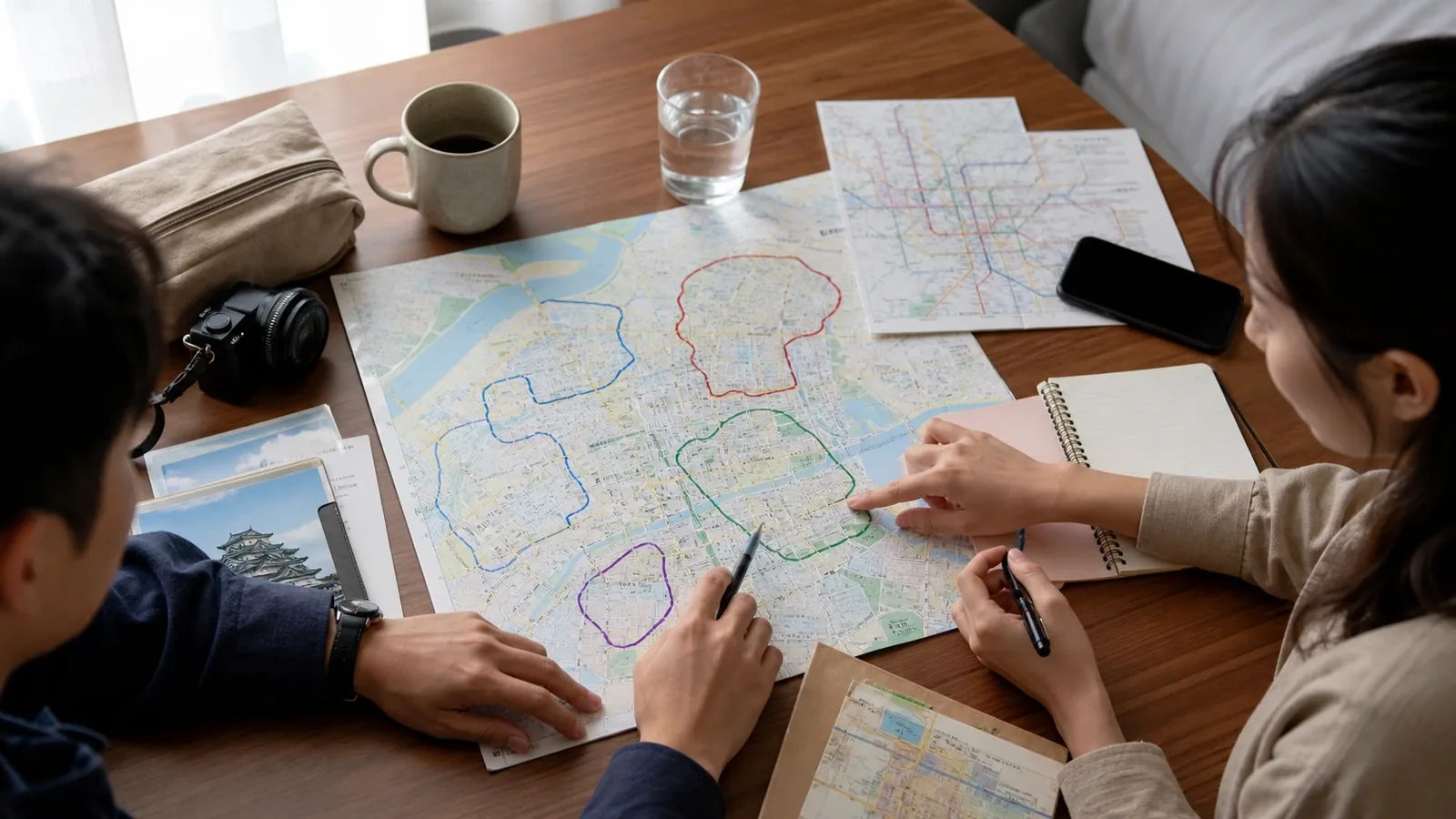
Planning your day as though distances in Osaka do not matter
On a map, many areas appear close together. In practice, the stations are large, transfers take time and finding the right exit can turn into a minor underground expedition.
It is better to group your visits by area: Namba and Shinsaibashi; Osaka Castle and the eastern districts; Umeda and Nakazakicho; Tennoji and Shinsekai. Constantly jumping from one side of the city to the other wastes hours and turns your trip into a parade of train platforms.
There is also no need to buy a tourist pass automatically. An IC card such as ICOCA can be used across different transport networks, while Osaka Metro also accepts contactless payments on compatible services. Before purchasing a pass, compare its price with the journeys you will actually make.
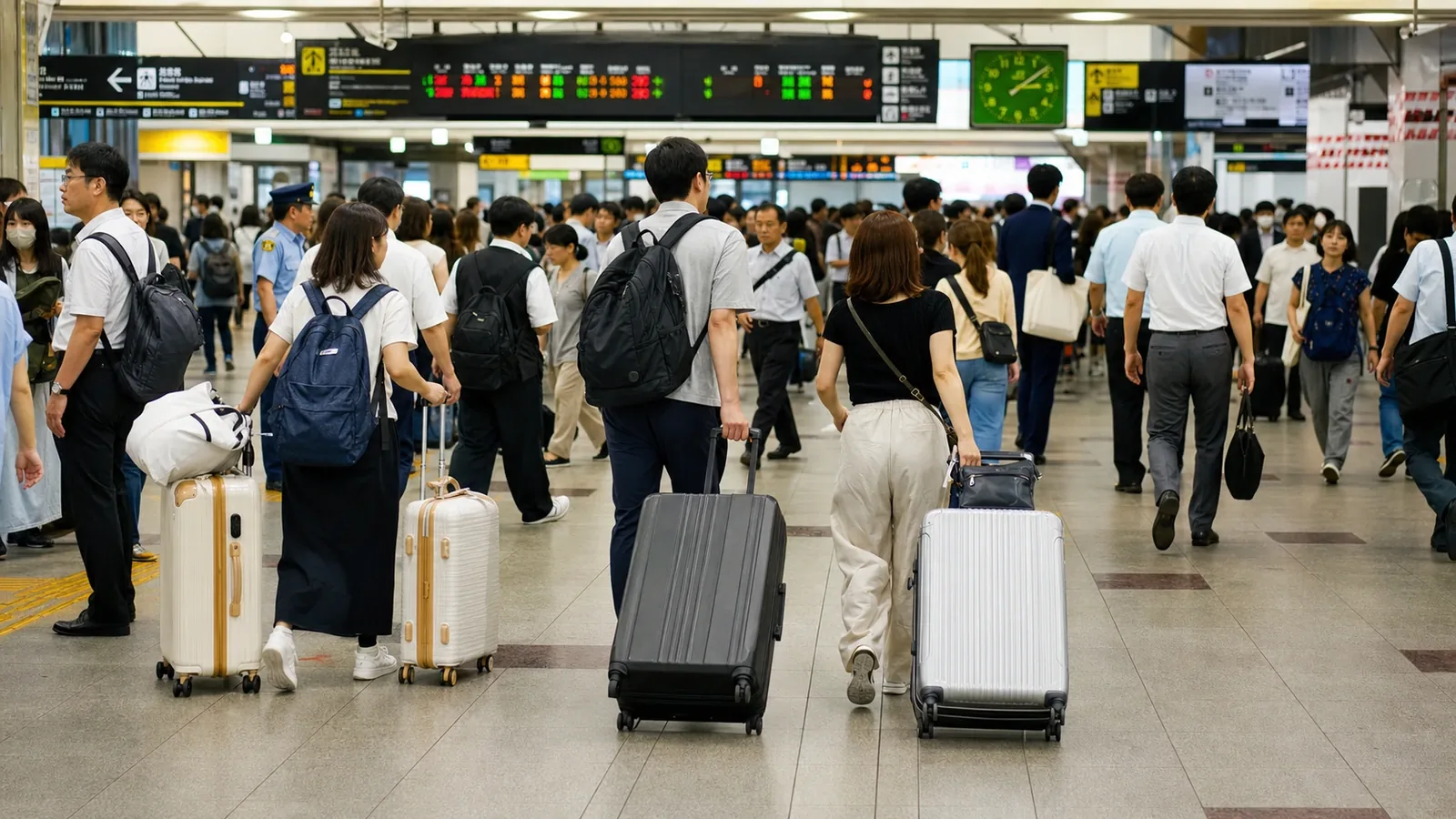
Dragging a huge suitcase through the metro at rush hour
Wheels banging against steps, doors closing and a crowd moving with precision are not a good combination. Traveling with bulky luggage during the busiest periods obstructs other passengers and turns every transfer into a physical challenge.
Do not leave your suitcase beside the doors or block corridors, ticket gates or vending machines. At stations, passengers are expected to queue, let people get off before boarding and keep circulation areas clear. Whenever possible, use luggage lockers or delivery services, or leave your bags at your accommodation before heading out to explore.
Assuming you can pay for everything by card
Osaka is modern and electronic payments are widely accepted, but some small restaurants, temples, markets and machines may still take only cash or specific payment methods.
Carry a reasonable amount of yen and avoid relying on a single card. An IC card makes transport and many small purchases easier, but it does not entirely replace cash. Running out of physical money just as you reach a six-seat counter is an unnecessary way to miss out on a good dinner.
Treating Osaka street food as permission to eat anywhere
Osaka constantly tempts you to snack. Takoyaki, taiyaki, skewers and sweets appear around every corner, but that does not mean it is appropriate to walk down any street while eating, enter a shop with food or leave packaging on any available surface.
The safest approach is to eat beside the stall, in the designated area or somewhere you will not obstruct pedestrian traffic. Public bins can be scarce, so it is useful to carry a small bag for your rubbish until you find somewhere to dispose of it.
Leaving tips or trying to haggle everywhere
Tipping is not part of standard Japanese custom. A sincere thank-you—arigatō gozaimasu—is enough and prevents staff from thinking you have accidentally left money behind.
Haggling is also uncommon in most shops. Displayed prices are usually final, except during promotions or in specific circumstances. Insisting is more likely to cause discomfort than save you money.
Entering a sentō without knowing the rules
Public bathhouses can provide some of the most intimate memories of your trip: tiles, steam and silence broken only by the sound of water. They are also shared spaces with clear rules.
You must wash before entering the bath, keep your towel out of the water and tie up long hair. As a general rule, swimsuits are not worn. Some establishments may restrict entry for people with tattoos, so check before making the journey.
Treating Osaka like a photo set
The neon lights and eccentric storefronts can make Osaka look like a scene designed for the camera. But there are workers behind every stall, and ordinary homes and businesses behind the narrow facades.
Avoid taking close-up photographs of people without permission, blocking an entrance to record a video or entering private property in search of a “secret photo spot.” A gesture toward your camera and a simple question are usually enough to find out whether a photograph is welcome.
Interacting with local people without observing first
Interactions in Osaka often feel warm and approachable, even when you do not share a language. The mistake is expecting everyone to speak English, speaking louder in the belief that it will make you easier to understand or interpreting a brief reply as unfriendly.
Learning a few basic expressions—sumimasen to attract attention or apologize, onegaishimasu when requesting something and arigatō gozaimasu to say thank you—can change the tone of many encounters. The key is not to perform every rule perfectly, but to show consideration: respect queues, arrive on time for reservations, avoid talking on the phone on trains and observe what others do before acting.
Osaka appreciates naturalness, but it also values consideration. A smile and a little humility usually open more doors than memorized Japanese spoken impatiently.
Smoking outside designated areas
Do not assume you can smoke while walking down the street. Osaka has designated smoking areas, and in certain districts smoking outside them is prohibited and may result in a fine.
Look for clearly marked smoking zones and avoid lighting a cigarette while moving through crowds of pedestrians. It is a practical rule, but also a matter of consideration on streets that already accommodate a high density of people.
Underestimating the weather and overloading your Osaka itinerary
June usually coincides with the rainy season, while summer can be extremely hot and humid. Trying to fit neighborhoods, observation decks and markets into the same day without breaks can turn enthusiasm into exhaustion before evening arrives.
During the warmer months, alternate outdoor activities with museums, shopping arcades or cafés. At especially busy times, starting early helps you experience certain places more peacefully. And when it rains, Osaka does not stop: its covered walkways, stations and underground shopping arcades allow you to continue exploring, although finding your way below ground requires patience.
The final mistake: using Osaka only as a base for visiting Kyoto
Osaka works extremely well as a base for exploring Kansai, but spending every day on excursions means returning only to sleep. It is precisely in the evening that the city reveals its personality: tiny bars, glowing lanterns, office workers having dinner after work and neighborhoods returning to a less monumental, more everyday rhythm.
Travelers seeking silence, contemplative gardens and a consistently historic atmosphere may find Osaka too commercial and noisy. Those who enjoy food, vibrant cities and unexpected encounters will probably be glad they gave it time of its own.
The greatest mistake is not accidentally breaking a rule. It is rushing through Osaka so quickly that you see only its signs and miss the life unfolding beneath them.
