 Activity on TourBookGo
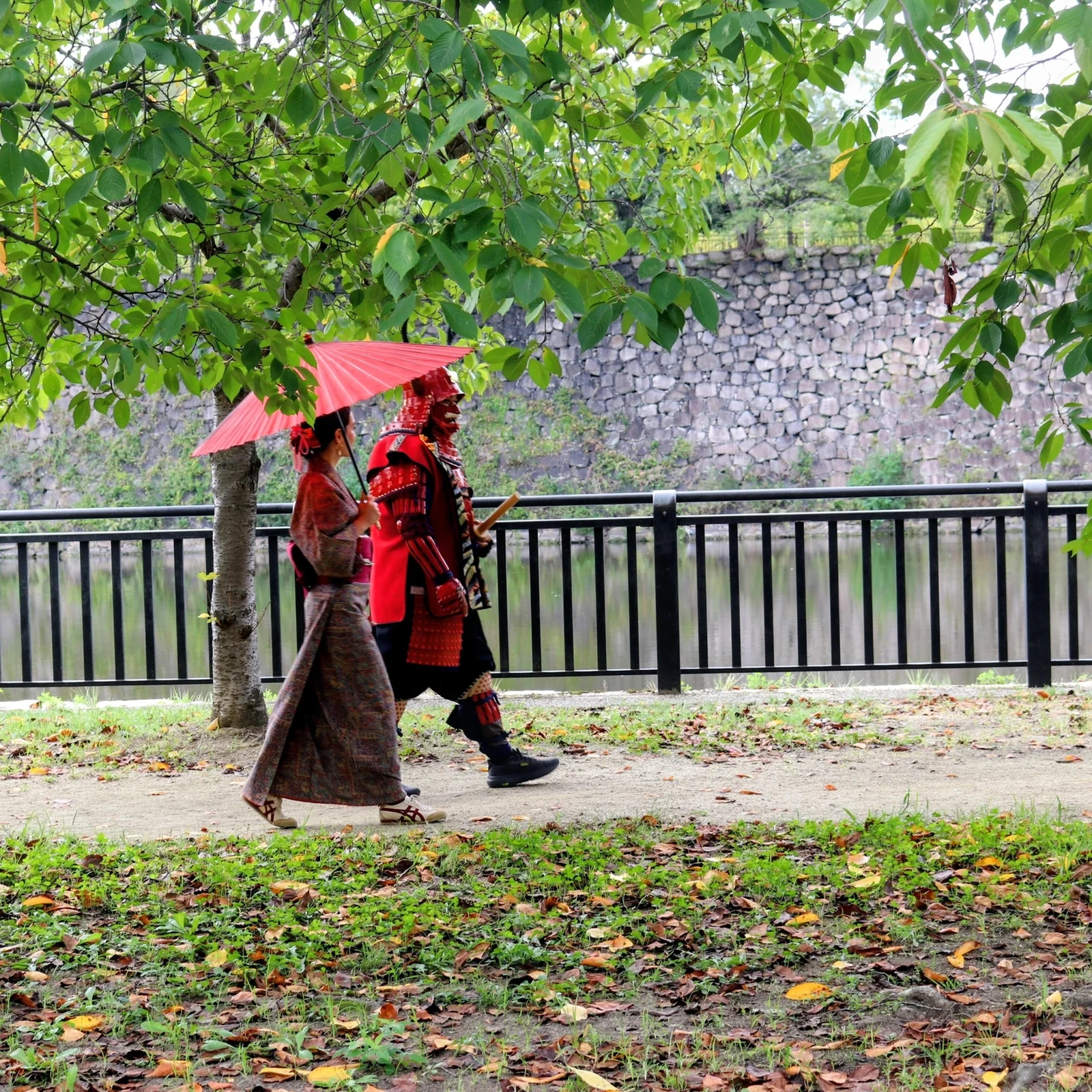
Samurai Experience in Osaka Near Osaka Castle
Discover a 3-hour samurai experience in Osaka with kimono, calligraphy, tea ceremony, iaido, armour and photos near Osaka Castle.
Discover the best things to do in Osaka as you walk beneath Dotonbori’s neon signs, taste sizzling street food and explore lively neighborhoods, panoramic viewpoints and peaceful temples.
Finding the best things to do in Osaka starts with understanding that this is not a city to admire from afar: it is a city to move through. You discover it beneath Namba’s electric signs, beside a hot griddle where okonomiyaki sizzles, in the passageways of an enormous train station, or in the unexpected silence of a temple hidden among high-rise buildings. It lacks Kyoto’s constant solemnity and Tokyo’s monumental intensity. Its appeal is more down-to-earth: eating, walking, talking, and allowing yourself to be swept along by a city that is direct, noisy, and refreshingly informal. Its nightlife, popular cuisine, and sense of humor are essential parts of its identity.
Compare locations and options to find a base that suits your trip. Booking.com confirms current availability and pricing.
Find accommodation on BookingDotonbori is one of the most recognizable places to visit in Osaka: facades covered in neon, enormous mechanical figures, restaurants stacked one above another, and a canal reflecting advertisements in every color.
It is best to arrive in the late afternoon, cross Ebisu Bridge, and stay until nightfall. From there, continue to Hozenji Yokocho, a narrow lane of cobblestones and lanterns where the noise suddenly fades. That contrast between excess and quiet contemplation perfectly sums up the city’s character.
The area is extremely crowded, and many of its businesses rely heavily on tourism. It is worth visiting for the atmosphere, not because every restaurant is exceptional. For a calmer dinner, it is usually better to walk a few streets farther toward Ura-Namba.
Osaka Castle rises above a vast park surrounded by moats, walls, and gardens. It is one of the city’s great symbols, but it is worth knowing that the current main tower is a 20th-century reconstruction and that its interior operates as a museum. Visitors expecting intact feudal rooms may be disappointed.
The most enjoyable part is often the exterior: walking alongside the walls, watching the castle reflected in the water, and resting beneath the trees. During cherry blossom season, the surroundings become especially beautiful, although they also attract large crowds.
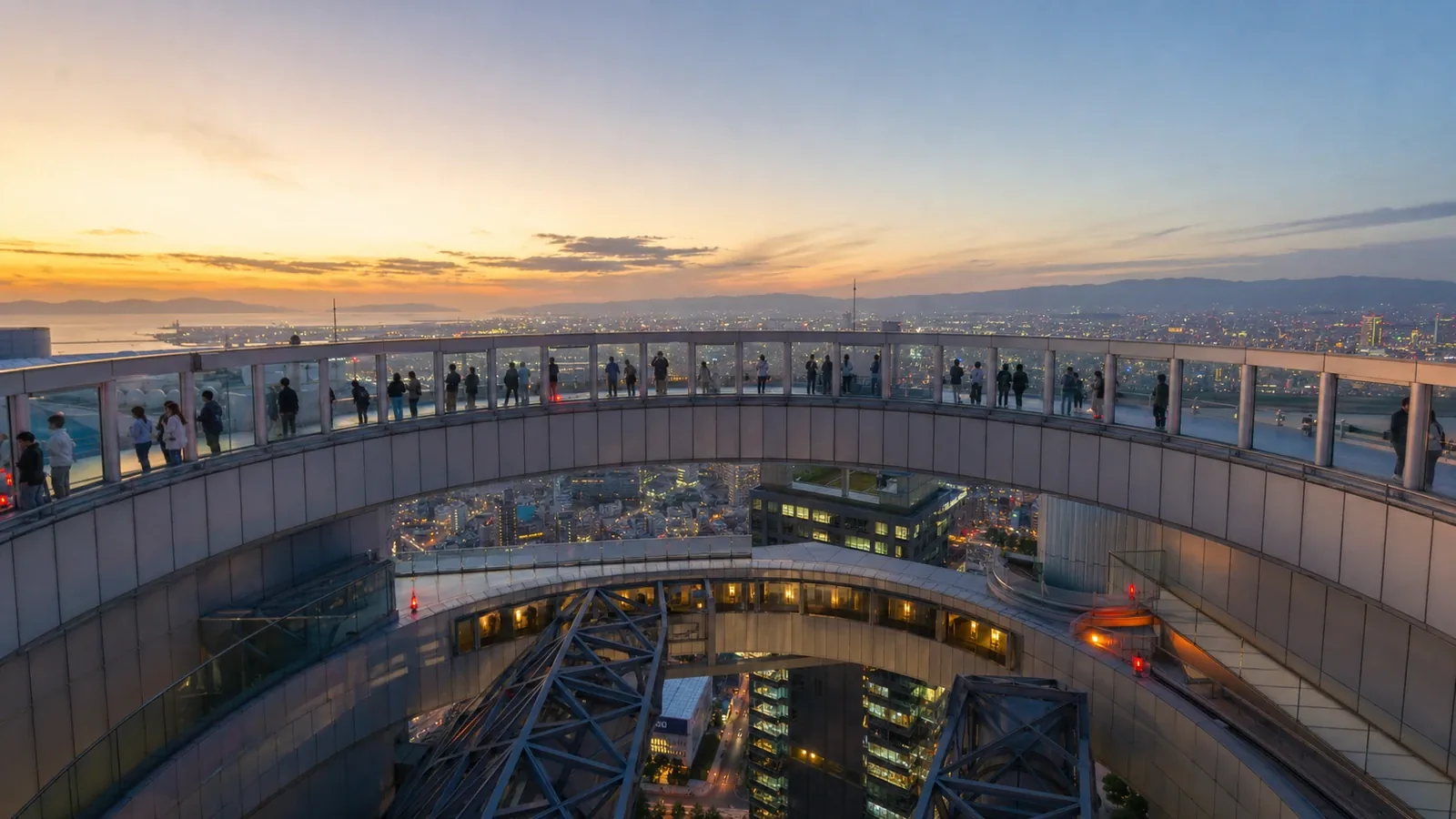
The Umeda Sky Building, formed by two towers connected by a suspended structure, is one of Osaka’s most distinctive landmarks. Its observation deck offers sweeping views across the city, especially beautiful as the evening light fades over the bay and the first illuminated windows begin to appear.
It is an especially good choice for couples and photography enthusiasts. Weekends and the period around sunset are usually the busiest times. During the day, the experience is less romantic, but the scale of the city is easier to appreciate.
Shinsekai retains a retro look, with illuminated signs, kushikatsu restaurants, and amusement arcades clustered around Tsutenkaku Tower. It is a picturesque, slightly brash neighborhood with a deliberately nostalgic feel.
It works better as an early-evening stroll than as a full-day visit. Some streets feel like tourist sets, but there are still small bars and traditional establishments where you can experience a less polished side of Osaka than in Umeda.
Osaka also has quiet spaces. Shitennoji, associated with the earliest centuries of Japanese Buddhism, offers courtyards, pagodas, and an atmosphere entirely different from Namba. Sumiyoshi Taisha, with its straight-roofed buildings and arched bridge, provides an introduction to an especially ancient form of Shinto architecture. Shitennoji is listed among the city’s main historical attractions by Osaka’s official tourism guide.
These places are no substitute for Kyoto’s great temples, but they help show that Osaka is about much more than entertainment, neon lights and food.
Universal Studios Japan can easily take up an entire day. It is a good choice for families, theme park enthusiasts, and travelers interested in its best-known themed areas. The visit requires planning: some zones or attractions may require timed entry, and waiting times vary considerably depending on the day.
It is not worth including on a very short trip unless it is a personal priority. Visiting the park means giving up almost a full day that could otherwise be spent exploring neighborhoods, markets, and city life.
Kaiyukan is one of the best things to do in Osaka on a rainy day or during a family outing. Its route descends around large tanks recreating different ecosystems, with an enormous central tank devoted to the Pacific Ocean and home to whale sharks.
The aquarium can become crowded at peak times and will not appeal to visitors who prefer to avoid attractions involving animals. For everyone else, it offers a leisurely and visually impressive experience.
Rain does not bring the city to a standstill. The best indoor alternatives for adults include Kaiyukan Aquarium, the museums of Nakanoshima, Umeda’s underground shopping arcades, and Namba’s large shopping centers, which make it possible to spend several hours indoors without worrying about the weather.
Osaka also has a broad range of museums and art spaces spread throughout its main neighborhoods.
For families, Kids Plaza Osaka combines physical play, experiments, workshops, and creative spaces. It is designed to help children learn while exploring and is particularly useful on hot or rainy days.
Not all the best things to do in Osaka require an admission ticket. You can enjoy the city simply by walking through Osaka Castle Park, along the banks of Nakanoshima, or around Dotonbori, Hozenji Yokocho, Shinsekai, and the covered shopping streets.
Tenjinbashisuji, an exceptionally long shopping arcade popular with local residents, is also worth exploring, followed by the narrow lanes of Tenma. Here, Osaka feels less theatrical and more everyday: small restaurants, bicycles leaning against facades, and conversations drifting through sliding doors.
A pleasant afternoon for two might begin with a walk around Nakanoshima, continue through the streets of Kitahama, and end with sunset views from the Umeda Sky Building.
For a more intimate evening, Hozenji Yokocho is more appealing than central Dotonbori. Urban cruises also operate along the canals, offering a different way to see the facades and lights reflected in the water. The city’s tourism guide itself highlights the revival of river travel as part of Osaka’s historical identity.
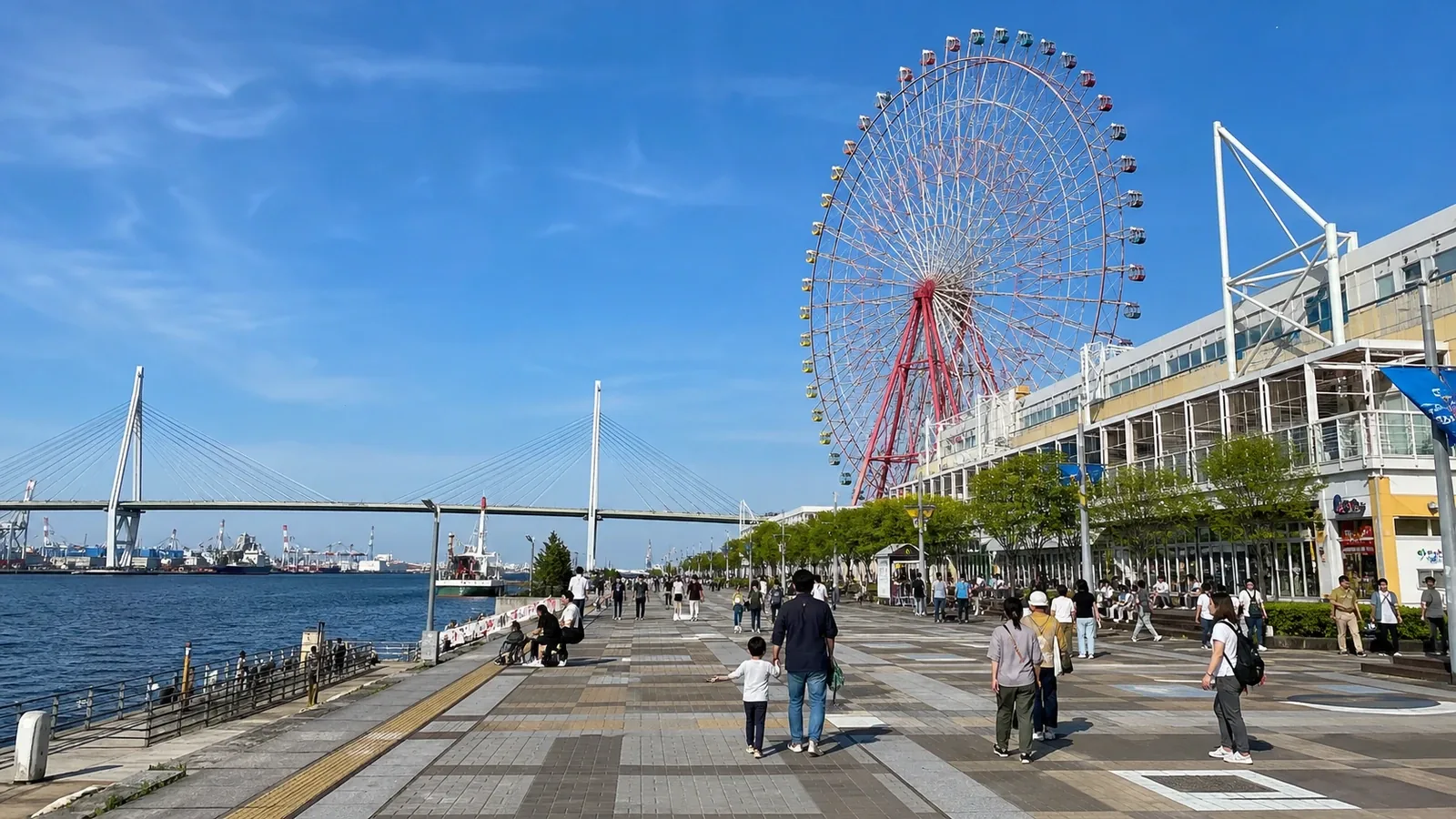
In addition to Universal Studios Japan and Kaiyukan, families can combine Kids Plaza Osaka with Ogimachi Park, visit Tennoji Zoo, or spend a day in the waterfront district.
The main difficulty is usually not a lack of activities, but fatigue: the stations are enormous, visitors walk long distances, and some neighborhoods become extremely crowded. It is best to avoid itineraries that involve changing areas too many times in a single day.
Dotonbori offers Osaka’s most photogenic nightlife; Ura-Namba provides a more informal dining experience; Tenma is known for small bars and restaurants; and Shinsekai has a distinctive retro atmosphere.
Those looking for clubs and late-night venues will find more options around Shinsaibashi and Amerikamura. Travelers who prefer a quieter evening can dine in Kitahama, walk along the river, or admire the city from Umeda.
Osaka is lively, but not every night out is refined. Some streets are noisy, certain venues have unclear pricing, and there are areas where the atmosphere can feel slightly rough. Choosing establishments with clearly displayed prices helps avoid most problems.
Nara is probably the most well-balanced day trip from Osaka: monumental temples, wooded parks, and a much calmer atmosphere. It is easy to reach by train and works very well as a one-day visit.
Kyoto has excellent transport connections with Osaka, but it deserves more than a rushed visit. A day trip can be enough to explore one particular area, but trying to cover its most famous temples in just a few hours usually results in an exhausting itinerary.
For an escape from the concrete, Minoh offers a forested trail leading to a waterfall. It is especially attractive in autumn, although this is also when it receives the most visitors. The park is a short train ride from central Osaka, and general access is free.
Osaka is not a city of constant classical beauty. Some avenues are gray, certain shopping districts can feel overwhelming, and several famous attractions are surrounded by souvenir shops, queues, and restaurants aimed almost entirely at visitors.
The humid summer heat can turn walking into a test of endurance. Spring and autumn usually offer a more comfortable experience, although they also coincide with very popular travel periods.
The city’s true richness appears when you leave room for improvisation: turning into a side street, sitting down at a small counter, or pausing at a neighborhood shrine. Osaka rewards travelers who enjoy observing how a city lives more than those focused on collecting landmarks.
Two days are enough to see the main neighborhoods, the castle, and one of the major observation decks. Three days allow for a more relaxed pace and make room for Kaiyukan, Tennoji, or a slower exploration of the city’s food scene.
Universal Studios Japan normally requires an additional day. With four or five days, Osaka can serve as a base for visiting Nara, Minoh, or Kobe without having to change accommodation.
Osaka is worth visiting when you accept it as it is: exuberant, imperfect, welcoming, and slightly chaotic. It does not try to impress through delicacy. It does so through the steam rising from a kitchen, the voices gathered around a counter, and the glow of the city multiplied across the water.
Discover selected experiences in Osaka to complete this guide with local culture, food, sightseeing and well-organised day trips.
Activity on TourBookGoDiscover a 3-hour samurai experience in Osaka with kimono, calligraphy, tea ceremony, iaido, armour and photos near Osaka Castle.
 Activity on TourBookGo
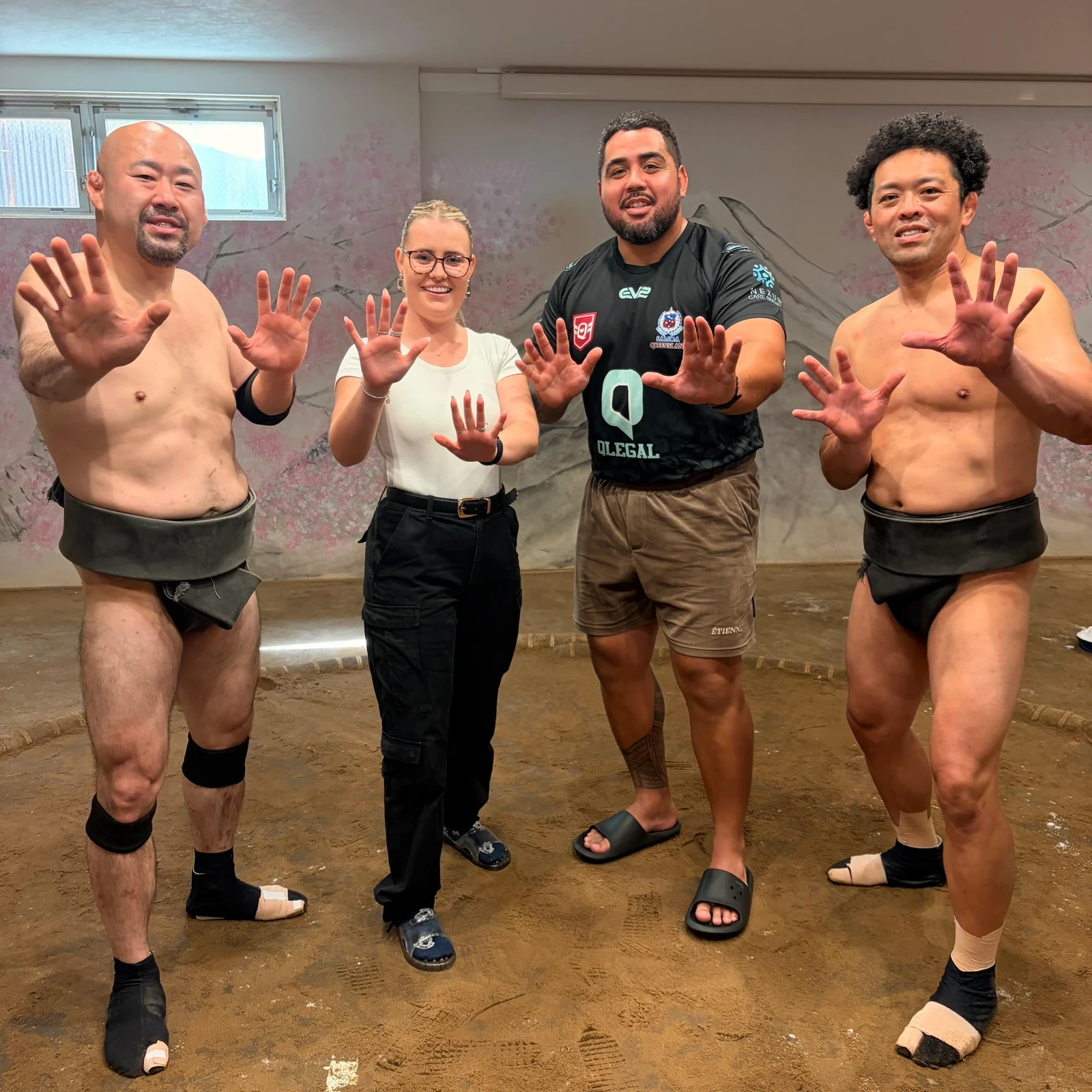
Book an Osaka sumo experience with a live show, English explanations, retired wrestlers and a limited opportunity to enter the ring.
 Activity on TourBookGo
Book a traditional sento bathhouse in Osaka with a local guide, small group, towel and post-bath drink, plus step-by-step etiquette advice.