 Activity on TourBookGo
Osaka Food Tour with 15 Dishes in Shinsekai
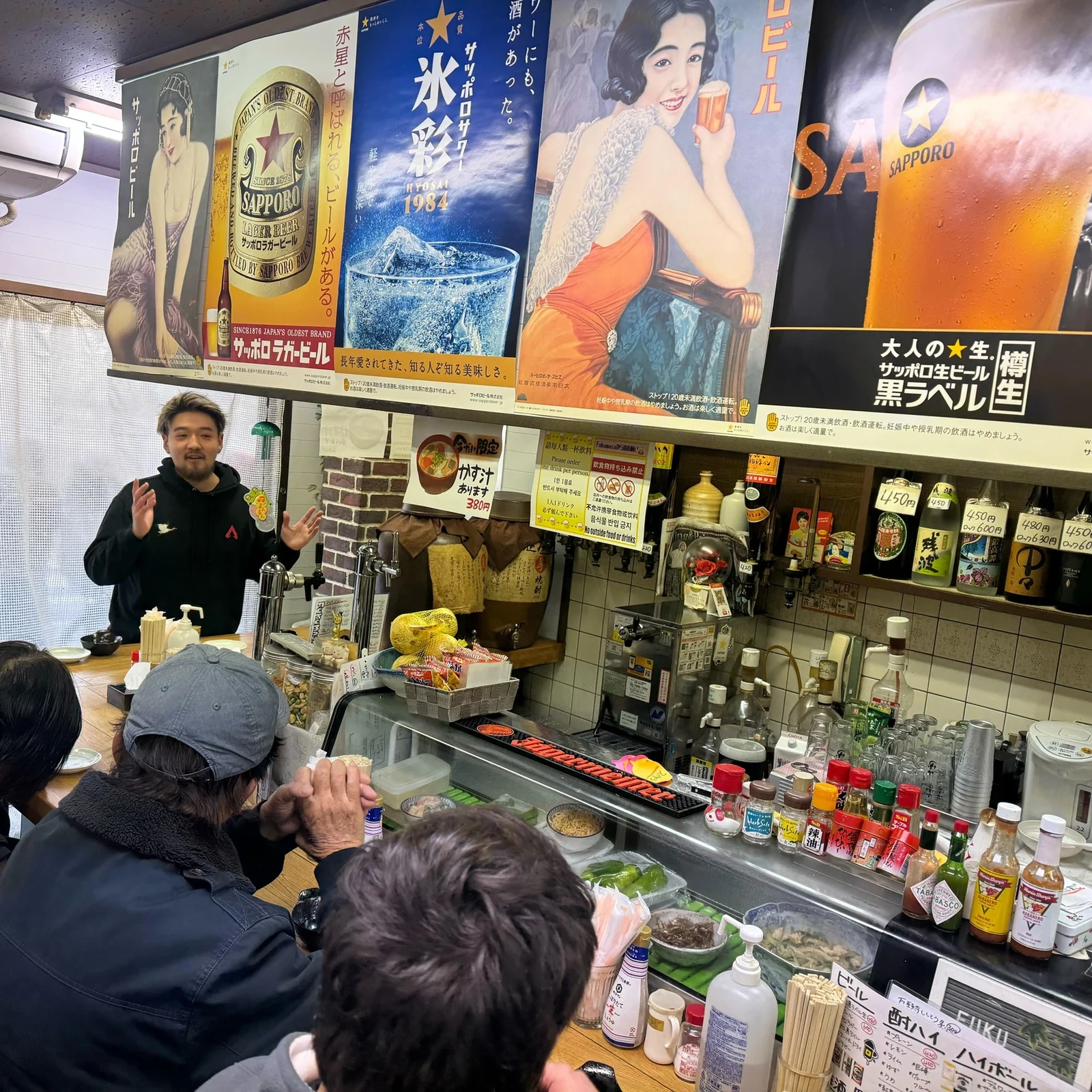
Book an Osaka food tour through Shinsekai with an English-speaking guide, 15 Japanese dishes, 3 drinks and stops at five local venues.
Knowing where to eat in Osaka means following the heat of busy griddles, tiny counters, and neon-lit streets filled with takoyaki, okonomiyaki, kushikatsu, markets, and local food neighborhoods.
Knowing where to eat in Osaka begins around a hot griddle: in the sizzle of batter beginning to brown, the steam fogging the entrance to a tiny izakaya, the aroma of broth drifting from an udon counter, or a skewer fresh from the fryer. The city makes no claim to delicate or ceremonial cuisine. It eats noisily, with plenty of sauce, a sense of humor, and often without too much concern for manners. But its culinary reputation also has a less appealing side. In the most visited areas, queues are common, many restaurants seem designed mainly for photographs, and prices often have more to do with location than quality. Eating well in Osaka means learning to distinguish worthwhile dishes, characterful neighborhoods, and tourist traps.
Compare locations and options to find a base that suits your trip. Booking.com confirms current availability and pricing.
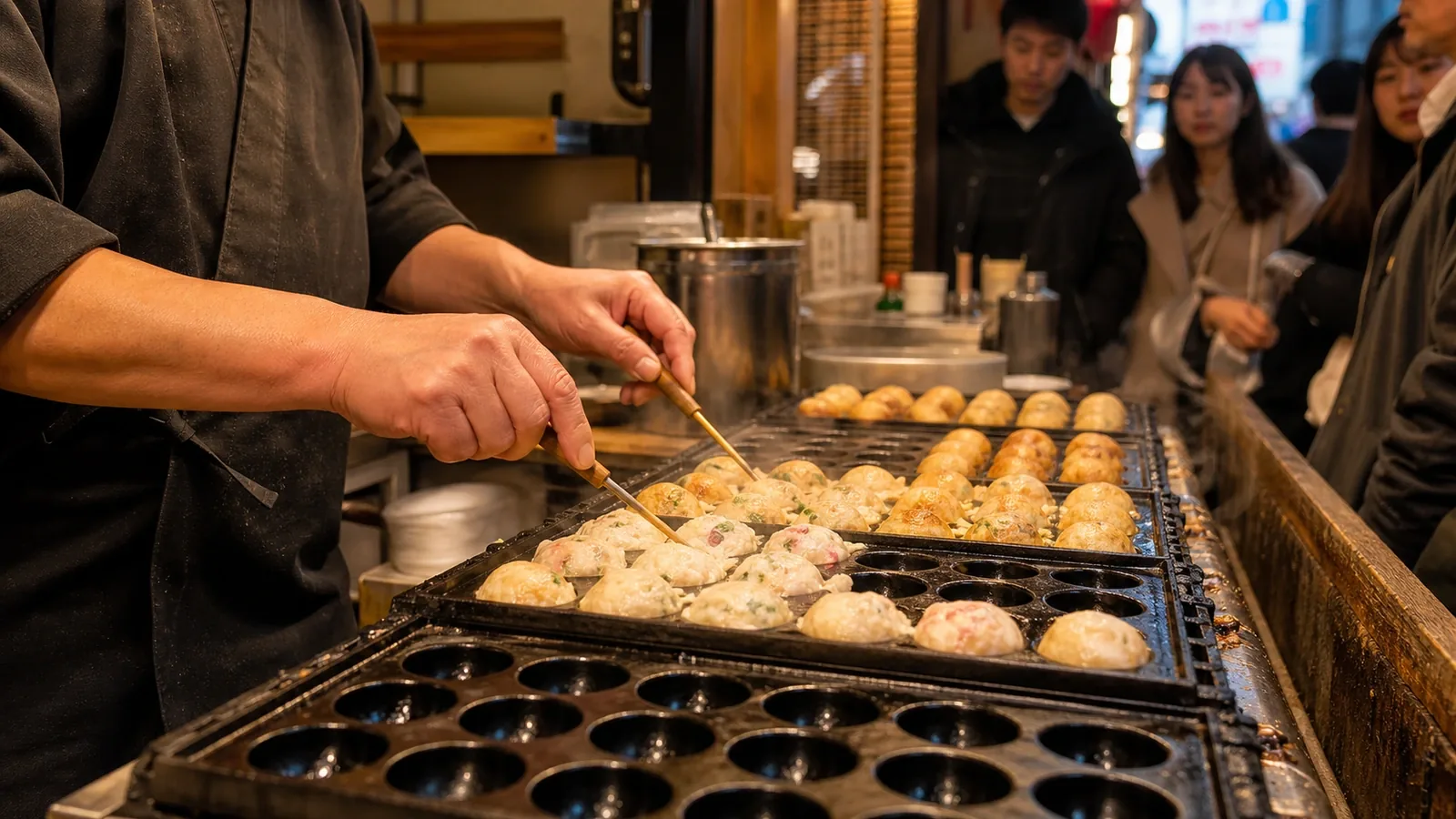
Find accommodation on BookingTakoyaki: the city’s most recognizable snack. These balls of batter filled with octopus come topped with sauce, mayonnaise, bonito flakes, and powdered seaweed. Fresh off the griddle, they are much hotter than they look: the outside may be golden, but the center remains almost creamy.
It is worth trying them once in Dotonbori for the atmosphere, although there is no need to choose the stall with the longest line. Takoyaki is simple, quick, everyday food, and expecting a culinary revelation may lead to disappointment. Its appeal lies in eating it piping hot amid neon lights and overlapping conversations in the street. Osaka’s official tourism guide presents it, together with okonomiyaki and kushikatsu, as one of the city’s signature flavors. OSAKA-INFO, Osaka’s Official Tourism Website.
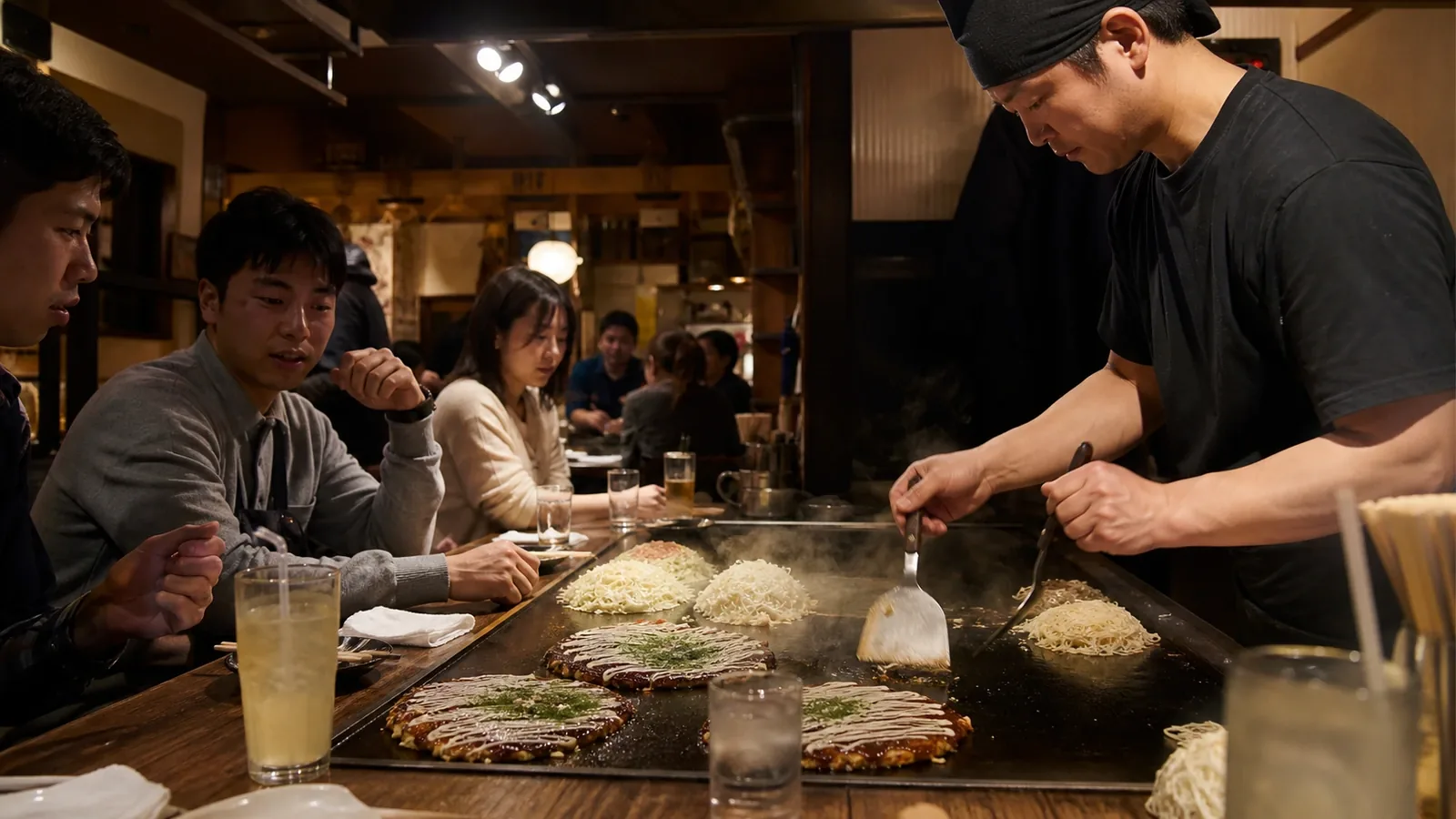
Okonomiyaki: a more substantial dinner. Okonomiyaki combines batter made with dashi stock, cabbage, egg, and various other ingredients, usually cooked on a griddle. It is then topped with dark sauce, mayonnaise, and seasonings. It is filling, slightly sweet, and far more satisfying when eaten seated at a table rather than rushed as a snack.
Some restaurants allow diners to cook it themselves at the table, while others serve it ready-made. For a first experience, the second option is usually safer, preventing a promising dinner from turning into a pancake that is burnt on the outside and raw in the middle.
Kushikatsu: skewers, deep-frying, and a lively atmosphere. Meat, vegetables, seafood, and cheese are threaded onto skewers, breaded, and fried until crisp. Shinsekai is the classic place to try them, especially along the streets around Janjan Yokocho, where numerous restaurants are concentrated. OSAKA-INFO, Osaka’s Official Tourism Website.
Kushikatsu works best as a shared meal: a few skewers, something to drink, and perhaps another dish. Ordering too many can leave you feeling uncomfortably full, especially during Osaka’s humid summer.
Yakiniku and horumon: the aromas of Tsuruhashi. Tsuruhashi is one of the most interesting areas for grilled meat. As soon as you leave the station, the smell of charcoal and sizzling fat leads you toward yakiniku restaurants, kimchi stalls, and shops selling Korean products. The neighborhood reflects the profound influence of the Korean community on the city’s culinary identity. OSAKA-INFO, Osaka’s Official Tourism Website.
Horumon, made with different cuts of offal, will appeal to curious travelers but may be challenging for those who prefer familiar flavors and textures. You do not have to order it to enjoy Tsuruhashi: there are more conventional cuts of meat, stews, marinated vegetables, and Korean dishes to choose from.
Beyond the major classics, Osaka is also worth exploring for its udon counters, Japanese curry restaurants, ramen, conveyor-belt sushi, steamed pork buns, and the food halls found in major department stores, known as depachika. These are especially useful when you want high-quality food without committing to a formal dinner. Under one roof, they offer bentos, fish, pickles, sweets, and prepared dishes. OSAKA-INFO, Osaka’s Official Tourism Website.
Dotonbori: spectacle over authenticity. Dotonbori is an unforgettable introduction to Osaka’s energy. Giant signs, theatrical façades, and neon reflections on the canal turn dinner into part of the urban landscape. Its close relationship between entertainment and dining dates back to its history as a theater district. OSAKA-INFO, Osaka’s Official Tourism Website.
It is well worth walking through and trying a snack or two, but not every meal should be eaten there. The most visible restaurants tend to be under greater tourist pressure, and a giant octopus above the entrance is no guarantee of the best takoyaki. The side streets around Namba generally offer a less frantic experience.
Ura-Namba: small bars and more reasonable prices. Behind Namba’s shopping avenues lies a network of streets filled with izakayas, standing bars, and tiny restaurants. Ura-Namba has established itself as a destination for Japanese-style bar hopping, with greater variety and a better balance between atmosphere and price than the more tourist-oriented side of Dotonbori. OSAKA-INFO, Osaka’s Official Tourism Website.
It is a good place to order one or two dishes at several different establishments. A certain amount of discomfort is part of the experience: narrow counters, small stools, smoke, noise, and little room for luggage. It is not the best choice for families with strollers or anyone hoping for a quiet conversation.
Tenma and Ura-Tenma: local life after sunset. Around Tenma Station and Tenjinbashisuji, informal restaurants, taverns, and small businesses line the streets. The area is particularly appealing in the evening, when the bars fill with office workers and groups of friends. The atmosphere is usually less touristy than in Namba, although translated menus may also be harder to find. OSAKA-INFO, Osaka’s Official Tourism Website.
For travelers willing to point at dishes, use a translation app, and accept a degree of improvisation, Tenma offers one of Osaka’s most natural dining experiences.
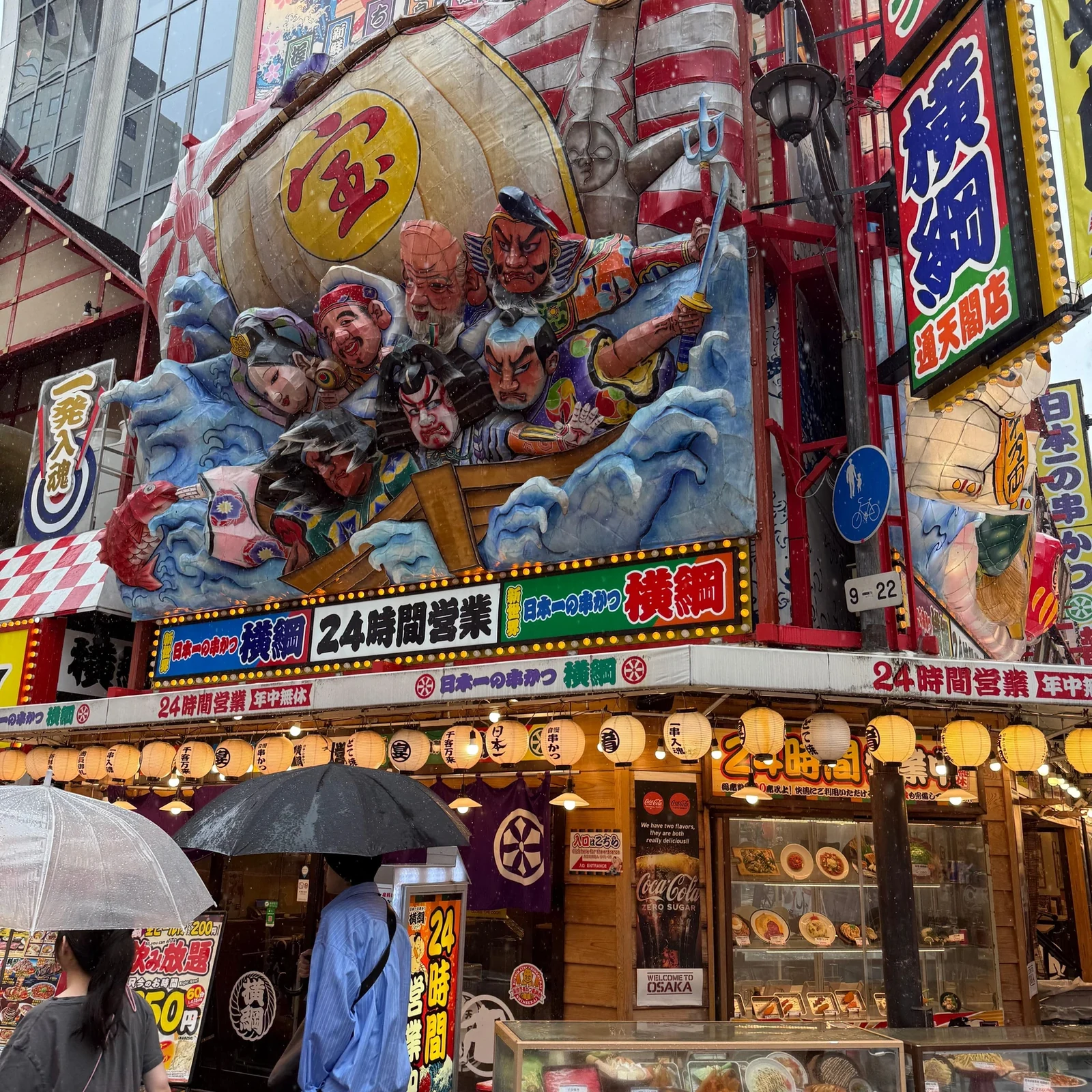
Shinsekai: retro flavor with a touch of staging. Shinsekai combines working-class nostalgia, flashy signs, arcades, and kushikatsu restaurants. It has plenty of personality, but its aesthetic has also been heavily commercialized for tourists. One meal here can be fun; several will probably begin to feel repetitive.
It is best visited without expecting a perfectly preserved time capsule of old Osaka. The neighborhood retains genuine elements, but it has also learned how to perform its own legend.
Kuromon: a market for browsing, tasting, and comparing. Kuromon Ichiba brings together fishmongers, fresh produce, sweets, meat, and stalls preparing food on the spot. Opening hours vary from one business to another, although most activity is concentrated in the morning and early afternoon. Kuromon Market.
A market should not automatically be confused with low prices. Seafood, luxury fruit, and premium meat can quickly increase the bill. The sensible approach is to walk around first, compare options, and choose one or two specialties. When eating, step away from the main flow of pedestrians or use the designated areas. The market itself asks visitors not to stop in the middle of the walkway and to return waste to the stall where the food was purchased. Kuromon Market.
The best budget options rarely require complicated planning: fast-service udon or soba counters, Japanese curry restaurants, lunch menus at establishments that are more expensive in the evening, standing bars in Ura-Namba or Tenma, conveyor-belt sushi with clearly displayed prices, and bentos and prepared meals from supermarkets or depachika food halls.
A common mistake is assuming that eating cheaply means moving from one street-food stall to another. Several small tastings in Dotonbori or Kuromon can end up costing more than a complete meal at a neighborhood restaurant.
Be wary of restaurants that attempt to serve sushi, ramen, okonomiyaki, wagyu, tempura, and kushikatsu all at once. An endless menu on a tourist street usually suggests limited specialization.
It is also unwise to plan your trip around viral restaurants. A long queue may indicate quality, but it can also be the result of limited seating, social-media exposure, or simple herd behavior. In a city with thousands of options, waiting an hour for a simple dish is rarely necessary.
Another mistake is ordering too much fried food on the first day. Osaka’s popular cuisine is flavorful, but it is also heavy on flour, oil, and sauce. Alternating it with fish, udon, vegetables, tofu, or Korean food makes the trip far more enjoyable.
Osaka rewards travelers who enjoy informal meals, tiny bars, meat, seafood, and bold flavors. It is also a convenient city for those who prefer trying many different foods without booking formal restaurants every evening.
Travelers following a vegan diet, needing to avoid gluten completely, or living with severe allergies will need to plan more carefully. Dashi may contain fish, sauces often combine several ingredients, and the language barrier can make modifications difficult. Carrying an allergy card written in Japanese is safer than relying solely on an improvised explanation.
The best strategy is to combine a neon-lit evening in Dotonbori, a market meal in Kuromon, skewers in Shinsekai, and a more local night out in Tenma, Tsuruhashi, or Ura-Namba.
Osaka may not always serve Japan’s most refined food, but few cities turn eating into such an expressive urban experience. Its cuisine speaks loudly, stains your shirt, forces you to wait for the takoyaki to cool, and reminds you that pleasure can also be found at a narrow counter, beneath unflattering lighting, in front of an excellent dish that would never have looked impressive in a photograph.
Discover selected experiences in Osaka to complete this guide with local culture, food, sightseeing and well-organised day trips.
Activity on TourBookGoBook an Osaka food tour through Shinsekai with an English-speaking guide, 15 Japanese dishes, 3 drinks and stops at five local venues.
 Activity on TourBookGo
Book a Shinsekai food tour in Osaka with up to 15 tastings, 3 drinks, five local stops and a small group of no more than 8 guests.
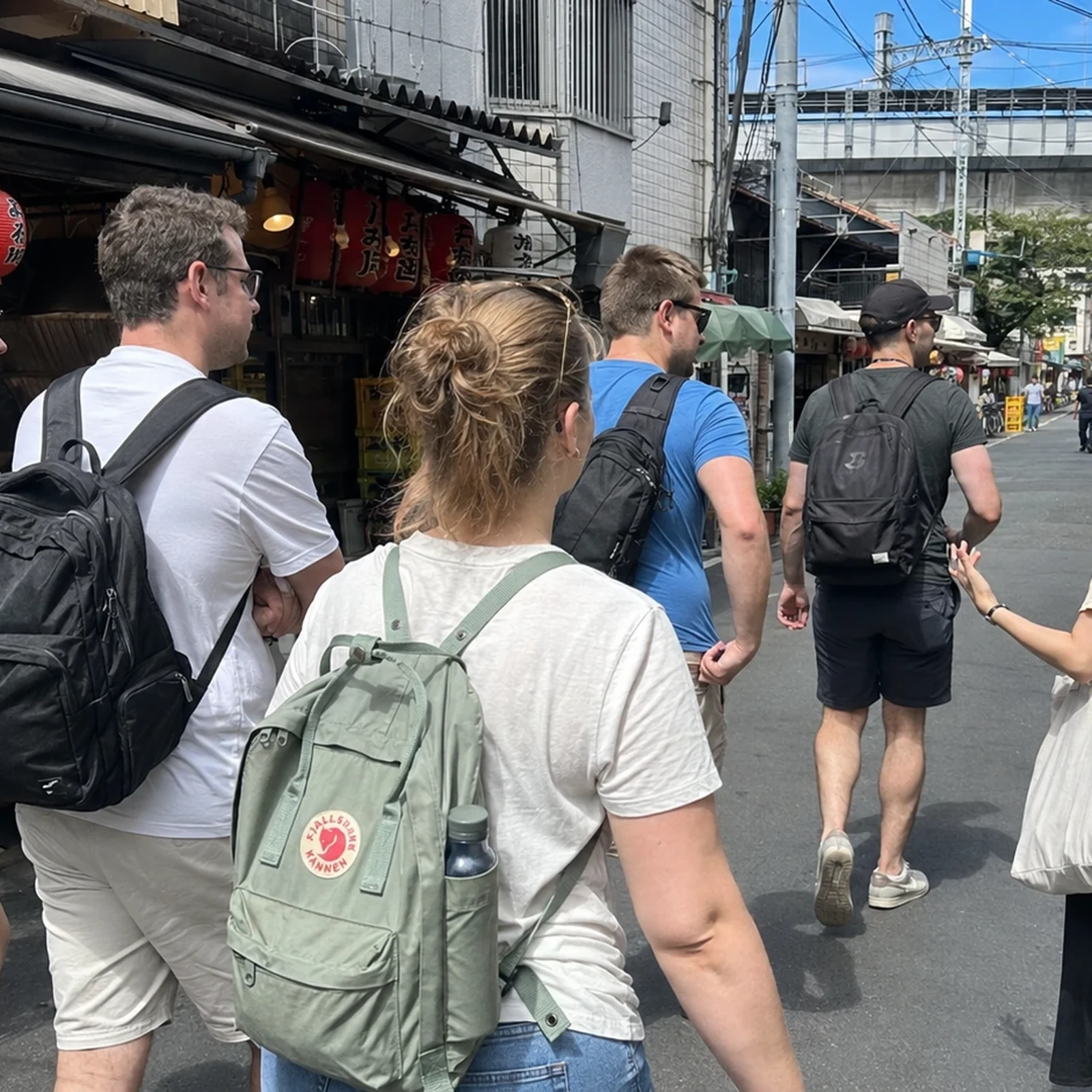 Activity on TourBookGo
Book a private Nakazakicho and Tenma walking tour in Osaka: 2.5 hours with an English guide, retro streets, markets and local neighborhoods.