
Denizli cuisine as a starting point
The food found around Pamukkale belongs to the wider culinary context of the Denizli region. Documented local dishes include soups such as tarhana, börülce and ovmaç, along with numerous recipes prepared with aubergine and other vegetables. Meat dishes such as tas kapama kebab and homemade doughs or breads such as şipit also form part of this repertoire.
These names can help you read a menu more confidently, but they are not a reason to expect every restaurant to serve them. A regional dish may vary depending on the kitchen preparing it and might not be available every day. The best approach is to ask which specialities are being made at that time and what ingredients they contain. This avoids turning local cuisine into a checklist and leaves room for a meal that feels more closely connected to the place.
Eating in Pamukkale without disrupting your itinerary
Staying or spending the day in Pamukkale Mahallesi makes it easier to arrange meals around the main area formed by the travertines and Hierapolis. The key decision is whether to eat during the visit or save the more leisurely meal until afterwards. Trying to fit a long lunch into the middle of an archaeological itinerary may force you to skip part of the site, while postponing it for too long can also reduce your energy and concentration.
A sensible formula is to separate the two functions: take a simple break during the day and enjoy a more relaxed meal once the heritage portion of the visit is over. Before sitting down, check the displayed menu, the ingredients, portion sizes and any applicable conditions. Terraces with an appealing panorama may be worth choosing for their atmosphere, but views alone do not demonstrate that the food will meet the diner’s expectations.
A break beside the Antique Pool
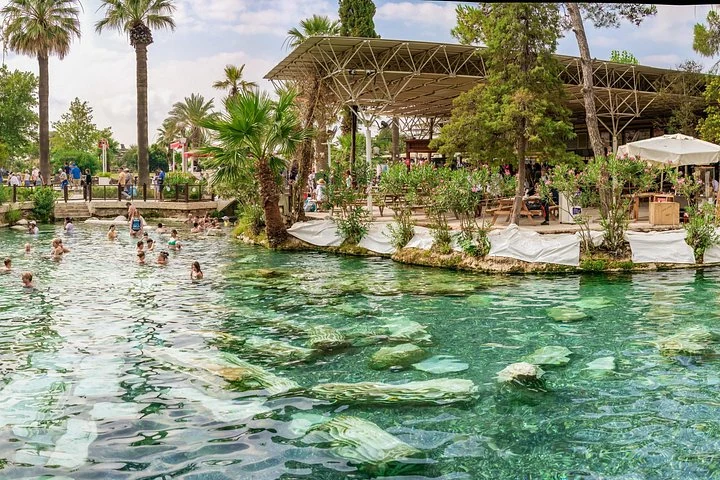
The terrace with tables beside the Antique Pool offers a practical opportunity to stop during a visit to Hierapolis. The proximity of the water and a space set up for sitting down may be particularly tempting after walking among ruins and outdoor areas. Its real value lies in providing a break that fits naturally into the itinerary, not in promising an exceptional dining experience.
This option suits visitors who prioritise continuity and rest. Anyone hoping to explore the regional cuisine at a leisurely pace may prefer to save that meal for another time. Nor should it be assumed that the selection, access or conditions remain unchanged. Check on the spot what is being served and which restrictions apply. The setting invites you to regain your energy; it does not confirm a particular menu, service standard or special properties of the water.
Karahayit as an alternative, not part of the centre
Karahayit is a separate extension of Pamukkale and should be approached as an excursion, not as just another street in the heritage centre. Its compact centre brings together local shops around the red thermal spring, making it possible to combine a stroll with a meal away from the main travertine route. It may appeal to those staying there or wishing to discover another side of the destination.
Choosing Karahayit solely for a meal means considering the journey and fitting it properly into the day. There is little point in adding it hastily if doing so turns the visit into a succession of transfers. Nor can you conclude that its restaurants are necessarily cheaper, quieter or more authentic simply because it is a different town. The decision should be based on the visible offering, clearly communicated ingredients and logistical convenience.
How to recognise an honest choice
A short, easy-to-understand menu may be more useful than an extensive selection designed to satisfy every possible expectation. It is worth looking for the names of regional dishes, but also asking for a straightforward explanation: what the dish contains, how it is cooked and whether it is available. That conversation can help distinguish a genuine speciality from a label used without meaningful context.
If you have dietary needs, allergies or restrictions, do not interpret an ambiguous translation or rely on assumptions. Ask directly and make your decision according to the answer you receive. It is also wise to understand the conditions before ordering. No view, photograph or generic reference to tradition can replace clear information about the food that will arrive at your table.
Eating well on a modest budget
Saving money does not mean reducing every meal to the quickest available option. It may be smarter to reserve most of your budget for a carefully chosen dinner and manage the rest of the day with simple dishes. Soups, vegetables, breads and regional dough-based preparations provide useful reference points, although their availability and price must be confirmed at each establishment.
A common mistake is paying for a privileged location while expecting the scenery and food to be equally impressive. Sometimes the sunset atmosphere will make the expense worthwhile; on other occasions, it may be better to separate the main meal from the most photogenic moment. For residents of Denizli or nearby towns, Karahayit may offer a change from their usual circuit, provided the journey makes sense within the plan as a whole and is not based solely on a vague culinary promise.
A table that suits the journey
The best area for a meal depends on the pace you have chosen. Pamukkale is convenient when the heritage complex is the priority; Karahayit offers a different setting if it is already part of your route or where you are staying. During the visit, a terrace beside the Antique Pool can work well as a rest stop. Afterwards, an outdoor dinner in the evening light allows you to end the day without rushing, but it should be selected for the complete offering and not merely for the scene.
Regional cuisine deserves curiosity rather than idealisation. Asking questions, comparing options and accepting that not every dish appears on every menu lead to more honest decisions. In Pamukkale, eating well is as much about discovering the flavours of Denizli as it is about choosing a time and place that do not disrupt what you came to experience.