

Book Eiffel Tower reserved access with a local host, lift to the second floor and summit option depending on the package. From EUR 29 per person.
View experienceBest time to visit Paris for good weather
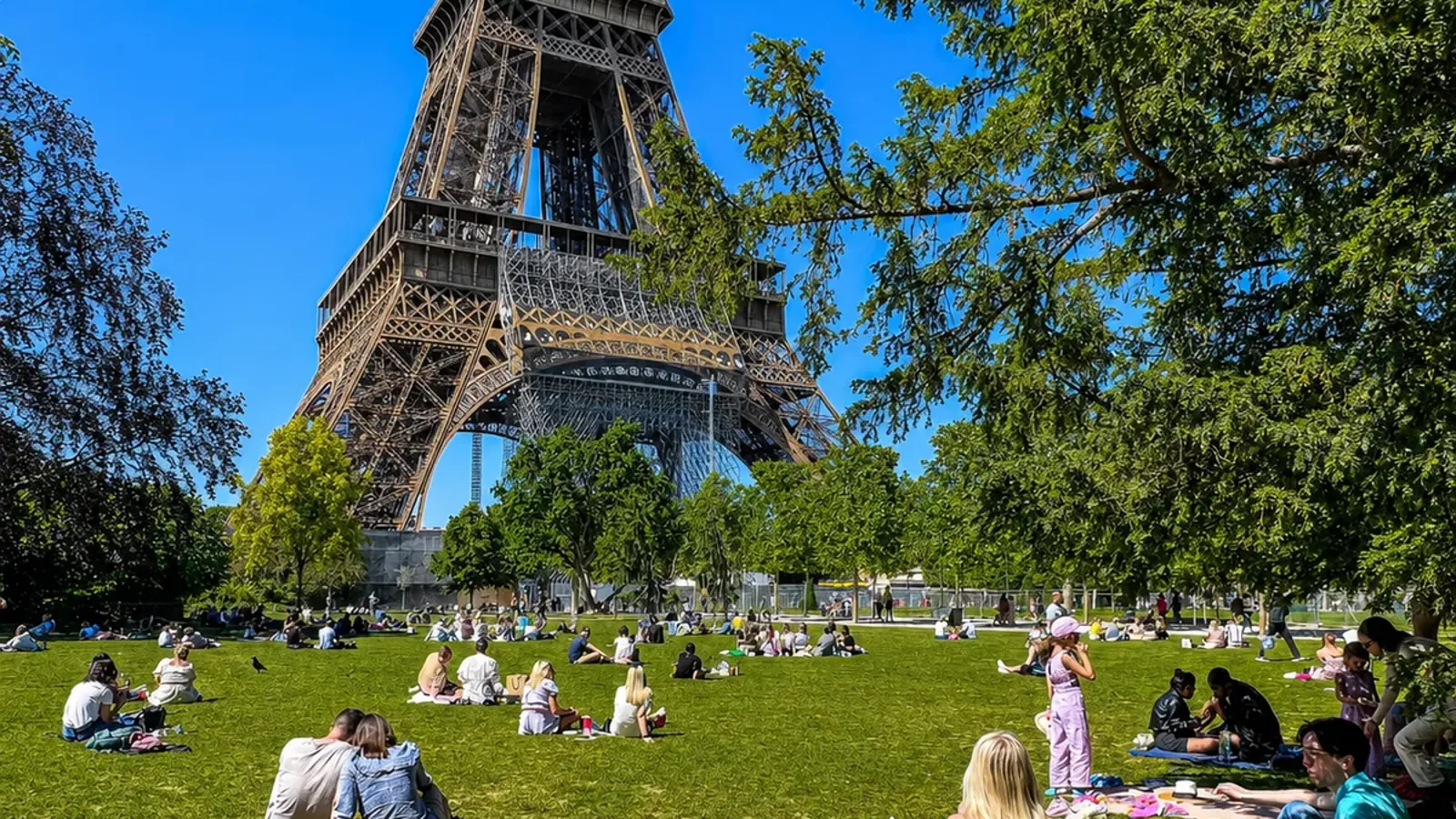
Spring and early autumn offer the most balanced version of Paris. They do not guarantee blue skies every day — Paris has never been a city with a tame climate — but they usually bring pleasant temperatures for walking for hours, sitting on a terrace or wandering through the Marais, Saint-Germain, Montmartre or along the Seine.
In April and May, the city carries a sense of promise: flowers in the parks, livelier markets, soft light on Haussmann façades and cafés returning to outdoor life. It may rain, and a light jacket is worth packing, but rain in Paris rarely ruins a trip if your itinerary leaves room to improvise.
In September and October, Paris feels more grown-up. The heat loses its edge, many Parisians return to their usual rhythm, and the gardens take on deeper colours. For many travellers, October is even more seductive than May: less obviously photogenic, perhaps, but more elegant and composed.
For pleasant weather, long walks and a more manageable city, May and September are usually the safest bets.
Paris in spring: beautiful, changeable and highly sought-after
Paris in spring is one of the most desired images for first-time visitors. April and May hold much of the city’s classic charm: flowers, riverside walks, open cafés, gardens full of life and afternoons that begin to stretch out.
The best thing about this season is that it invites you to walk. Paris is best understood on foot: crossing bridges, stepping into bookshops, looking at shop windows, pausing without hurry in front of a bakery or an unexpected façade. The downside is that prices can rise, especially at weekends, on public holidays and during European long weekends.
Spring is worth it for couples, first-time visitors, photography lovers and anyone who wants to see Paris in a gentler light. It is not the best choice for those looking for absolute calm or very low rates, but it is one of the most complete seasons.
Paris in summer: long days, lively streets and a few drawbacks
Visiting Paris in summer has one obvious advantage: the days are long and the city lives outdoors. Terraces fill up, the Seine becomes a natural meeting point, open-air activities appear across the city and the energy is especially noticeable in the evening.
The less appealing side is that July and August can bring intense heat, expensive hotels, long queues and a feeling of overcrowding around places such as the Eiffel Tower, the Louvre, Montmartre or Versailles. If your plan is to see everything without pauses, summer can feel tiring.
Even so, summer can work well if you want long evenings, outdoor life and a festive atmosphere. It is wise to plan carefully: visit monuments early, book tickets, rest at midday if it is very hot, and alternate the major icons with less crowded neighbourhoods.
In summer, the key is to book ahead and leave space to rest: Paris is better when you are not competing with the heat or the queues.
Paris in autumn: probably the most elegant option
September and October are, for many travellers, the best time to visit Paris. The city regains its everyday rhythm after summer, museums start to feel more natural again, and the weather usually cooperates without demanding too much.
Autumn encourages a slower Paris: bookshops, exhibitions, walks through the Jardin du Luxembourg, long dinners, market mornings and afternoons by the Canal Saint-Martin. It is also a good time for those who already know the main monuments and want to enter a Paris that is less decorative and more real.
The less attractive part is that the weather becomes more unsettled as October advances. It may rain, turn quite cool and get dark earlier. But if you embrace that atmosphere, Paris in autumn has a depth that is hard to find in high season.

Paris in winter: cold air, lights and fewer crowds
Winter is not the most comfortable season for walking around Paris from morning to night, but it has clear virtues. January and February are usually quieter months for visiting museums, exploring covered passages, stepping into historic cafés or enjoying the city without so much tourist pressure.
December has charm thanks to the Christmas lights, shop windows and festive atmosphere, although it is not always cheap or quiet. Shopping areas and the surroundings of major monuments can become very crowded, especially during the holidays.
Winter is worthwhile for cultural travellers, museum lovers and people who prefer a city that is less picture-perfect but more intimate. It is not ideal for those dreaming of picnics, gardens in bloom or long outdoor lunches.
Best month to visit Paris by traveller type
For a first trip to Paris, May, June, September or October are usually the best options. They allow you to enjoy the major landmarks without the harsher summer weather or the short days of winter.
For a romantic trip, April, May and October work very well, although it is worth avoiding too much idealisation: Paris also has traffic, roadworks, noise, queues and high prices.
For a more affordable trip, January, February and some parts of November can be interesting, provided they do not coincide with major events or holidays.
For travelling with children, late spring and early autumn are usually more comfortable than August or the depths of winter, as they allow you to combine parks, museums and walks without so much weather-related fatigue.
When to avoid Paris or travel with more caution
There is no forbidden date for travelling to Paris, but there are moments worth approaching with caution. August can be uncomfortable because of heat, prices and crowds, although it also offers a city with plenty of outdoor atmosphere. Christmas is beautiful, but not necessarily calm.
Major European long weekends, Easter, fashion weeks and certain international events can push accommodation prices up. If you travel during those dates, booking early and adjusting expectations makes a real difference.
The most common mistake is thinking that Paris will always match the ideal image you carry in your head. The city can be wonderful, but it can also be tiring, expensive, damp, overcrowded and demanding. It is enjoyed more when you travel with desire, but also with realism.
Paris is best experienced when you accept both its shine and its inconveniences: that contrast is part of its character.
So, what is the best month to visit Paris?
If you want a clear answer, I would choose May or September. May has flowers, light and energy. September keeps the softness, but with a city less focused on summer tourism. October would be my choice for a slower, more cultural traveller who is sensitive to nuance.
Paris does not need a perfect season to move you. It needs time, good shoes, smart reservations and a gaze willing to accept both its elegance and its cracks. Its beauty is not only in the illuminated Eiffel Tower or the bridges over the Seine: it is also in a grey morning, in the steam from a coffee and in an unknown corner that appears when you stop rushing.