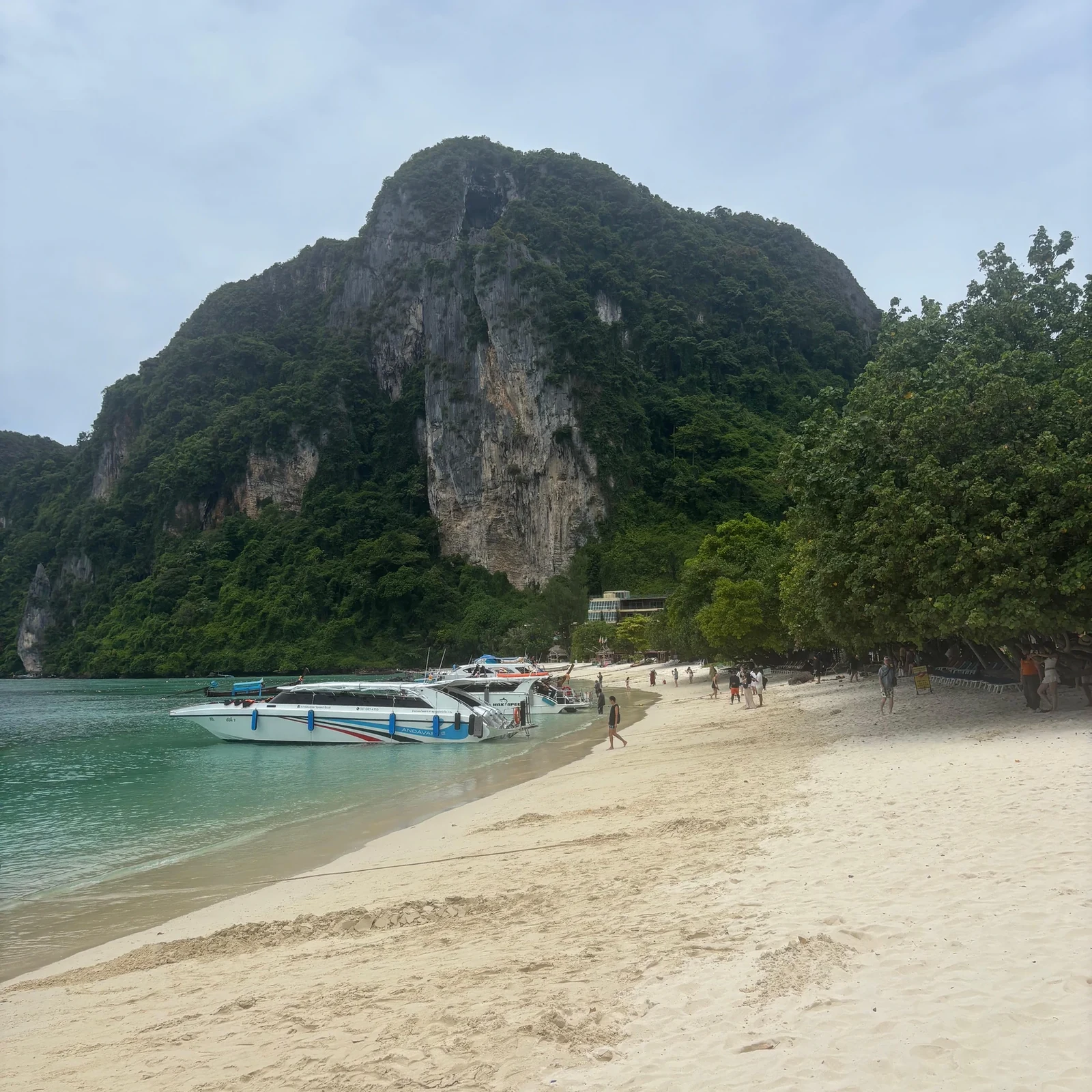
 Activity on TourBookGo
Phi Phi and Maya Bay from Phuket with Lunch | TourBookGo
Explore Phi Phi and Khai Island by speedboat from Phuket. An 8-hour trip with a buffet lunch; check park fees, guide languages and seasonal Maya Bay access.
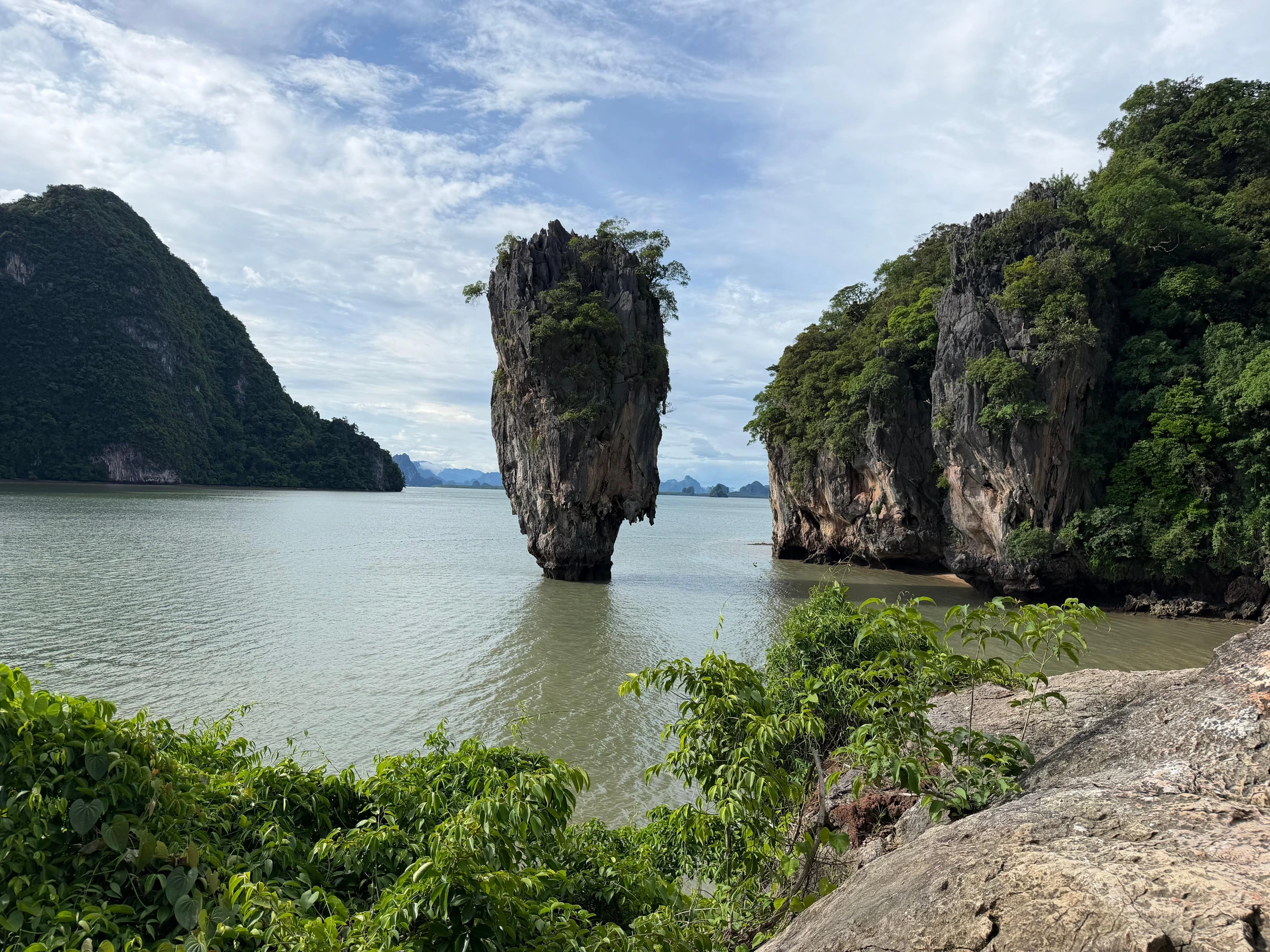
The best dates depend on how much your trip revolves around the sea. Phang Nga Bay is visited on excursions from Phuket; this daytime scene does not establish typical weather for any month or guarantee a sailing.
The best time to visit Phuket depends on how much your plans revolve around the sea. If you want beaches and boat trips, the usually drier months offer better prospects, although no date guarantees clear skies. If culture, food and a stay less focused on swimming appeal to you, the rainy season may also suit your plans. The island has a tropical climate: it is hot for much of the year, and the main differences tend to be rainfall, waves and how easily you can arrange outdoor activities.
Phang Nga Bay is visited on excursions from Phuket; this daytime scene does not establish typical weather for any month or guarantee a sailing. The same image accompanies accommodation search as a reference for planning outings, without showing a hotel. Compare areas and transfers, and confirm accommodation facilities on Booking.
Find accommodation on BookingDecember to February usually offers favourable conditions for travellers planning a coastal holiday. It is a reasonable choice for enjoying west-coast beaches such as Kata, Karon or Patong, with less weather uncertainty than during the rainy monsoon.
That does not make every day suitable for swimming or guarantee calm water at every beach. You still need to assess conditions locally. The trade-off is that these months appeal to many other travellers too: if you want solitude, choosing this season alone will not keep the crowds away. Your choice of beach and the area where you stay also matter.
March and April can suit a beach holiday, but heat deserves a central place in your planning. A long urban walk, a cultural visit and an afternoon by the sea involve different levels of exertion and offer different opportunities for shelter.
In Phuket Town, walking when the heat is more bearable makes it easier to appreciate the old town’s façades and streets. You can leave the rest of the day for meals or indoor activities. If you are travelling with young children or people who struggle with heat, consider how much time the group will actually spend outdoors before choosing these months.
May to October is usually associated with the southwest monsoon and a greater likelihood of rain. This does not mean it will rain continuously throughout your stay; nor does it justify promising that showers will be brief or always arrive at a particular time.
These months work better when the trip remains worthwhile even if some days cannot be spent on the beach. The west coast can experience waves and conditions unsuitable for swimming. If your main wish is to swim every day at Kata or Karon, that possibility matters greatly. If you enjoy alternating walks, meals and cultural visits, the compromise may be smaller.
November is often considered a transition towards drier conditions, but the seasonal change is neither sudden nor tied to a fixed date. Booking at the beginning or end of the month cannot guarantee what any particular week will be like.
It may suit travellers who accept some uncertainty and want to combine the coast with other activities. A short stay devoted almost entirely to boat trips, however, leaves little flexibility if conditions are unfavourable. Consider how many activities depend on the sea: the greater that proportion, the less sensible it is to base the whole trip on an expectation that the transition will already be over.
Phang Nga Bay is visited on excursions from Phuket; it is not part of the town centre. Including it means considering the journey and sailing conditions, as well as the weather around your accommodation.
A daytime scene of the bay can convey the landscape’s appeal, but it does not establish typical weather for any month or guarantee that a trip will depart. A bright sky alone is also insufficient to assess sea conditions. If this excursion is a priority, avoid making it your only activity on the final day. Before booking, check the departure conditions and what happens if the trip must change or be cancelled.
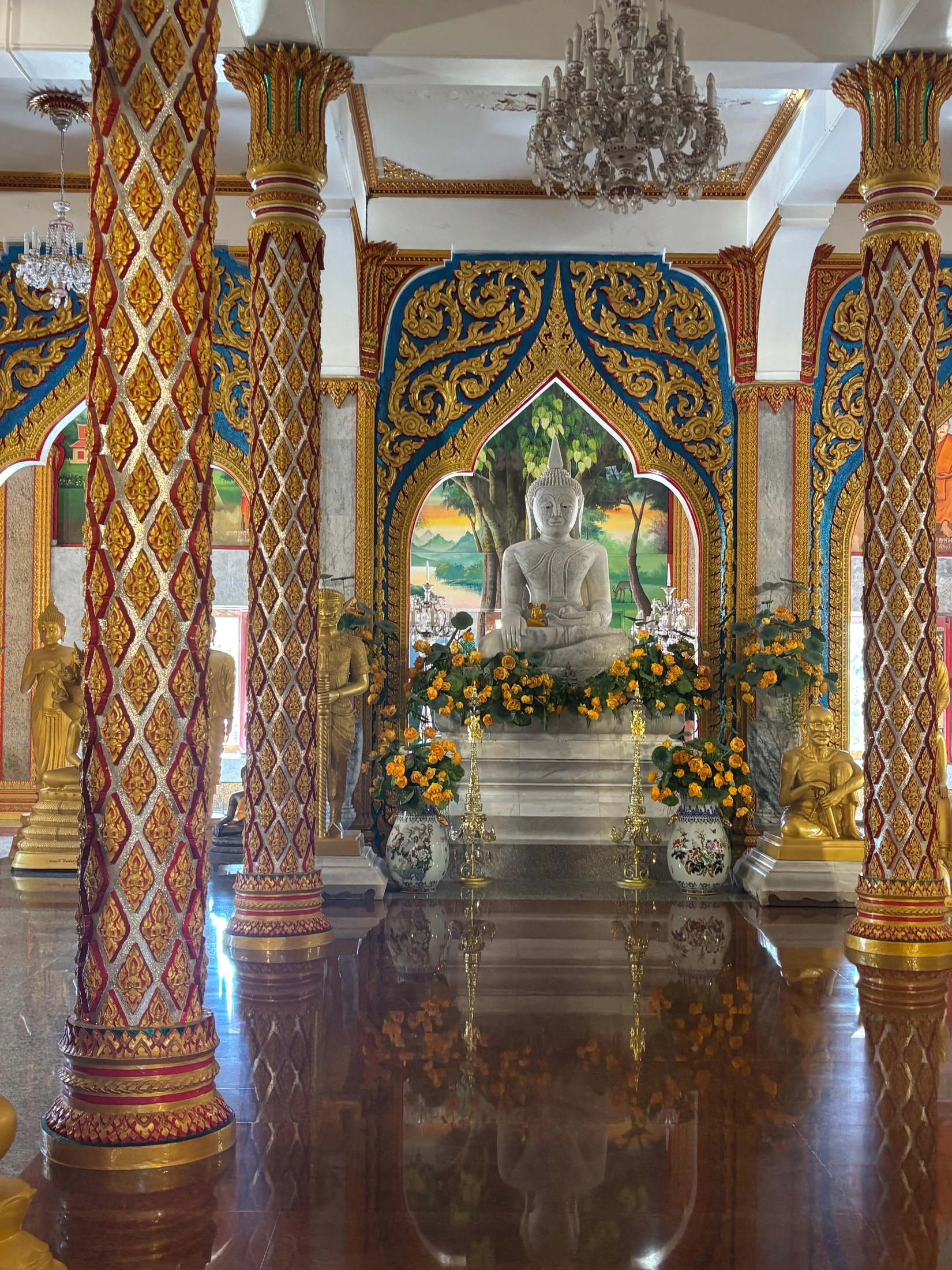
The interior of a temple in Phuket, with a white Buddha statue, offers an indoor cultural option, although getting there and exploring other parts of the site may still mean exposure to the weather. The scene shows a religious space on the island; it does not identify a particular temple or establish which season it was photographed in.
Choosing such a visit out of cultural interest, rather than simply to fill a rainy day, makes for a better plan. Adapt activities to the actual weather and follow the site’s instructions. Phuket Town’s old town provides another option, but its streets are not an indoor attraction: an architectural walk still depends on rain and heat.
The most popular periods for beach holidays can put greater pressure on accommodation and activities. Without checking specific dates, it would be misleading to assign a fixed saving to rainy-season travel or promise that a particular week will be inexpensive.
Compare the whole package: accommodation, transfers and the activities you actually want to do. A deal loses some of its value if it requires journeys that do not suit you. Patong, Kata, Karon and Phuket Town are not interchangeable bases for every itinerary either. First decide whether you want more time on the coast or exploring the town; then compare equivalent options for your dates.
For a first visit of a few days focused on the beach, choosing the usually drier period helps reduce one major uncertainty. It does not remove other decisions: staying close to what you want to do may be more useful than trying to cover the entire island.
A longer stay allows you to spread activities out, but it does not turn the rainy season into a guarantee of good weather. Before booking, imagine several days without sea excursions. If the trip still appeals, you have a sound basis for choosing. If it loses its appeal, consider changing your dates or reconsidering Phuket’s place in your itinerary.
People living in Phuket or nearby can make decisions with more immediate information. For a trip out to sea, that advantage means assessing near-term conditions and actual availability, rather than relying solely on a booking made far in advance.
For cultural outings, it allows a return with a different purpose: observing part of the old town or devoting a visit to a temple without repeating an entire route. For visitors, December to February is usually a reasonable choice when beaches come first; for residents, the best opportunity may be a particular day. In both cases, the calendar offers guidance, while actual conditions determine the final decision.
Explore activities across Phuket island and, where available, excursions departing from different parts of the destination. Check each activity's departure point, destination and route before booking.
Activity on TourBookGoExplore Phi Phi and Khai Island by speedboat from Phuket. An 8-hour trip with a buffet lunch; check park fees, guide languages and seasonal Maya Bay access.
 Activity on TourBookGo
Experience a Muay Thai night in Phuket with a ringside ticket, live fights, a T-shirt and an advertised fighter photo opportunity.
 Activity on TourBookGo
Visit James Bond Island, canoe near Hong Island and enjoy beach time from Phuket, with an English-speaking guide, transfers and lunch. Allow a full day.