 Activity on TourBookGo
South Coast and Jokulsarlon: 2 Days from Reykjavik
Explore Iceland’s South Coast with a glacier hike, one night and an English-speaking guide. Check the boat option and accommodation bathroom on Viator.
Group walking along a rainbow-painted street between shops and houses. Illustrative photograph; exact location unverified.

Start exploring Reykjavik with a day in the centre, then add days around your interests: culture, geothermal pools or a trip beyond the capital. Three days let you give these experiences separate space; a week offers more flexibility to combine them. These suggested routes provide a starting point: access, bookings and conditions on the day should determine your final plans.
The image gives urban context for choosing a base; it identifies no booked accommodation and establishes no facilities, price or accessibility. Illustrative photograph; exact location unverified.
Find accommodation on BookingStart at Hallgrímskirkja, linking the shopping streets with Tjörnin before heading towards the waterfront. The compact centre makes it possible to connect these places on foot, although you should adapt the route to wherever you start. There is no obligation to return to your starting point.
Decide which places you want to enter before adding further stops. If you devote part of the day to a cultural visit, shorten the remaining route. With just one day, exploring this central area makes more sense than adding a regional excursion. The city deserves more than the gaps between transfers.
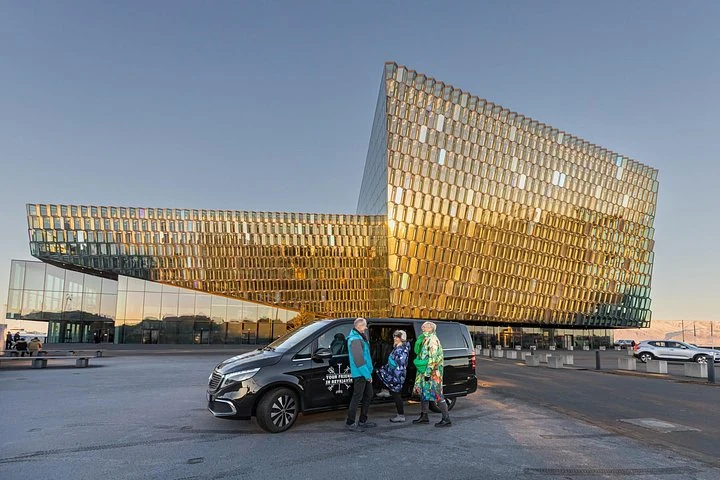
Give Harpa its own stop along the waterfront. Its cultural role lets you choose between approaching the building during your walk and attending a specific activity, provided the programme and access arrangements suit your visit.
The scene of people and a van outside Harpa, lit in warm tones, provides an urban visual reference; it does not establish interior access or a transport service. Keep these possibilities separate when planning: seeing the building is different from attending an activity. Avoid arranging your afternoon around admission you have yet to confirm.
Devote your second day to a museum or gallery that matches your interests. Reykjavik offers cultural experiences, music and geothermal pools; spreading them out prevents your visit from becoming a succession of doorways. One thoughtfully chosen visit may deserve more time than several places included out of obligation.
Afterwards, consider the Old Harbour for a change of atmosphere and a meal. If you prefer a pool, give it dedicated time and check the chosen facility’s conditions. Avoid automatically squeezing it between two visits: travel, preparation and your group’s needs are also part of the day.
There are two ways to spend the third day. If you still want to explore the capital, combine a cultural experience you have yet to enjoy with a walk or meal that particularly appeals. This suits anyone seeking a deeper urban experience, or whose first days were taken up by other activities.
If you choose a regional excursion, treat it as a separate day. Check transport, meeting point, equipment and applicable conditions before committing to other bookings. Departing from Reykjavik does not make the excursion’s destination part of the centre. Staying in the capital guarantees neither northern lights nor wildlife sightings: avoid building your trip around that outcome.
With a week, spend the first days discovering the centre and pursuing your cultural interests. Then spread out your chosen regional trips without assuming they will all fit or work the same way. Consider each activity’s advertised duration alongside its transfers and preparations.
Keep some full days in the city, too. A week loses its purpose if Reykjavik becomes merely somewhere to sleep between excursions. You could devote one day to museums and another to pools, food or music, depending on availability. Decide what each outing contributes; repeating similar landscapes may prove less rewarding than discovering another side of the capital.
Plan meals near where each part of your route ends, rather than repeatedly crossing the centre to follow a food checklist. The Old Harbour and central streets offer different settings for a break. Choosing one keeps your walk flowing and gives the meal its own place in the day.
Fish and seafood, lamb soup, skyr desserts, pastries and hot dogs are examples of local food. Do not assume every menu includes them all. If a meal matters to you, confirm the menu, ingredients and reservation; ask the establishment directly about allergies.
Outdoor tables outside red and yellow façades on an urban street. Illustrative photograph; exact location unverified.
Summer’s long daylight hours create more opportunities for walking, but do not automatically extend cultural venues’ opening hours. Distinguish between visits that depend on opening times and outdoor routes you can rearrange. This helps you prioritise visits with specific requirements.
Days shorten in autumn, while winter clothing and footwear need to match actual street conditions. Focus outdoor priorities within the available daylight and choose a cultural alternative for unfavourable conditions. Before a regional trip, consult official SafeTravel advisories, including any affecting the route you will take.
Walking links the stops on this suggested central route without making every stretch a separate transfer. If your accommodation lies outside this area or you want to visit other places, consult Strætó using your origin, destination, date and time. An exact location matters more than a generic description of proximity.
Consider a car according to the trips you will actually make, rather than simply having one available. An organised excursion and an independent route involve different needs. Also separate your airport arrival from your city walk: check the specific connection, and do not assume tickets or services cover both journeys interchangeably.
On a first visit, use the first day to understand the city’s main landmarks and the second to pursue an interest. For families, choose one central visit that engages the group and avoid adding another merely to fill the day. As a couple, decide whether you would prefer a shared cultural activity or more time for a meal.
If you live nearby, build your outing around an exhibition, pool or musical experience you have yet to discover, instead of repeating the entire tourist route. An itinerary works when each stop has a purpose: visiting fewer places can help you enjoy your choices more.
Reykjavík: Each outing needs its own time.
Activity on TourBookGoExplore Iceland’s South Coast with a glacier hike, one night and an English-speaking guide. Check the boat option and accommodation bathroom on Viator.
 Activity on TourBookGo
Explore the South Coast with Hidden Iceland: waterfalls, Reynisfjara, a lava show and a glacier valley walk. Private tour in English; view on Viator.
 Activity on TourBookGo
Combine Kerið, Gullfoss, Geysir and Thingvellir with Laugarvatn Fontana on a shared 9-hour day tour. English-speaking guide. Book on Viator.