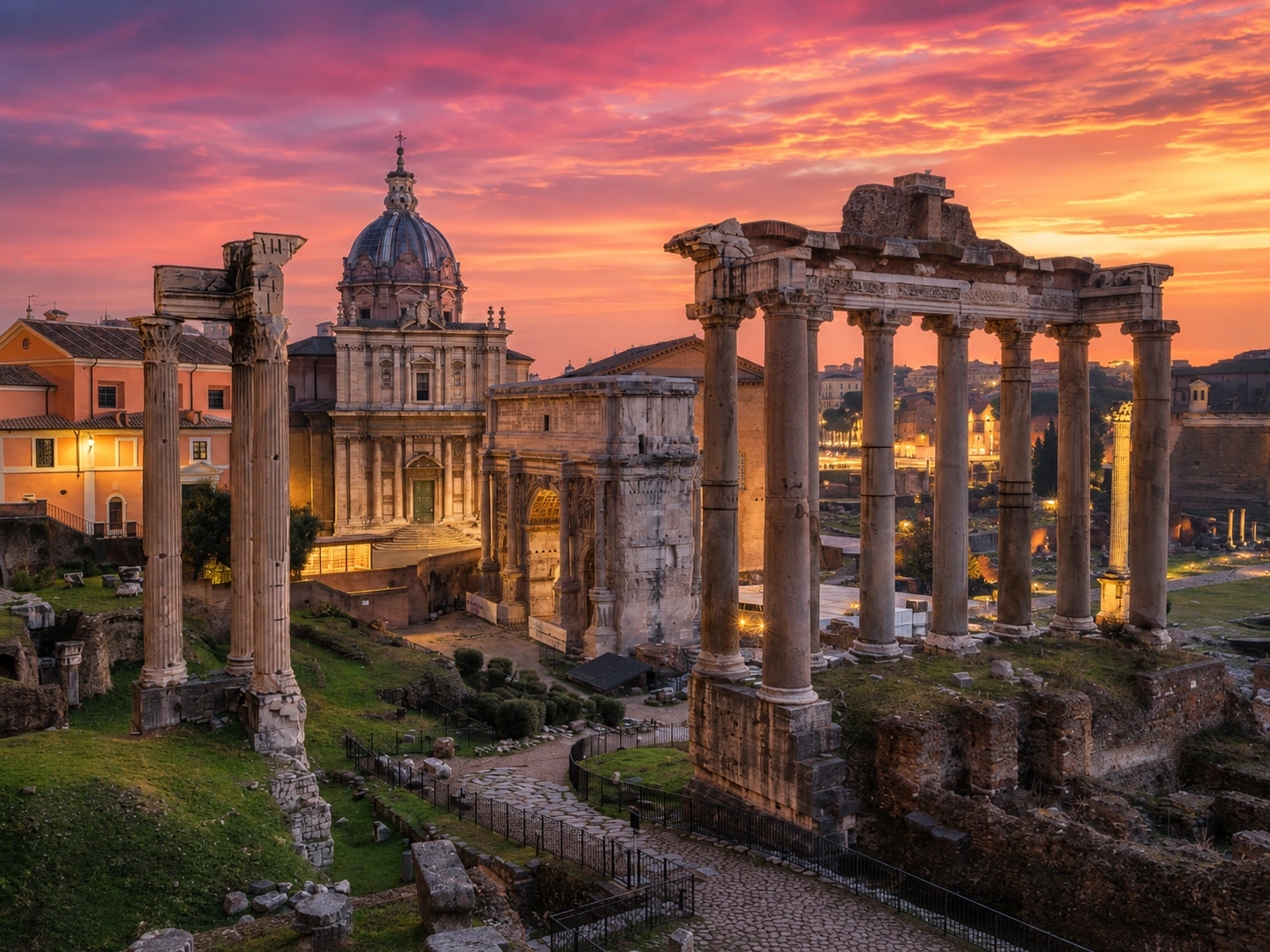

Book a Colosseum Roman Forum Palatine Hill guided tour with a licensed guide, ticket-office skip-the-line entry and optional arena access.
View experienceIs Rome an expensive destination?
Rome is a mid-to-high-priced destination within Europe. It is not usually as expensive as Paris, London, or Venice, but it is not as affordable as many cities in southern Spain, Portugal, or Eastern Europe either.
What makes a trip more expensive is, above all, staying close to the historic centre. Accommodation near Piazza Navona, the Trevi Fountain, the Pantheon, or the Spanish Steps tends to be convenient, beautiful, and expensive. By contrast, neighbourhoods such as San Giovanni, Testaccio, Prati, Monti, or well-connected areas near Termini can offer a better balance for your Rome budget.
Food can be quite reasonable if you avoid restaurants where waiters try to lure tourists in around the most famous squares. A slice of pizza al taglio, a simple pasta dish in a local trattoria, or a panino can get you through many days without feeling like you are travelling “on the cheap”. Rome has luxury, but it also has a popular food culture where eating well does not have to be complicated.
How much does accommodation cost in Rome?
Accommodation will probably be your biggest expense.
For a traveller on a tight budget, a bed in a hostel can cost around €30–60 per night, depending on the season and location. In high season, even hostels can feel expensive for what they offer.
A simple double room in a basic hotel, guesthouse, or B&B usually ranges from €90 to €160 per night. If you want somewhere central, attractive, and well reviewed, prices usually rise considerably, especially in spring, autumn, Easter week, long weekends, and dates close to major religious events.
A comfortable mid-range hotel can cost between €150 and €250 per night. From there, Rome becomes very indulgent: charming hotels, terraces, views, historic buildings, or a perfect location can easily send prices soaring.
To save money, the best option is not always to stay extremely far away, because you may end up losing time and money on transport. It is smarter to look for a less touristy area that is well connected by metro, tram, or bus.
How much does it cost to eat in Rome?
Eating in Rome can be one of the great pleasures of the trip, but it can also become a trap if you sit down without checking at the first restaurant next to a monument.
A simple Italian breakfast, with coffee and a cornetto, can cost between €3 and €6 if you have it standing at the counter or in a local café. In very touristy areas, or seated on a terrace, it can cost considerably more.
For cheap meals, budget around €8–15 per person if you go for pizza by the slice, panini, local fast food, or simple dishes. A normal meal in a trattoria can be around €18–35 per person, depending on whether you order just one dish or add a starter, dessert, and drink.
A more refined dinner, with wine and several courses, can easily reach €40–60 per person. And if you are looking for fashionable restaurants, special terraces, or more sophisticated cuisine, the budget can rise much further.
One important tip: always check whether they charge for coperto, bread, or service. It is not necessarily a scam, but it is good to know beforehand. Also be wary of huge menus in several languages, photos of every dish, and restaurants too close to monuments such as the Colosseum, the Trevi Fountain, or Piazza Navona.
Always check whether they charge for coperto, bread, or service before sitting down.
How much do activities cost in Rome?
Rome has countless free things to do, but the most famous sights require paid entry.
The Colosseum, Roman Forum, and Palatine Hill are usually included in a combined ticket, and it is worth booking in advance. The Vatican Museums and the Sistine Chapel are also one of the major expenses of the trip, especially if you choose skip-the-line entry or a guided tour.
Churches, squares, fountains, and many historic corners are free. You can enter impressive places without paying, although some basilicas, domes, crypts, or specific areas do charge admission.
For a realistic budget, estimate between €40 and €80 per person for basic activities if you visit the Colosseum/Forum/Palatine Hill and the Vatican Museums. If you add guided tours, catacombs, viewpoints, food experiences, or day trips outside Rome, spending can rise to €100–200 per person or more.
You do not need to pay for everything. Rome can also be understood by walking through it slowly: the Pantheon, Campo de’ Fiori, Trastevere, the Trevi Fountain, the Spanish Steps, Piazza del Popolo, the Tiber River, and many historic churches can fill several days without emptying your wallet.
How much does it cost to get around Rome?
Rome can be explored a lot on foot, but you should not underestimate the distances. On the map, everything seems relatively close; in reality, the heat, cobblestones, hills, and tiredness all add up.
Public transport is quite useful, although not always perfect. The metro has few lines for such a monumental capital, because digging in Rome is complicated, but it is useful for connecting important areas. Buses and trams help too, although they can be slow and somewhat unpredictable.
To get around the city, budget a few euros a day if you use single tickets or transport passes. If your accommodation is well located, you may only need transport to go to the Vatican, return at night, or travel from Termini.
Taxis can be convenient, but they are not the cheapest option. For occasional journeys, especially at night or with luggage, they can be worth it. For getting around every day, they make the trip much more expensive.
From the airports, the cost will depend on whether you arrive at Fiumicino or Ciampino and whether you choose the train, shuttle bus, taxi, or private transfer. The bus is usually the cheapest option; the train to Termini from Fiumicino is more comfortable and faster, but more expensive.
Budget for 3 days in Rome
For 3 days in Rome, without luxuries but travelling comfortably, a reasonable budget per person could be between €300 and €600, excluding flights.
On a budget, staying in a hostel or simple shared accommodation, eating cheaply, and only paying for the essentials, you could manage on around €250–350.
In a mid-range style, with a shared double room, regular restaurants, occasional transport, and major entrance tickets, it would be normal to budget between €400 and €600 per person.
In a more comfortable style, with a well-located hotel, good restaurants, and guided visits, the budget can easily exceed €700–900 per person.
Budget for 5 days in Rome
Five days is an excellent length of time for Rome. It allows you to see the essentials without rushing too much and leaves room to get lost, which is almost compulsory in this city.
For 5 days, a budget traveller may need between €450 and €700 per person, excluding flights. This means keeping accommodation under control, eating simply, and choosing paid sights carefully.
A mid-range budget would be between €700 and €1,100 per person. With this, you can stay in a decent area, eat well on some days, visit the Colosseum and the Vatican, use transport when needed, and treat yourself a little.
With more comfort, good hotels, carefully chosen restaurants, tours, and transfers, the trip can rise to €1,200–1,800 per person.
Budget for 7 days in Rome
A week in Rome allows you to travel at a slower pace, but it also increases accommodation and food costs considerably.
For 7 days, a tight budget can be around €650–950 per person, excluding flights. It is possible, but it requires choosing accommodation carefully and not eating in restaurants all the time.
A realistic mid-range budget would be between €1,000 and €1,600 per person. This is a comfortable amount for enjoying the city without watching every euro, but without going into major luxuries.
If you want a beautiful central hotel, special dinners, guided tours, excursions to nearby places, and comfortable transfers, you can easily exceed €2,000 per person.
Can you travel cheaply to Rome?
Yes, you can travel cheaply to Rome, but you need to accept a few compromises. You will not sleep next to the Pantheon, you will not eat every day on pretty terraces, and you may have to walk a lot. Even so, Rome rewards the frugal traveller better than other cities, because much of its beauty is out in the street.
To save money, book accommodation in advance, travel outside high season, look for well-connected neighbourhoods, have breakfast like the locals, eat pizza al taglio or pasta in simple places, and avoid restaurants right next to the most famous monuments.
It is also worth choosing your tickets carefully. You do not need to pay for everything. If it is your first time, the Colosseum/Forum/Palatine Hill and the Vatican Museums are usually worth the expense. From there, you can complete the trip with churches, squares, viewpoints, and free walks.
How much money should you take to Rome per day?
As a general guide, excluding flights:
A budget traveller can spend between €70 and €110 per day.
A mid-range traveller can spend between €130 and €220 per day.
A comfort-focused traveller can spend between €250 and €400 per day or more.
The difference almost always comes down to three things: accommodation, restaurants, and guided tours. The city can be reasonable if you walk, eat simply, and book wisely. It can be expensive if you improvise in high season, sleep right in the centre, and eat where all the tourists eat.
So, how much money do I need for Rome?
For a first 3-day getaway, budget at least €400–600 per person excluding flights if you want to travel with a certain level of comfort. For 5 days, the most realistic figure is €700–1,100. For a week, a reasonable mid-range budget would be between €1,000 and €1,600 per person.
Rome can hurt your wallet a little, especially when booking a hotel. But it is also a city where money does not always buy the best experiences. Sometimes the most memorable moment will be a quiet church found by chance, a simple pasta dish on an unknown street, a fountain lit up at night, or a slow walk through Trastevere as the city begins to smell of dinner.
The trick is not to spend a lot. It is to spend where it is truly worth it.
The trick is not to spend a lot. It is to spend where it is truly worth it.