
Book a Colosseum Roman Forum Palatine Hill guided tour with a licensed guide, ticket-office skip-the-line entry and optional arena access.
View experienceDo I need to rent a car in Rome?
No. If you are visiting Rome, renting a car is usually more of a problem than a help.
The centre has limited traffic zones, many narrow streets, difficult parking, and rather chaotic driving if you are not used to it. Besides, the main sights are much better visited on foot or by public transport.
Renting a car would only make sense if, after Rome, you are planning a road trip through Tuscany, the Amalfi Coast, Umbria, or other areas of Italy. But if you are staying in Rome for a few days, the most practical option is to forget about the car.
If you arrive by car because you are on a longer trip, the best thing to do is leave it in your hotel car park or in a parking facility away from the centre, and not move it again until you leave.
If you are staying in Rome for a few days, the most practical option is to forget about the car.
Can you explore Rome on foot?
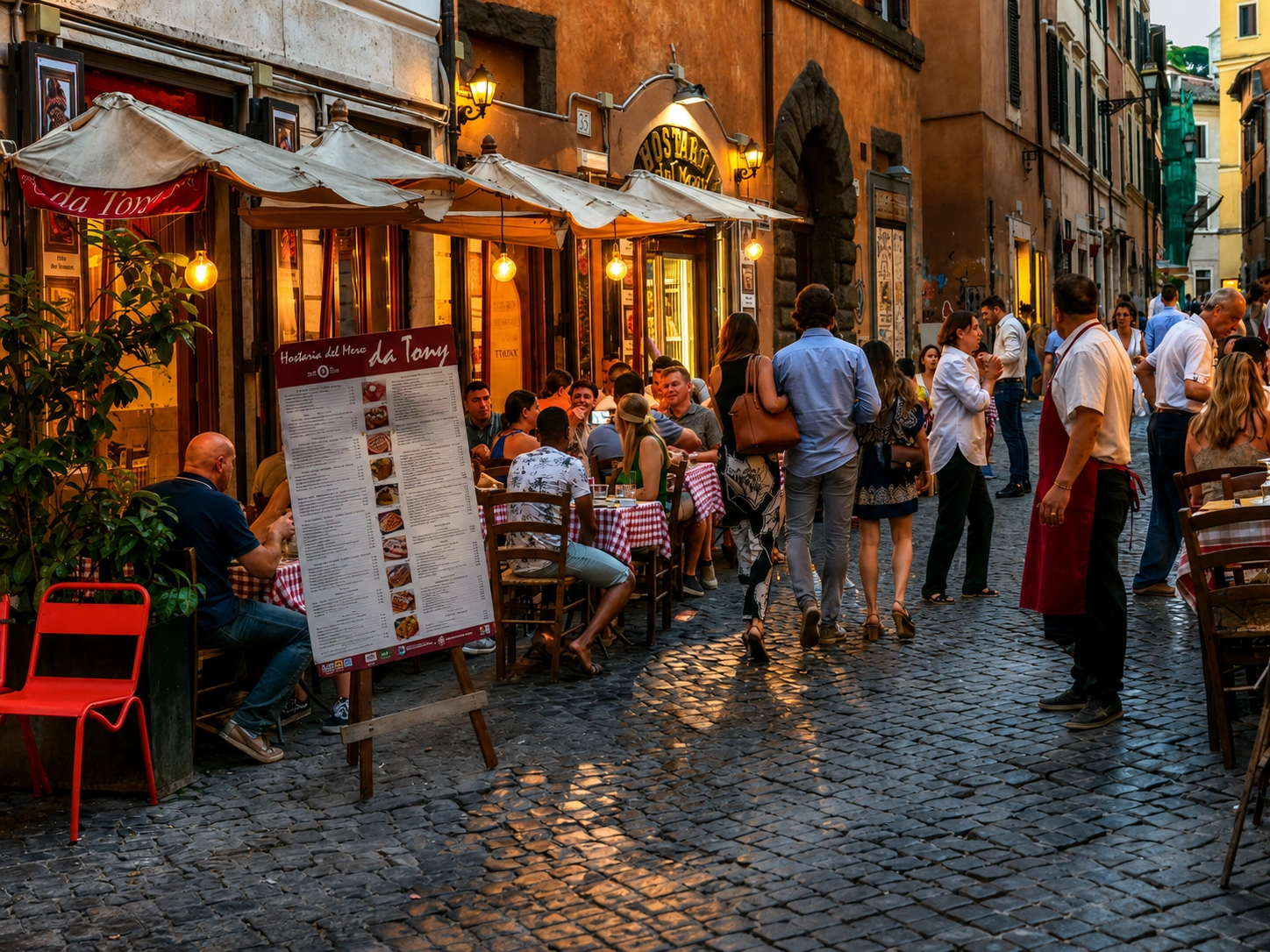
Yes, and in fact it is the best way to enjoy it. Rome’s historic centre is wonderful for walking, although it is not always comfortable: there are cobblestones, uneven streets, narrow pavements, and heavy crowds in some areas.
You can walk between many important places: the Pantheon is only a few minutes from Piazza Navona; you can easily walk from the Trevi Fountain to the Spanish Steps; the Colosseum, Roman Forum, and Palatine Hill are practically part of the same route; from Campo de’ Fiori to Trastevere, you can cross on foot in a very pleasant walk.
The beauty of Rome is that between one monument and the next, you come across fountains, columns, Baroque churches, old cafés, hidden courtyards, and streets that look like film sets. Walking is not just a way to get around: it is part of the trip.
That said, it is best to organise your days by area. Trying to see the Vatican, Colosseum, Trastevere, Pantheon, and Villa Borghese all on foot in a single day can end up being exhausting.
Walking is not just a way to get around: it is part of the trip.
Is there public transport in Rome?
Yes. Rome has a metro, buses, trams, and urban trains. It is not the most perfect system in Europe, but it works reasonably well if you use it with a little patience.
The metro is useful, though limited. It has few lines compared with other European capitals, because digging in Rome is complicated: every time the ground is opened, archaeological remains appear. Even so, it is useful for reaching key places such as the Colosseum, Termini, the Spanish Steps, San Giovanni in Laterano, and areas near the Vatican.
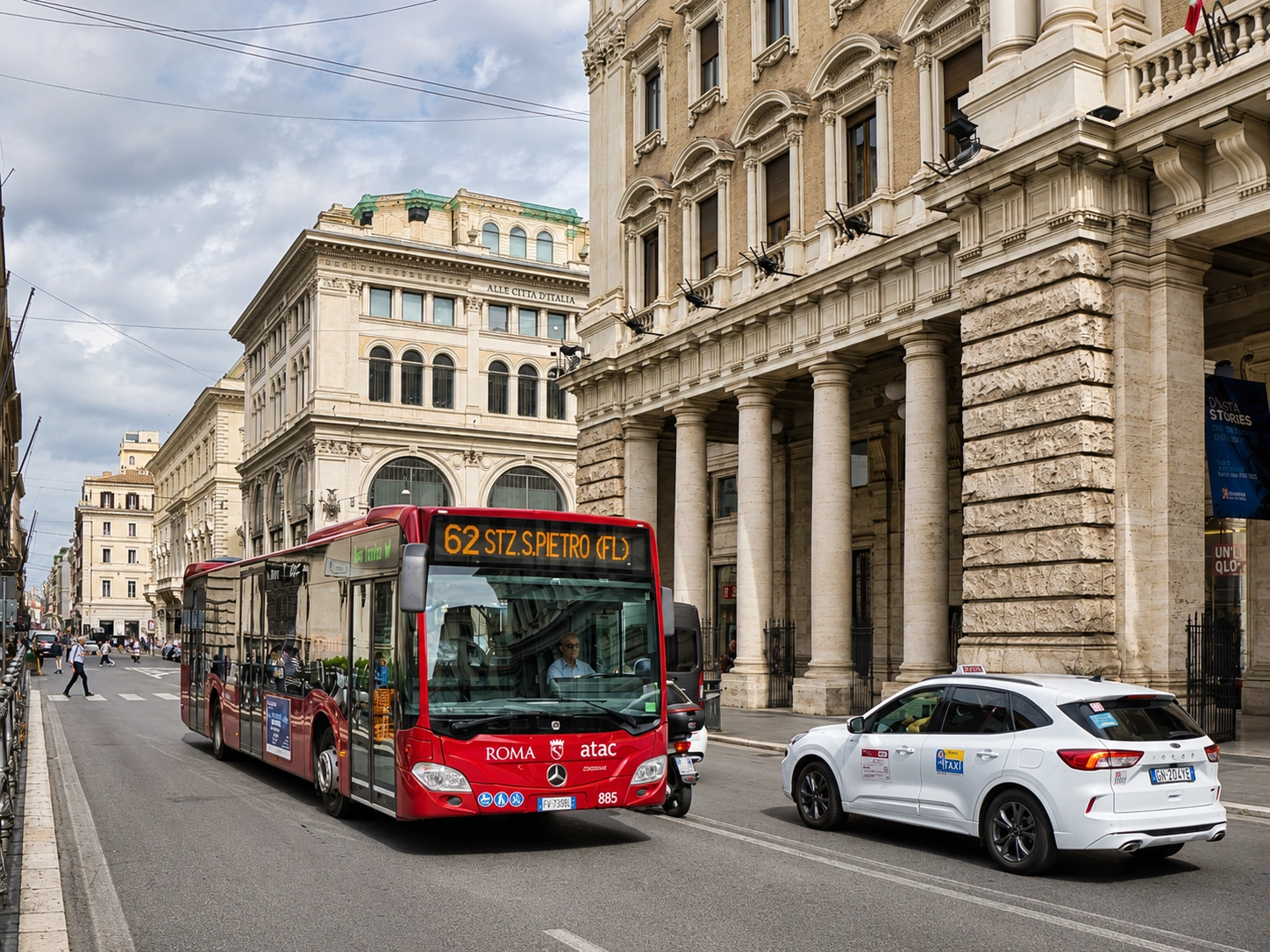
Buses reach more places, but they depend heavily on traffic. At rush hour they can be slow, crowded, or take longer than expected. Even so, they are useful for journeys where the metro does not go.
The tram can be practical for certain areas, especially if you are staying outside the most touristy centre or heading towards neighbourhoods such as Trastevere, Testaccio, or residential areas.
How do I get from the airport to my hotel in Rome?
Rome has two main airports: Fiumicino and Ciampino.
From Fiumicino, the most convenient option is usually the direct train to Termini, Rome’s main station. It is fast, simple, and avoids traffic. There are also cheaper buses connecting the airport with Termini, although they may take longer depending on the time of day.
From Ciampino, you usually combine a bus with a metro station or take a direct bus to Termini. It is a smaller airport used by many low-cost airlines.
If you arrive late, are travelling with a lot of luggage, or are staying in a tricky area, an official taxi or private transfer may be worth it. It is not always the cheapest option, but after a long flight it can save you a lot of fatigue. The important thing is to use official taxis and confirm the fare before getting in if you are travelling from the airport.
What is the best area for getting around easily?
For a first visit, the most practical areas are the historic centre, Monti, carefully chosen areas around Termini, Prati, and Trastevere, depending on the type of trip.
The historic centre is ideal for walking almost everywhere, but it is usually more expensive and touristy. Monti is one of the best areas if you want to stay near the Colosseum, with a lovely atmosphere, restaurants, charming streets, and good connections.
Termini is practical for transport, trains, and the metro, but not all its streets have the same feel. It is convenient, although less romantic than other areas. Prati works very well if you want to stay near the Vatican and in a more orderly, elegant, and slightly quieter area.
Trastevere has plenty of charm and nightlife, but there is no metro nearby, so it can be less convenient if you want to move quickly around the whole city.
Is it easy to park in Rome?
No. Parking in Rome can be maddening. In the centre it is difficult, expensive, and many areas have restrictions. There are also areas where only residents or authorised vehicles can enter.
If you are travelling by car, look for accommodation with parking or a nearby private car park. It is not a good idea to improvise. You also need to be careful with limited traffic zones, because entering without permission can result in a fine.
For travellers who simply want to visit monuments, eat well, and wander around, a car adds almost nothing within Rome.
Are taxis expensive in Rome?
Taxis are not the cheapest way to get around Rome, but they can be useful at certain moments: at night, with luggage, after an exhausting day, or when getting to poorly connected areas.
The issue is not just the price, but the traffic. A short journey can take much longer at rush hour. That is why walking or taking the metro is often faster.
It is best to take official taxis, with a visible licence, and avoid drivers who approach you insistently at airports, stations, or tourist areas. In Rome, as in many heavily visited cities, you need to pay a little attention to avoid paying more than you should.
Which areas are far away?
The Vatican is somewhat separate from the most classic heart of Rome, although you can walk there from the centre if you enjoy walking. From the Pantheon or Piazza Navona, the walk towards St Peter’s can be pleasant, especially when crossing the river.
The Colosseum is southeast of the historic centre, but it is well connected and easily combined with the Roman Forum, Palatine Hill, and Monti. Villa Borghese and the Borghese Gallery are further north, near the Spanish Steps, but the visit needs to be planned properly.
Trastevere is on the other side of the river. It is not far, but depending on where you are staying, it may be less well connected by metro. The catacombs and the Appian Way are further out. To visit them, it is best to plan your transport, take a tour, or use a taxi, because it is not as immediate as the monumental centre.
Ostia Antica and Ostia beach are outside central Rome and require an urban train. They are worth it if you have several days, but they are not a priority on a short first visit.
How long does it take between the main sights?
On foot, many routes in the centre are shorter than they look on the map. You can easily walk between the Trevi Fountain, the Pantheon, Piazza Navona, Campo de’ Fiori, and the Spanish Steps.
From the Colosseum to the Pantheon, the walk is longer, but beautiful if you are not in a hurry. You can also take a bus or combine it with the metro. From the Vatican to the Colosseum, it is better to use public transport or a taxi if you do not want to use up too much energy.
From Termini to the Colosseum, the metro is very practical. From Termini to the historic centre, you can take a bus, taxi, or walk if you do not have luggage and feel like it.
The big tip is not to measure Rome only in kilometres. Tiredness comes from the heat, the cobblestones, the queues, the long visits, and the sheer number of things to take in. A 30-minute walk can be beautiful in the morning and exhausting at four in the afternoon in the middle of summer.
The big tip is not to measure Rome only in kilometres.
Which transport should you use depending on the plan?
For the first day, the best thing is to walk around the historic centre: the Pantheon, Piazza Navona, Trevi Fountain, Spanish Steps, and the surrounding streets.
For the Colosseum day, take the metro if your accommodation is not nearby, then continue on foot through the Roman Forum, Palatine Hill, Capitoline Hill, and Monti. For the Vatican, the metro or bus is usually the most practical option, unless you are staying in Prati or near the river.
For Trastevere, the nicest option is often to arrive on foot at sunset, crossing the Tiber, and return by taxi or bus if it gets late.
For more distant areas such as the Appian Way, the catacombs, or Ostia Antica, it is best to check the route carefully before leaving and not leave it to improvisation.
Mistakes when getting around Rome
One of the most common mistakes is trying to do everything on foot without considering how tiring it will be. Rome invites you to walk, but it also wears you out. You need to leave time for breaks, sit down for a proper meal, and not turn every day into a race.
Another mistake is staying too far out while thinking only about saving money. If you lose a lot of time on transport every day, it may not be worth it. In Rome, a good location can greatly improve the experience.
It is also a mistake to rely too much on buses when you have an important reservation. If you have tickets for the Colosseum, the Vatican, or the Borghese Gallery, leave with plenty of time.
And above all, do not rent a car to get around Rome. The city is much more enjoyable without that worry.
So, how to get around Rome in the best way?
The best way to get around Rome is to walk as much as possible in the centre, use the metro for longer journeys, rely on buses when needed, and save taxis for specific moments.
Rome is not a city designed for rushing. It is best enjoyed with a smart route, comfortable shoes, and a certain amount of flexibility. Sometimes the best plan is not to get there quickly, but to get a little lost among old streets, hear the sound of water from a fountain, step into a silent church, and let the city appear without warning.
Getting around Rome well does not mean seeing everything. It means not wearing yourself out before you have truly felt it.
Getting around Rome well does not mean seeing everything. It means not wearing yourself out before you have truly felt it.