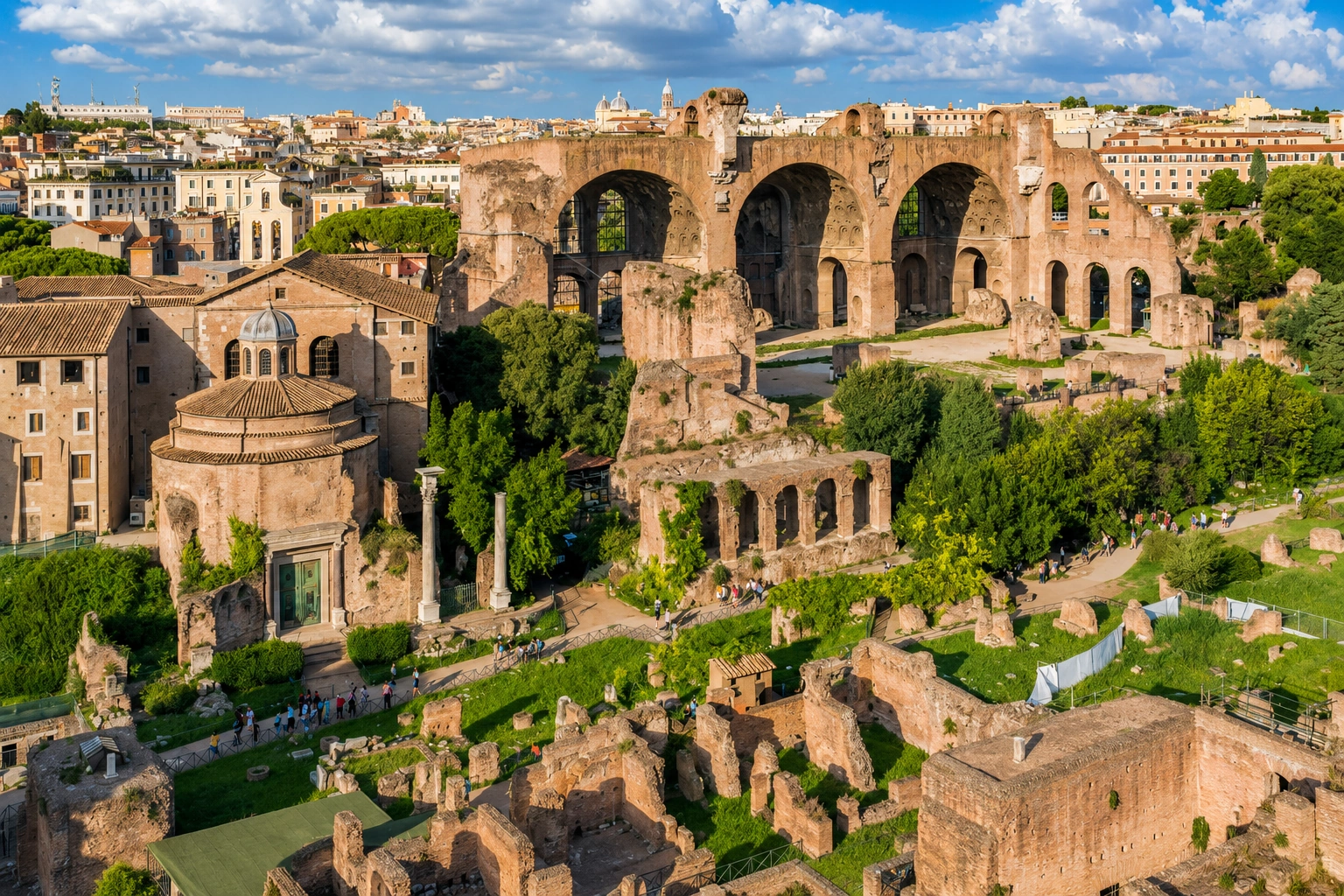

Book a Colosseum Roman Forum Palatine Hill guided tour with a licensed guide, ticket-office skip-the-line entry and optional arena access.
View experienceRome itinerary by day: what to see in 1 day
If you only have one day in Rome, it is best to accept one thing from the start: you will not see everything. Rome punishes overly ambitious itineraries. The best approach is to focus on a classic, walkable and highly visual route.
Start early at the Colosseum, one of the most powerful sights in the city. Even if you do not go inside, seeing it from the outside is impressive. If you do decide to visit the interior, book in advance, as demand is usually high. Then continue to the Roman Forum and the Palatine Hill, where the grandeur of ancient Rome becomes easier to understand. This area needs time, so it is not worth rushing through it.
From there, you can walk towards Piazza Venezia and gradually make your way into the historic centre. The next logical stop is the Pantheon, one of Rome’s most awe-inspiring buildings. Its interior is simple, majestic and unlike almost anything else in the city.
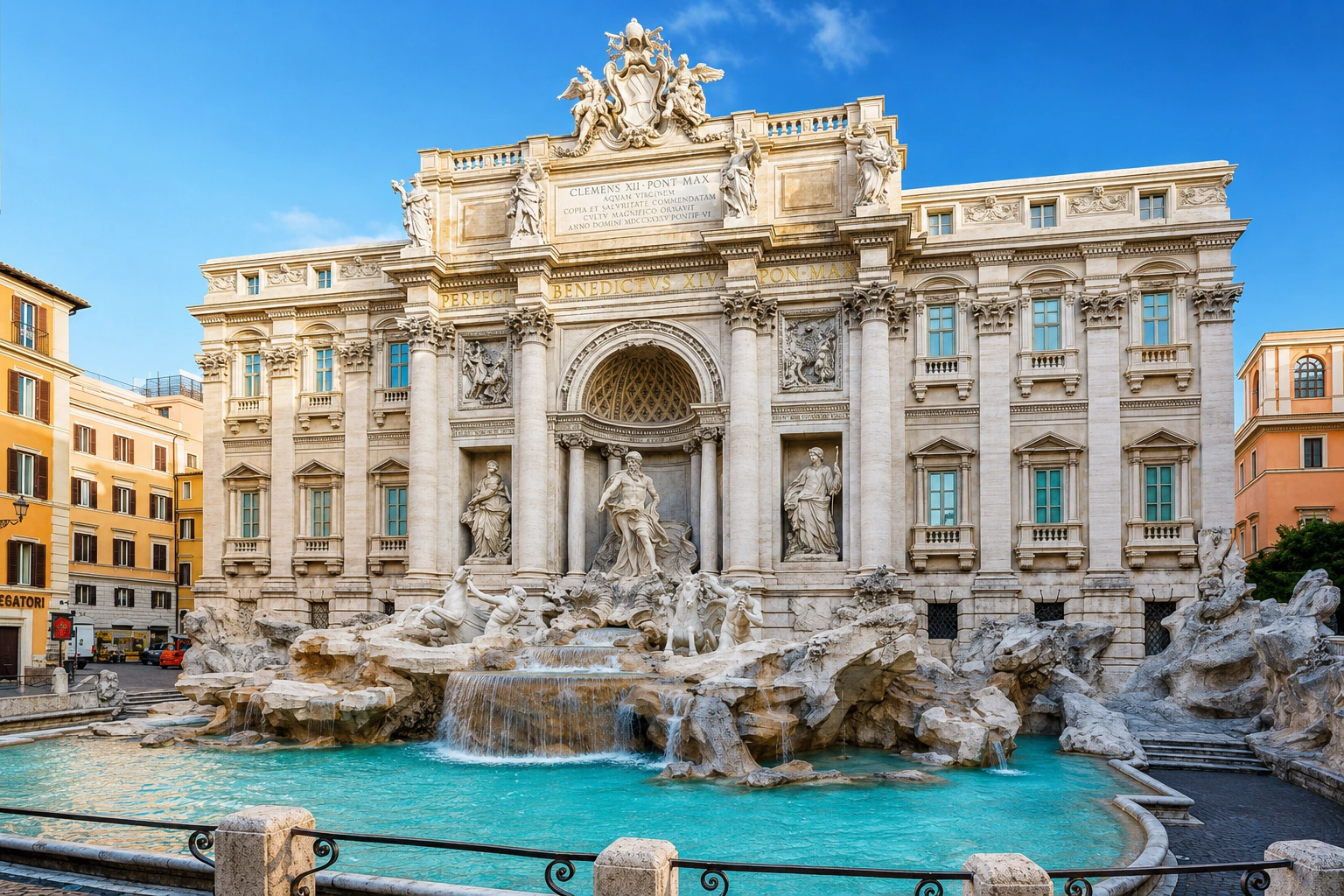
Then continue to Piazza Navona, one of Rome’s most elegant and lively squares. Yes, it is touristy, but its beauty is still undeniable. From there, you can end the day at the Trevi Fountain and, if you still have energy, walk up to the Spanish Steps.
This itinerary is perfect for a first taste of the city, but it has one clear drawback: it will be an intense day. It is not the ideal route for anyone who wants to go inside every monument, enjoy a leisurely meal and take several breaks.
You will not see everything: the best approach is to focus on a classic, walkable and highly visual route.
Rome route in 2 days
With two days, Rome starts to breathe a little more. Ideally, devote the first day to ancient Rome and the historic centre, and the second to the Vatican and Trastevere.
Day 1: Colosseum, Roman Forum and historic centre. Start with the Colosseum, the Roman Forum and the Palatine Hill. These visits work very well together because they are close to one another and form the archaeological heart of the city. If you are interested in history, this area can easily take up most of the morning.
Then walk towards Piazza Venezia, the Capitoline Hill and the area around Trajan’s Markets. You do not need to go inside everything; sometimes Rome is best enjoyed simply by walking through its layers of history.
In the afternoon, head into the historic centre: the Pantheon, Piazza Navona, Campo de’ Fiori, the Trevi Fountain and the Spanish Steps. It is a fairly complete route, very photogenic and easy to do on foot.
Day 2: Vatican, castle and Trastevere. The second day can begin at the Vatican Museums and the Sistine Chapel. It is a spectacular visit, but also a long and very crowded one. If you are not a great art lover or do not want to spend so many hours in museums, you can limit yourself to St Peter’s Basilica and the square.
Afterwards, walk towards Castel Sant’Angelo, cross the bridge over the Tiber and slowly make your way down to Trastevere. This neighbourhood is one of the best places to end the day: narrow streets, warm-toned façades, hidden churches and plenty of dinner options.
Trastevere is beautiful, but do not expect an undiscovered neighbourhood. At night it can be full of tourists. Even so, it still retains a special atmosphere if you move a little away from the most obvious streets.
Rome in 3 days: the most balanced itinerary
Three days is probably the ideal length for a first visit to Rome. It allows you to see the essentials without turning the trip into a constant race.
Day 1: Imperial Rome and great viewpoints. Devote the first day to the Colosseum, the Roman Forum, the Palatine Hill and the Capitoline Hill area. Afterwards, you can head to the Monument to Victor Emmanuel II, controversial for some, but with excellent views from the upper level.
In the afternoon, a good idea is to walk towards the Jewish Ghetto, an area with plenty of character, quiet streets and very interesting food. From there, you can cross over to Tiber Island and finish in Trastevere.
Day 2: Vatican and historic centre. Set aside the second day for the Vatican. If you want to visit the Vatican Museums, go first thing in the morning. Afterwards, enter St Peter’s Basilica and climb to the dome if you feel like enjoying one of the best views in Rome.
In the afternoon, cross back towards the centre and visit the Pantheon, Piazza Navona and the Trevi Fountain. Even if you have already passed through these areas, they have a different light at sunset. Rome changes greatly depending on the time of day.
Day 3: squares, churches and a more local Rome. You can dedicate the third day to a less hurried side of Rome. Start at the Spanish Steps and walk up towards Villa Borghese, a good place to take a break from the noise of the centre. If you like art, the Borghese Gallery is well worth it, but booking ahead is advisable.
Then head down towards Piazza del Popolo and stroll along Via del Corso at an easy pace, taking detours into the more pleasant side streets. In the afternoon, you can visit churches such as San Luigi dei Francesi, famous for its works by Caravaggio, or Santa Maria sopra Minerva, very close to the Pantheon.
This third day is what makes the difference between “seeing Rome” and truly beginning to enjoy it.
Three days allows you to see the essentials without turning the trip into a constant race.
What to see in Rome in one week
A week in Rome allows you to combine major monuments with neighbourhoods, day trips and moments of pause. It is the best option if you do not want to feel overwhelmed by the city.
Day 1: Colosseum, Roman Forum and Palatine Hill. Dedicate the first day to ancient Rome. Take your time. The Colosseum is impressive, but the Roman Forum requires imagination and time. If you explore it calmly, you will better understand how Rome became the centre of an empire.
Day 2: Classic historic centre. Set this day aside for the Pantheon, Piazza Navona, Campo de’ Fiori, the Trevi Fountain, the Spanish Steps and the surrounding streets. It is a perfect day for walking, stepping inside churches, having coffee and letting the city reveal itself naturally.
Day 3: Vatican and Castel Sant’Angelo. Visit the Vatican Museums, the Sistine Chapel, St Peter’s Basilica and Castel Sant’Angelo. It is an intense day, so do not overload the afternoon. You can finish by the river or have dinner in Prati, a more orderly and less chaotic area than the centre.
Day 4: Trastevere, Janiculum and Jewish Ghetto. Start in the Jewish Ghetto, cross over to Tiber Island and enter Trastevere. Then climb up to the Janiculum, one of the most beautiful viewpoints in Rome. This is not a day of major monuments, but of atmosphere, hidden corners and leisurely walks.
Day 5: Villa Borghese, Piazza del Popolo and art. This day can be more relaxed. Visit Villa Borghese, the Borghese Gallery if you are interested in art, Piazza del Popolo and the upper part of the city. It is a more elegant, green and luminous Rome.
Day 6: Catacombs, Via Appia or major churches. You can dedicate this day to the Via Appia Antica and the catacombs, a different experience that may seem less monumental at first, but is highly interesting. Another option is to visit some of the great basilicas, such as San Giovanni in Laterano or Santa Maria Maggiore.
Day 7: Ostia Antica or Tivoli. For the final day, you can take a day trip. Ostia Antica is ideal if you are interested in archaeology and want somewhere less crowded than Pompeii. Tivoli, with its villas and gardens, is a more scenic and elegant option. If you prefer to stay in Rome, use this day to return to your favourite area without a map.
What is the best Rome itinerary by day?
The best route for a first trip to Rome would be this:
Day 1: Colosseum, Roman Forum, Palatine Hill, Capitoline Hill and Trastevere.
Day 2: Vatican, Castel Sant’Angelo, Pantheon and Piazza Navona.
Day 3: Trevi Fountain, Spanish Steps, Villa Borghese, Piazza del Popolo and a free walk through the centre.
This order makes sense because it groups nearby areas together and avoids crossing the city too many times. Rome is much more enjoyable when the itinerary respects its geography. One of the most common mistakes is jumping from the Vatican to the Colosseum, then back to the centre, then on to Trastevere, and ending up exhausted.
Rome is much more enjoyable when the itinerary respects its geography.
What can be combined on the same day?
The Colosseum, the Roman Forum and the Palatine Hill should be visited together. They are in the same area and form a coherent visit.
The Pantheon, Piazza Navona, the Trevi Fountain and the Spanish Steps also work very well together over a long afternoon.
The Vatican and Castel Sant’Angelo are a natural pairing. Afterwards, you can cross into the centre or head down towards Trastevere, depending on how tired you are.
The Jewish Ghetto, Tiber Island and Trastevere work very well for an afternoon that includes dinner.
Mistakes to avoid when planning your itinerary
The first mistake is trying to see everything. Rome has too many layers for a single visit. It is better to choose well than to pile up places without enjoying them.
The second mistake is not booking the most popular visits. The Colosseum, the Vatican Museums and the Borghese Gallery can be difficult if you improvise, especially in high season.
The third mistake is underestimating the distances. Rome invites you to walk, but the uneven ground, the heat and the crowds are more tiring than expected.
And the fourth mistake is visiting only monuments. The city is also found on a terrace at sunset, in an almost empty church, in a side street in Trastevere, in a simple plate of pasta and in that moment when you stop looking at the map and start looking at Rome.