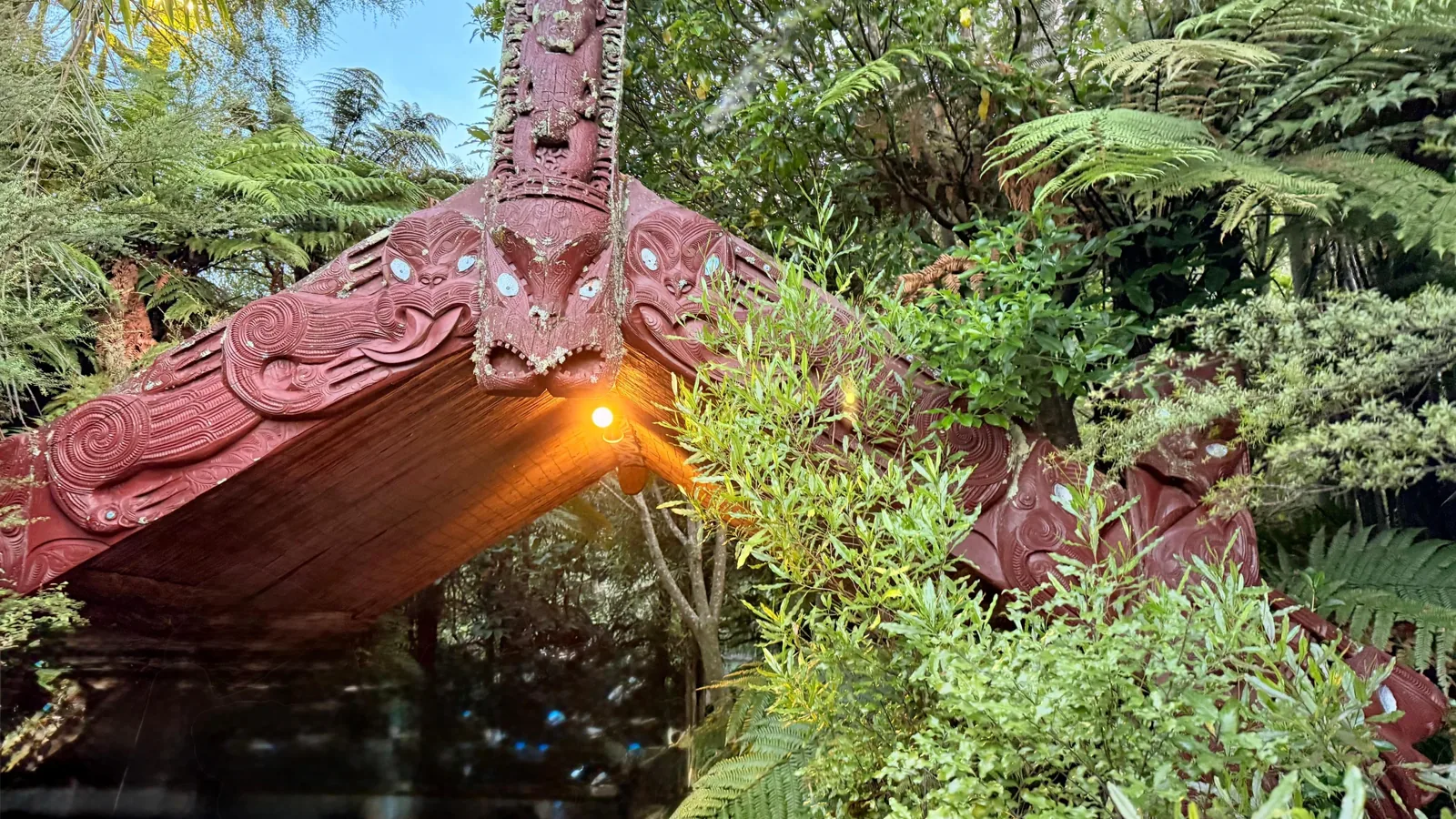
The city centre: convenience and urban life
Staying in central Rotorua puts restaurants, shops and public spaces near the lake within walking distance. It is a straightforward base for a short stay, particularly when travelling without a car or if you would rather not drive when going out for dinner.
Its main advantage is logistical. Less time is lost on short journeys, making it easier to alternate activities with breaks. It can also suit regional residents who want to spend a night in the city after a show, a celebration or a relaxing day out.
The trade-off is that the centre does not always provide the sense of retreat some people associate with New Zealand. There is traffic, commercial activity and streets that are more functional than picturesque. Rotorua also has a noticeable geothermal presence: the smell of sulphur is part of the place and can feel intense at first.
Around the lake: views, walks and a more open atmosphere
Staying near the shore of Lake Rotorua offers broad horizons, changing light and easy access to walks by the water. It can appeal particularly to couples, families and travellers who value unhurried mornings.
Being near the lake does not necessarily mean having a direct view. The exact location of the accommodation, the room's orientation and nearby buildings can make a considerable difference. The shoreline also varies: some stretches blend into the city, while others are quieter or more residential.
This option works well for travellers who want to combine nature with urban amenities. If forest activities or excursions beyond Rotorua are the main purpose of the trip, it may not be the most efficient base.
Fenton Street and the surrounding area: a practical choice
Fenton Street is one of Rotorua's best-known accommodation corridors. Its appeal lies less in the charm of the street itself than in the range of options and its convenient position between the city centre and several attractions to the south.
It can suit families, road trips and stays where the accommodation serves mainly as a base. It also offers different levels of comfort without placing guests too far from restaurants and services.
The drawback is the area's busy thoroughfare character. Traffic noise and privacy can vary according to the section of the street and the room's position. Before booking, it is worth checking whether the room faces the street, an inner courtyard or the rear of the property.
Whakarewarewa: close to Rotorua's geothermal character
Whakarewarewa offers a stronger sense of one of Rotorua's defining features: the connection between geothermal activity, landscape and Māori culture. Staying in this part of the city can reduce travel time when these experiences are central to the trip.
It is a good base for travellers who prefer an early start and want to spend time understanding the land rather than simply photographing it. Proximity does not, however, mean that every visit can be arranged spontaneously or that all accommodation provides direct access to places of interest.
There is also a compromise: the city centre is less readily accessible on foot, and evening options may be more limited. The smell associated with geothermal activity can be stronger here. It forms part of the local identity but will not appeal to everyone.
Lynmore: forest, cycling and a quieter pace
Lynmore, southeast of the city centre, is especially appealing to travellers drawn to Whakarewarewa Forest, walking trails or mountain biking. It has a greener, more residential atmosphere and a more natural transition between the city and the surrounding landscape.
It can suit active travellers, families who appreciate more peace and returning visitors who do not need to be close to every service. After a day outdoors, returning to a less busy neighbourhood can become part of the relaxation.
The trade-off is mobility. Distances may not look particularly long, but carrying bicycles or equipment, or travelling with children, changes how a journey feels. A car usually provides greater flexibility for dining elsewhere or combining the forest with regional excursions.
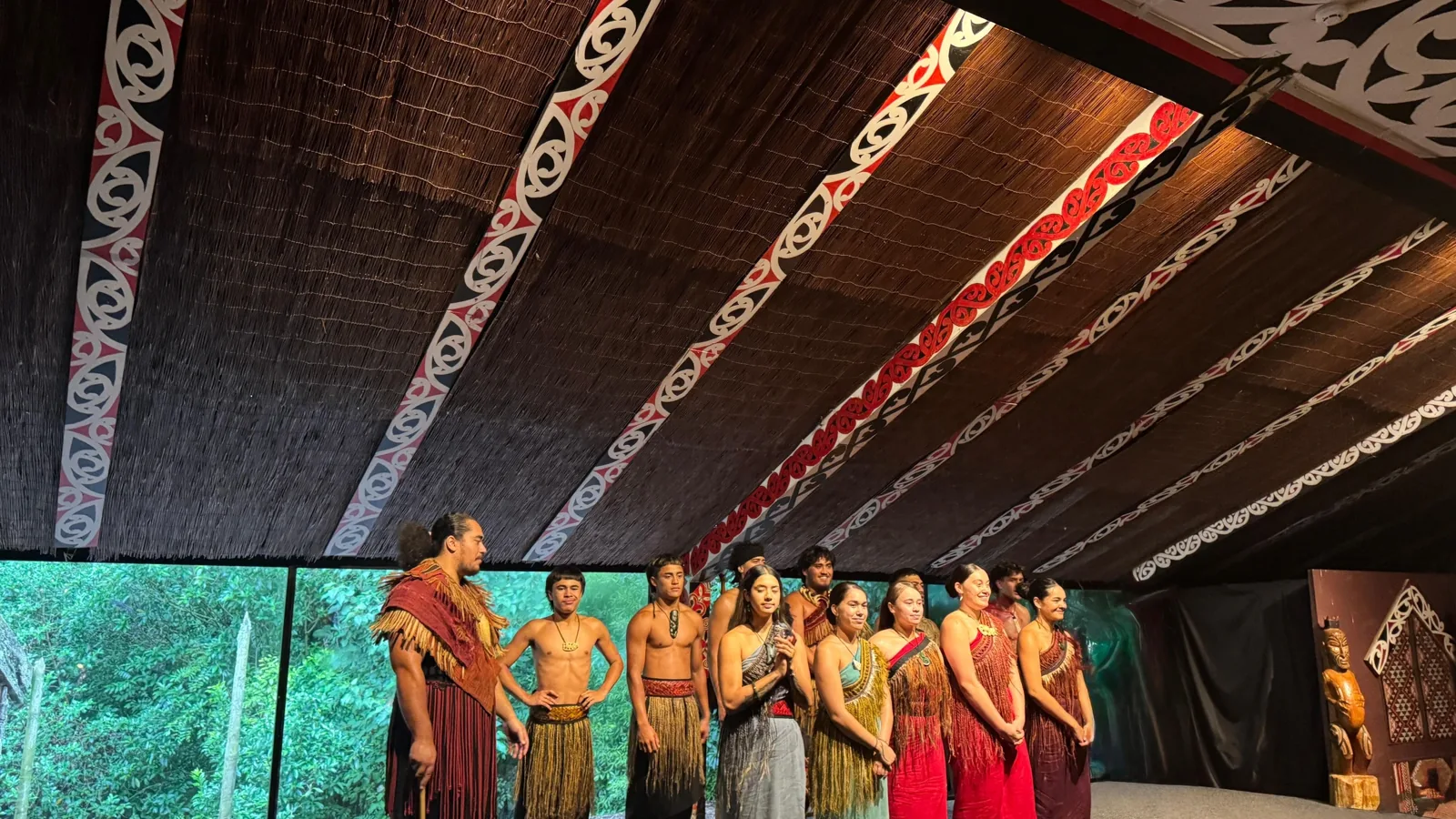
Ngongotahā: local life north of the city
Ngongotahā provides a more everyday setting that is less focused on visitors. It may suit those seeking peace, planning a slightly longer stay or looking for a practical base for exploring the northern side of the lake and other parts of the region.
The experience is closer to residential life than Rotorua's tourist hub. That can be an advantage when space and tranquillity matter, but it also means fewer opportunities to walk out for dinner or return to the accommodation between activities.
The precise location deserves careful attention. Properties listed under the same general area can have very different access, views and distances. A car is usually advisable.
The lakes and rural areas: tranquillity in exchange for independence
Staying beyond the urban area, near other lakes or in the countryside, offers quiet mornings, open skies and a more direct connection with the landscape. It can appeal to couples, groups and families who want the accommodation to be an essential part of the trip.
The beauty of isolation comes with a logistical cost. Meals, driving and the return after activities all need planning. Rural roads, darkness at night and the time needed to travel in and out of Rotorua can make an overly remote base inconvenient when every day is packed with urban sightseeing.
This option works best when the itinerary leaves time to stay in, cook, walk or simply look over the water. If the aim is to fit in many activities, a more central location is usually the sensible choice.
Do you need a car?
Without a car, the city centre and its immediate surroundings are the most convenient options. Some daily needs can be met on foot, reducing reliance on transport for meals and walks. Even so, many experiences in the region are spread out, so check the transport available for each activity before choosing accommodation.
A car broadens the choice considerably, making Lynmore, Ngongotahā, the lakes and rural areas more attractive. However, a vehicle can become a burden if the aim is to remain in the city, go out for dinner and avoid parking or driving at the end of the day.
Which area should you choose for your trip?
For a short first visit without a car, the city centre offers the simplest balance. Travellers prioritising the lake can look along the shoreline while carefully checking the accommodation's actual position. Fenton Street is practical for road trips and varied budgets, although potential noise deserves attention.
Whakarewarewa suits a trip focused on the geothermal landscape and Māori culture. Lynmore is the most natural base for forest activities and cycling. Ngongotahā and the areas around the lakes work best for travellers with a vehicle who value tranquillity over proximity.
The best area in Rotorua is not necessarily the one that looks most beautiful in a photograph. It is the one that avoids unnecessary journeys and fits the trip's actual pace. Choosing well means deciding how much time you want to spend exploring and how much you want to reserve for simply staying still.