 Activity on TourBookGo
Private photography tour in Salvador da Bahia
Explore Salvador while a photographer captures your private group during a 90-minute session. Compare both routes and check current details on Viator.
Colourful ribbons above the façades of Largo do Pelourinho frame a practical question: which costs are essential, which are optional and how to distribute them without turning every day into a succession of purchases.
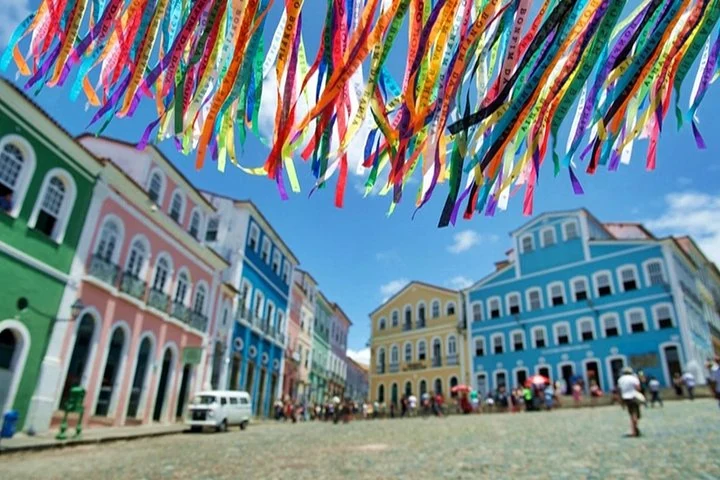
There is no universal daily budget for Salvador da Bahia. Spending varies with your accommodation area, airport journey, travel between neighbourhoods, meals, admission fees and booked activities. Dividing the budget into categories and planning by area helps separate essentials from optional expenses.
This image supports preparing a budget for Salvador da Bahia.
Find accommodation on BookingBefore booking, divide your budget into accommodation, arrival and departure, local transport, meals, cultural visits and activities. Add a reserve for operational changes or last-minute decisions.
Accommodation often accounts for a large share of the cost, but it should not be considered in isolation. An apparently cheaper option may require more travel if it is far from the places you want to visit. Similarly, paying more for a well-located base may make sense if it allows you to group several visits within the same area.
Admission fees and activities deserve a separate budget. Some urban spaces can be viewed or explored without booking an experience, while museums, indoor visits, excursions and guided services may require payment. Always check the current terms with the operator or provider.
For a heritage-focused trip, staying around the Historic Centre reduces the need to travel repeatedly to Pelourinho, Terreiro de Jesus and other nearby sites. Barra is better suited to an itinerary focused on the seafront. Rio Vermelho may work well when food and nightlife are essential parts of the trip, while Itapuã requires you to consider its location within a more dispersed itinerary.
Do not assume that an area will be cheap, quiet or convenient simply because of its name. Compare the actual accommodation conditions, how well it connects with your itinerary and the services included. Real savings come from a location that avoids pointless journeys, not merely from a lower initial rate.
The Forte de Santo Antônio da Barra and its lighthouse are a good example of how to organise this category. The fortified site overlooking the sea lets you enjoy the urban and coastal scenery without confusing the public space with indoor visits or other optional experiences. If you want to go inside, hire a guide or combine the area with an activity, confirm current access arrangements, conditions and prices beforehand.
The decision depends on your interests. Travellers who value history may allocate more money to cultural visits, while those who prefer walking and admiring the seafront can spend that amount on another experience. Barra does not necessarily require a large budget, but improvising there without distinguishing between a walk, admission and an activity can disrupt your spending plan.

The division between Cidade Alta and Cidade Baixa, together with the distances separating the Historic Centre, Barra, Rio Vermelho, Itapuã and the airport, makes it unrealistic to treat Salvador as a compact destination. Hills, heat, luggage and personal mobility also affect what is reasonable to do on foot.
Group each day geographically. Spending one day in the Historic Centre, another in Barra and another in a coastal area avoids unnecessary journeys. Airport transport options include the metro, with a transfer between the terminal and the station, as well as buses, taxis and cars. Since fares, traffic and operating arrangements may change, compare the options for your specific travel date instead of basing your budget on an outdated figure.
Local cuisine is part of the experience, but not every meal needs to carry the same weight. You can set aside one or two meals to try dishes such as acarajé, abará, moqueca, vatapá or caruru, while keeping other meals simpler. Always ask about ingredients and preparation if you have allergies, dietary restrictions or preferences.
Pelourinho, Mercado Modelo, Rio Vermelho and Itapuã provide different settings in which to discover the local cuisine, but that does not guarantee that a particular establishment will be open, affordable or suitable for your needs. Check the menu and prices before ordering. Avoiding impulse decisions in the most visited areas is usually more helpful than looking only for the cheapest option.
Bookable activities are the easiest category to expand. First decide which ones give the trip meaning, then consider any additions. A guided tour can be valuable if you want historical interpretation; an excursion makes sense when you genuinely want to spend time outside the city, not simply add another name to the itinerary.
The Imbassaí River, with its boats among coconut palms, belongs to an excursion outside Salvador, not to an urban route. Budget separately for transport, the activity and any associated purchases. Before booking, the provider should confirm availability, duration, inclusions, restrictions and the meeting point.
For a three-day trip, focus on two or three areas and choose only a few paid experiences. Costs can remain relatively contained because there are fewer journeys and fewer opportunities for unplanned purchases or activities.
Five days provide more room to combine heritage, coastline, food and a booked activity without cramming every day. Accommodation and meal costs also accumulate, although planning by neighbourhood helps keep them under control.
Over seven days, costs do not rise only because of the additional nights. They may also include excursions, more indoor visits or rest days. If your budget is limited, alternate days with paid activities and days focused on walks, public spaces and city life.
A budget trip prioritises a practical base, public transport when appropriate, simple meals and a small number of carefully chosen activities. A mid-range budget offers greater comfort alongside cultural visits and an occasional booked experience. A comfortable trip mainly buys flexibility: better connections, less logistical friction and more freedom to decide as you go.
Do not overlook commonly underestimated expenses: travelling with luggage, late-night transport, payment fees, changes of plan and excursions outside the city. For residents, the most useful approach is to separate everyday spending from the budget for a special activity and choose plans concentrated in a single area.
Salvador can accommodate different budgets, but it requires clear priorities. Spending with purpose—on history, food, the coast or excursions—offers more value than trying to cover everything.
Salvador da Bahia: discover activities for your trip. Before booking, check each activity's location, meeting point and route.
Activity on TourBookGoExplore Salvador while a photographer captures your private group during a 90-minute session. Compare both routes and check current details on Viator.
 Activity on TourBookGo
Explore Salvador da Bahia on an approximately 4-hour shared panoramic tour with route-based transfers, a Portuguese-speaking guide and time at Mercado Modelo.
 Activity on TourBookGo
Learn basic samba steps in a 60-minute shared class with Afro-Brazilian cultural context. Check current availability and conditions on Viator.