 Activity on TourBookGo
Hands-on Brazilian cooking class in Salvador da Bahia
Prepare Brazilian and Bahian specialities with Cook in Fiesta, share the meal and check current options, terms and availability on Viator.
Bahian dishes, distinctive neighbourhood settings and practical criteria for fitting each meal into your Salvador itinerary.

Eating in Salvador da Bahia is not simply about choosing a dish. Food’s place within your itinerary matters too: it can be a break between historic churches and squares, an experience connected to the coast or a way to explore living traditions. The best choice depends on your appetite, dietary needs and plans for the day.
This image supports choosing food experiences in Salvador da Bahia.
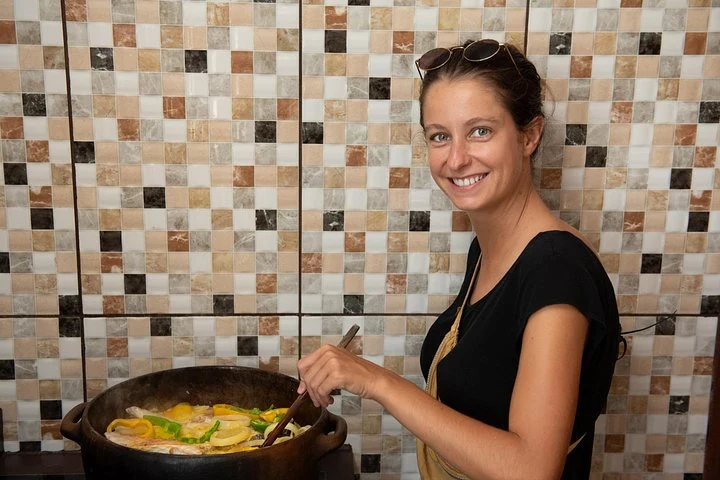
Find accommodation on BookingA culinary experience lets you observe preparation and ask questions. A participant cooking moqueca during a Salvador class shows its value: cuisine becomes a process in which someone participates, learns and better understands what they later taste.
This option suits travellers seeking more than a meal and residents rediscovering a familiar recipe. Tasting Bahian bites helps compare preparations without making a compulsory checklist. The current listing must confirm content, duration, restrictions, meeting point, availability and ingredients.
Learning should not be mistaken for absolute authority. A class represents one particular experience, not every family, religious or professional kitchen in Salvador. Its value lies in providing context and judgement, not reducing a diverse tradition to a single version.
Acarajé, abará, moqueca, vatapá and caruru regularly appear in institutional accounts of Salvador’s and Bahia’s cuisine. Knowing these names can help you find your bearings, but it does not mean you must try them all or assume that every version represents the local tradition equally well.
A sensible approach is to spread your discoveries out. Instead of packing several rich specialities into one meal, alternate dishes, snacks and breaks according to the pace of your day. This makes it easier to appreciate each preparation and prevents the culinary experience from becoming a tasting race.
Before ordering, ask what the dish contains and how it is prepared. A local speciality is not necessarily suitable for every diet, allergy or preference. The name may remain the same while ingredients, accompaniments or cooking methods change, so a short conversation is more useful than any assumption.
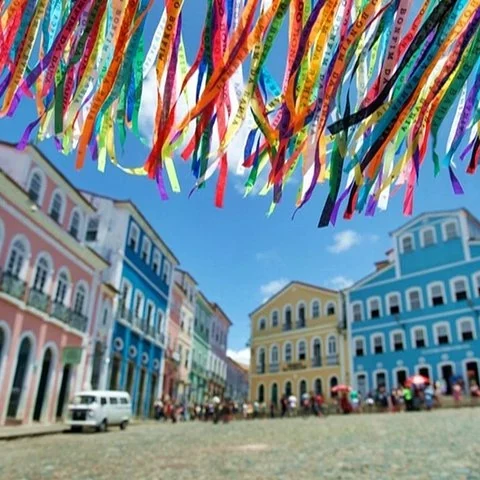
Pelourinho, in the UNESCO-recognised Historic Centre, combines heritage, urban life and culinary traditions. It is a logical place to eat between Terreiro de Jesus, the Basilica Cathedral or São Francisco. Colourful ribbons above Largo do Pelourinho provide a recognisable setting and help place the cuisine within a city shaped by African, European and Indigenous American influences.
Problems arise when somewhere is chosen solely for its proximity or visible appeal. A historic setting does not prove the quality, price, hygiene or authenticity of any particular business. Read the available menu, ask about the day’s dishes and check whether the offering genuinely matches what you want.
On a first visit, Pelourinho works well for a meal integrated into a cultural day. Those who already know the area can approach it differently: return for a specific preparation or combine a walk with a culinary activity, without automatically repeating the monumental itinerary.
Mercado Modelo is one of Salvador’s prominent landmarks and connects an itinerary through the Lower City with a commercial and culinary setting. It can make sense when the day already includes moving between the city’s two historic levels, rather than adding a separate journey solely for a meal.
The decision here depends on what you expect from the place. If the aim is to combine a market, heritage and a break within the itinerary, it is a natural fit. If you want a highly specific culinary experience, first check what is available on the date of your visit.
Do not interpret the word “market” as a guarantee of low prices, traditional cooking or permanent availability. These conditions vary between businesses and over time. Comparing options and asking before ordering helps avoid decisions based only on the area’s general reputation.
Rio Vermelho is institutionally associated with gastronomy and nightlife. It is therefore particularly useful when food is not an interruption to the day but the focus of an urban outing. It may suit you better than the Historic Centre if you want to devote the afternoon or evening to eating and then continue in the same area.
Choosing still requires separating atmosphere from quality. A neighbourhood known for its activity does not make all its establishments equivalent or guarantee quiet, affordability or easy access. Choose according to the kind of meal you want and plan your return based on actual transport conditions.
For residents, Rio Vermelho makes it possible to choose a particular experience without reconstructing the classic tourist route. Trying a dish still on your list, attending a tasting or sharing an evening out may offer more than revisiting familiar places purely out of habit.
Itapuã belongs to a coastal itinerary distinct from the Historic Centre. Its culinary appeal increases when the day is already focused on the beach or seascape. Eating there then avoids returning to the centre simply to find a table and gives the journey a clear geographical logic.
It should not be presented as an immediate extension of Pelourinho or an interchangeable stop. The distance between areas affects planning, especially if you also intend to visit Barra, Rio Vermelho or the Lower City. Packing too many places into one day can turn meals into rushed intervals.
Caution also applies to the coastal setting: sea conditions, traffic and business opening arrangements should be checked for the specific date. A neighbourhood’s coastal identity does not in itself guarantee what each establishment serves.
A suitable place is one where you can understand what you will eat and under what conditions. Before sitting down, check whether the menu or explanation is clear, whether staff can answer questions about ingredients and whether the offering meets your needs. Do not assume a dish suits a particular diet because of its name, or that an old recommendation remains valid.
Be wary of overly broad claims too: “the authentic recipe”, “the best acarajé” or “the ultimate experience” mean little without evidence. A well-explained preparation served in a setting you can assess is more useful.
Respectful consumption also means not treating vendors, cooks or cultural practices as scenery. Asking politely, accepting that certain expressions are not produced on demand and resisting the urge to turn every encounter into a photograph helps foster a more honest relationship with the city.
Pelourinho suits a heritage day; Mercado Modelo fits a visit to the Lower City; Rio Vermelho works for an outing centred on food and urban life; and Itapuã complements a coastal itinerary. A cooking class adds a learning dimension when you want to understand a preparation rather than merely taste it.
None of these areas guarantees a good meal by itself. Assess each establishment individually and confirm its ingredients, preparation methods, availability and current conditions. Distributing meals according to the geography of your itinerary also helps avoid unnecessary journeys and rushed decisions.
Salvador’s best table cannot be chosen from a universal list. It depends on what you want to discover, where you already are and what you can comfortably eat. Bahian cuisine deserves curiosity, but also time, questions and the freedom to choose without turning tradition into a checklist of compulsory dishes.
Three food-focused options for Salvador da Bahia: two hands-on Brazilian and Bahian cooking classes, plus a full-day historical tour that includes lunch. Check ingredients, languages, pickup and current terms before booking.
Activity on TourBookGoPrepare Brazilian and Bahian specialities with Cook in Fiesta, share the meal and check current options, terms and availability on Viator.
 Activity on TourBookGo
Prepare Brazilian and Bahian recipes in a hands-on Salvador cooking class. Compare market, language and transfer options before booking on Viator.
 Activity on TourBookGo
Explore Salvador for eight hours with a guide, air-conditioned transport, an old-city walk, lunch and pickup. Check current details on Viator.