 Activity on TourBookGo
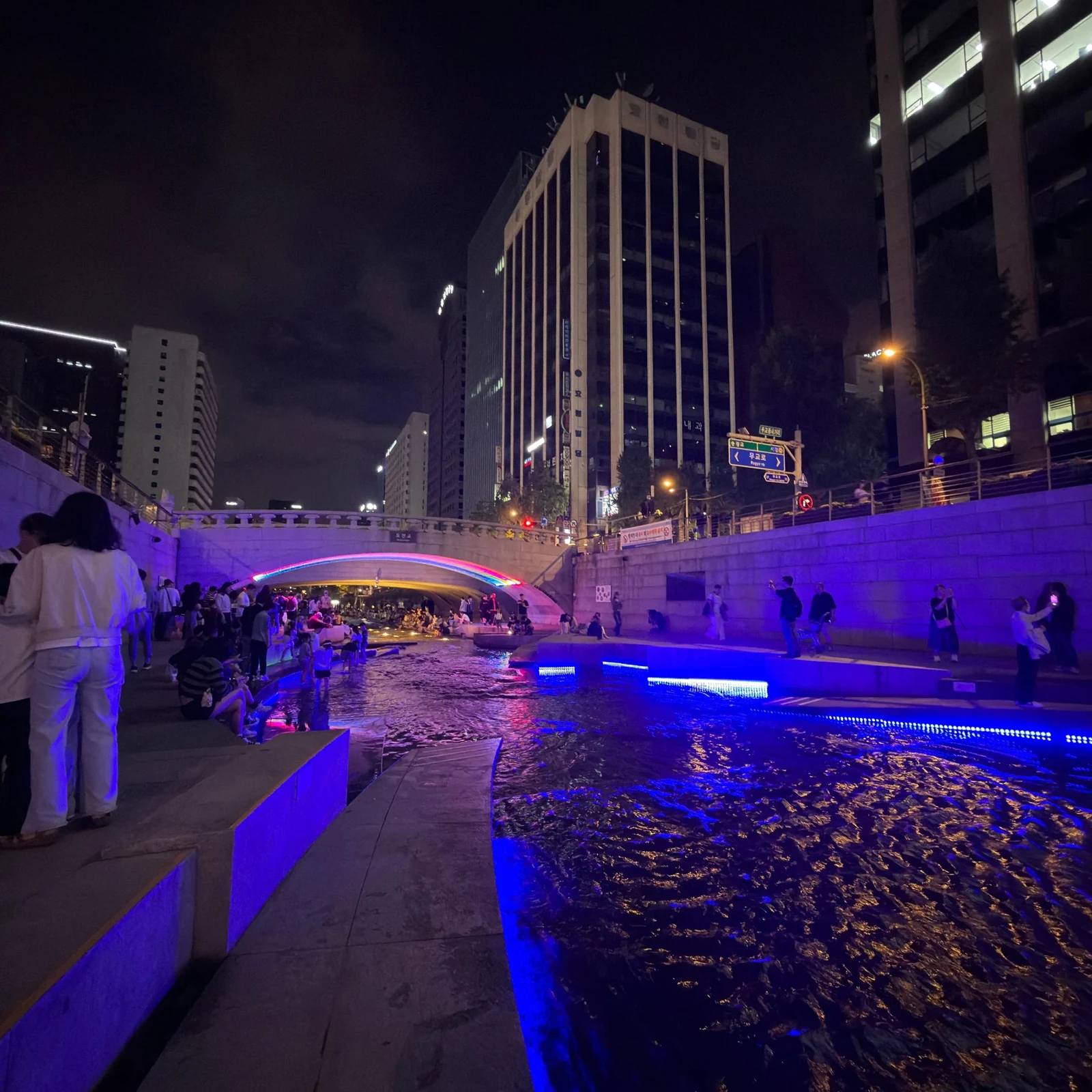
Han River Night Cruise in Seoul with Market and Viewpoint
Book a Han River night cruise in Seoul with Gwangjang Market, Korean food and panoramic views from Yongwangsan Skywalk.
This Seoul itinerary for 1 to 7 days leads you through a city of quiet palaces, alleyways where wooden doors still creak, steam-filled markets and avenues that turn into rivers of neon after dark.
Seoul is enormous, and the most common mistake is crisscrossing the city in pursuit of a checklist of famous sights. The best Seoul itinerary for 1 to 7 days is not the one that packs in the most attractions, but the one that groups nearby neighbourhoods together and leaves time to sit down over a hot meal, browse a bookshop or wander aimlessly for a while.
Compare locations and options to find a base that suits your trip. Booking.com confirms current availability and pricing.
Find accommodation on BookingTo avoid unnecessary travel, it helps to think of the city as four main areas:
Historic centre: Gwanghwamun, Gyeongbokgung, Bukchon, Insadong and Seochon.
Shopping and nightlife district: Myeongdong, Namdaemun, Namsan and Dongdaemun.
Creative east and modern south: Seongsu, Seoul Forest, COEX and Gangnam.
Youthful west: Hongdae, Yeonnam, Mangwon and the Han River.
Seoul is easy to explore by metro and bus, but distances can be deceptive: two places that look close on a map may involve transfers and long walks. Organising your Seoul route by neighbourhood makes each day more efficient and leaves more time to enjoy the city at a comfortable pace.
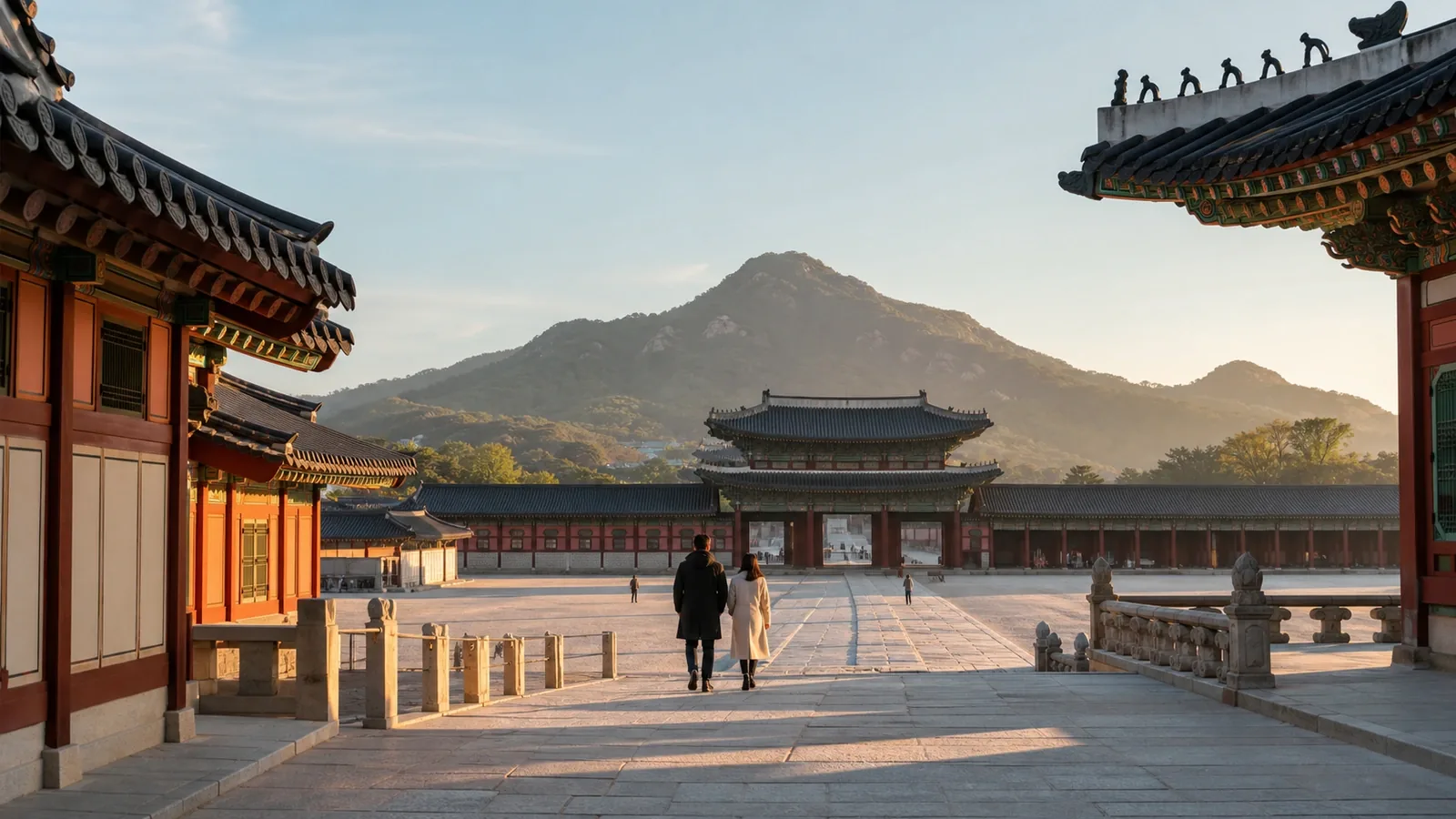
In the morning, start early in Gwanghwamun Square, before the office buildings have fully come to life and while the mountains still rise in the distance like a hazy blue boundary.
From there, enter Gyeongbokgung, the great royal palace. There is no need to march through every courtyard with military discipline: focus on the main pavilions, the ponds and the contrast between the curved rooftops and the modern buildings beyond them.
Gyeongbokgung is usually closed on Tuesdays, and its opening hours vary depending on the season, so check the official information before planning your day.
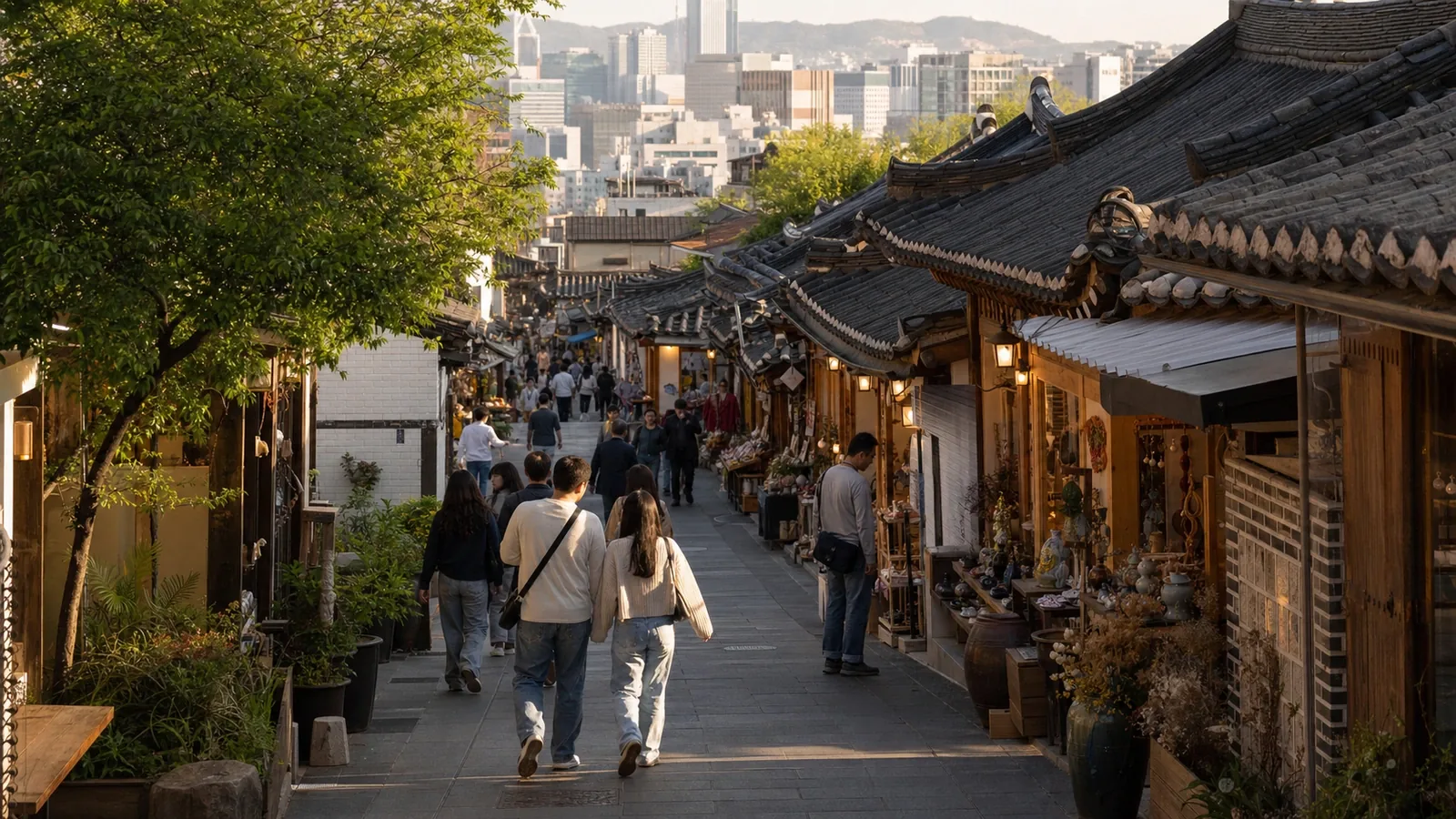
At midday, continue to Bukchon Hanok Village, preferably at an unhurried pace and without turning its steep lanes into an endless photo shoot. The dark wooden hanok are especially beautiful when the light falls across their tiled roofs, but Bukchon remains a residential neighbourhood.
Tourist access to certain areas is restricted outside the hours of 10:00 a.m. to 5:00 p.m. Speak quietly, avoid large groups and do not photograph the interiors of people's homes.
Then walk downhill towards Insadong, where you will find teahouses, craft shops and small restaurants. It is touristy, certainly, but there are still pleasant corners to discover away from the main street.
In the afternoon and evening, finish in Myeongdong if you are looking for street food, cosmetics and urban energy. For a panoramic view of Seoul, continue to Namsan and wait until nightfall.
The view is expansive, but the observation deck and surrounding area can be crowded. Going up only to take a quick photo can feel rather mechanical; walking through the park and watching the city light up is far more memorable.
Day 1: follow the historic Seoul route above, but at a slower pace: Gwanghwamun → Gyeongbokgung → Bukchon → Insadong → Ikseondong.
Ikseondong is home to cafés, restaurants and shops housed in old traditional homes. It has plenty of charm, although its popularity has turned some of its alleyways into busy commercial backdrops.
Day 2: begin at Seoul Forest, then continue through Seongsu, a former industrial district transformed into a neighbourhood of creative studios, shops and cafés. Some of its appeal is genuine; some of it comes from trends and spaces designed for social media. Not every queue is worth the time it demands.
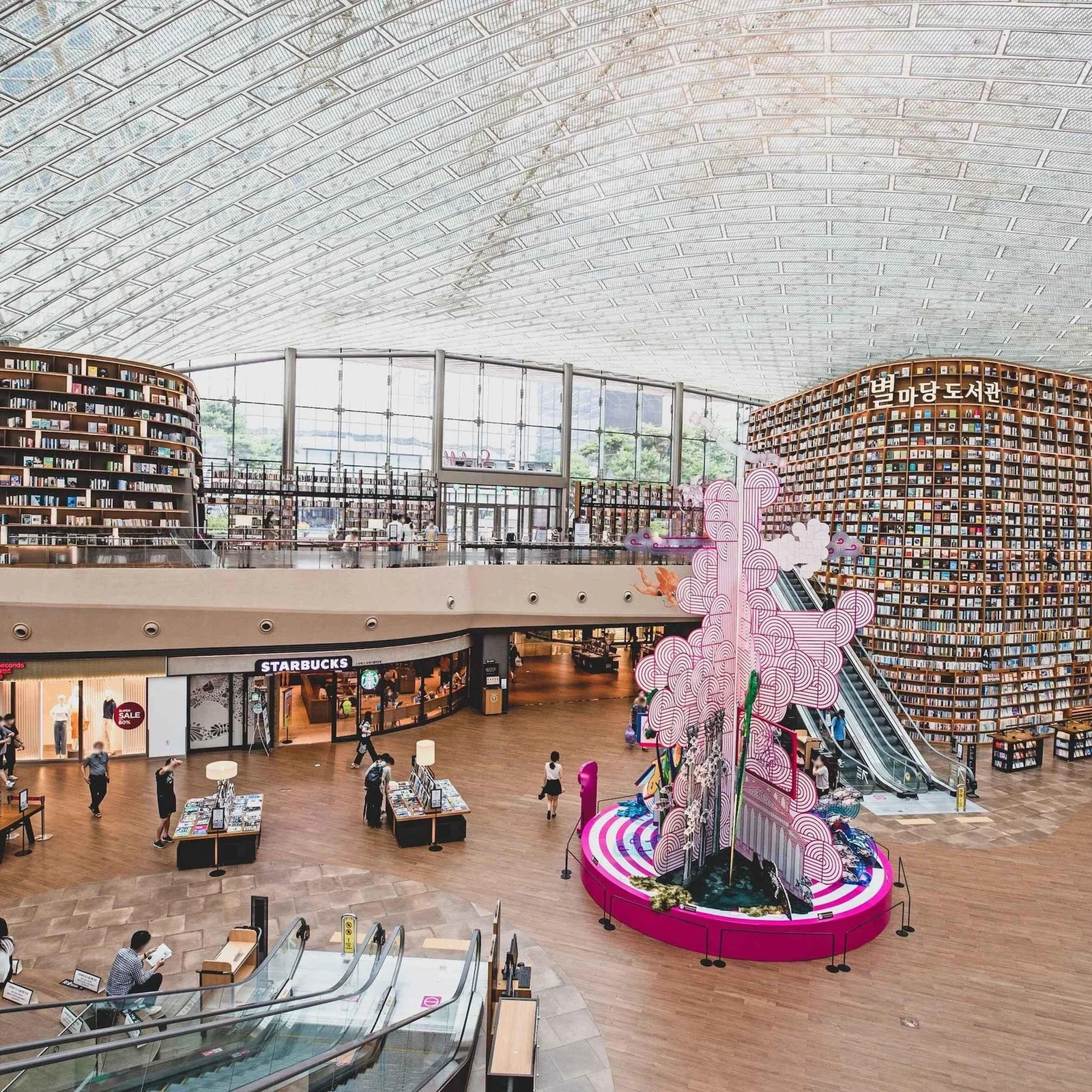
Next, cross over towards COEX and Gangnam. Starfield Library is visually impressive, although the visit is brief unless you plan to stop and read or shop.
In the late afternoon, head to the Han River. During the more pleasant months of the year, sitting by the water reveals a less frantic side of Seoul: cyclists, families, delivery riders and groups of friends sharing food beneath the bridges.
Day 3: spend the morning in Yeonnam-dong, a more relaxed neighbourhood than Hongdae's main shopping streets. You will find cafés, small independent shops and walking paths along the former railway line.
Continue to Hongdae as it begins to wake up. Its youthful atmosphere, music and shops can be fun, but the busiest streets are noisy and highly commercial. Travellers looking for traditional Korea will find little of it here.
In the afternoon, visit Mangwon Market and finish the day at a park beside the Han River. This Seoul neighbourhood itinerary provides a useful contrast: fewer palaces and monuments, more everyday life.
Gwanghwamun, Gyeongbokgung and Seochon.
Discover the political and historic heart of the capital. After visiting the palace, choose Seochon instead of Bukchon if you prefer less formal alleyways, small galleries and neighbourhood restaurants.
Changdeokgung, Bukchon and Insadong.
Visit a second palace, preferably Changdeokgung, and explore Bukchon during the permitted hours. End the day among the teahouses of Insadong or the alleyways of Ikseondong.
There is no need to visit all five palaces. After the second, the architectural differences may begin to blur for travellers without a particular interest in history.
Gwangjang, Dongdaemun and Naksan.
Try a few specialities at Gwangjang Market, but compare stalls and do not automatically sit down at the first one with a queue of tourists.
Continue to Dongdaemun Design Plaza and, around sunset, walk along a section of the city wall near Naksan. Here, Seoul reveals one of its finest transitions: from food stalls and textiles to futuristic design and houses climbing the hillside.
Seongsu, Seoul Forest and Gangnam.
Set aside this day for contemporary Seoul. Seongsu is more appealing to those interested in design, fashion and urban culture, while Gangnam is better suited to visitors looking for shopping centres, major brands and pop-culture references.
Finish the day beside the river, not inside yet another shopping mall.
Hongdae, Yeonnam and Mangwon.
Explore the west without a rigid schedule. This is the right day for shopping, music, cafés and nightlife. Hongdae changes considerably after dark, but the noise and crowds can also be exhausting.
Bukhansan or Suwon.
For a break from the concrete, choose a hiking route in Bukhansan National Park. Not all trails are easy; wear appropriate footwear and do not treat the mountain as an improvised outing during periods of extreme heat, rain or ice.
For a cultural alternative, travel to Suwon to explore the World Heritage-listed Hwaseong Fortress, including its gates, walls and markets.
Deoksugung, Museums and Farewell.
Spend your final day at a slower pace: visit Deoksugung, the nearby Seoul Museum of Art, bookshops, cafés or any shops you still want to return to.
Do not fill this day with far-flung attractions. Seoul is usually best left on foot rather than at a run.
Avoid crossing from one side of the river to the other several times in a single day, visiting too many palaces or booking every meal in a different neighbourhood. Seoul demands a great deal of physical energy: there are stairs, long metro corridors and hills that are barely noticeable on a map.
Do not underestimate the weather either. Spring and autumn are generally the most comfortable seasons for walking; summer can be hot, humid and rainy, while winter is cold and dry.
Three days are enough to experience its main contrasts. Five days provide a more balanced visit. A full week is worthwhile for travellers who enjoy neighbourhoods, food, museums and urban life.
Seoul may disappoint travellers expecting spectacular monuments on every corner or a city that is consistently beautiful to look at. Many districts are dense, functional and dominated by apartment blocks. Its magnetism lies in the transitions: a temple between towers, a mountain at the end of an avenue, the smell of broth drifting out of a market or the unexpected silence of a royal courtyard while, beyond the wall, the city keeps rushing past.
Discover selected experiences in Seoul to complete this guide with Korean culture, food, palaces, neighbourhoods and well-organised day trips.
Activity on TourBookGoBook a Han River night cruise in Seoul with Gwangjang Market, Korean food and panoramic views from Yongwangsan Skywalk.
 Activity on TourBookGo
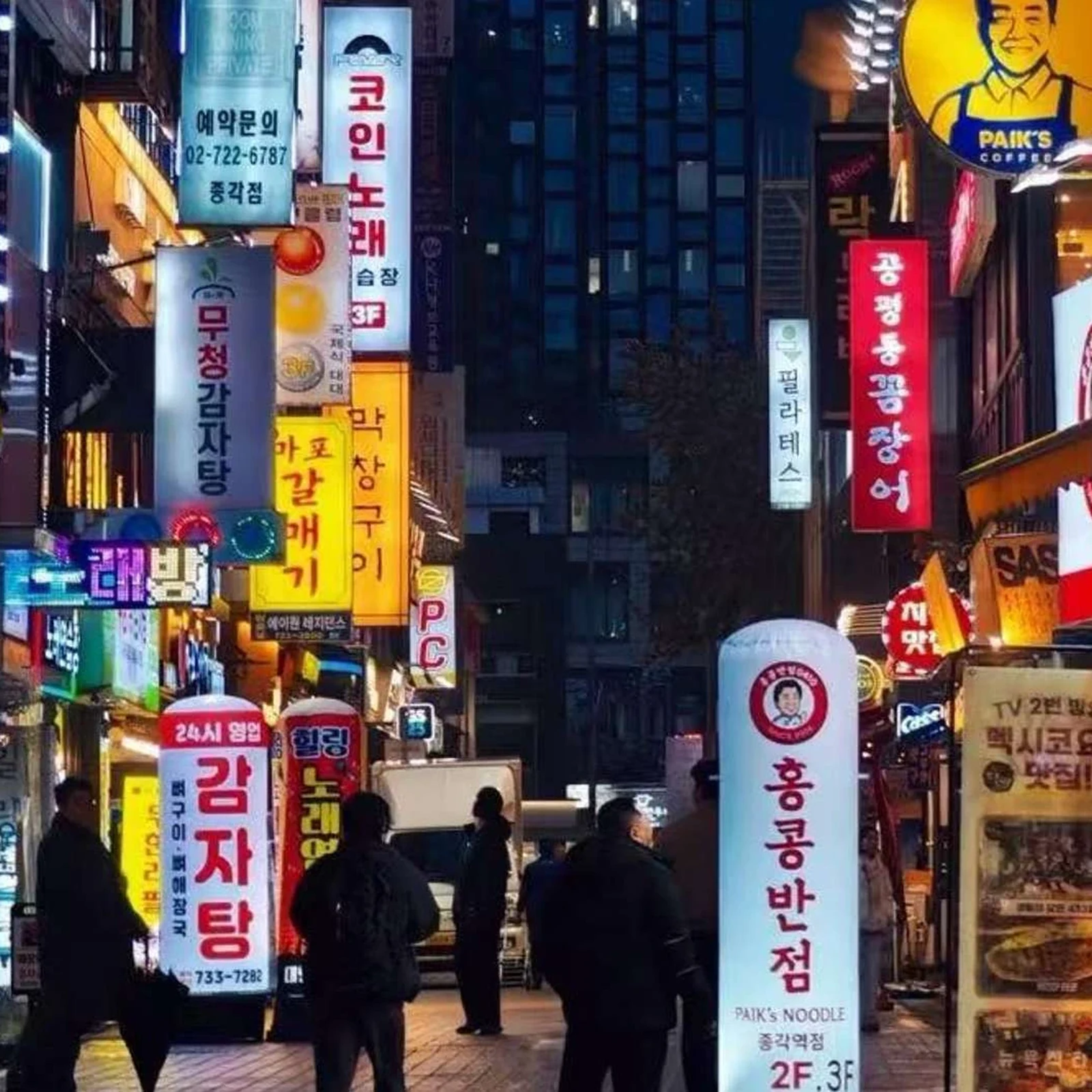
Book a modern Seoul small-group tour and explore Hongdae, Yeouido, Gangnam, COEX and Myeongdong over 10 hours with transport included.
 Activity on TourBookGo
Book a private Starfield Library, COEX Mall and Pokpo Café tour: 8 hours in modern Seoul with a guide, pickup, transport, admission and coffee.