 Activity on TourBookGo
Seoul Night Food Tour with a Palace, Market and 11+ Tastings
Book a Seoul night food tour with Changgyeonggung Palace, Gwangjang Market, 11+ Korean tastings, Jogyesa Temple and vehicle transfers.
Yes, Seoul is worth visiting if you enjoy energetic, creative cities filled with contrasts. Its character unfolds gradually through vast avenues, quiet palaces, steaming markets, mountains and neighbourhoods with distinct identities.
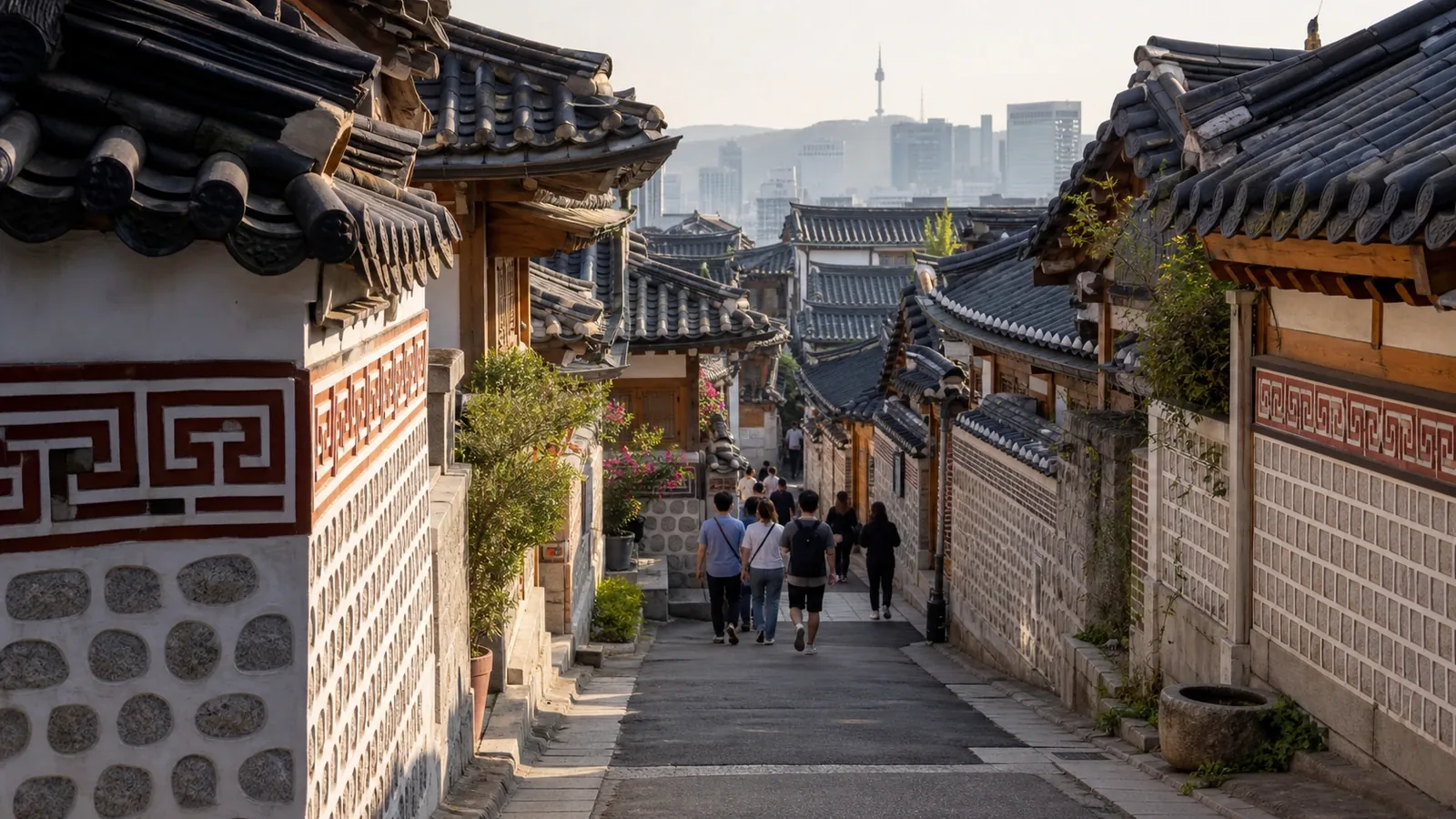
Yes, Seoul is worth visiting, although it is not always an easy city to fall in love with at first sight. Its appeal reveals itself in layers: first come the vast avenues, glowing screens and almost electric pace; then the quiet palaces, steam-filled markets, mountains rising between buildings and neighbourhoods where a minimalist café can sit alongside a tiny family-run restaurant. Seoul rewards curious travellers. Those who arrive expecting a perfectly uniform postcard view may need time to understand it. Those willing to embrace its contradictions will discover an intense, creative and deeply vibrant capital.
Compare locations and options to find a base that suits your trip. Booking.com confirms current availability and pricing.
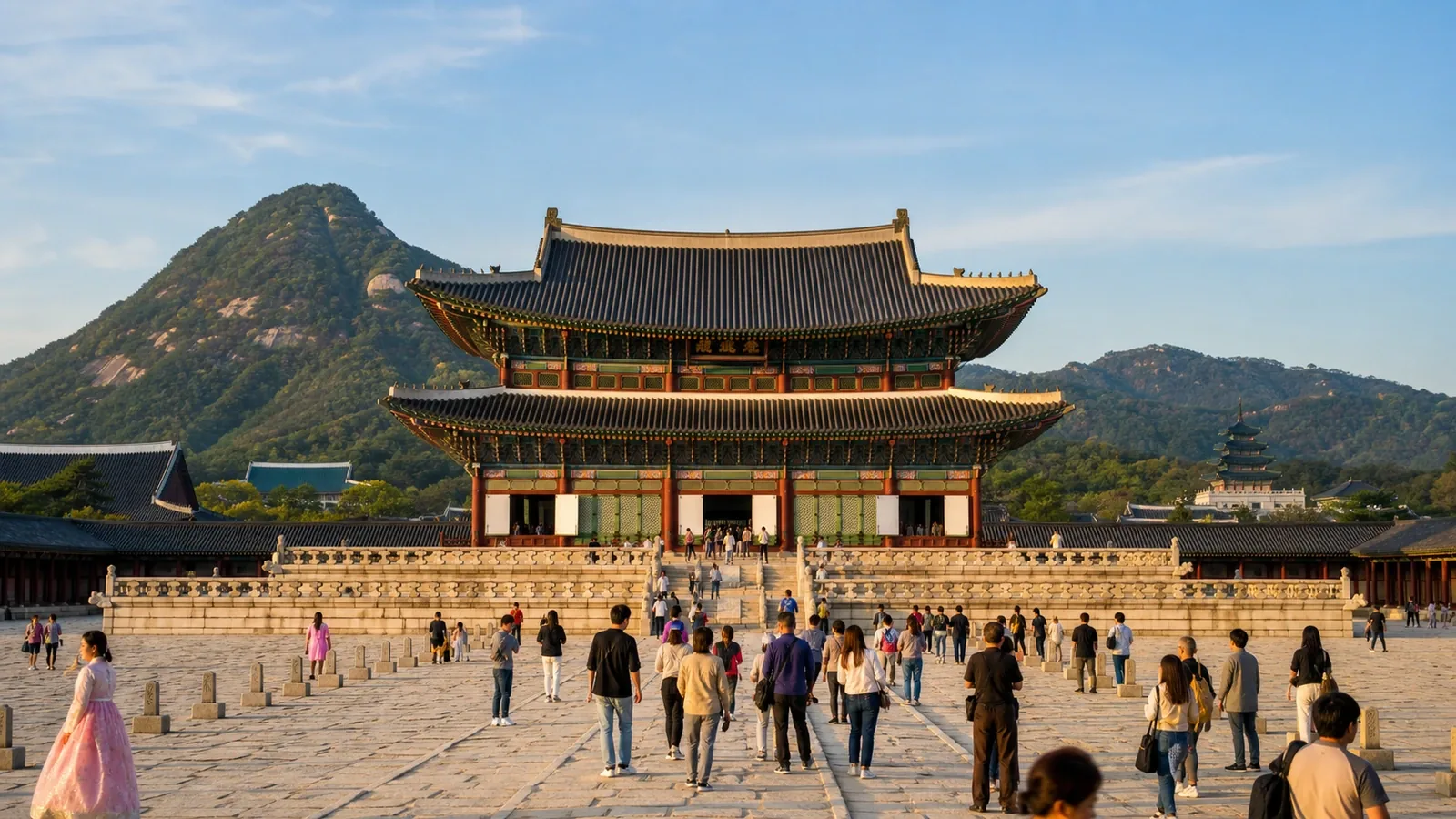
Find accommodation on BookingSeoul’s greatest strength is the way different eras coexist. In a single morning, you can walk past the curved rooftops of Bukchon, cross the courtyards of Gyeongbokgung and end up surrounded by skyscrapers, boutiques and designer cafés. Seoul’s Joseon dynasty palaces are not isolated inside a historic centre turned into a stage set: they are part of a metropolis that continues to grow around them.
That contrast is not always subtle. At times, it can feel abrupt or even chaotic. Yet that is precisely where part of the city’s personality lies: Seoul does not preserve the past behind glass, but forces it into conversation with technology, fashion, entertainment and popular culture.
The city also changes dramatically from one neighbourhood to another. Jongno and Gwanghwamun are centres of history and traditional architecture; Hongdae is known for its youthful energy and nightlife; Seongsu blends former industrial spaces with creative studios; Myeongdong revolves around shopping; and Gangnam represents a more polished, vertical and commercial side of the capital. The Han River and green spaces such as Seoul Forest provide moments of calm amid the urban density.
Seoul stays in the memory as much for its sights as for its sounds and smells. The metallic clatter of the subway, overlapping conversations in the markets, the scent of grilling meat, hot broth, sesame oil and sweet dough. At nightfall, the façades light up and the city seems to change temperature.
Food is one of its strongest attractions. Not every meal needs to become a sophisticated experience: much of the pleasure comes from stepping into a small restaurant, sharing dishes, sampling market specialities or sitting down somewhere the menu may require a little intuition. Gwangjang is one of the best-known markets for street food, while areas such as Myeongdong, Hongdae and Dongdaemun remain lively well into the night.
Seoul tends to delight travellers who enjoy:
Big cities and neighbourhoods with distinct identities.
Korean food, markets and café culture.
Design, fashion, technology and contemporary architecture.
Asian history and royal palaces.
K-pop, Korean dramas, cosmetics and popular culture.
Fast-paced city breaks with plenty of nightlife.
It can also be a good destination for solo travellers. The public transport network makes it easy to move between the main areas, although distances are considerable and some journeys require several transfers. Efficiency does not eliminate fatigue: Seoul is enormous, so it is best to organise each day by area.
Seoul may not be the best choice for anyone looking for a slow holiday, peace and quiet, or a small city that can be explored entirely on foot.
The population density, shopping centres, enormous stations and visual advertising can feel exhausting. Some well-known neighbourhoods are clearly geared towards consumption, and certain heavily photographed places may seem less romantic when experienced among crowds, traffic and queues.
Bukchon, for example, is still a residential area. Its beauty is real, but so are the restrictions needed to protect residents’ daily lives. Treating it like a theme park—speaking loudly or blocking the entrances to people’s homes—spoils the experience for both locals and visitors.
The language barrier does not disappear entirely either. It is usually manageable in tourist areas, but in small restaurants, markets or less-visited neighbourhoods, you may need patience, a translation app and a willingness to communicate through gestures.
Seoul can suit a range of budgets, although it is not automatically cheap.
Well-located accommodation often takes up a significant share of a Seoul travel budget, especially during busy periods. Speciality cafés, trendy bars, cosmetics and shopping can make the trip more expensive almost without you noticing. On the other hand, public transport, markets, simple meals and the many areas that are free to explore make it easier to keep spending under control.
The real risk is usually not one large bill, but the daily accumulation of small expenses: coffee, dessert, shopping, admission fees, observation decks and transport. Travellers on a tight budget should choose accommodation near a well-connected station and save indulgences for a few specific experiences.
For a first trip to Seoul, four or five full days offer a good balance.
In three days, you can see the main palaces, visit a market, explore a modern neighbourhood and experience one nightlife district, but the pace will be fast. Four or five days allow you to combine history, food, shopping, design and walks along the river without turning every day into a race. Seoul’s official tourism guide itself suggests a broad five-day itinerary for first-time visitors, covering the historic districts, Namsan, Itaewon, Gangnam and Hongdae.
A full week makes sense for travellers who want to explore less obvious neighbourhoods, hike in the nearby mountains, visit museums at a relaxed pace or include a day trip outside the capital.
Spring and autumn usually offer the most pleasant conditions for walking, along with blossoms or colourful foliage in parks and palace grounds. Summer can be hot, humid and rainy, while winter is cold and windy. That does not mean any season is entirely unsuitable, but the weather has a significant impact on how much you enjoy a city where you are likely to walk a great deal.
During the most popular seasons, accommodation, attractions and photogenic neighbourhoods also become busier. Travelling outside the most sought-after periods may mean less favourable weather, but a city that feels easier to breathe in.
Seoul is worth visiting for anyone who wants to understand one of Asia’s great cultural capitals through its contradictions. It is neither a calm city nor one that is immediately easy to read. It can be tiring, disorienting and, at times, excessively commercial.
But it also offers scenes that are hard to forget: a palace beneath the red leaves of autumn, elderly people playing games beside a park, young crowds filling the streets of Hongdae, steam rising from a food stall on a cold night, or the city skyline stretching across the other side of the Han River.
The key is not to try to see everything. Seoul is best enjoyed by choosing just a few neighbourhoods each day, leaving room to step into places you had not planned to visit and accepting that the city does not reveal its character all at once. It wins you over not through perfection, but through contrast, energy and depth.
Discover selected experiences in Seoul to complete this guide with Korean culture, food, palaces, neighbourhoods and well-organised day trips.
Activity on TourBookGoBook a Seoul night food tour with Changgyeonggung Palace, Gwangjang Market, 11+ Korean tastings, Jogyesa Temple and vehicle transfers.
 Activity on TourBookGo
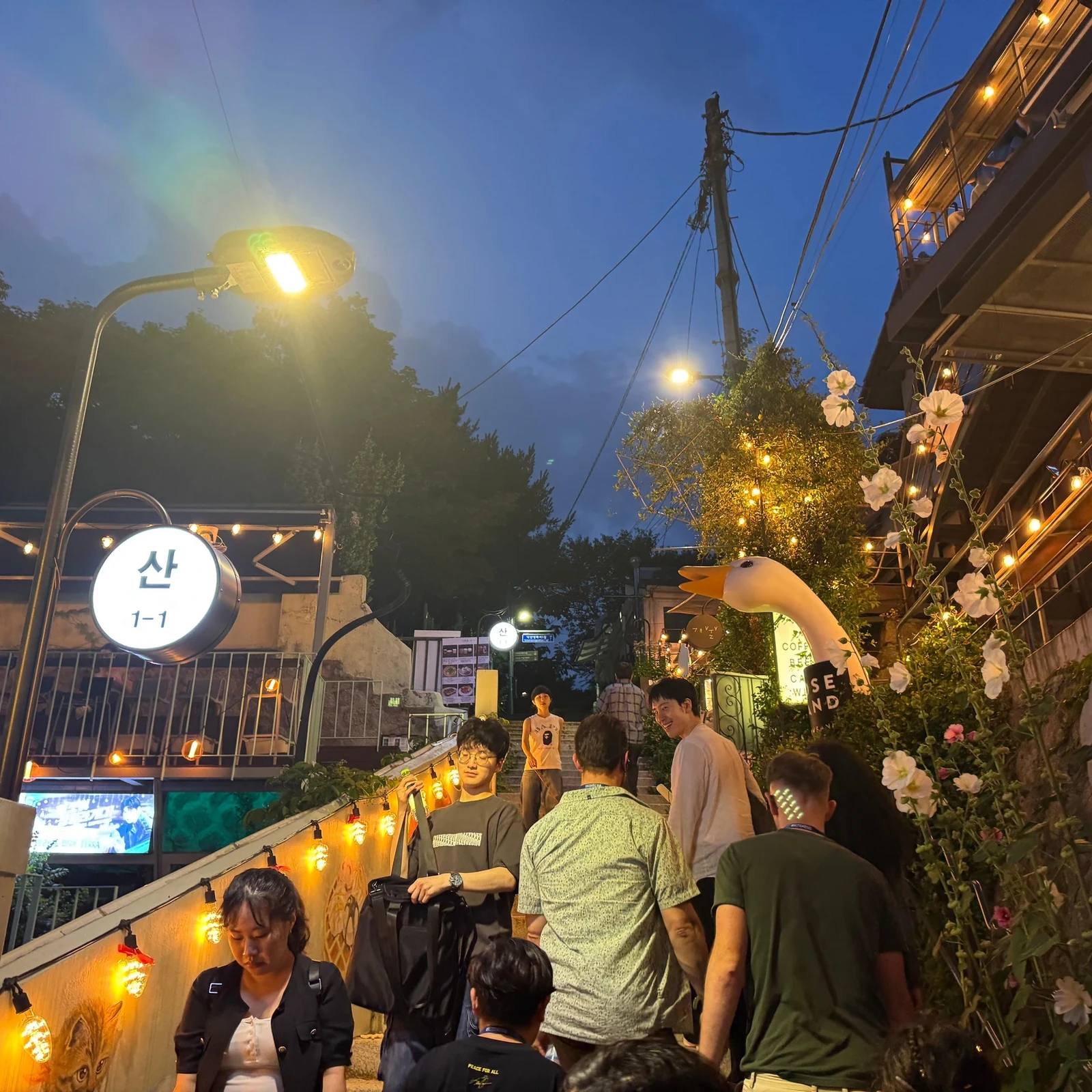
Discover whether this Seoul nighttime walking tour is worth it, with two hours exploring Naksan Park, Hanyang City Wall and historic neighbourhoods.
 Activity on TourBookGo
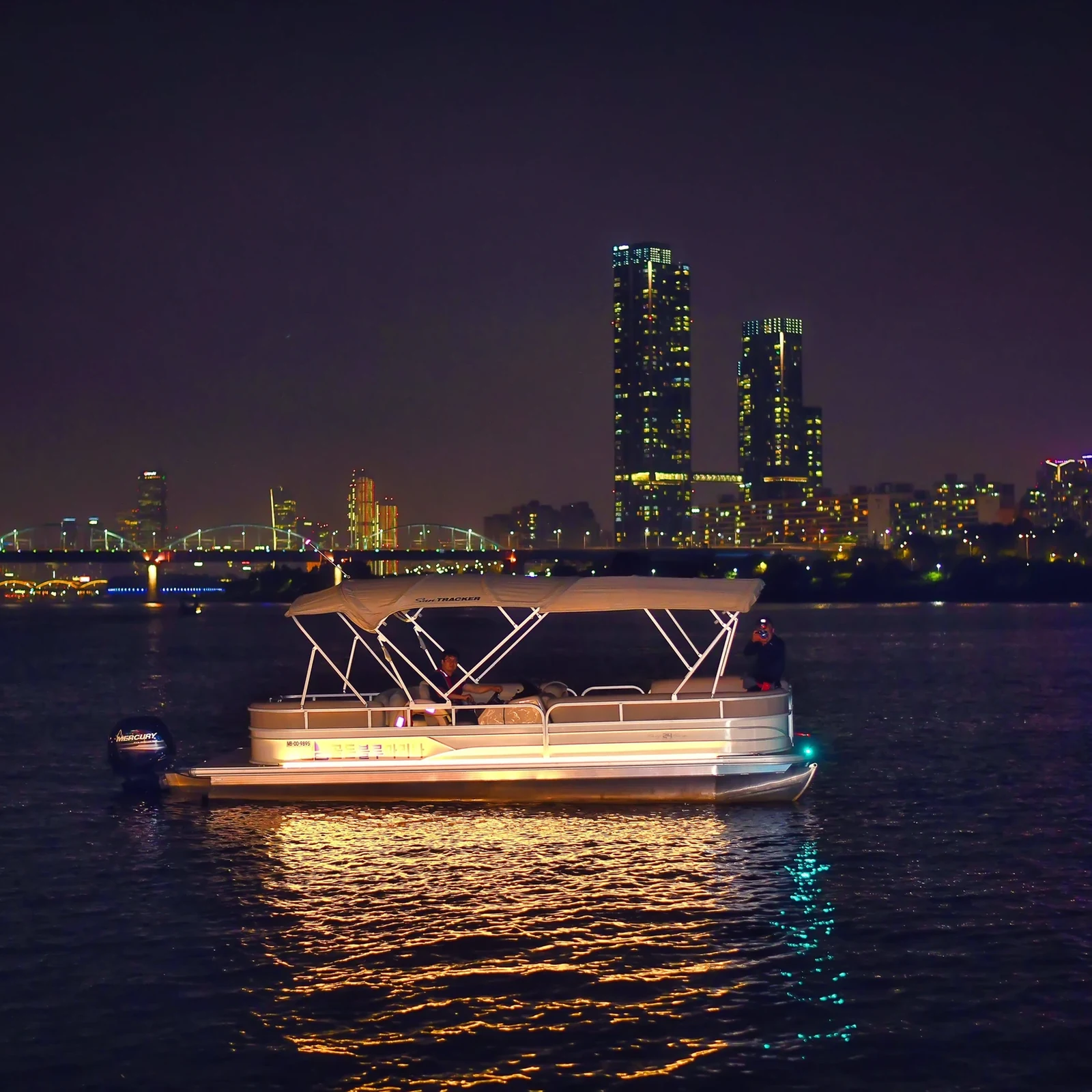
Book a Seoul Han River night boat tour with views of the illuminated skyline, Sevit Island, Banpo Bridge and the Rainbow Fountain.