 Activity on TourBookGo
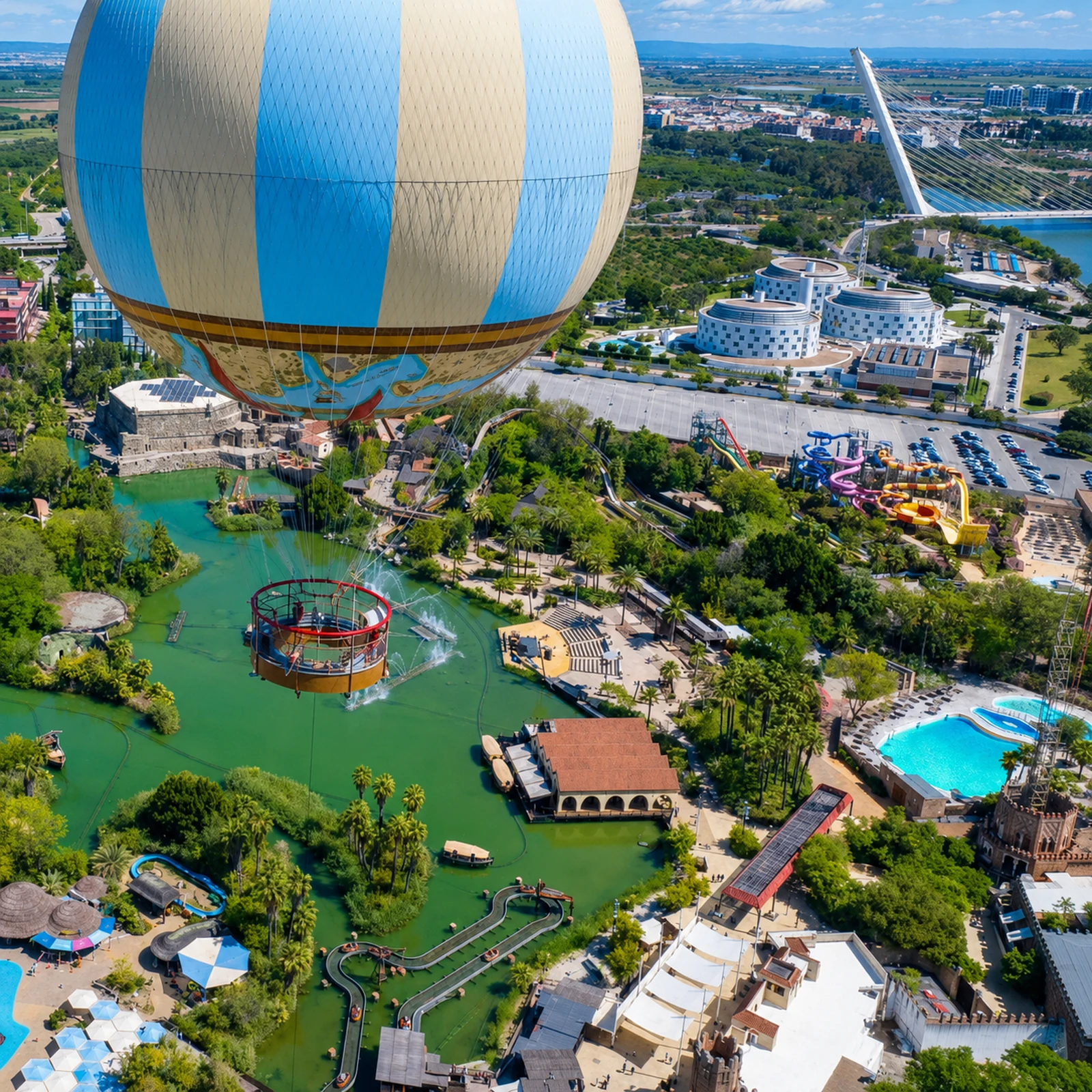
Isla Mágica Seville tickets with optional Agua Mágica
Book Isla Mágica Seville tickets with optional Agua Mágica. A 1-day family theme park plan from €27, with no ticket-office queue and free cancellation.
If you are wondering what to do in Seville, start by combining its great landmarks with street life: Seville Cathedral, the Giralda, the Real Alcázar, Triana, Plaza de España, the Setas, the Guadalquivir, tapas and the slower rhythm the city demands.
What to do in Seville cannot be answered with a simple list of monuments. You have to walk through it when the sun begins to gild the façades, breathe in the scent of orange blossom if spring is on your side, listen to the murmur of a square before dinner and accept that part of its beauty also demands patience: queues, heat, crowded streets and higher prices in the most touristy areas. Even so, when you visit it at the right rhythm, Seville has an intensity that is hard to forget. It is a city of cool patios, silent churches, noisy bars, sought-after shade and sunsets that turn the Guadalquivir into a sheet of copper.
Compare locations and options to find a base that suits your trip. Booking.com confirms current availability and pricing.
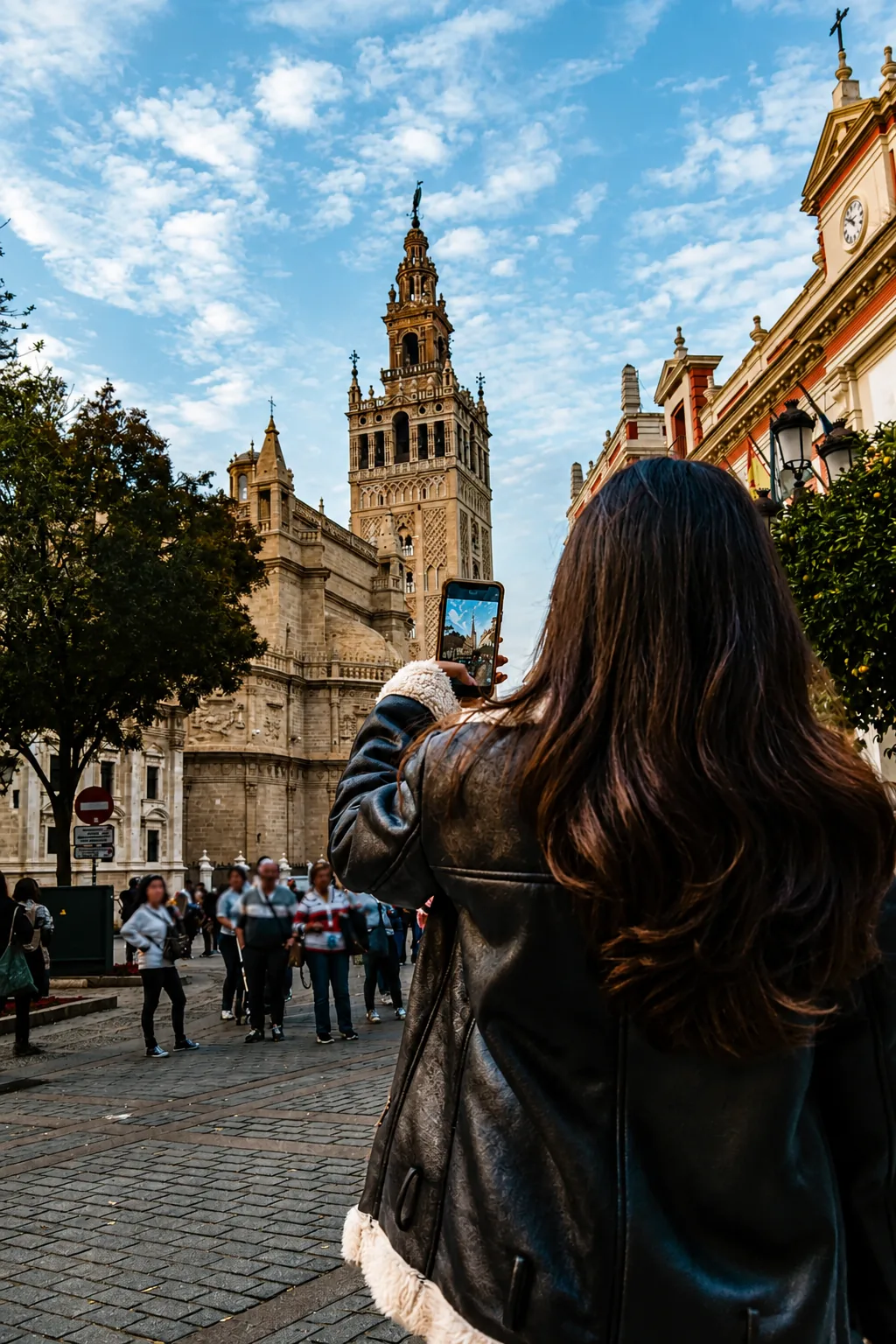
Find accommodation on BookingSeville Cathedral and the Giralda form one of the city’s most powerful images. Seville Cathedral stands as the city’s great Gothic landmark, and a cultural visit usually also includes the Giralda and the Church of El Salvador, although opening times may change due to religious services or cultural events. It is worth checking the official calendar before you go.
The best part is not only going inside, but also slowly walking around it: Plaza del Triunfo, the Patio de los Naranjos, the surrounding streets and that Giralda that appears around corners like a stone compass.
It may disappoint those looking for an intimate visit: it is one of the essential places in Seville and also one of the busiest. It is worth going early or booking a less popular time slot.
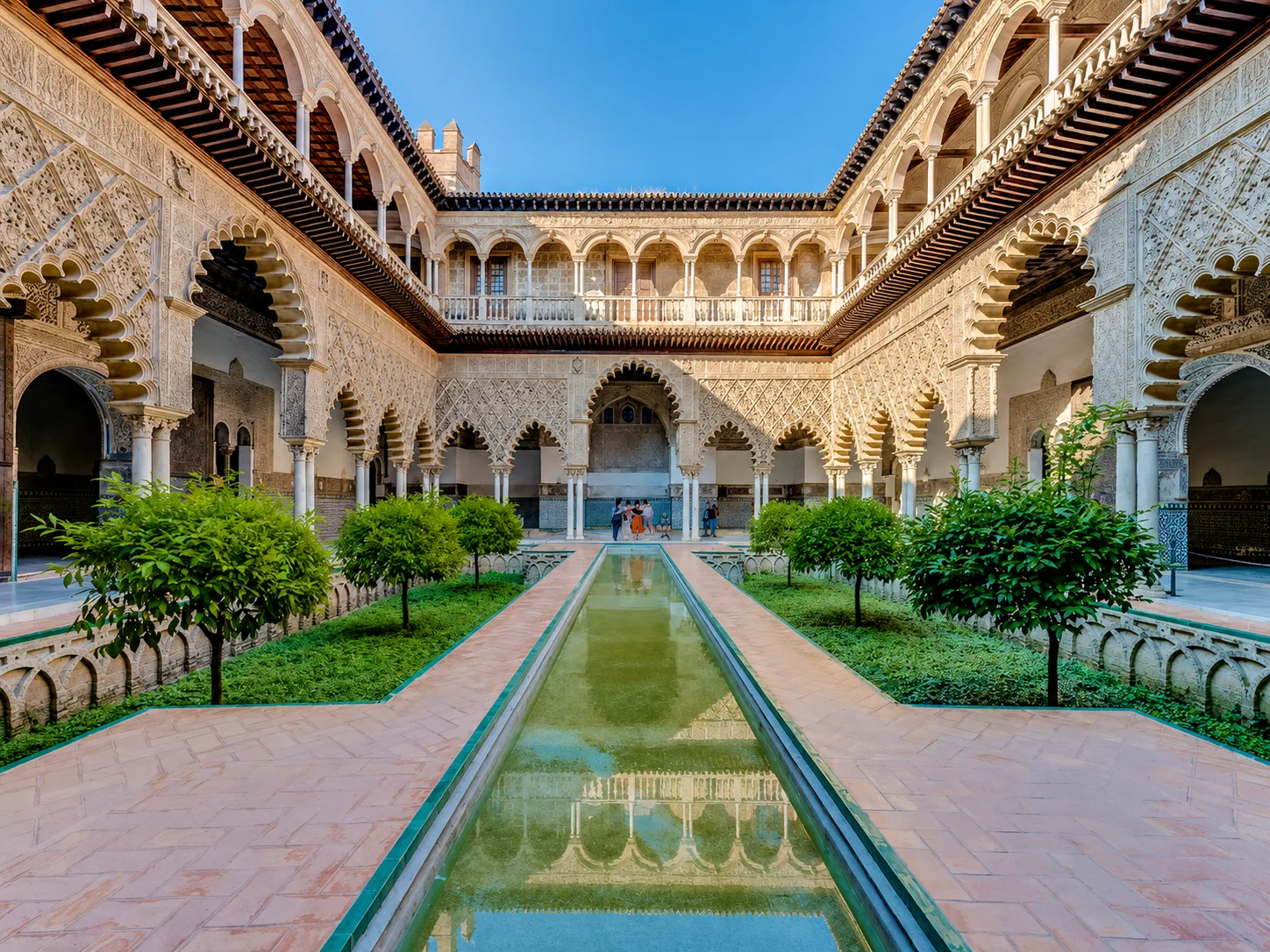
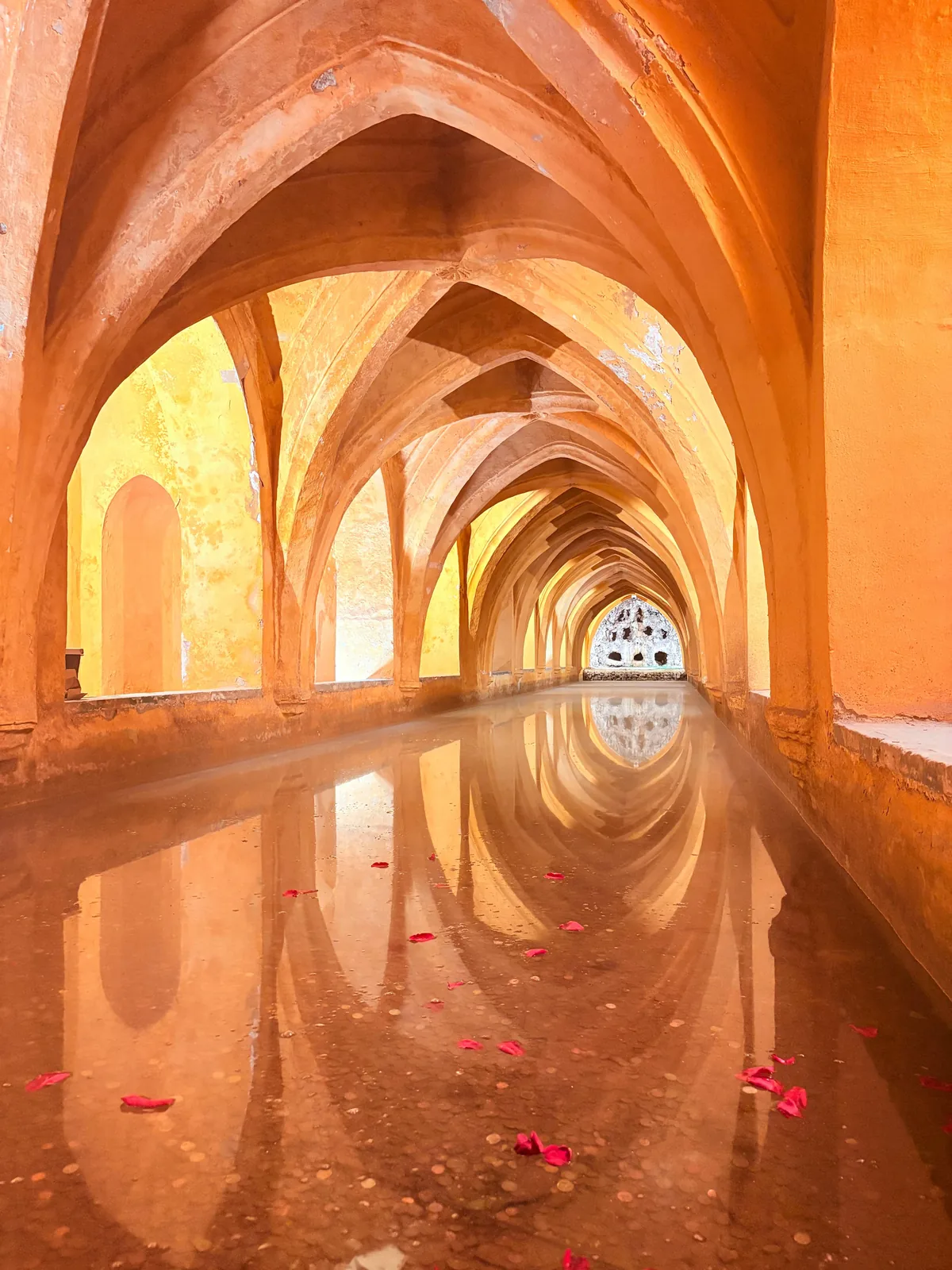
The Real Alcázar of Seville is one of those places where the city becomes almost liquid: water, ceramics, gardens, arches, shade and silence between walls steeped in history. It is not a place to rush through. Its beauty lies in the details: a gallery, a fountain, a reflection, a room that seems to change with the light.
It is a highly recommended visit for lovers of architecture, history and gardens. It is also one of the places where overtourism is most noticeable, so buying tickets in advance is usually a good idea, especially in high season.
The Santa Cruz neighbourhood is beautiful, but it is also very popular with visitors. Its whitewashed alleyways, flower-filled balconies, small squares and hidden taverns still retain their charm, although some areas clearly live off tourism.
The best time to wander through it is early in the morning or at dusk, when the light is softer and the streets breathe more easily. Plaza de Doña Elvira, Callejón del Agua and the streets near the Alcázar have an obvious beauty, but it is worth drifting a little away from the most obvious routes to find a Seville that feels less decorative and more real.
Triana is not just “the neighbourhood on the other side of the river”. It has a character all its own. Once you cross the bridge, Seville changes tone: more working-class, more ceramic, more tavern-like, more street conversation. Calle Betis offers one of the best-known views of the historic centre, but Triana’s soul is better felt in its inner streets, its bars and its market.
It is a good neighbourhood for eating, wandering without a strict route and understanding another side of the city. That said, some areas by the river are very much geared towards visitors; not everything that looks authentic really is.
Plaza de España is grand, theatrical and photogenic. It may seem excessive, but it works: its bridges, tiles, towers and galleries create a monumental scene that is hard to match. It is one of the most visited places in Seville, so do not expect solitude.
Afterwards, María Luisa Park offers something that is worth its weight in gold in Seville: shade, trees, benches, fountains and a chance to pause. On hot days, this plan works much better early in the morning or late in the afternoon. At midday in summer, even the most beautiful places can become demanding.
The Setas de Sevilla divide opinion: some love them, while others feel they clash with the city’s traditional aesthetic. That is precisely what makes them interesting. From the viewpoint, the city is seen in a different way: rooftops, bell towers, hidden patios and a low skyline that lights up at sunset.
The site opens every day with generous hours, from 9:30 a.m. to 12:30 a.m., with the last stated entry at 11:45 p.m., although it is always worth checking the official information before planning your visit.
It is worthwhile if you enjoy urban views and photography. Perhaps less so if you are only looking for historic, classical Seville.
The Guadalquivir softens Seville. Walking from the Torre del Oro towards Triana, pausing on the bridge, watching the façades reflected in the water and listening to the city’s movement from the riverbank is one of the simplest and most pleasant things to do.
River cruises can be entertaining on a first visit, although they are not always the deepest way to experience the city. For many travellers, a quiet walk at sunset offers more emotion than an overly guided route.
Seeing flamenco in Seville can be an intense experience, but it is worth choosing carefully. Not all shows have the same quality or atmosphere. The tablaos in the centre are convenient and accessible, although some can feel overly geared towards tourists.
For anyone who has never seen live flamenco, it is worth dedicating an evening to the experience. The key is not to expect it as a folkloric postcard, but as something more serious, physical and emotional.
Seville is best enjoyed at the bar: spinach with chickpeas, salmorejo, braised pork cheeks, montaditos, fried fish, Russian salad, ham, cheese, stews and fortified wines. Eating tapas in Seville does not require luxury, but it does require choosing carefully.
Avoid restaurants with huge menus in several languages next to the main monuments if you are looking for something more authentic. In Seville, you tend to eat better when you move a few steps away from the obvious route, notice where locals go in and accept that some good bars are not designed for Instagram.
Seville in the rain loses part of its outdoor life, but it does not run out of things to do. The Cathedral, the Alcázar, the Archivo de Indias, historic churches, museums, markets and traditional bars allow you to enjoy the city without depending on the sun.
Rain also has one virtue: it cleans the streets, slows the pace and reveals a more intimate Seville, with reflections on the cobblestones and the smell of wet stone.
With children, Seville works better if you do not overdo long monument visits. Plaza de España, María Luisa Park, riverside walks, some museums and the Setas can be easier to manage than a whole day of churches and palaces.
In summer, you need to be especially careful: short distances, frequent breaks, water, shade and indoor plans during the hottest hours of the day.
Seville is a very rewarding city for couples: outdoor dinners, walks through Triana, sunsets by the river, patios, hotels with terraces and warm evenings when the weather allows. You do not need to fill every hour with visits. Sometimes the best plan is to walk without a map and sit in a square just as the city begins to switch on its streetlights.
Seville can be tiring. In high season there are queues, full terraces and areas where tourism weighs too heavily. In summer, the heat can completely shape the trip. Some experiences have become more expensive, and certain corners of the centre can feel more like a stage set than a lived-in neighbourhood.
That does not make the city any less worthwhile. It simply means you need to choose the right moment, book the important things and avoid trying to see everything in two days.
The best way to experience Seville is to combine monuments with street life. A day made up only of visits can become overwhelming; a day spent only wandering can leave you feeling as though you have seen too little. The ideal approach is to alternate: one major visit in the morning, a slow lunch, a rest if it is hot and a walk at sunset.
Spring and autumn are usually very pleasant seasons, although they are also busier. Winter can be a pleasant surprise: fewer people, clear light and mild temperatures on many days. Summer, on the other hand, requires adjusting your schedule and lowering expectations during the middle of the day.
Do the essentials, but do not stop there. Go inside the Cathedral, climb the Giralda, wander through the Alcázar, cross over to Triana, take in Plaza de España and see Seville from the Setas. But also leave time for what does not appear on the lists: an uncelebrated tavern, a church open by chance, a shaded street, a brief conversation, the sound of a fountain, a shared table filled with the clatter of plates and life.
Seville is worth it when it is not visited as a collection of monuments, but as an intense, beautiful, imperfect and deeply sensory city.
Find selected experiences in Seville that combine essential sights, local activities and distinctive plans.
Activity on TourBookGoBook Isla Mágica Seville tickets with optional Agua Mágica. A 1-day family theme park plan from €27, with no ticket-office queue and free cancellation.
 Activity on TourBookGo
Book a Seville Cathedral, Giralda and Alcazar tour with an authorised guide, organised tickets and skip-the-line access. From 53 EUR.
 Activity on TourBookGo
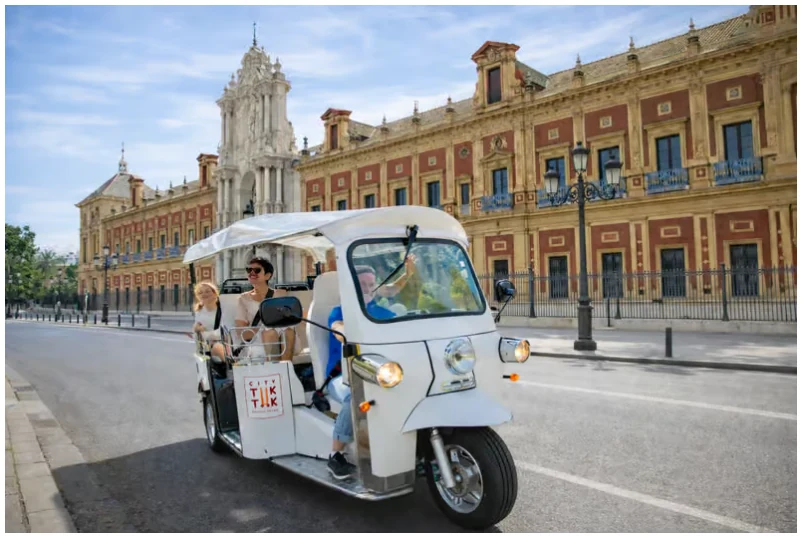
Book a private tuk tuk tour in Seville with a local guide. See Triana, Torre del Oro, Plaza de España and more by electric vehicle. From 24 EUR.