Where to stay in Seville: best areas, charming neighbourhoods and mistakes to avoid
Choosing where to stay in Seville can make a big difference to your trip. Waking up beside the walls of the Alcázar, among whitewashed alleyways and quiet patios, is not the same as staying in a more modern area that is convenient for parking but less evocative.
Seville is a joy to explore on foot, but it can also be hard going when the heat sets in, when the streets of the centre fill up, or when you discover that your “central” hotel is on a noisy street until the early hours. If you are deciding where to stay in Seville, the real question is how to balance location, rest and the kind of trip you want. The Cathedral, the Giralda, Santa Cruz, the Alcázar, the Guadalquivir, Triana and Plaza de España can all fit into the same itinerary without long journeys, but each neighbourhood has its own personality.
For a first visit, the historic centre, Arenal or Santa Cruz are the most rounded options.
Triana offers local character without sacrificing too much convenience.
In Seville, it is worth prioritising air conditioning, good soundproofing and a realistic walking distance.
Booking.com
Accommodation in Seville
Compare locations and options to find a base that suits your trip. Booking.com confirms current availability and pricing.
Where to stay in Seville historic centre: the most practical option for a first visit
Seville’s historic centre is the most convenient choice for first-time visitors who want everything close at hand: monuments, restaurants, shops, tapas bars, shady squares and that unmistakable Sevillian atmosphere, a mix of elegance, bustle and street life.
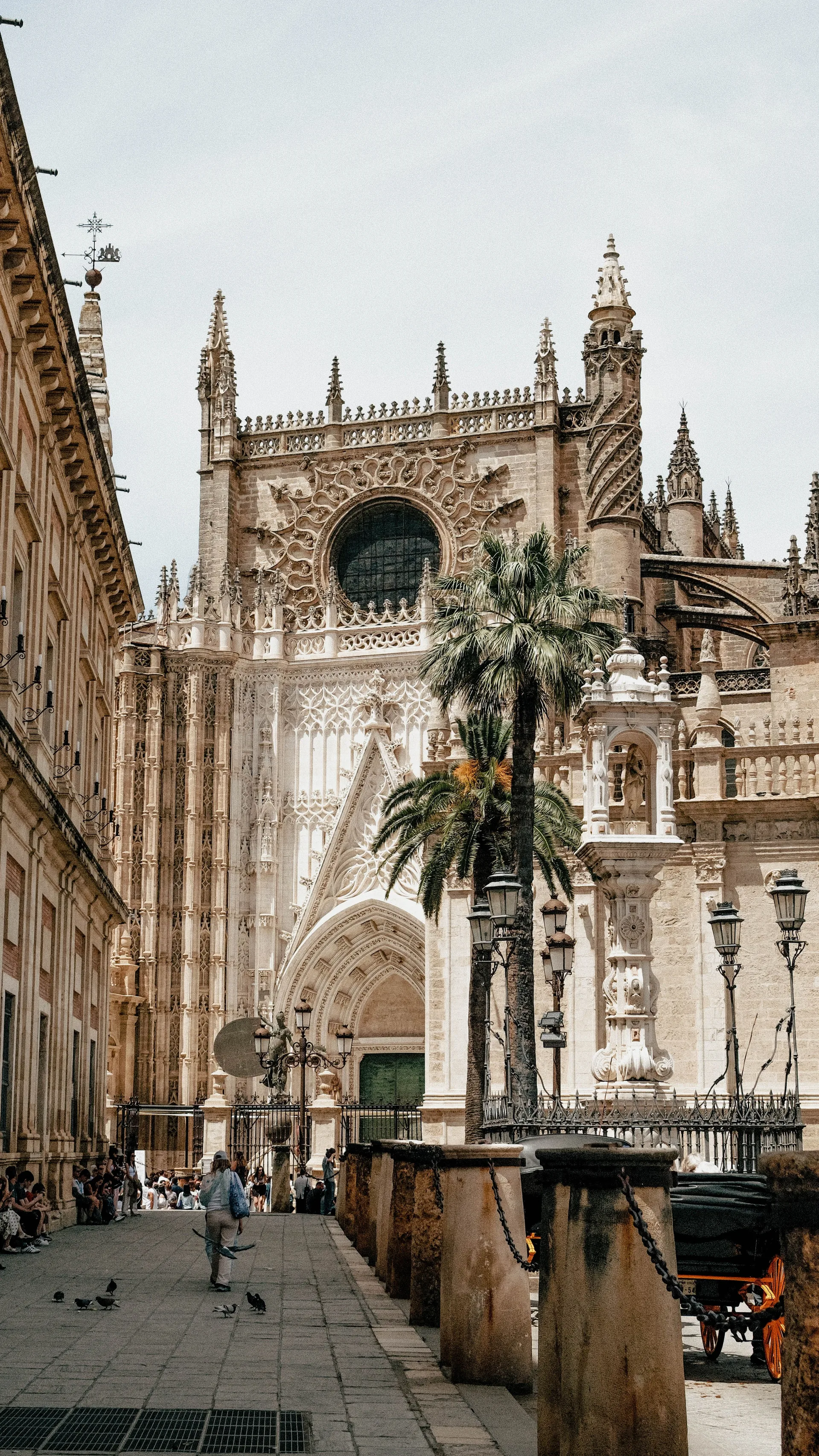
Staying near the Cathedral, the Giralda or the City Hall means you can head out early, return for a rest in the middle of the afternoon and go back out at sunset, when the light turns golden on the stone and the terraces begin to fill.
It is an ideal area for two- or three-day breaks, couples, travellers without a car and anyone who prefers walking to relying on public transport.
The less appealing side is the price. Accommodation is usually more expensive, especially in spring, during Holy Week, the April Fair and on key weekends. It is also worth checking the exact street carefully: some areas are quiet and elegant, while others can be noisy because of bars, terraces or late-night foot traffic.
It is worth checking the exact street carefully: some areas are quiet and elegant, while others can be noisy because of bars, terraces or late-night foot traffic.
Santa Cruz: postcard-perfect Seville, beautiful but not always peaceful
The Santa Cruz quarter is one of the most atmospheric places to stay in Seville. Its narrow streets, white façades, flower-filled balconies and little squares seem made for wandering without looking at the clock. Staying here feels like a privilege: at dawn, before the tour groups arrive, the neighbourhood retains an almost intimate calm.
It is a wonderful area for couples, travellers looking for charm, photography lovers and anyone who wants to feel the city’s most historic side right from the hotel door.
But Santa Cruz can also disappoint those looking for a very local experience or spacious surroundings. It is touristy, sometimes too much so. Some streets are narrow, access by car can be tricky and certain small hotels have rooms with little natural light or views onto interior courtyards. Before booking, it is worth checking carefully whether the property has a lift, air conditioning and good soundproofing.
Before booking, it is worth checking carefully whether the property has a lift, air conditioning and good soundproofing.
Arenal: elegant, central and very well located
Arenal, between the Cathedral and the Guadalquivir River, is one of the most balanced areas to stay in Seville. It has the beauty of the centre without feeling as maze-like as Santa Cruz. From here, you can easily reach the Maestranza bullring, the river, Triana, the Cathedral and many tapas areas.
It is a good choice for travellers who want comfort, location and a certain classic feel. Its streets have history, but also enough space to move around more easily. At dusk, the walk towards the Guadalquivir is one of Seville’s small luxuries: the city is reflected in the water, Triana lights up on the opposite bank and the air seems gentler.
It can be an expensive area for quality accommodation, but it is especially recommended for a first visit if your budget allows.
Triana: local character across the river
Triana is not just a neighbourhood to sleep in; it is a different way of seeing Seville. On the other side of the Guadalquivir, it has kept a very strong identity: ceramics, long-standing bars, patios, churches, a market and a special connection with flamenco and popular life.
Staying in Triana is worth considering if you are looking for a more local atmosphere without moving too far from the centre. Cross the Isabel II Bridge and you are quickly in Arenal and the monumental area. It is an appealing option for travellers who already know Seville, for slightly longer stays or for those who would rather have dinner in neighbourhood bars than sleep in the heart of the tourist district.
The downside is that not all of Triana is equally close. Some streets are very well connected to the centre; others involve more walking than expected, which can feel like a lot in summer or with young children. Some areas are also lively at night, so it is worth checking the exact location.
Some streets are very well connected to the centre; others involve more walking than expected, which can feel like a lot in summer or with young children.
Alameda and Feria: alternative atmosphere, nightlife and more varied prices
The area around Alameda de Hércules and Calle Feria offers a younger, more creative and more everyday side of Seville. Here, modern bars sit alongside old taverns, markets, independent shops and squares where the city feels less solemn than around the Cathedral.
It can be a good area for young travellers, groups of friends, people looking for nightlife or those who prefer accommodation with slightly better value for money than in the monumental centre.
It is not the best option for everyone. Some streets can be noisy, especially at weekends. And although you can walk to the centre, you are not as close to the major monuments as you would be in Santa Cruz or Arenal. For families with young children or travellers looking for absolute peace and quiet, there may be more comfortable options.
Nervión: practical, modern and convenient if you arrive by train
Nervión is a modern, commercial and well-connected area, particularly interesting if you arrive in Seville by train at Santa Justa station or if you are looking for functional hotels, more space and better transport links. It does not have the historic charm of the centre, but it offers convenience, services, public transport and accommodation that can sometimes be more competitive.
It is a good choice for business trips, stays with a car, visits where budget matters more, or travellers who do not need to sleep surrounded by monuments.
The main disadvantage is emotional: you do not wake up in the most beautiful version of Seville. To enjoy the centre, you will have to walk farther, take public transport or use a taxi. If it is your first visit and you want to feel the city from the very first minute, Nervión may seem too practical and not magical enough.
Los Remedios: quiet, residential and useful during the Fair
Los Remedios is a residential, orderly and comfortable area located near Triana and the April Fair grounds. Outside specific dates, it can be a peaceful option for those looking to sleep away from the noise of the centre and get around at an unhurried pace.
During the Fair, its location becomes especially convenient, although prices usually rise and availability drops sharply. For a classic sightseeing visit, it would not be my first recommendation, unless you find particularly good accommodation or are travelling with specific needs for quiet, space or parking.
Areas to avoid or consider carefully
There is no need to exaggerate: Seville is an enjoyable and visitor-friendly city, but some locations can make the experience more complicated. Rather than avoiding whole neighbourhoods, it is better to avoid accommodation that is too far away if your goal is to explore the city on foot.
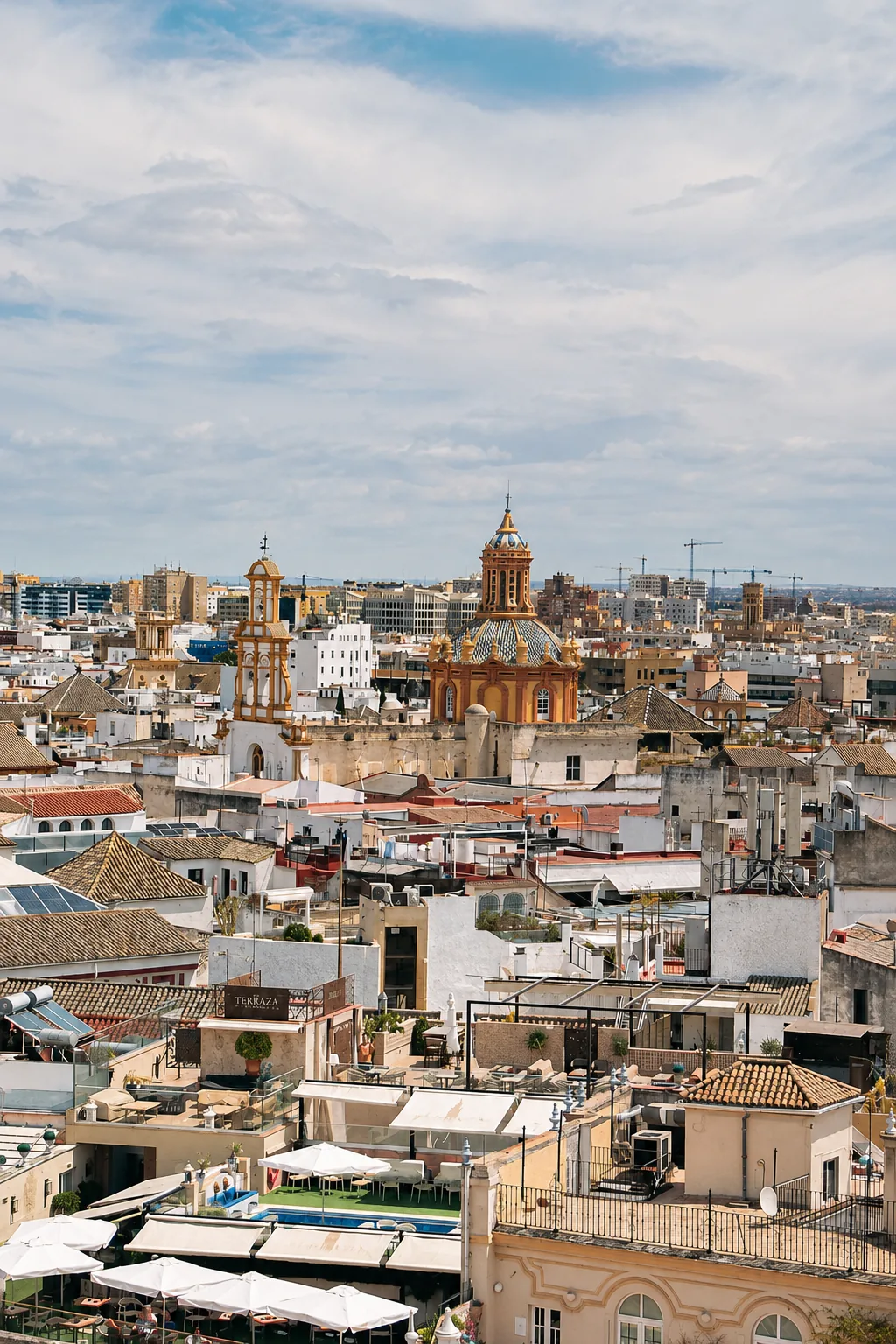
It is also worth being careful with hotels that advertise themselves as “near the centre” but leave you dependent on buses or long walks. On a map, twenty or thirty minutes may not look like much; in August, under the Sevillian sun, they can feel endless.
In the centre, the issue is usually not distance but noise. Streets with bars, terraces, stag and hen parties or heavy late-night foot traffic can ruin your rest. Before booking, it is worth reading recent reviews about quietness, windows and air conditioning.
Before booking, it is worth reading recent reviews about quietness, windows and air conditioning.
Do you need a car to stay in Seville?
To visit Seville, you usually do not need a car. In fact, it can be a nuisance. The centre has narrow streets, restrictions, expensive parking and areas where driving is uncomfortable. If your trip is focused on the city, the best option is to stay in a walkable area and get around on foot, by tram, metro, bus or taxi when needed.
A car only makes sense if Seville is part of a wider route through Andalusia, with stops in villages, beaches or nearby cities. In that case, it may be better to stay outside the historic centre or choose a hotel with clear parking arrangements and easy access.
The best area depending on your travel style
For a first visit to Seville, the historic centre, Arenal or Santa Cruz are the most rounded options. For a stay with more local flavour, Triana offers character without sacrificing too much convenience. For a younger atmosphere and lively nights, Alameda and Feria can be a very good fit. For practical trips, train arrivals or work, Nervión does the job without promising romance. For the April Fair, Los Remedios can be strategic.
The choice depends less on which is “the best neighbourhood” and more on how you want to experience Seville: as an old postcard when you open the window, as a city of bars and markets, as a monumental getaway or as a comfortable base for exploring Andalusia.
One final tip before booking
In Seville, location matters, but so does rest. Prioritise air conditioning, good soundproofing, recent reviews and a realistic walking distance. The city can be delightful in spring and autumn, intense in summer, thrilling during its major festivals and somewhat quieter in winter. Each season changes the trip.
Staying in the right place allows you to enjoy it without rushing: heading out early while the streets still smell of coffee, taking shelter during the hottest hours and returning at sunset, when Seville becomes slower, more golden and more itself.
Prioritise air conditioning, good soundproofing, recent reviews and a realistic walking distance.
C
DiscoverCars
Car rental
Compare prices and book your rental car at the best price.
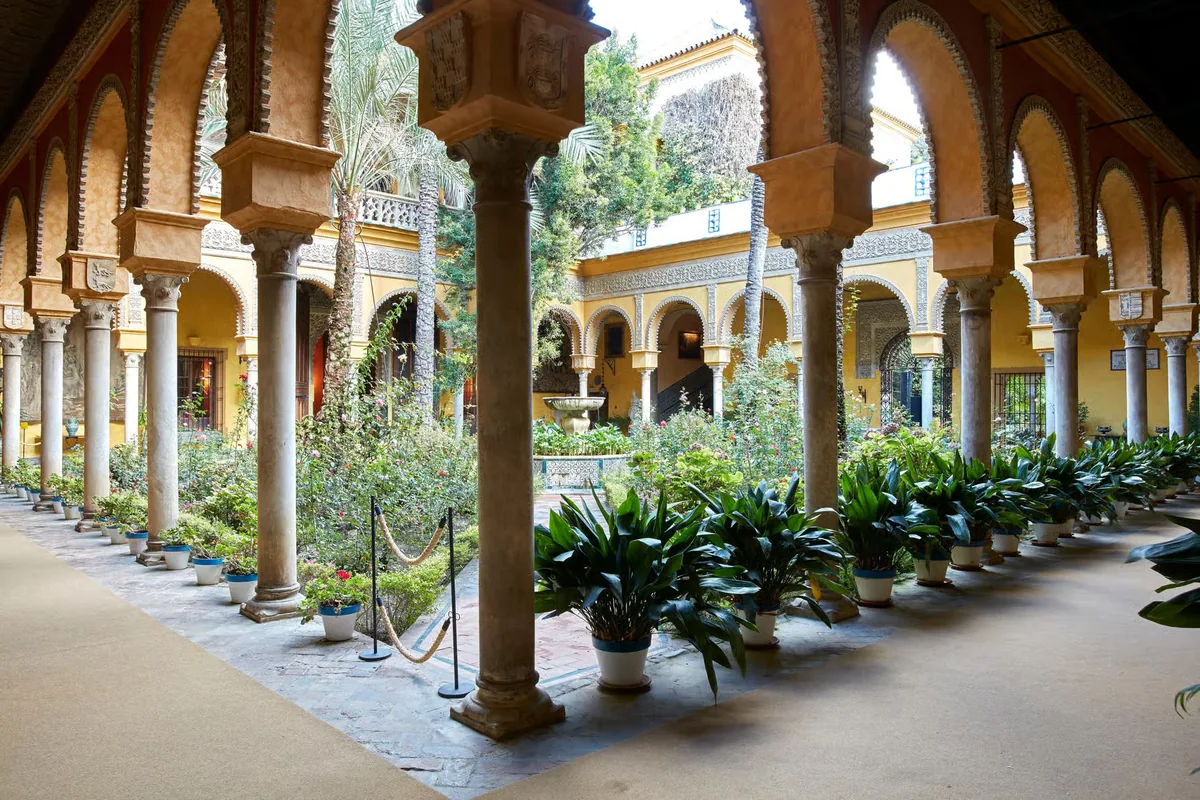
Book a Palacio de las Dueñas Seville ticket with in-app audio guide. From 15 EUR, historic courtyards, flexible visit and free cancellation 24h before.
From 15 EUR per personThe activity states that it is valid for 1 day, but no fixed route duration is given.
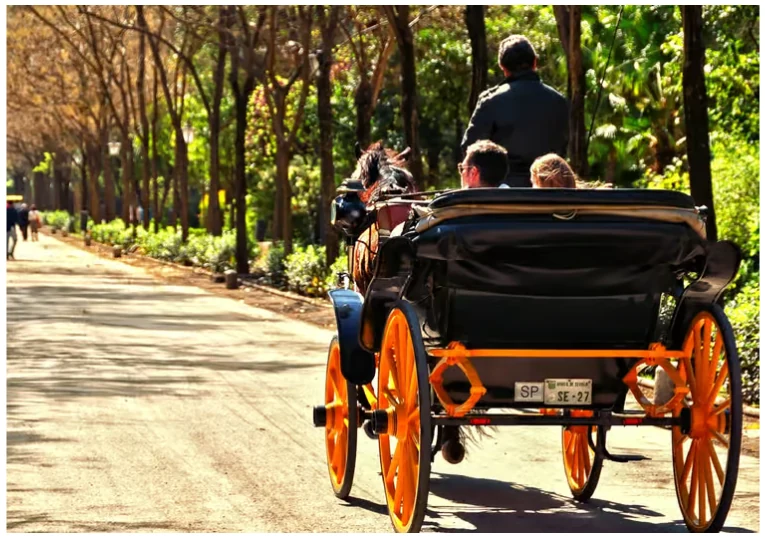
Book a horse-drawn carriage ride in Seville lasting about 45 minutes. See Plaza de España, María Luisa Park, Torre del Oro and Plaza del Triunfo on a private carriage tour.
From EUR 85 per group of up to 4 peopleThe indicated duration is approximately 45 minutes.
 Activity on TourBookGo