 Activity on TourBookGo
Tokyo Imperial Palace walking tour and shogun history
Book a Tokyo Imperial Palace walking tour through the East Gardens with an English-speaking guide, Edo Castle context, shogun history and tickets included.
This Tokyo itinerary helps you organize an immense city by neighborhoods, rhythm and mood: incense-filled temples, neon crossings, immaculate trains, simple dinners and the pauses that make the trip feel real.
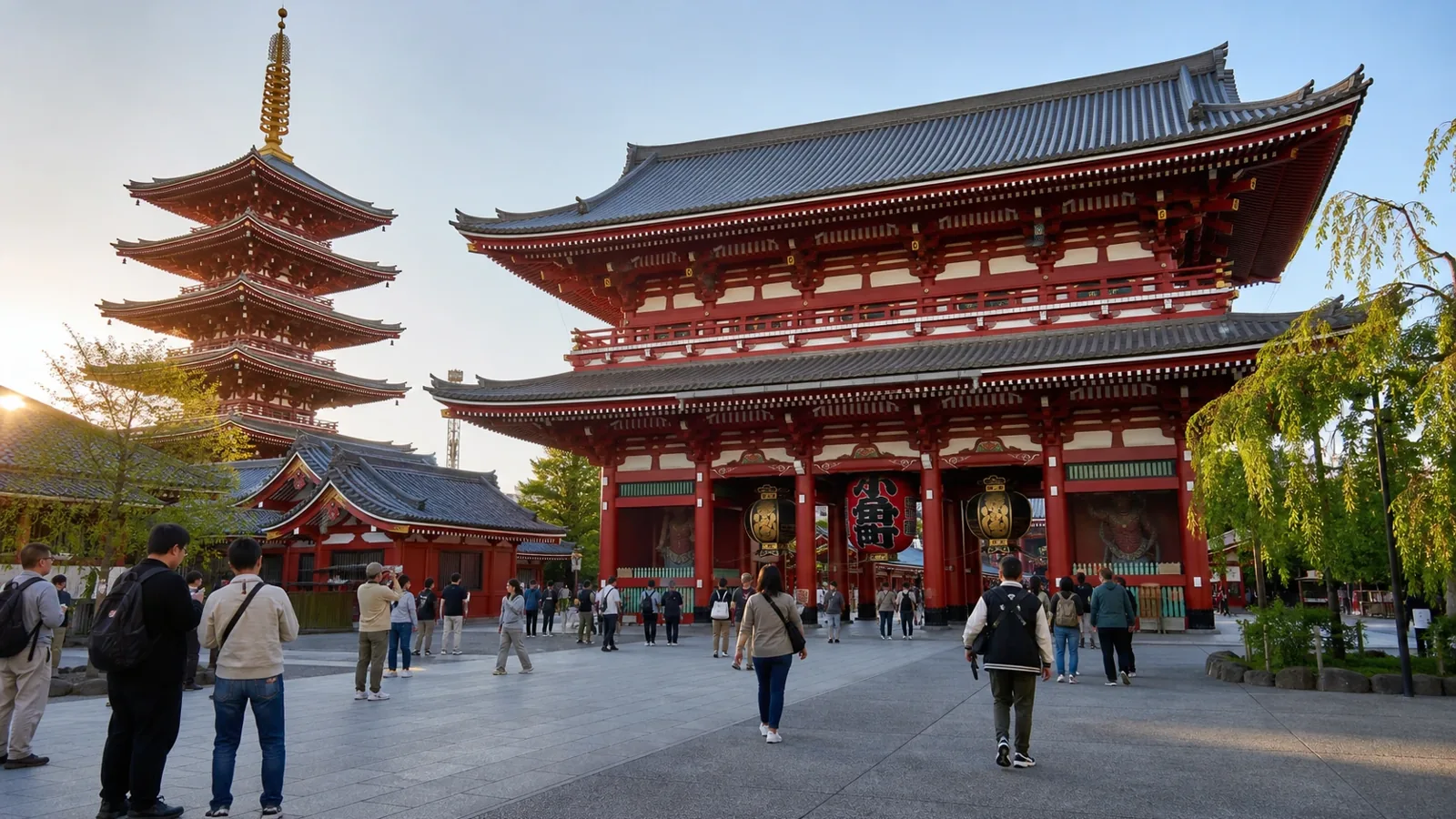
A good Tokyo itinerary is not about rushing from landmark to landmark, but about learning the city in layers. First it dazzles you with neon lights, vast pedestrian crossings and trains that seem to breathe in time with the city. Then another Tokyo appears, lower and quieter: the incense-filled Tokyo of Asakusa, gardens that turn down the noise, tiny restaurants where an eight-seat counter can be worth more than any postcard. The key to enjoying it is not trying to see everything. Tokyo punishes excessive ambition: distances may look short on a map, but transfers, crowds and the sheer scale of the city eventually take their toll. A good Tokyo neighborhood route should group nearby areas together, leave room for wandering and accept that something will always be left out.
Compare locations and options to find a base that suits your trip. Booking.com confirms current availability and pricing.
Find accommodation on BookingWith just one day, it is best to choose a clear route that combines tradition, the contemporary city and urban nightlife without wasting energy on unnecessary transfers.
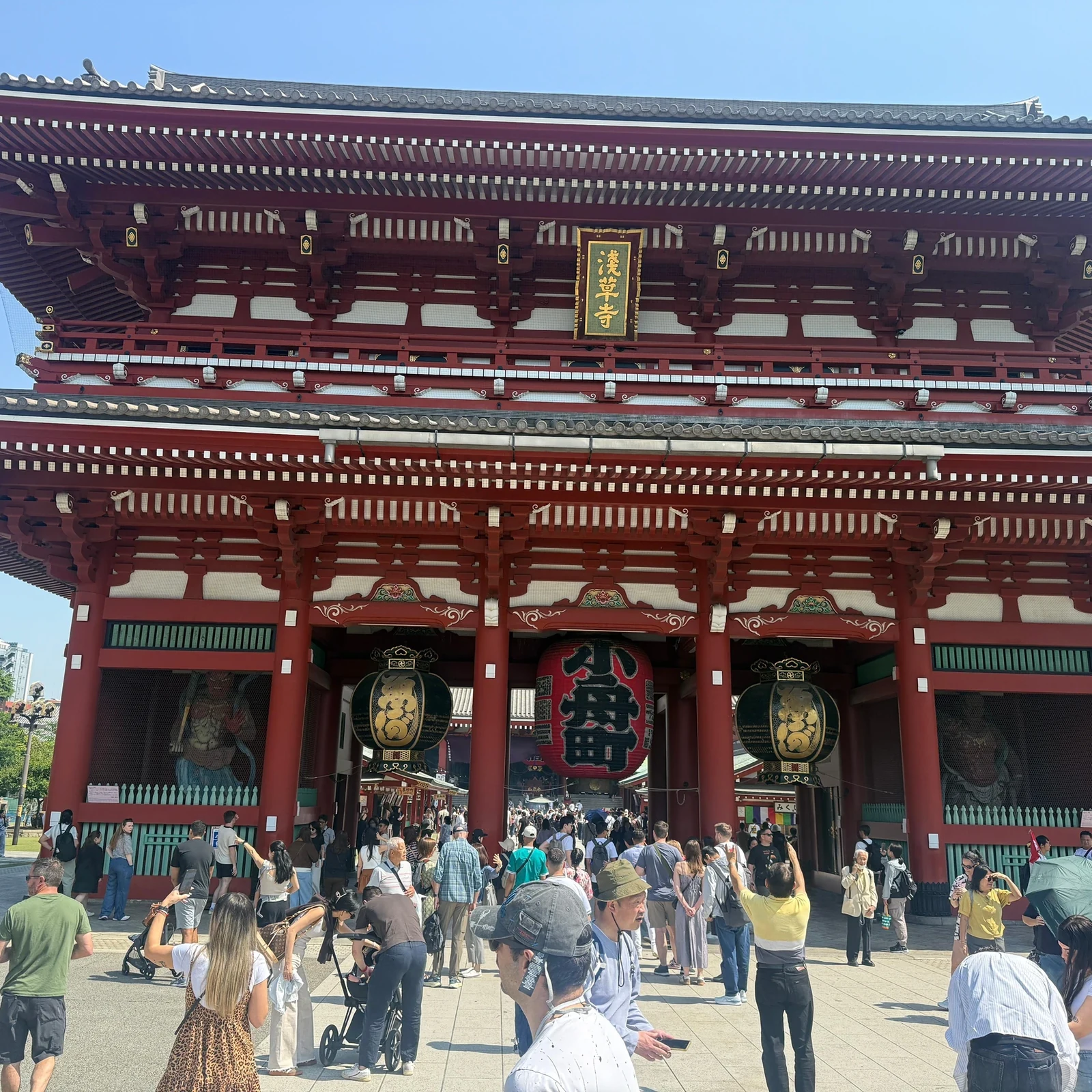
Morning: Asakusa and Old Tokyo. Start in Asakusa, around Sensō-ji, while the shops are still raising their shutters and the sweet smell of dorayaki begins to mingle with incense. It is a touristy area, yes, but also one of the clearest ways to enter Tokyo’s popular memory. Afterwards, cross toward the Sumida River or head to Ueno if you want to add a garden, museums or a quieter pause.
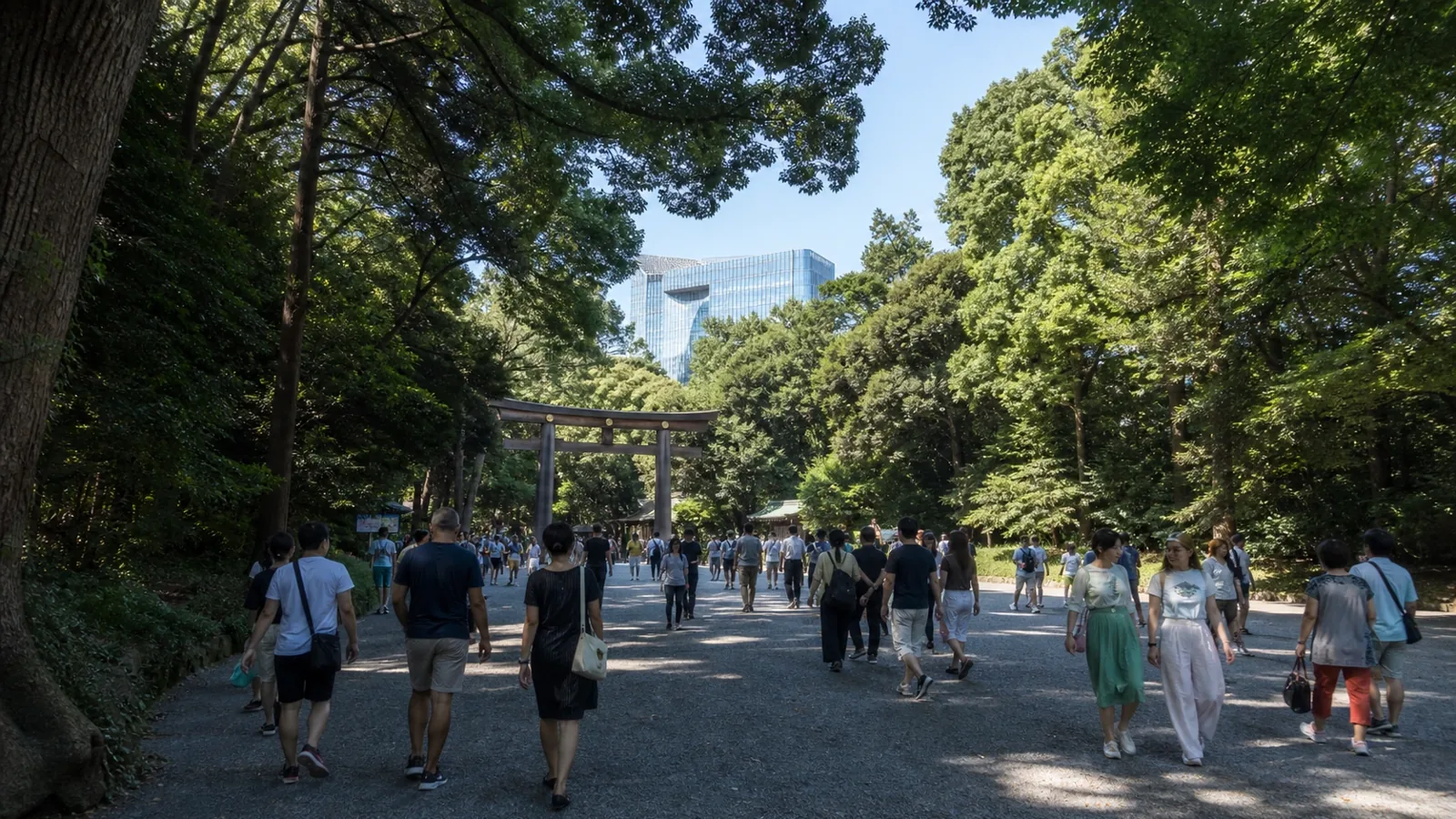
Afternoon: Harajuku, Meiji and Shibuya. In the afternoon, shift gears. Meiji Jingu Shrine offers shade, gravel underfoot and a surprising silence for somewhere so close to Harajuku. Then head down toward Omotesando or Takeshita Street, depending on your tolerance for crowds. Finish in Shibuya, where the famous crossing brings together one of the city’s most recognizable images; JNTO describes it as one of Tokyo’s most iconic places and mentions thousands of pedestrians crossing at its busiest moments.
Night: Shinjuku. End the day in Shinjuku. You do not need to go into every bar or chase the perfect photo: it is enough to walk among the lights, watch the trains release rivers of people and have dinner in a simple izakaya. Anyone expecting an elegant night out may find Shinjuku too noisy; anyone wanting to feel Tokyo’s electric pulse will understand it immediately.
With two days, the city starts to breathe a little better and you can shape your Tokyo itinerary by neighborhood instead of jumping across town every hour.
Day 1: Asakusa, Ueno, Akihabara and Ginza. Dedicate the first day to the eastern side. Asakusa works well in the morning; Ueno offers a cultural or green break; Akihabara is worth it if you are interested in manga, anime, video games or electronics, but it may disappoint anyone who does not connect with that world. At the end of the day, Ginza reveals another side of the city: clean avenues, commercial architecture, department stores and more refined restaurants.
Day 2: Meiji, Harajuku, Shibuya and Shinjuku. The second day can focus on the west: Meiji Jingu, Harajuku, Omotesando, Shibuya and Shinjuku. It is a logical route because it avoids unnecessary jumps across the city. Even so, do not try to enter every shop or go up every observation deck. Tokyo is not enjoyed by ticking boxes, but by choosing well.
Three days allow you to add a more contemporary Tokyo without losing the balance between must-see areas, characterful neighborhoods and time to breathe.
Day 1: Tradition and Historic Neighborhoods. Asakusa, Ueno and Yanaka make for a pleasant combination. Yanaka, if you include it, slows the pace: small houses, cats, discreet temples and shops with a neighborhood feel. It is a good counterpoint to monumental Tokyo.
Day 2: Fashion, Youth Culture and Neon. Meiji, Harajuku, Omotesando, Shibuya and Shinjuku. This day can be exhausting because of the sheer number of stimuli, so it is best to choose one area for dinner and not improvise too late, especially if you are traveling with children or with people who tire easily in crowds.
Day 3: Toyosu, Odaiba, Azabudai Hills or Roppongi. The third day can turn toward Tokyo’s newer side. If digital art appeals to you, teamLab Borderless reopened in Azabudai Hills after moving from Odaiba, according to Tokyo’s official tourism information.
It is not an experience for everyone: it can be fascinating if you enjoy immersive spaces, but somewhat expensive or crowded if you are looking for calm, history or traditional art. The official website itself explains that the museum is designed without a map and does not allow re-entry, important details when planning your visit.
A week does not make Tokyo small, but it does allow you to see it with less anxiety and add day trips from Tokyo without sacrificing the main neighborhoods.
Day 1: Asakusa, Sumida and Ueno. Start with historic, popular Tokyo. Sensō-ji, a walk along the river, Ueno and a simple dinner. It is a good day to adjust to the time zone and not demand too much of yourself.
Day 2: Shibuya, Harajuku, Omotesando and Shinjuku. A day of contrasts: shrine, fashion, crowds and neon. It is better to do it in walking sections and use the train only when it makes sense.
Day 3: Ginza, Marunouchi and the Imperial Palace. A more elegant and orderly day. Ginza for strolling and eating well; Marunouchi for contemporary architecture; the area around the Imperial Palace for a spacious, less crowded pause.
Day 4: Toyosu, Odaiba or Azabudai Hills. Set this day aside for futuristic Tokyo: modern markets, the bay, digital art or large urban complexes. It is worth checking opening hours and tickets before going, because some experiences vary depending on the date and capacity.
Day 5: Neighborhoods with Character. Choose Shimokitazawa, Koenji, Kichijoji or Daikanyama. These are not routes of major monuments, but of cafés, small shops, music, bookshops and local life. They are ideal areas for anyone who has had enough of the icons.
Day 6: A Day Trip from Tokyo. Kamakura is good for temples, the sea and a more human scale. Nikko offers shrines and forest, although it requires more time. Hakone works well for mountains, onsen and views of Fuji when the weather helps, but it can disappoint if you go only to see the mountain and the day is cloudy.
Day 7: Return to What You Liked Most. The last day should not be too packed. Tokyo is best said goodbye to by returning to a neighborhood, shopping at a relaxed pace, having a good bowl of ramen or walking without looking at the map so much.
The practical rule is simple: east with east, west with west. Asakusa, Ueno, Akihabara and Ginza combine well. Meiji, Harajuku, Omotesando, Shibuya and Shinjuku do too. Toyosu, Odaiba, Roppongi and Azabudai Hills work better as their own day or as a carefully chosen half day.
Tokyo’s official tourism website proposes multi-day itineraries with some of these major points of interest, a useful sign that even official routes group the city by areas rather than by an endless list of attractions.
The first mistake is filling every day as if trains were not tiring. The second is staying very far away to save money and then losing those savings in time and energy. The third is booking only famous restaurants: in Tokyo, you can also eat extremely well in discreet places, stations, department-store basements and counters with no international fame.
It is also wise not to idealize the city. Tokyo can be expensive, overwhelming and not very spontaneous in certain highly sought-after places. In summer, humid heat can make any walk feel heavy; in spring and autumn, the most beautiful moments tend to attract more visitors; in winter, the light is clear, but the days are shorter.
Tokyo is very much worth it for anyone who enjoys big cities, food, design, pop culture, trains, contrasts and details. It is less recommendable for those seeking absolute rest, immediate nature or a slow trip without crowds. Even so, those travelers can still find their Tokyo if they move away from the icons and make room for gardens, residential neighborhoods and early mornings.
The city does not reveal itself all at once. It appears in a vending machine glowing at midnight, in a tray of sushi served without spectacle, in the silence of a shrine surrounded by expressways, in the impossible choreography of a station at rush hour. The best Tokyo itinerary is not the one that accumulates the most, but the one that lets you keep looking when the city stops seeming enormous and starts seeming infinite.
Complete your Tokyo itinerary with selected experiences that fit naturally into one-day or multi-day routes.
Activity on TourBookGoBook a Tokyo Imperial Palace walking tour through the East Gardens with an English-speaking guide, Edo Castle context, shogun history and tickets included.
 Activity on TourBookGo
Tokyo bike tour lasting 3 hours with bike or e-bike option, local guide, temples, Hibiya Park, Imperial Palace, Tokyo Station and free cancellation.
 Activity on TourBookGo
Review of the private full-day Tokyo tour with driver/guide, hotel pickup, flexible Senso-ji, Shibuya and Skytree route, and included transport.