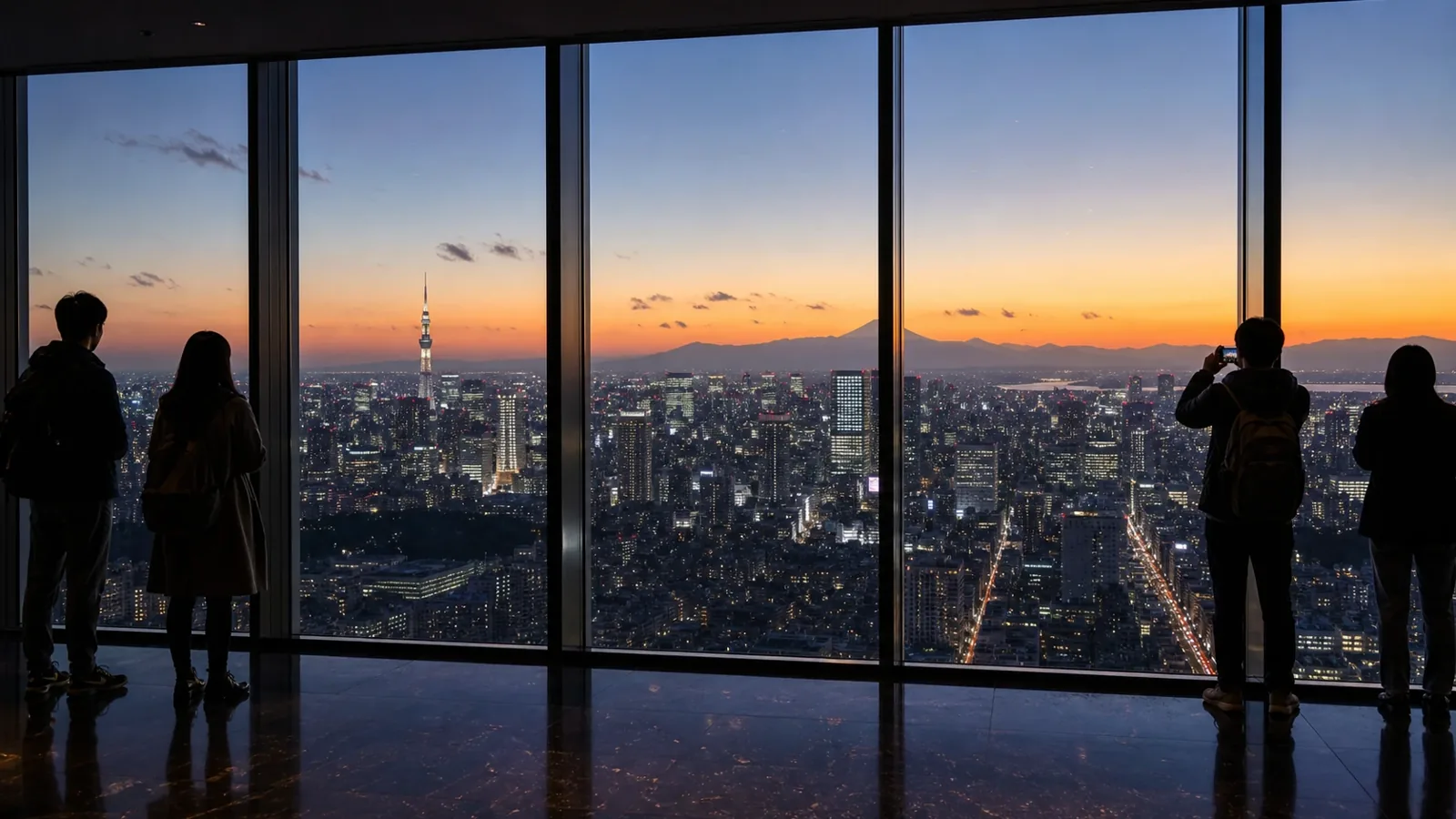


Book your Tokyo Disneyland 1-day ticket in Urayasu: mobile QR entry, seven themed lands, and free cancellation up to 14 days in advance.
View experienceThings to do in Tokyo on a first trip
For a first trip, Tokyo is easier to understand if you choose areas that show its main contrasts: historic temples, gardens, big stations, neon, fashion, viewpoints and neighbourhoods where everyday life appears with less staging.
Asakusa and Senso-ji: ceremonial Tokyo
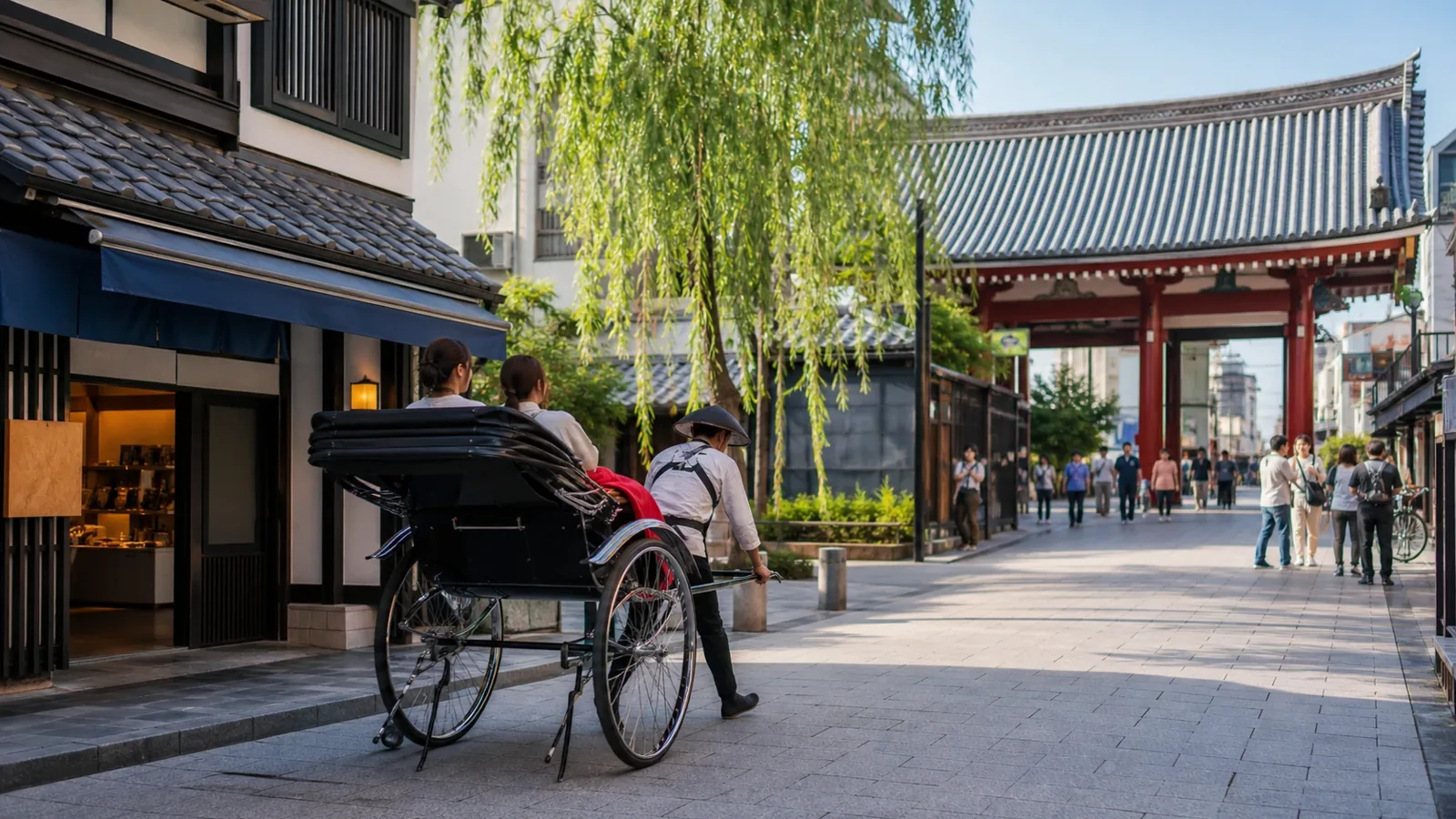
Asakusa is one of the best gateways into Tokyo’s more historic side. Senso-ji Temple, its lanterns, the incense smoke and Nakamise Street create a powerful scene, though not an intimate one: it is often crowded, the shops can feel repetitive, and there are moments when the place feels more touristy than spiritual.
Even so, it is worth visiting. Ideally, go early, when the shutters are still being raised and the neighbourhood still holds on to a little calm. Afterwards, walking towards the Sumida River reveals another Tokyo: more open, with the silhouette of Tokyo Skytree in the background and particularly beautiful light at sunset. Tokyo’s official guide groups Asakusa, Skytree and Ryogoku among the key areas of the city’s east side, a very logical combination for a full day.
Go Tokyo
Ideally, go early, when the shutters are still being raised and the neighbourhood still holds on to a little calm.
Shinjuku: viewpoints, gardens and neon
Shinjuku is an exaggerated summary of Tokyo. By day, it offers skyscrapers, department stores and the green relief of Shinjuku Gyoen; by night, it becomes a city of neon, tiny bars, screens and streets best explored without too much hurry.
Shinjuku Gyoen is one of the city’s best urban escapes: it combines Japanese gardens, lawns, seasonal flowers and views of buildings through the trees. The official tourism information describes it as a natural refuge in the heart of the city, especially prized in spring for its cherry blossoms and in autumn for its colours.
Go Tokyo
The less friendly side: Shinjuku can be confusing, especially around the station. For some travellers it will be thrilling; for others, an exhausting maze of lights, exits and crowds.
Shinjuku can be confusing, especially around the station.
Shibuya and Harajuku: youth, fashion and urban energy
The Shibuya crossing is an iconic image, but it is best not to expect a spiritual revelation. It is, above all, a crossing: impressive for its human choreography, interesting to observe for a few minutes, but not enough as a plan in itself.
The best approach is to combine it with Miyashita Park, a rooftop terrace, design shops, cafés and a walk towards Harajuku or Omotesando. Harajuku is no longer as wild as it was in certain years, but it still has youth fashion, photogenic sweets, quirky shops and the nearby contrast of Meiji Shrine, where the forest seems to close a door between the city and its noise.
The Shibuya crossing is interesting to observe for a few minutes, but not enough as a plan in itself.
Tokyo neighbourhoods made for slow wandering
Tokyo does not reveal itself only through its major icons. Shimokitazawa, Kichijoji, Yanaka, Kagurazaka and Daikanyama show a more everyday city: small shops, cafés, bookshops, low houses, quiet alleyways and local life less concerned with the camera.
This kind of walk is ideal for those who have already seen the essentials or for travellers who prefer atmosphere to monuments. It may disappoint anyone looking for major attractions all the time, but it is often what people remember most afterwards.
Experience pop culture without prejudice
Akihabara, Nakano Broadway, Ikebukuro and parts of Shibuya bring together manga, anime, video games, figures, arcades and otaku culture. It can be fun even for non-fans, as long as you go with curiosity rather than condescension.
Tokyo’s official guide includes anime, manga, pop culture, experiences, nightlife and food among the main interests for exploring the city, confirming what becomes obvious as you walk around: Tokyo does not separate traditional culture from popular culture; both can coexist in the same day.
Go Tokyo
Tokyo does not separate traditional culture from popular culture; both can coexist in the same day.
Museums, digital art and science
For rainy, hot or tiring days, Tokyo works very well indoors. There are classic museums, contemporary galleries, aquariums, planetariums, huge shopping centres and immersive experiences. Odaiba and Ikebukuro are especially convenient areas for families or travellers who want several indoor options close together; Tokyo’s official information highlights, for example, Miraikan in Odaiba as a science museum surrounded by other indoor attractions and late-afternoon or evening options.
Go Tokyo
It is worth booking the most famous experiences in advance and checking updated opening hours. In Tokyo, some exhibitions change, others close on specific days, and demand can be high.
It is worth booking the most famous experiences in advance and checking updated opening hours.
Free things to do in Tokyo
Tokyo can be expensive, but not everything requires spending a lot. Walking around Asakusa, exploring Yanaka, entering Meiji Shrine, watching Shibuya, strolling around the Imperial Palace area, visiting urban parks or exploring neighbourhoods such as Shimokitazawa and Kichijoji can fill several days without sending your budget soaring.
There are also free or low-cost observation decks depending on the season and the building, although conditions may change. Shinjuku, for example, is known for its urban views and for the Tokyo Metropolitan Government Building, mentioned in the official guide as part of the neighbourhood experience.
Go Tokyo
Things to do in Tokyo with kids
Tokyo can be magnificent with children if organised intelligently. It works well when temples and gardens are alternated with aquariums, character shops, trains, observation decks, parks and informal restaurants.
Odaiba, Ikebukuro, Ueno and the Skytree area are usually good family options. The official guide notes that Tokyo Skytree Town includes, in addition to the tower, a shopping centre, aquarium and planetarium, making it a convenient area for concentrating several activities without major transfers.
Go Tokyo
A warning: large stations, rush hour and small restaurants can be difficult with pushchairs or very tired children. It is better to plan less and leave some margin.
It is better to plan less and leave some margin when travelling with children.
Romantic plans for couples
Tokyo is not romantic in an obvious way, but it has moments of very intimate beauty: an evening walk through Nakameguro, dinner at a small counter, Shinjuku’s lights seen from above, a garden in autumn, a rainy afternoon in a hidden café, the Sumida River at sunset.
For couples, the plans that work best are those that do not try to cover too much: one neighbourhood in the morning, an elegant pause in the afternoon and a quiet dinner at night. The usual mistake is turning Tokyo into a to-do list. The city needs room to breathe.
The usual mistake is turning Tokyo into a to-do list.
Tokyo at night
Night in Tokyo is not just one kind of night. Shinjuku offers neon, tiny bars and noise; Shibuya, youth and screens; Ginza, a more grown-up elegance; Ebisu and Nakameguro, dinners and drinks with less glare; Roppongi, international nightlife, though not always with the most refined atmosphere.
Solo travellers can enjoy Tokyo at night very much, but common sense is advisable: keep alcohol consumption under control, avoid overly insistent invitations and do not enter places without clear prices. Tokyo is generally orderly, but tourist naïveté always comes at a cost.
Do not enter places without clear prices.
Day trips from Tokyo
With several days available, it is worth leaving the city for a day. Nikko offers temples, forest and mountains; Kamakura combines Buddhas, shrines and the sea; Yokohama is an easy urban escape; Hakone attracts visitors with its hot springs and views of Fuji when the weather cooperates.
Not all day trips are equally relaxed. Hakone, for example, may require more planning and Fuji is not always visible. Kamakura is usually simpler for a first excursion: train, walks, temples and a stop by the sea.
Kamakura is usually simpler for a first excursion.
What can disappoint about Tokyo
Tokyo disappoints those who expect a traditional city on every corner. Much of Tokyo is concrete, cables, stations, shopping centres and functional buildings. It can also be tiring because of its size, its transfers and the feeling that there is always something else you should be seeing.
But that is precisely its truth: Tokyo is not a single postcard. It is an accumulation of worlds. A temple between apartment blocks. A garden behind an avenue. A memorable dinner in a place with no pretty façade. A vending machine lit up at midnight. An unexpected silence in an immense city.
Common mistakes when choosing what to do in Tokyo
The first is filling each day with too many areas. Tokyo is large, and although the transport system works very well, getting around consumes energy. The second is visiting only famous places and forgetting to wander without a goal. The third is failing to adapt plans to the weather: summer can be humid and heavy; rain changes the pace; spring and autumn make parks and gardens more beautiful, but also attract more visitors. Tokyo’s official guide organises recommendations by month and season, a good clue to how much the experience changes depending on the time of year.
Go Tokyo
Tokyo is large, and although the transport system works very well, getting around consumes energy.
So, what should you do in Tokyo if it is your first time?
For a first trip, a good selection would be: Asakusa and the Sumida River, Shinjuku and Shinjuku Gyoen, Shibuya-Harajuku-Omotesando, a museum or immersive experience, a night in an izakaya, a less touristy neighbourhood such as Yanaka or Shimokitazawa, and a day trip if there is time.
Tokyo is worth it for those who enjoy complex cities, food, design, technology, discreet traditions and contrasts. It may not be ideal for anyone looking for easy rest, instant nature or a small, easily readable city.
The best way to experience it is not to conquer it. It is to let each day show a different version. Tokyo never gives itself away completely, and perhaps that is why so many travellers feel that, even after leaving, there is still a city waiting for them.