

Book the Tokyo Samurai Restaurant Show in Shinjuku with two drinks included. A visual samurai show with ninjas, neon lights and free cancellation.
View experienceThe best area to stay in Tokyo for a first visit
Shinjuku: the most practical, intense, all-round option.
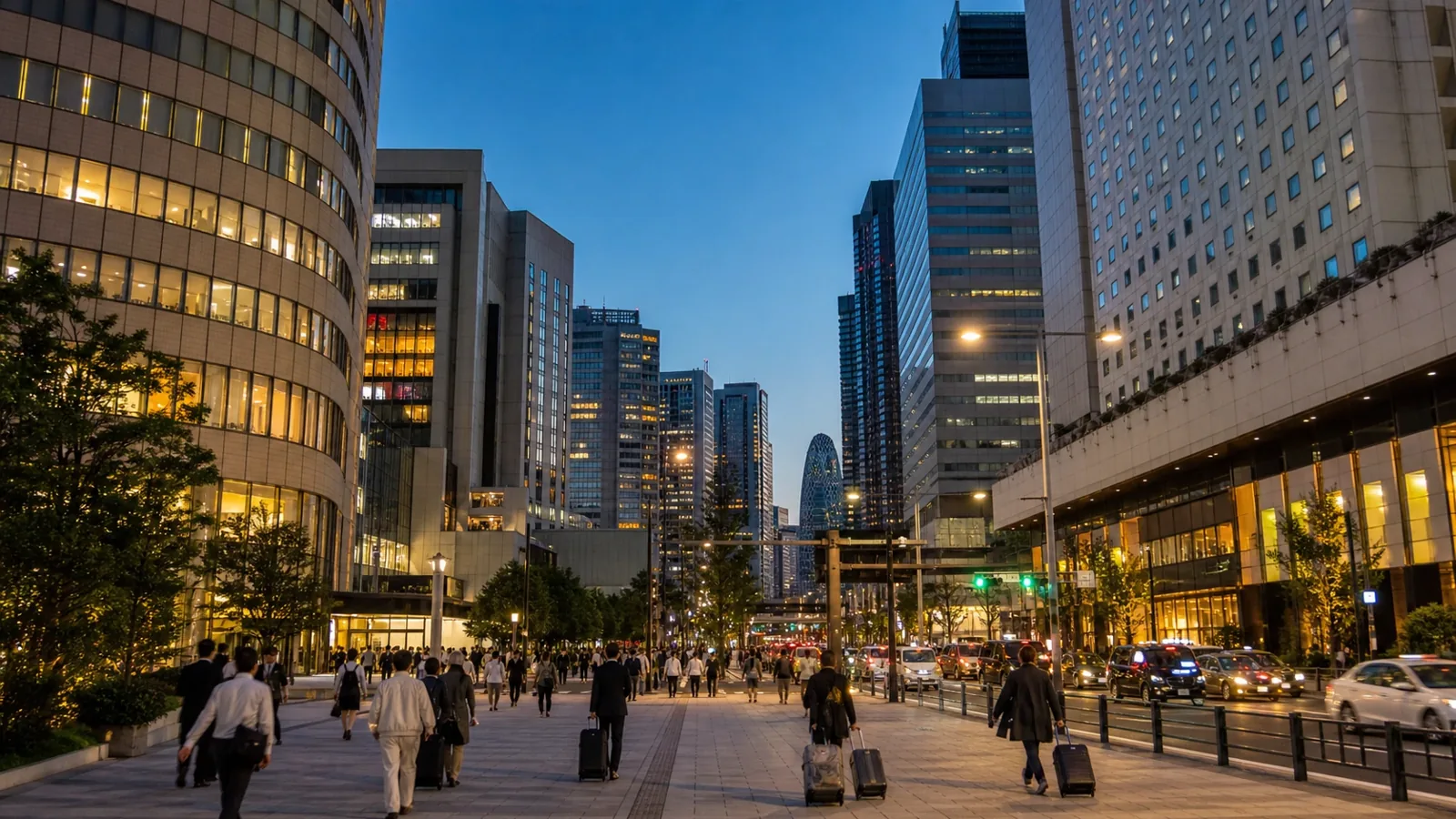
Shinjuku is often the safest choice for a first visit. It has excellent transport links, endless urban life, and a huge range of hotels, restaurants, shops, and nightlife. From here, it is easy to get almost anywhere in Tokyo, and the station connects JR lines, subway lines, and private railway companies.
The best thing about staying in Shinjuku is that it lets you feel Tokyo from the very first minute: glowing screens, elevated walkways, late-night ramen, department stores, skyscrapers, and streets that seem never to switch off. The downside is exactly that: it can feel overwhelming. If you are traveling with small children, looking for quiet, or easily worn down by crowds, it is better to stay in western or southern Shinjuku, which is more orderly, and avoid staying too deep inside Kabukicho if you do not want nighttime noise.
In Tokyo, it is better to stay near a well-connected station than to choose only by how pretty a neighborhood looks.
The best areas to stay in Tokyo depending on your travel style
Tokyo Station and Marunouchi: convenience, trains, and understated elegance.
The Tokyo Station and Marunouchi area is ideal for anyone who puts logistics first. Its location is very practical for getting around the city, connecting with long-distance trains, and staying close to Ginza, Nihonbashi, and the Imperial Palace. It is a polished, financial, convenient, and expensive area, with high-end hotels and broad streets that become quieter after dark.
It is worth considering if you are staying only a few days, planning train excursions, or want to avoid the emotional chaos of Shibuya and Shinjuku. It may disappoint anyone looking for a more nocturnal, youthful, or spontaneous Tokyo: Marunouchi is elegant, but not especially intimate or cheap.
Ginza: luxury, shopping, and a calmer night out.
Staying in Ginza is a good choice for couples, mature travelers, design lovers, food lovers, and anyone who appreciates well-kept hotels. It is a bright, orderly area, with grand avenues, boutiques, refined restaurants, and an almost theatrical sense of safety. It also works well if you want easy transport without giving up an elegant base.
Its main drawback is the price. Staying here is usually more expensive, and the area can feel a little cold if you are looking for small bars, lively alleyways, or a less polished local atmosphere. In return, it offers rest, good transport links, and impeccable urban aesthetics.
Shibuya: youthful energy, fashion, and long nights.
Shibuya is Tokyo in motion: screens, music, shops, cafés, crowded crossings, and a constant feeling of being in the present. It is an excellent area for young travelers, fans of fashion, urban photography, nightlife, and nearby neighborhoods such as Harajuku, Omotesando, Daikanyama, and Nakameguro.
It is not the best option for anyone who needs calm. It can also be expensive and, at rush hour, rather exhausting. If you are looking at hotels in Shibuya Tokyo, try to be close to the station, but not necessarily right on the noisiest streets.
Asakusa: tradition, atmosphere, and better value for money.
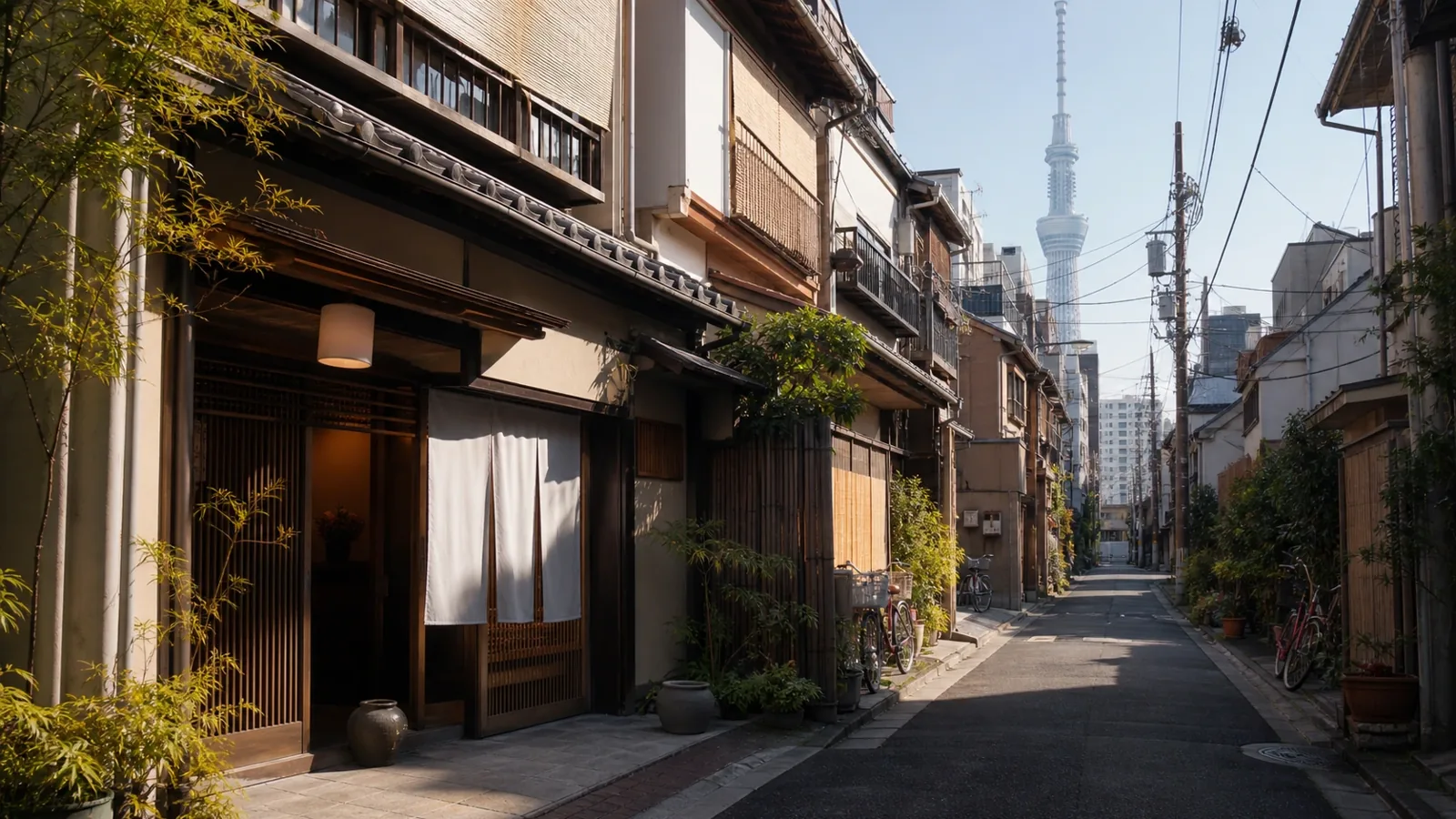
Asakusa preserves a lower-rise, older Tokyo, with lanterns, temples, traditional shops, and a neighborhood life that breathes at a different pace. It is especially appealing for travelers who want a more cultural trip, for mid-range budgets, and for those who prefer walking through streets with character rather than sleeping among skyscrapers.
Its weak point is its location in relation to some western neighborhoods, such as Shinjuku or Shibuya. It is not poorly connected, but journeys can be longer. If your priority is going out at night or moving around western Tokyo every day, it may not be the most efficient choice.
Ueno: practical, family-friendly, and somewhat more affordable.
Ueno works very well for families, travelers who want to save money without staying too far out, and anyone arriving or departing via Narita. It has a park, museums, markets, simple restaurants, and an atmosphere that feels less intimidating than Shinjuku.
It does not have Ginza’s glamour or Shibuya’s visual electricity, but it is comfortable and honest. It can be an excellent base if you would rather spend less on your hotel and more on food, transport, and sightseeing.
Areas to choose with care
I would not say there are large areas of Tokyo that should be strictly “avoided,” but some choices can make the trip more complicated. Staying too far from a station is a common mistake: ten or fifteen minutes on foot may not look like much on the map, until you do it with luggage, in the rain, in humid heat, or after a full day of walking.
Odaiba can be appealing for its views and modern hotels, but it is not always practical for a first visit focused on classic neighborhoods. Areas near Disney only make sense if you are going to spend several days at the park. It is also worth looking carefully at very cheap accommodation in outlying neighborhoods: the money saved can disappear in lost time and long journeys.
In Shinjuku, Kabukicho can be fascinating for a night out, but it is not the most comfortable area for everyone. If you are traveling as a family or want to sleep well, it is better to stay on quieter streets around Shinjuku, not right in the heart of the noise.
Staying too far from a station is one of the most common mistakes when choosing a hotel in Tokyo.
Do you need a car to stay in Tokyo?
No. To visit Tokyo, renting a car is usually more of a problem than a help. The city is built around trains, subway lines and walking, and many of the best areas to stay in Tokyo make sense precisely because they are close to useful stations.
The real luxury in Tokyo is not having a car, but sleeping near a well-connected station. Before booking, check the exact name of the nearest station and how many transfers you will need to reach the places that interest you most.
The real luxury in Tokyo is not having a car, but sleeping near a useful station.
So, what is the best area to stay in Tokyo?
For a first visit, Shinjuku is probably the most complete option if you accept the noise and intensity. Tokyo Station or Ginza are better if you are looking for convenience, elegance, and easy journeys. Shibuya is ideal if you want youthful energy and urban life. Asakusa and Ueno are gentler options for mid-range budgets, families, or travelers who prefer a Tokyo that is less dazzling but easier to breathe in.
Tokyo is not chosen only by its monuments; it is chosen by its rhythm. Staying well located does not mean being in the center, because Tokyo has many centers. It means being somewhere your trip can flow without forcing you to cross half the city every morning. That is where the difference begins between visiting Tokyo exhausted and experiencing it with a certain calm.