 Activity on TourBookGo
Toronto Islands Evening Bike Tour | TourBookGo
Explore the Toronto Islands on a 210-minute guided tour with a bike and ferry ticket. Check times, languages and booking conditions on Viator.
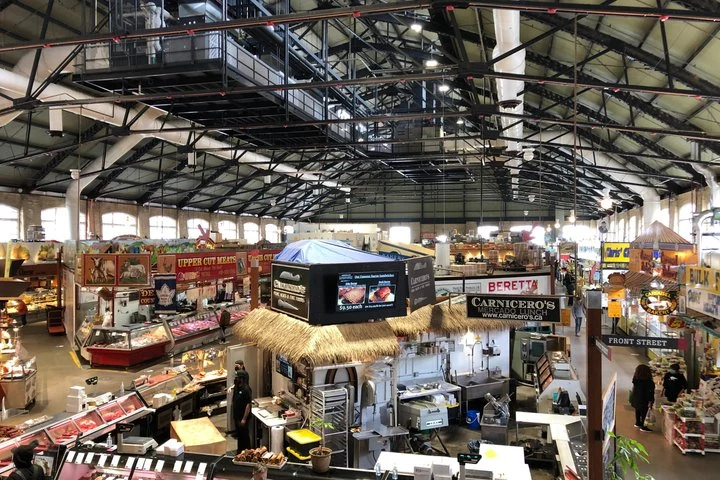
The food stalls at St. Lawrence Market make food part of the travel experience. Decide what you want to enjoy and how much of your budget each plan deserves.
Your budget for Toronto depends on your dates, where you stay and how much you spend on paid attractions compared with walking around. There is no daily amount that works for everyone. The city offers a mix of neighbourhoods, food, culture and waterfront scenery; deciding what you want from that mix helps you allocate your money. Start by separating accommodation, transport, food and activities, and calculate each category for your particular trip.
This urban scene accompanies the choice of a base for exploring Toronto.
Find accommodation on BookingA useful budget separates arrival expenses from costs that recur during your stay. Your airport transfer belongs in the first category; meals belong in the second. Activities depend on your choices and do not need to fill every day.
First, set an overall limit and put aside a contingency fund. Then decide which experience deserves a larger share of your money: a comfortable base, varied meals or a particular visit. This avoids assigning the same amount to days that may look very different. A day exploring neighbourhoods and a day with admission tickets each need their own calculation.
The City Centre brings together attractions, the area around Union and the Entertainment District. It can be a practical base for a first visit focused on this area. Old Town and the area around St. Lawrence Market offer another point of reference if you want to give heritage and food a more prominent role.
Choose your location around your itinerary. Somewhere that requires a journey for every plan can affect both your spending and the time available. Compare accommodation alongside your planned journeys, without assuming a neighbourhood has advantages simply because of its name.
TTC publishes fares by category and payment method. Check which fare applies to each traveller before multiplying it by the number of journeys: using the same amount for the whole group can lead to an incorrect calculation.
UP Express connects Pearson with Union, but you need to check the conditions for that transfer separately. The same applies to the municipal ferry if you include the islands. Do not assume one ticket covers every operator.
To organise your transport spending within the city, group visits by area and decide which journeys suit your ability to walk. Keep valid proof of payment on TTC, too: during an inspection, you must show the same payment method or device you used to pay.
The food stalls beneath the covered structure of St. Lawrence Market put food at the heart of the experience. The market is part of the historic Old Town area; Kensington Market offers a different setting, with businesses and multicultural food.
Both allow you to build a day around food, but browsing, buying produce and sitting down to eat involve different spending decisions. A market does not automatically mean a cheap meal.
Set aside part of your budget for the food experience that interests you most, then organise your other meals around that choice. Check what each establishment offers before ordering, especially if you are sharing dishes or have dietary requirements.
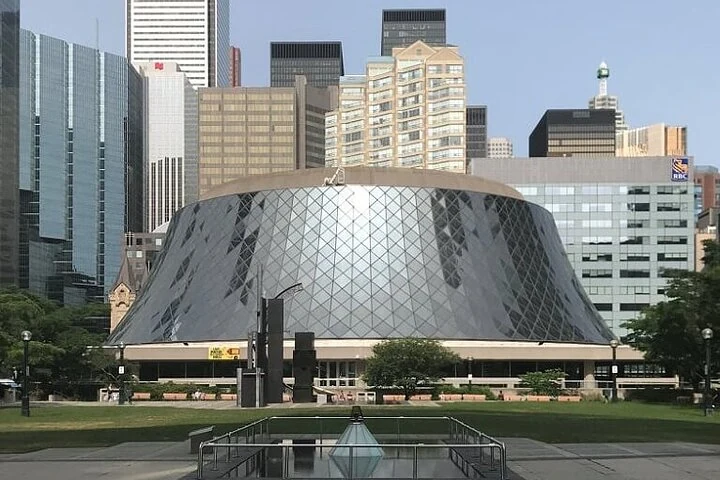
Roy Thomson Hall’s circular façade and glass exterior provide a visual reference point in Toronto’s cityscape. Looking at the building from outside and choosing a cultural activity inside are different plans; its architecture tells you nothing about tickets, programming or included services.
If a particular event interests you, compare its total cost with the other visits you want to make. Check what you are buying and whether it fits your dates before booking. For someone who lives in Toronto, focusing a leisure budget on something chosen out of personal interest may be more satisfying than collecting activities because they are well known to tourists.
Toronto’s skyline, with the CN Tower beside the water at sunset, represents a way to enjoy the cityscape without turning every view into an admission ticket. A waterfront walk can take up part of your trip without purchases or booked activities; getting there still forms part of your logistics.
Visiting the islands adds another expense: the municipal ferry has its own ticket information. Demand can be concentrated on weekends and public holidays. Decide whether you want to admire the city from the shore or spend time on the islands, because these are different experiences that require different planning.
On a budget trip, neighbourhood walks can form much of your itinerary, with carefully chosen meals and few paid activities. The trade-off is leaving out some experiences that may interest you; make that choice consciously.
A mid-range budget can combine urban exploration with specific visits and meals, without booking something for every part of the day. This is a reasonable option if you want variety.
A more comfortable trip can prioritise a base that suits your itinerary, convenient transfers and greater freedom to choose activities. Spending more only adds value when it meets a real need: comfort, access or a particular interest. It does not guarantee that you will enjoy everything more.
On a three-day trip, arrival expenses account for a larger share of the total. For a first visit, it usually makes sense to choose a few priorities and avoid journeys that take up a disproportionate amount of your available time.
Over five days, meals and accommodation nights increase, but there is also room to combine days with admission tickets and days spent walking. A longer stay does not require adding a booked activity every day.
Over seven days, consider how much you really need to expand your itinerary. If you include Niagara Region, budget for an excursion outside Toronto with its own transport. The falls are not part of the city centre and cannot be treated as just another nearby visit.
Before finalising your calculation, review the full conditions of each purchase: what is included, what is excluded and what happens if your plans change. Also check the total before paying, without assuming discounts, surcharges or cancellation terms.
Winter means allowing for cold weather and less daylight; if your outdoor plans no longer work, an indoor alternative may change your spending. Leave room in your budget for that decision.
If you live in the city, start with your usual needs and calculate only the additional cost of the plan. If you are visiting Toronto, protect your priority experiences and cut back on secondary purchases. A budget works when it lets you enjoy what you have chosen without turning every day into a negotiation with your money.
Toronto: discover activities for your trip. Before booking, check each activity's location, meeting point and route.
Activity on TourBookGoExplore the Toronto Islands on a 210-minute guided tour with a bike and ferry ticket. Check times, languages and booking conditions on Viator.
 Activity on TourBookGo
Plan a private Niagara Falls trip from Toronto for 1–6 travellers. Transport and driver-guide included; attraction tickets extra. Check terms on Viator.
 Activity on TourBookGo
Explore Canadian, Indigenous and European art at Toronto’s AGO. Check general admission, current conditions and excluded exhibitions on Viator.