 Activity on TourBookGo
Albufera sunset and barraca visit by traditional boat
Book the Albufera sunset and barraca visit with a traditional boat ride, Spanish-speaking guide and 1 hour of nature near Valencia.
The best time to visit Valencia depends on your travel style: bright spring days, intense Fallas, beach-heavy summer, gentle autumn or a quieter winter escape.
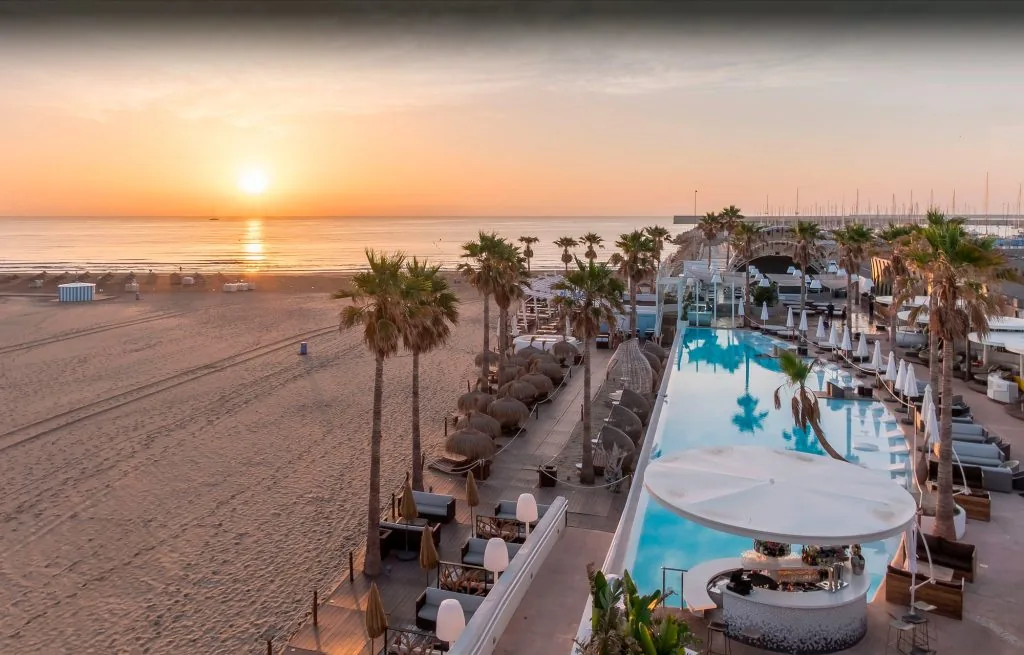
The best time to visit Valencia is usually April, May, June, September and October. These are the months when the city feels at its easiest: there is light, terrace life, neighbourhood energy, pleasant walks through the Turia Gardens and enough warmth to head down to the sea without enduring the heaviest summer heat.
Compare locations and options to find a base that suits your trip. Booking.com confirms current availability and pricing.
Find accommodation on BookingValencia does not need one specific season to be understood, but it does change a great deal from one month to the next. The same city can feel bright and gentle in April, festive to the point of exhaustion in March, humid and beach-focused in August, or quiet and almost local in January. Its Mediterranean climate makes it possible to visit year-round, with mild winters and hot summers; the local tourist office mentions an average annual temperature of around 19°C and plenty of sunny days, though it is worth remembering that sunshine does not always mean complete comfort in the height of summer.
May and June have a particular charm: the days grow longer, the city is not yet overly crowded, the beaches begin to come alive, and walking around the historic centre does not turn into an endurance test. September and early October are ideal for those who want to combine city and beach: the Mediterranean still keeps some of the summer’s warmth, but the tourist intensity begins to ease.
Valencia in spring is probably the most balanced choice. The city wakes up with the scent of orange blossom, pale façades, lively markets and afternoons that invite you to stroll without rushing from El Carmen to Ruzafa, or from La Lonja to the Marina.
April and May are highly recommended months for a first visit. Valencia weather is usually pleasant, prices have not yet reached the more uncomfortable summer peaks, and the city allows you to do almost everything: museums, the beach, cycling, paella by the sea, trips to the Albufera and long walks along the old Turia riverbed.
The exception is March. Not because it is a bad time, but because Valencia stops behaving like a normal city.
Travelling to Valencia during Fallas can be an unforgettable experience, but it is not for everyone. From 1 to 19 March, the city is transformed by ephemeral art, fireworks, music, closed-off streets, crowds and a relentless energy; the festival is recognised by UNESCO as Intangible Cultural Heritage of Humanity.
For anyone seeking intense popular culture, long nights, tradition, noise, fire and a city overflowing with energy, March can be the perfect moment. For anyone who wants to sleep well, move around calmly, avoid crowds or travel with young children who are sensitive to noise, it may be better to choose another date. During the main Fallas days, especially from 15 to 19 March, accommodation tends to become more expensive, finding a table can be harder and walking through certain areas requires patience.
July and August bring out a very Mediterranean Valencia: beach bars, long afternoons, swims at Malvarrosa or Patacona, cold horchata and nights that stretch on late. It is an appealing time if your priority is Valencia beaches and the summer atmosphere.
But it has to be said clearly: summer can be hot and humid. Visiting the City of Arts and Sciences in full sun, crossing wide avenues at midday or exploring the centre without breaks can feel exhausting. August also combines tourism, heat and a certain sense of the city slowing down in some neighbourhoods, although the beach areas remain very lively.
Summer is worth it if you want the sea, terraces and nightlife. It may disappoint you if you are looking for a comfortable, quiet cultural getaway with plenty of daytime urban wandering.

September and October are magnificent months. The light becomes softer, the sea is still inviting on many days and the city regains a more liveable rhythm. It is an especially good time for couples, food-focused travellers and those who want to combine cultural visits with moments on the coast.
October can bring some spells of rain, which is common at the start of the Mediterranean autumn, but it also offers a Valencia that feels less rushed, more local and very pleasant for eating well, walking and discovering neighbourhoods without the pressure of large crowds. The tourist office itself recommends carrying an umbrella, especially at the beginning of autumn, although Valencia is not usually a city of constant rain.
From December to February, Valencia loses some of its beach identity, but gains in comfort. Winters are mild compared with many European cities, which makes it possible to enjoy the historic centre, museums, markets and food scene without major crowds.
It is a good time for travellers who do not need to swim, who value relatively better prices and who prefer to see a more everyday version of the city. The less attractive side is obvious: the days are shorter, the beach is more of a place for a walk than a swimming plan, and some terraces lose that feeling of endless summer that many people associate with Valencia.
If it is your first time, choose May, June, September or October. If you want to experience Fallas, go in March, but book well in advance and accept the noise as part of the trip. If you are looking for beach time, June and September are more pleasant than August. If you are travelling on a tighter budget, look at January, February, November or early December, avoiding long weekends, public holidays and major events.
For families, spring and autumn are usually more comfortable than high summer. For couples, May and September have a particularly generous light. For travellers who hate crowds, it is best to avoid Fallas, Easter, national holiday weekends and the most popular weekends.
Valencia is best enjoyed when the weather helps without taking over. That is why the most sensible answer is clear: May and September are probably the most complete months to visit Valencia. April, June and October are also excellent alternatives.
March can be extraordinary, but only if you want Fallas. August can be fun, but only if you accept heat, humidity and a more touristy city. Winter does not offer the most luminous postcard version of Valencia, but it does offer a quieter, friendlier and easier city to explore.
Valencia does not need to promise perfection: its light, its rice dishes, its neighbourhoods, its nearby sea and its very own way of blending tradition, design and everyday life are enough. The key is to choose the month that suits the way you travel, not the prettiest postcard.
Discover selected experiences in Valencia to complete this guide with culture, food, architecture, coastline, nature and well-organised day trips.
Activity on TourBookGoBook the Albufera sunset and barraca visit with a traditional boat ride, Spanish-speaking guide and 1 hour of nature near Valencia.
 Activity on TourBookGo
Take an Albufera Valencia boat ride by electric boat with a local guide. From €7, around 45 minutes, with a one-hour sunset departure available.
 Activity on TourBookGo
Discover this 1-1.5-hour Valencia catamaran cruise with sunset, cava and DJ options. From €15 with free cancellation up to 24 hours in advance.