

Book a Valencia Oceanogràfic ticket with access to every exhibition, the underwater tunnel and more than 45,000 marine creatures.
View experienceHow to get around Valencia on foot: the city at its most intimate
Walking is the best way to understand old Valencia. Light falls on golden stone façades, shutters open onto narrow balconies, horchata shops perfume the corners and squares appear almost without warning: Plaza de la Virgen, Plaza de la Reina, the Central Market, La Lonja, El Carmen.
On foot, you can especially enjoy the Ciutat Vella, El Carmen, the Colón area, the Eixample and Ruzafa. The common mistake is trying to do everything on foot: going from the centre to the beach or crossing the city several times in summer can turn a lovely day into a tiring march. In July and August, even reasonable distances can feel long because of the sun and humidity.
Metro and tram: useful for the airport, neighbourhoods and beach
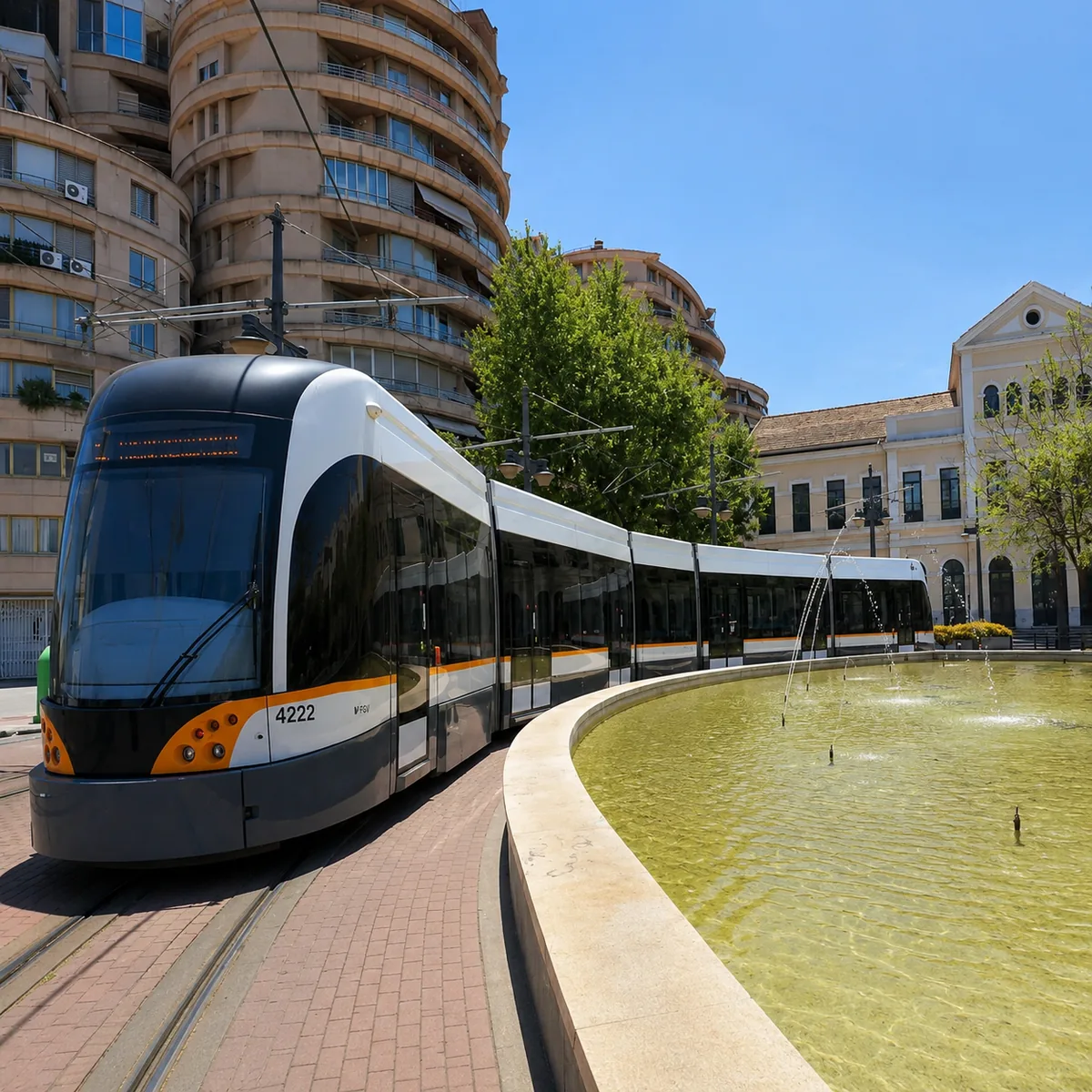
Metrovalencia is very useful for getting in from the airport, travelling to certain residential areas, connecting with some beaches by tram and avoiding traffic. The network includes metro and tram lines linking the airport, the historic centre, beaches, the City of Arts and Sciences and other points of interest.
From the airport, metro lines 3 and 5 connect with Valencia, with an approximate journey time of around 20 minutes depending on where you are heading, and the official tourism website indicates usual frequencies of 15 to 20 minutes.
What may disappoint you: the metro is not always the most direct option within the centre, and some tourist routes require walking or combining it with a bus. To move between nearby neighbourhoods, it is sometimes quicker to walk than to go down into the metro, wait and change lines.
EMT bus Valencia: more useful than it may seem
The EMT bus Valencia network is one of the most practical ways to get around Valencia when the metro does not fit your route. EMT covers many urban areas and makes it possible to reach neighbourhoods, beaches and areas where the metro is not always convenient. EMT itself also provides service status information, a route planner and an official app to organise journeys.
For travellers, the bus can be especially useful for connecting the centre with the City of Arts and Sciences, the seafront area or the Turia Gardens. There are also lines to the Albufera: official tourist information states that lines 24 and 25 reach the natural park from Valencia.
The less comfortable side: at rush hour or during events such as Fallas, races, festivals or major concerts, some lines may be diverted, delayed or crowded. It is worth checking the service status before setting off.
Cycling in Valencia: perhaps the most Valencian way to get around
Valencia has the ideal scale for cycling: it is flat, bright and crossed by a large green corridor. The Turia Gardens, the former riverbed turned into a park, are one of the most pleasant urban routes in Spain for cycling without the pressure of traffic. The official tourism website highlights the network of bike lanes and cycle-friendly streets connecting the city’s neighbourhoods.
A bike is perfect for going from the centre to the City of Arts and Sciences, continuing towards the Marina, heading over to El Cabanyal or exploring the Turia at a relaxed pace. Valenbisi is the public bike-sharing system, although for a short visit it may be simpler to rent a bike by the hour or by the day from a local shop.
It is not ideal for everyone: in midsummer, at midday, cycling can be uncomfortable. It is also worth riding carefully at junctions, in shared areas and through the narrow streets of the historic centre.
Do you need to rent a car in Valencia?
To visit the city of Valencia, usually not. A car makes things more complicated than easier: limited parking, restricted-traffic streets, pedestrian areas, paid car parks and unpleasant driving in the centre. If your trip focuses on the Ciutat Vella, Ruzafa, the Turia, the City of Arts and Sciences, El Cabanyal and the beach, it is better to avoid it.
Renting a car can be worthwhile if you are going to explore villages, coves, inland areas, wineries, less accessible natural parks or several stages around the Valencian Community. For a one-off trip to the Albufera, however, it is not always necessary: you can get there by public transport, although a car gives you more freedom to move between rice fields, viewpoints and nearby beaches.
How to get from Valencia airport to the city centre
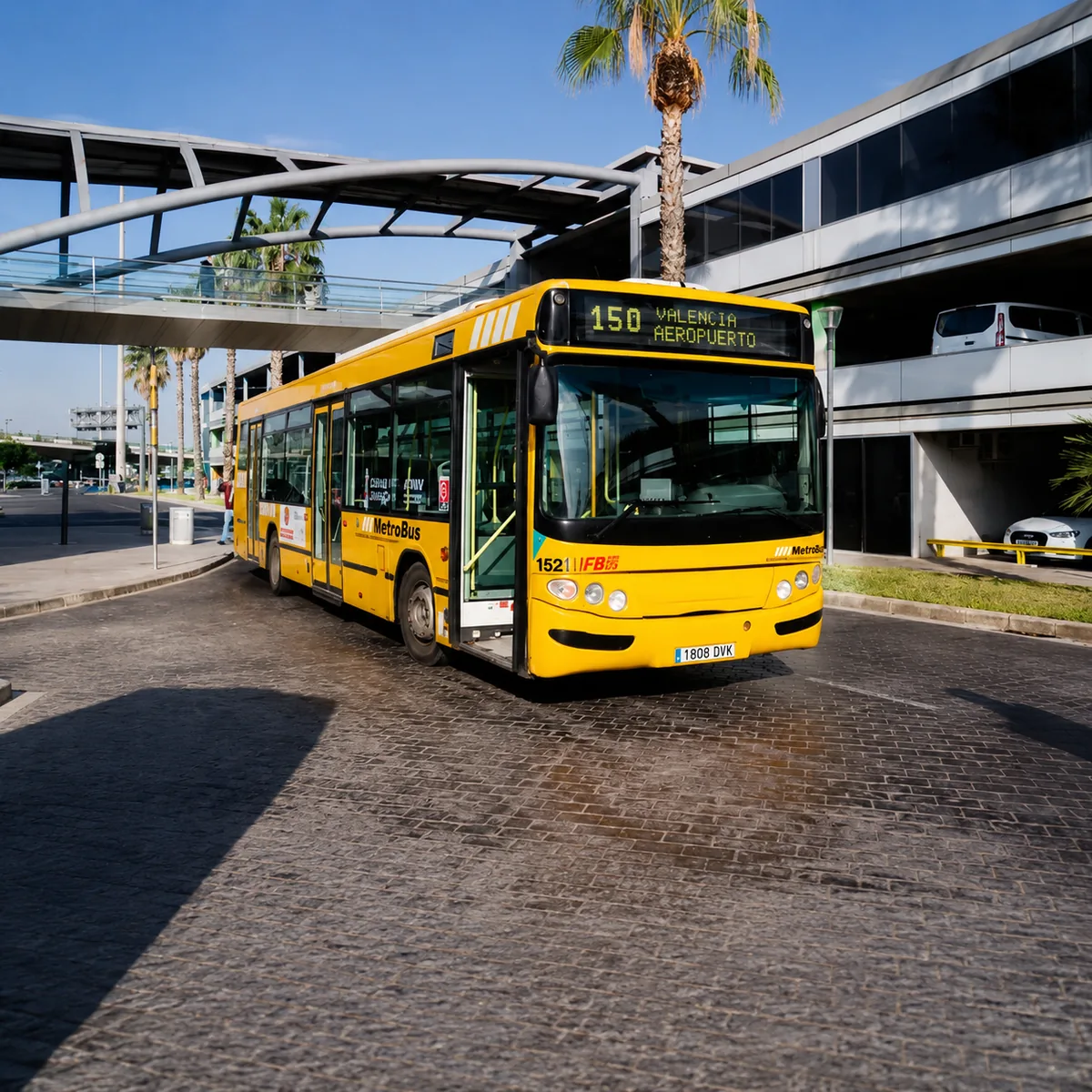
The fastest and most convenient option is usually the metro. Lines 3 and 5 connect the airport with the city, and the Valencia Tourist Card includes journeys to or from the airport by metro and also on MetroBus line 150.
There is also MetroBus line 150, which links the airport with the centre of Valencia via Mislata, Quart de Poblet and Manises. Aena confirms this connection and publishes updated timetables and fares for the line.
A taxi or VTC may be worth it if you arrive late, travel with a lot of luggage, have children with you or your accommodation is far from a convenient stop. It is not the cheapest option, but it is the simplest when tiredness matters more than budget.
Distances worth keeping in mind
Valencia can be a little misleading: on the map it looks as if everything is close, and partly it is, but not every journey is pleasant at every time of day.
You can easily walk from the historic centre to Ruzafa. From the centre to the City of Arts and Sciences, it is already worth considering the bus, a bike or a long walk through the Turia. To get to the beach from the centre, public transport or a bike is usually the most comfortable option. For the Albufera, it is better to take the bus, join an organised excursion or use a car if you want complete freedom.
When mobility changes in Valencia
The experience changes a lot depending on the season. In spring and autumn, getting around Valencia is a pleasure: walking and cycling almost become part of the trip. In summer, the heat forces you to plan more carefully, avoid the middle of the day and use public transport more often. During Fallas, the city undergoes an intense transformation: closed streets, diversions, crowds, noise and journeys that can take longer than usual.
That does not mean it is not worth visiting at those times; it means travelling with patience and accepting that getting around is part of the experience, not just a formality.
Common mistakes when getting around Valencia
The first mistake is renting a car “just in case” and then discovering that you almost never use it. The second is underestimating the distance to the beach. The third is not checking diversions during events. The fourth is trusting that you can walk everywhere in August. And the fifth is not making the most of the bike in a city that truly favours it.
Valencia is best enjoyed when you do not force it. There are days for getting lost on foot around El Carmen, days for crossing the Turia by bike, days for taking the tram towards the sea and afternoons when an air-conditioned bus saves your mood.
Verdict: how to get around Valencia without overcomplicating things
For most travellers, the ideal formula is simple: metro from the airport, walking around the centre, bike for the Turia and the City of Arts and Sciences, bus for longer urban journeys and car only for specific excursions.
Valencia does not require a complicated strategy. Its best mobility is the kind that lets you look around: the shade of an orange tree, a modernist façade, Calatrava’s blue and white forms in the distance, a bicycle crossing the old riverbed, the smell of rice by the sea. Getting around Valencia well is not just about arriving quickly, but about letting the city appear at its own pace.