Walk to get to know the city
The historic centre is made for exploring on foot. From Santa Lucia station, you can walk through Cannaregio towards Rialto and continue to San Marco. You can also spend time wandering around Dorsoduro without turning every journey into a boat trip. Signs for Rialto and San Marco help you find your way, though a street that looks direct on a map may end at a canal.
Walking works especially well when you group visits by area. You notice the shifts in atmosphere between shopping streets, squares and waterfronts as you go. It becomes harder when you have suitcases, struggle with steps or need to arrive at a set time. In those situations, bridges and detours matter more than the distances shown on a map.
Plan your first journey with luggage
Santa Lucia and Piazzale Roma are two common points of arrival by land. Before leaving either, locate the actual entrance to your accommodation and count the bridges on the final stretch. A place that looks close may take more effort to reach than one farther away but accessible from a vaporetto stop.
If you arrive with heavy luggage, plan this first journey separately from the rest of your stay. Ask your accommodation which stop and entrance are most convenient. You can explore once you have dropped off your suitcase. Take the same care when leaving: allow time to walk the final stretch to the station or Piazzale Roma.
Use the vaporetto when it makes a difference
The vaporetto is Venice’s public water transport. It is useful for longer journeys, crossing the Grand Canal and visiting places across the lagoon. A ride along the Grand Canal also gives you a different view of its façades, but you do not need a boat for every short trip.
Before buying a ticket or pass, consider the journeys you will actually make. If you spend the day in one compact area, walking may be enough; if you expect several boat trips or an island visit, public transport becomes more useful. Check the current conditions for your chosen ticket or pass and validate it as required. Do not assume every landing serves the same destination or every line makes the same stops.
Cross the Grand Canal without a long detour
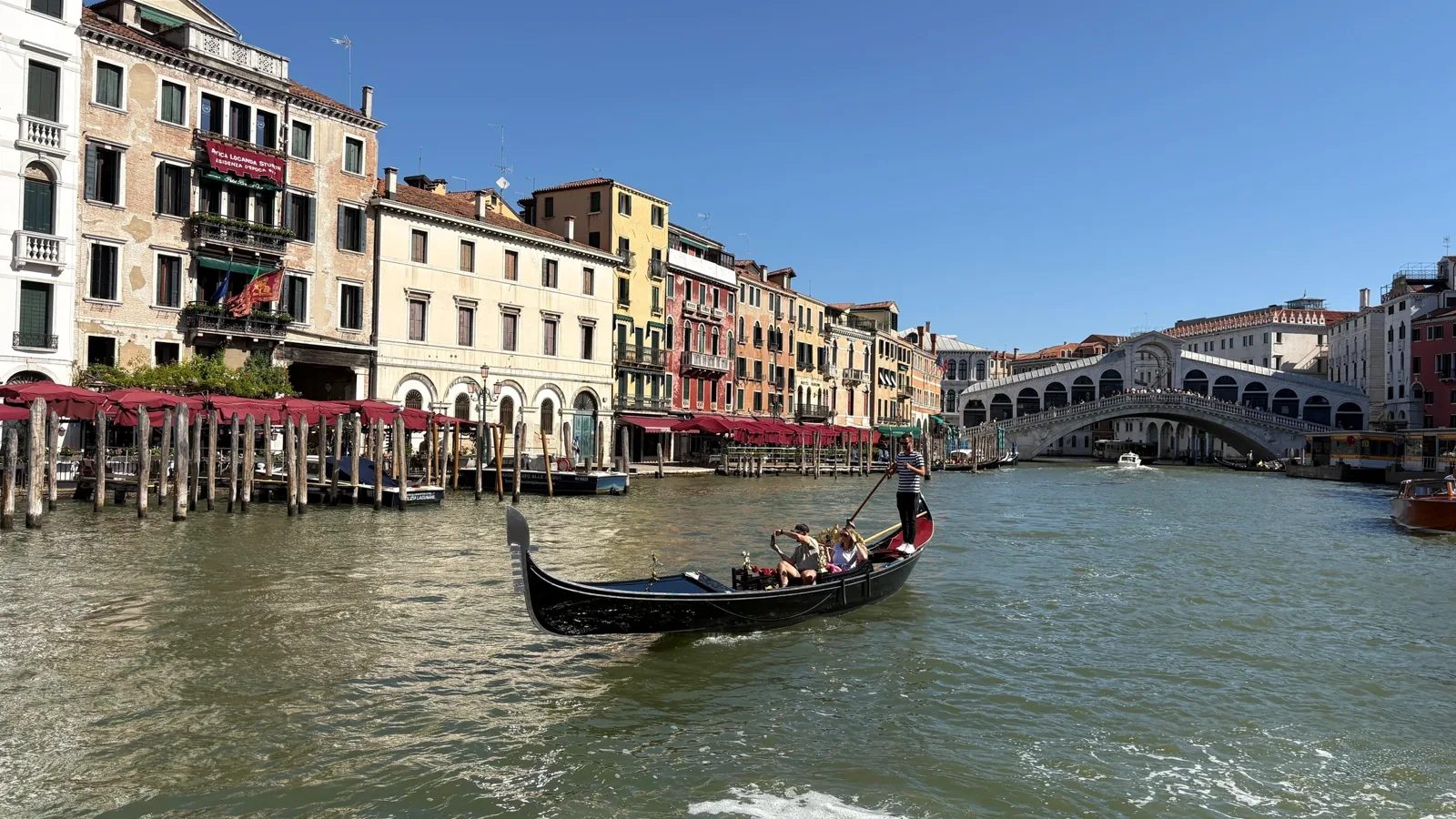
The Grand Canal gives the city its shape, but it also interrupts walking routes: you cannot cross wherever you like. Bridges such as Rialto and Academia may fit naturally into a walk. Heading to one solely to reach the opposite bank, however, can mean a considerable detour.
When planning a day, first consider which side of the canal your visits are on. You can explore Rialto and San Marco on foot; if you then want to go to Dorsoduro, choose where to cross based on your next stop. Traghetto services operate at some points, but availability can vary. Check before building your route around one.
Give an island visit time to breathe
Murano, Burano, Giudecca and the Lido are not extensions of a walk through the centre: reaching them requires water transport. Each suits a different interest. Murano may appeal if you want to learn about its glassmaking tradition; Burano if you would rather spend time exploring another lagoon community; and the Lido if you want a landscape unlike the canals of the centre.
Trying to fit every island into one day may leave more time for travel than for the islands themselves. Choose one or two according to the time you have, and check connections before setting out, especially for the return. People who live in Venice can follow the same principle and enjoy a nearby island without feeling obliged to complete a sightseeing circuit.
Know when a water taxi helps
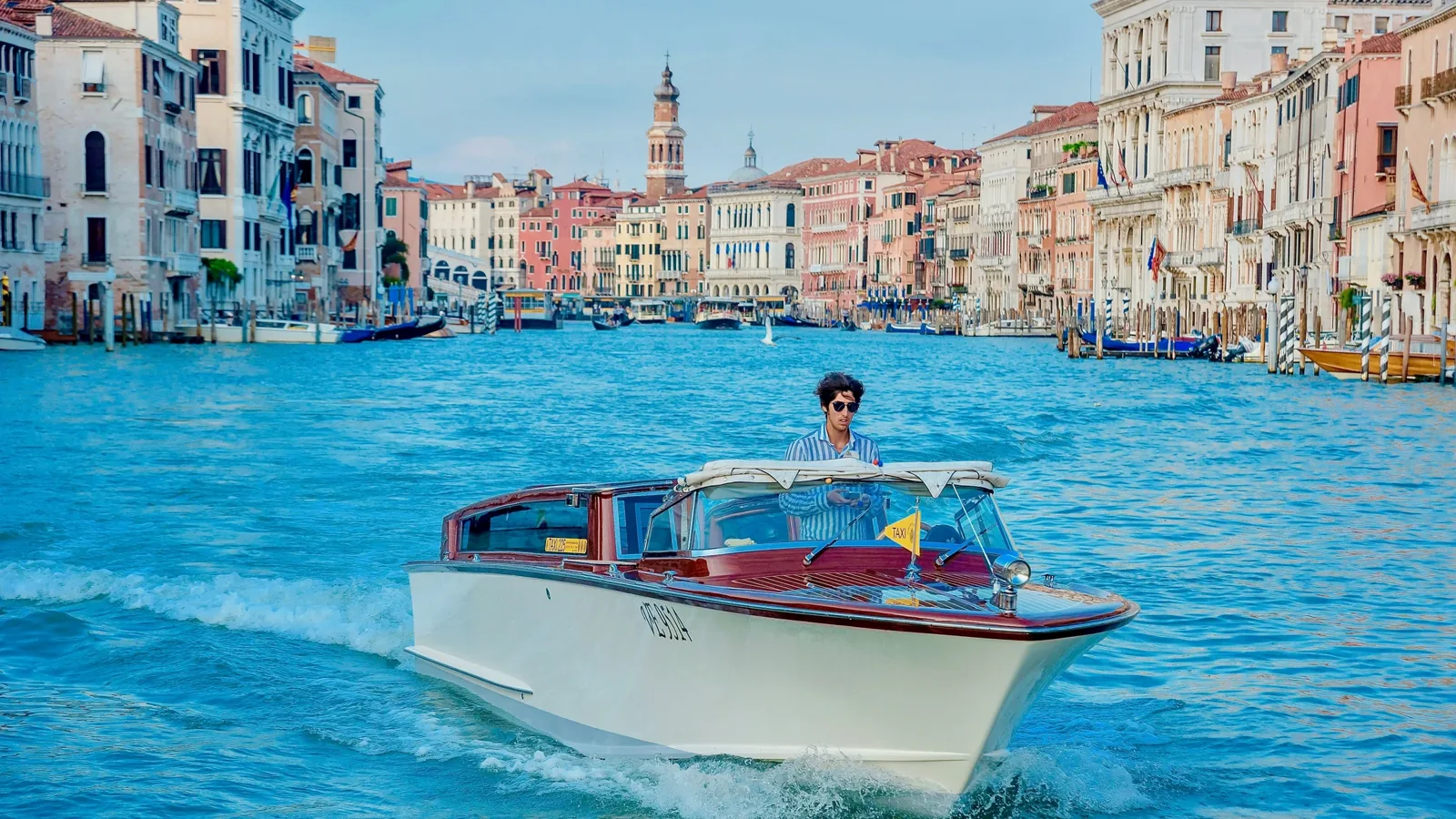
A water taxi can simplify a transfer with a lot of luggage or a journey that is difficult by public transport. Its usefulness depends on where it can pick you up and drop you off: the nearest landing is not always beside your accommodation. Confirm the location and the service conditions before booking.
For a series of visits within the centre, a taxi rarely replaces walking well. Venice is easier to appreciate when you have time to walk between stops. Saving direct transport for a specific transfer avoids paying for convenience that may not solve the final stretch.
Decide whether a car is useful
You cannot use a car to travel between neighbourhoods in the historic centre. If you drive to Venice, you will have to leave it behind and continue on foot or by water. Renting one just to see Venice therefore usually adds a task without making the main sights easier to visit.
The calculation changes if Venice is part of a wider trip on the mainland. In that case, consider a car for those other stages and plan your arrival in the city separately. If you stay in Mestre, check the specific connection to the centre and how long the return takes at the end of the day. Weigh any saving or convenience from the accommodation against those journeys.
Adapt to mobility needs and the day’s conditions
Bridges are part of the Venetian experience, but they are also a barrier for some people. If you travel with a wheelchair or pushchair, or have reduced mobility, plan around specific accessible routes instead of relying on the shortest line on a map. Check current boarding conditions and passable stretches with transport operators and accommodation providers.
Rain and episodes of high water can also disrupt routes. When conditions change, consult local information and keep a simple alternative, such as concentrating your visits in an area you can reach from where you are staying.
The most comfortable approach is often to choose one area to explore on foot each day and use water transport when it helps you cross the canal, reach an island or avoid a difficult journey. Getting around then becomes part of the visit rather than dictating it.