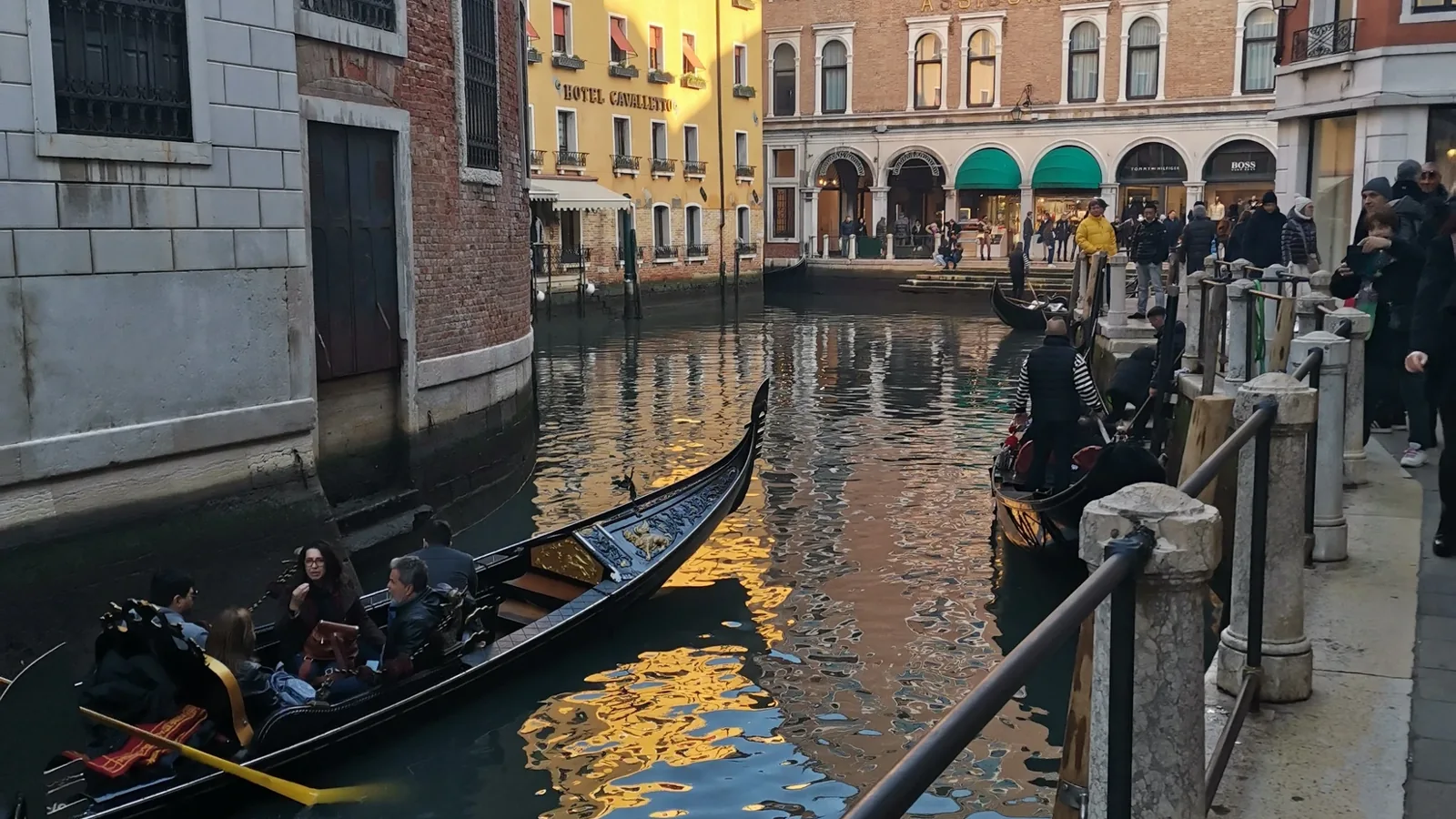
Turning your visit into a race between landmarks
St Mark’s Square and the Rialto Bridge deserve your attention. The mistake is trying to fit them, museums, several churches and a lagoon excursion into a single day. Each visit then takes time away from looking around and finding your bearings.
Choose one place you particularly want to explore inside, and leave the rest as possibilities. If you have little time, a short selection will give you a clearer sense of the city than a list rushed through. Check the entry conditions for places central to your plans; they may change, and it is unwise to build a whole day around an assumption.
Planning a route without looking at the canals
Two points close together on a map may require a detour to the next bridge. Before linking visits, check which side of the Grand Canal each place is on. Grouping places by area saves repeated crossings and makes the journey part of the pleasure.
For example, it makes more sense to spend one part of the day around St Mark’s and another in Dorsoduro than to keep going back and forth. If a street catches your eye, allow yourself to follow it. Losing your way for a few minutes is not exhausting; following a schedule so tight that every detour feels like a failure is.
Assuming walking will be equally easy for everyone
Bridges are part of the Venetian landscape, but they also pose a practical challenge. Steps, uneven paving and heavy luggage can completely change the experience of a route that looks short. If you are travelling with a stroller, have reduced mobility or are carrying suitcases, look into the actual route to your accommodation before choosing it.
It helps to distinguish a leisurely walk from a transfer: a winding street can be delightful without luggage and a nuisance when you arrive tired. For anyone who needs to limit obstacles, the choice of area and route matters as much as the distance shown on a map.
Using water transport without considering the whole journey
The vaporetto can save you a walk and let you see the city from the water. It does not remove the time needed to reach the boarding point, wait and walk from the final stop. Nor should you assume every line works equally well for every journey.
Before choosing between a boat and a walk, consider the entire route and how you feel. Walking often offers more on short journeys with few bridges; water transport becomes useful when it avoids a long detour or gives someone in your group a rest. Check current routes and conditions before relying on a particular connection.
Treating the weather and season as minor details
Rain changes the pleasure of walking and makes indoor visits more appealing. Heat, cold and crowds can also affect how long you want to spend in busy squares and streets. Acqua alta can occur at certain times; its extent varies, so do not assume the whole city will be affected.
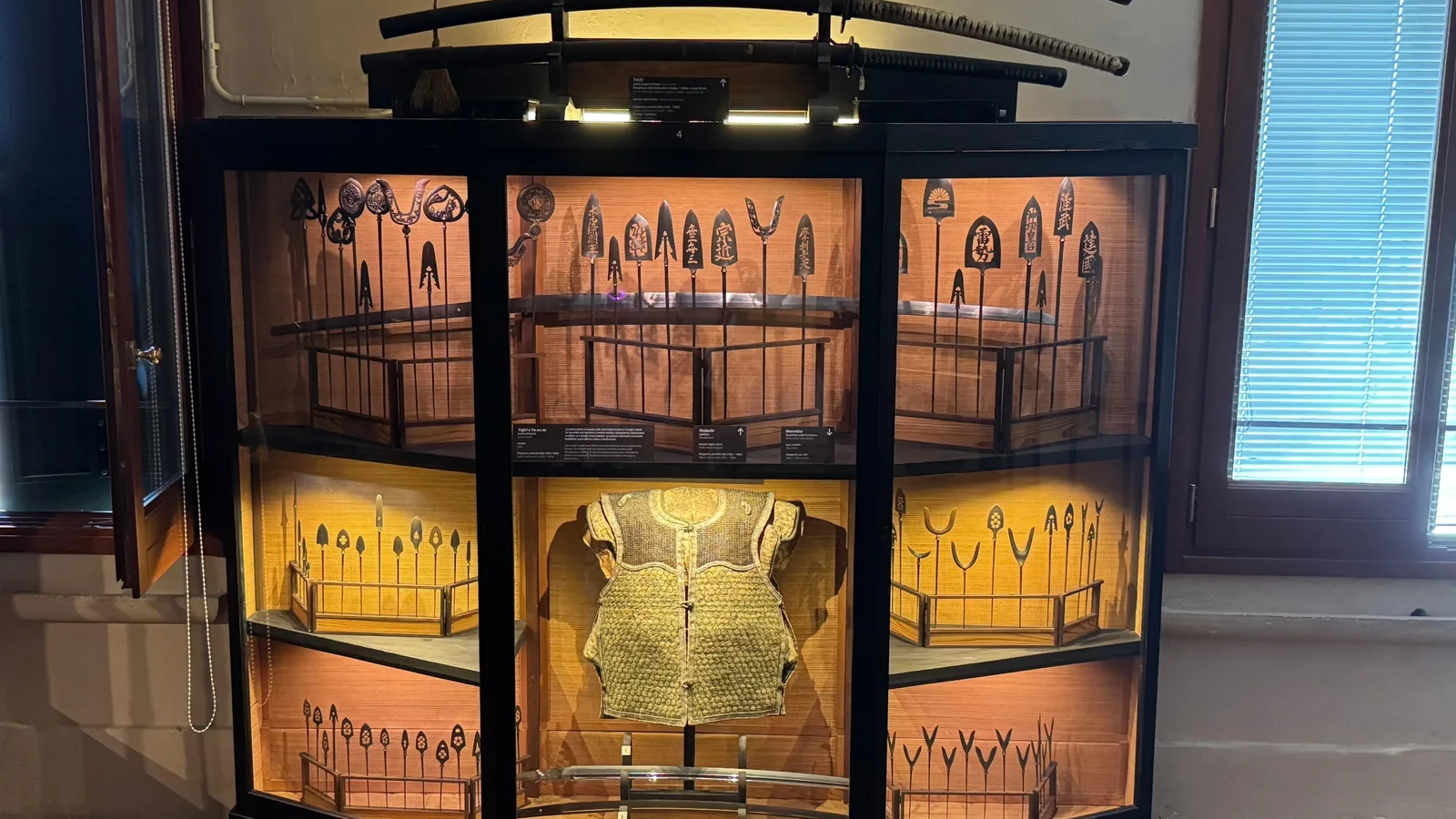
Have an alternative for a day when the weather lets you down: a museum or church that genuinely interests you, with its visiting conditions checked. Choosing it in advance saves you from improvising in the rain or sticking to an outdoor route you no longer enjoy. The photo shows a display case of objects in a Venice museum. It illustrates a possible indoor visit for a rainy day, not current weather or an included admission ticket.
Adding islands just to complete a list
Murano, Burano and Giudecca offer different reasons to leave the most familiar routes. Including them all without time to spend on them, though, reduces the visit to a series of transfers. Ask yourself what you want: to learn about Murano’s glassmaking tradition, stroll through Burano or look back at Venice from Giudecca.
Choose according to that interest and work out the return journey before committing your day. If your stay is short and you most want to explore the city on foot, skipping an excursion may be the best choice. The islands are not boxes to tick.
Eating wherever hunger catches you
Walking into the first place you find beside a crowded landmark may be convenient, but it may suit neither what you want to eat nor the time you want to spend. There is no need to chase a supposedly “authentic” table far from your route, either. Both impulses can turn a simple meal into another race.
Decide whether you want a quick break or time to sit down, then look at the options in the area where you will be. Reading the menu and the posted conditions tells you more than judging a place by its location alone. People who live nearby can use the same approach to see a familiar street afresh, without turning every outing into a tourist visit.
Forgetting that the city is also home
Venice is not a stage set. On narrow streets and bridges, stopping as a group can block someone going to work, shopping or home. Leave room to pass, avoid blocking entrances, and respect residents’ spaces and quiet. A natural greeting or “buongiorno” can make an encounter easier; there is no need to act out a preconceived idea of how Venetians “should” be.
Spend respectfully, take care of what you bring with you, and do not enter private property or sensitive areas for a photograph. Residents have a useful choice, too: seek out a walk, exhibition or meal away from the usual circuit without assuming every neighbourhood must entertain visitors. Courtesy applies whether you are a tourist or a neighbour.
Letting expectations decide for you
Venice’s reputation can lead you to expect quiet on every street and an unobstructed view from every bridge. Famous places are shared with many other people; accepting that makes them easier to enjoy without demanding impossible privacy. It also helps to recognise when a visit no longer interests you, even if it was on the plan.
Avoiding mistakes does not mean scheduling every minute. It means choosing what deserves your time, anticipating difficulties that matter to the way you travel, and keeping the freedom to change course. Venice often reveals more when the itinerary follows your curiosity than when your curiosity has to follow the itinerary.