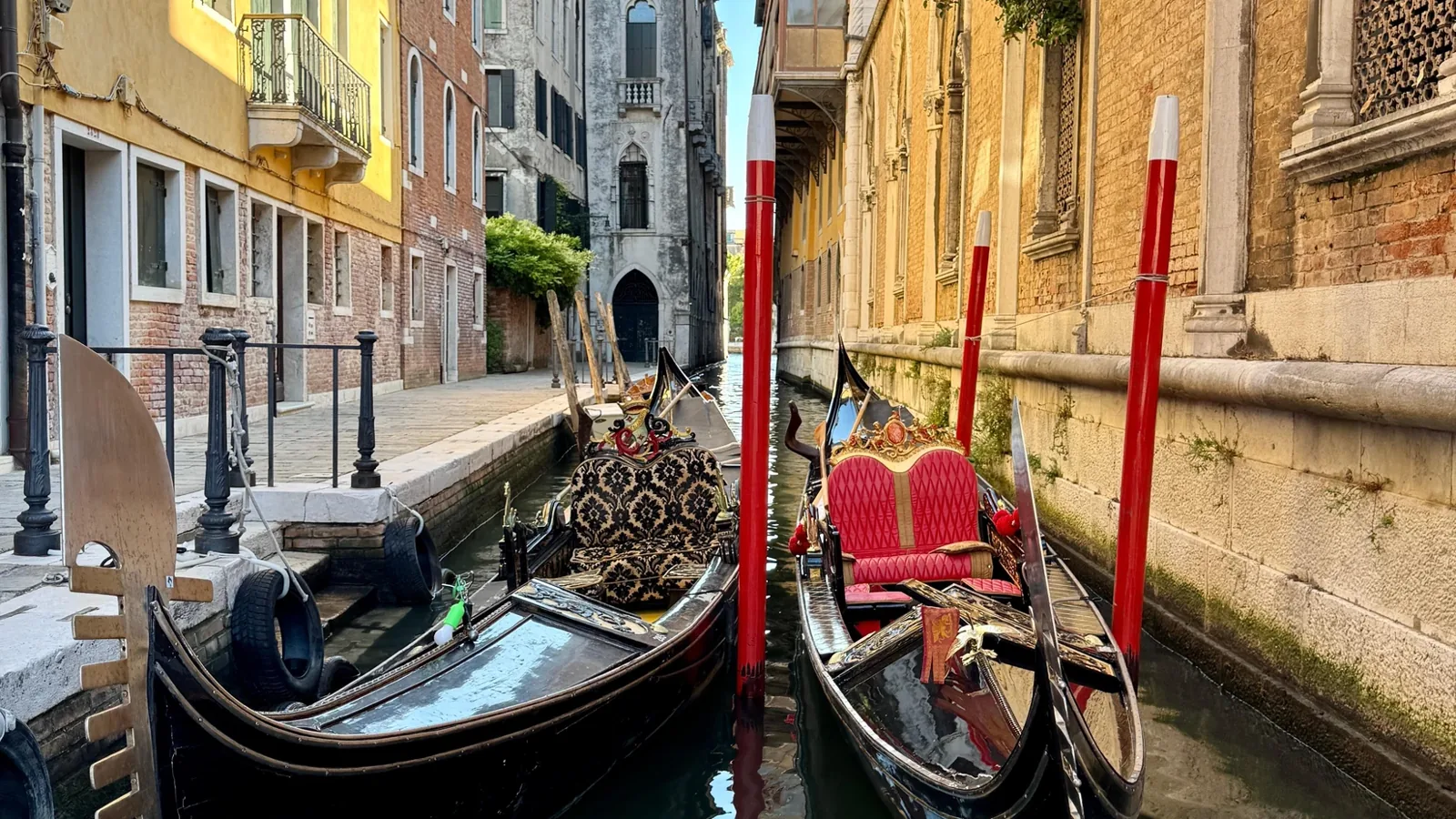
Start at St Mark’s, but don’t stop there
St Mark’s Square brings together the basilica, the Doge’s Palace and some of Venice’s best-known monuments. It deserves time if you’re interested in how the city expressed its political and religious power. Notice how the square meets the water, too: it helps explain why Venice feels different from other historic cities.
The area gets crowded, which may make it less enjoyable if you want a leisurely walk. If time is short, choose between going inside one monument and taking your time around several exteriors. Check entry conditions before planning an indoor visit; don’t build your whole day around admission you haven’t secured.
See the Grand Canal from the water
Walking reveals Venice’s intimate scale; travelling along the Grand Canal reveals another side of the city. From a vaporetto, you can see how palaces and other buildings face the water, a perspective the streets cannot offer. It’s particularly useful if this is your first visit or you need to walk less.
There’s no need to turn the journey into a race to identify every façade. Watch how the two banks change and get off when a neighbourhood makes you want to explore on foot. If you’re travelling with children, alternating boat rides and walks may make the day easier. Check the route and transport conditions before boarding: choosing a stop without looking at the route could take you away from what you hoped to see.
Cross Rialto and decide what to look for beyond it
Rialto Bridge offers one of the Grand Canal’s best-known views. It’s worth crossing, but there’s more to the area than the bridge. Around Rialto Market, you can discover a commercial side of Venice that contrasts with the grandeur of St Mark’s.
If you want to shop or see the market in action, check when it operates. If it’s closed, the walk still connects neighbourhoods, though it will be a different experience. On the busiest streets, choose where to eat or shop for what the place offers, not just its proximity to the bridge. On a short visit, Rialto works better as a link between two parts of the city than as a half-day destination.
Make time for art in Dorsoduro
Dorsoduro offers a chance to spend a few hours with art and see the city at a different pace. The Gallerie dell’Accademia suit anyone keen to explore Venetian art in depth; the Peggy Guggenheim Collection answers a different interest, in modern art. The visits are not interchangeable, and you don’t need to do both.
Choose one according to your curiosity, then leave time for a walk. What you’ve seen inside can then become part of the wider scene of canals and façades. On a rainy day, a museum visit gives the route some structure, though you’ll still need to travel between places on foot or by water. If art doesn’t appeal to you, spend those hours exploring another neighbourhood.
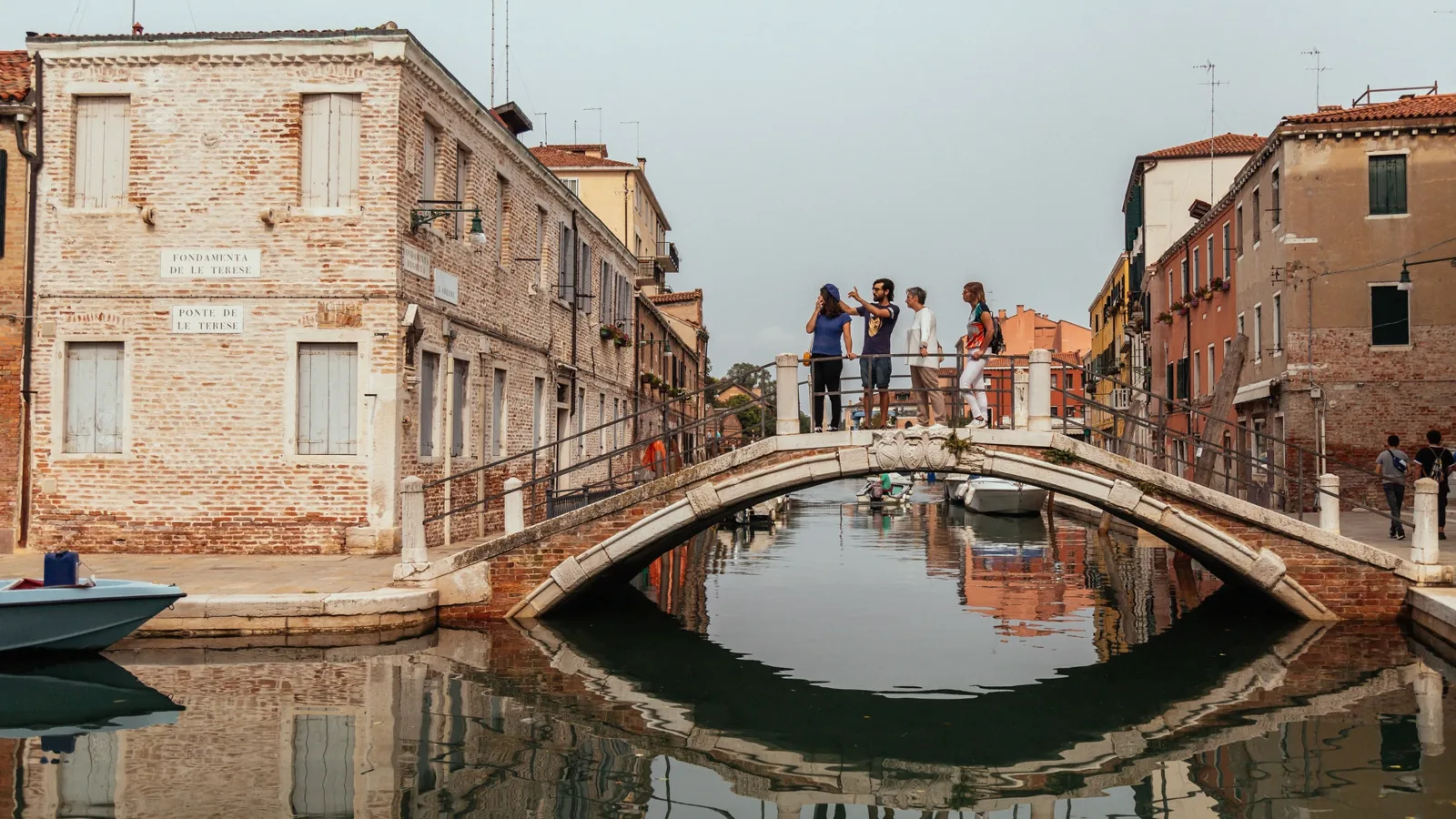
Walk through Cannaregio with a question of your own
Cannaregio covers a large part of northern Venice and is home to the former Jewish Ghetto. If you’re interested in that history, you can plan a walk around its sites and institutions, checking in advance what you can visit. If you’d rather get a feel for the city’s layout, follow its canals and notice how the streets change away from the busiest routes.
For a resident, this can be an alternative to repeating the monument circuit: choose a particular cultural site in the neighbourhood and build a walk around it. For a visitor, the priority is different: allow enough time to pay attention to the place instead of treating it as a shortcut to the next attraction. Either way, remember that these buildings and streets are part of other people’s daily lives.
Choose one island if you have time to enjoy it
Murano and Burano offer different reasons to leave the historic centre. Murano is associated with its glassmaking tradition; Burano with its colourful façades and lacemaking tradition. If you have only a few free hours, choosing one island is often more satisfying than spending much of that time changing boats.
The trip depends on water connections and what you want to do once you arrive. Decide what interests you first, then check the available routes. The islands are not compulsory: on a short stay, skipping them may give you the time you need to get to know Venice better on foot.
Adapt your plans to the weather and your company
If it rains, centre the day on a museum, church or monument you want to see inside, and keep a second option nearby. With young children, make fewer stops and bear in mind the many bridges: a walk that looks short on a map may take more effort than expected. Couples may enjoy sharing a boat ride and a conversation over dinner more than trying to reach every viewpoint.
There is also plenty to do without filling the day with ticketed visits: walk between neighbourhoods, cross a canal by a different bridge and pause to watch activity on the water. Those experiences cost little or nothing in themselves, though transport and indoor visits need a budget.
Leave room for Venice in the evening
At the end of the day, choose where you want to be instead of automatically heading back to St Mark’s. You could return to the Grand Canal to see it in a different light or stay in the neighbourhood where you spent the afternoon. If you’d like dinner or a drink, find somewhere that fits your route and respect the peace of those who live nearby.
Venice offers more than you can fit into a first visit. A good day is measured less by the number of places crossed off a list than by understanding why you chose to go inside some, pass others by and return to one without rushing.