What lies behind its fame
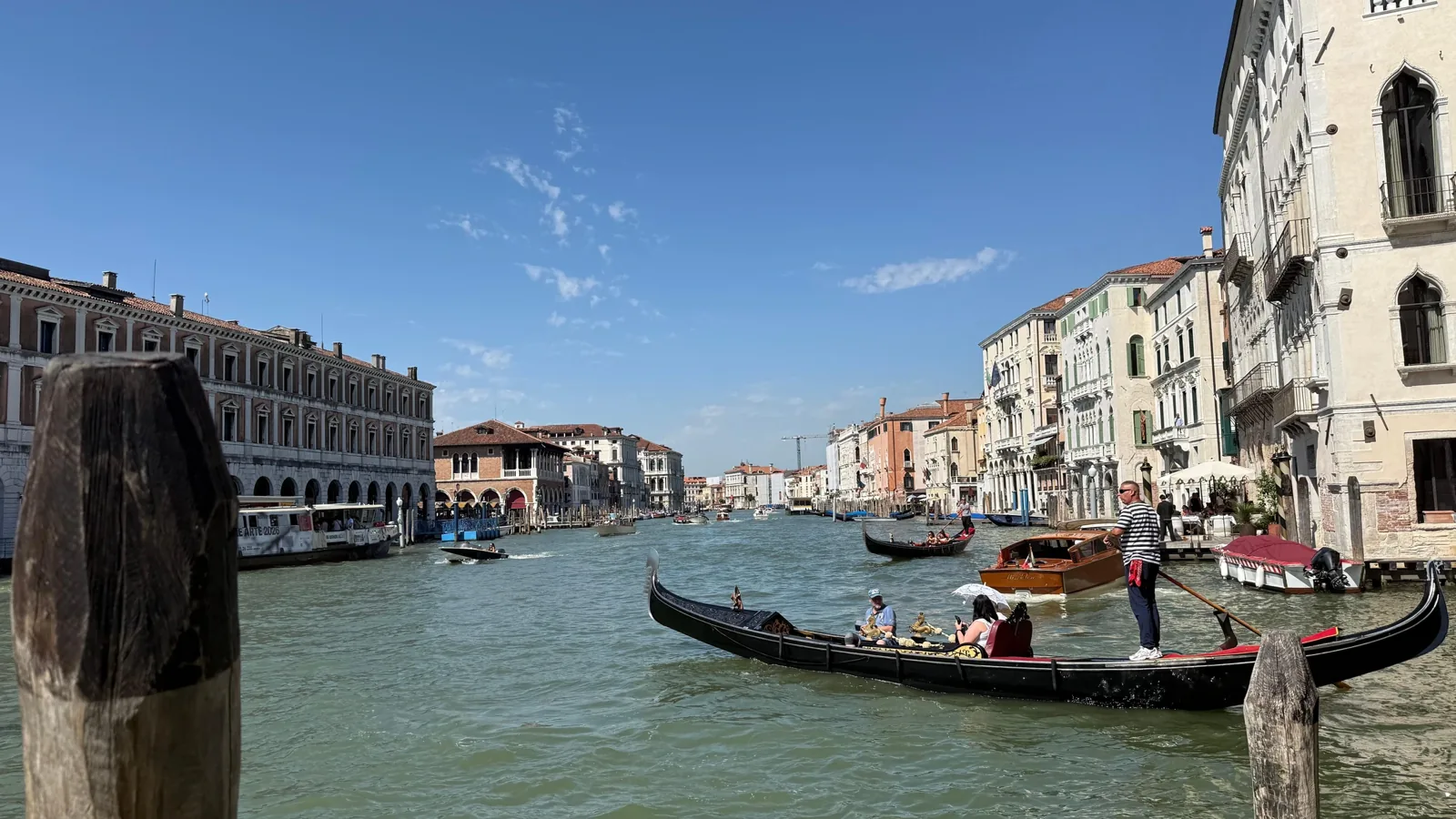
The Grand Canal reveals something no still image quite captures: façades and boats share a space where water serves as the main street. Around St Mark’s Square, buildings invite you to pause and explore the city’s history, while the Rialto Bridge shows where everyday routes meet the busiest visitor paths.
If architecture and cities shaped by their surroundings appeal to you, Venice offers far more than a postcard view. If you mainly want to visit individual monuments quickly, you may find the experience less straightforward than expected.
The Venice you find between sights
Part of the appeal lies in the journeys between places. Walking from Cannaregio towards Rialto, or crossing Dorsoduro without stopping to photograph every corner, reveals bridges, small squares and shifting views that bring the city together. A place does not need to be called a “secret” to be enjoyable.
That changes how you plan your day: choose a few priorities and give the routes between them time. Detours may frustrate anyone who always wants the most direct path; for those who enjoy exploring on foot, they are part of the visit.
What might disappoint
The best-known areas can be very crowded. The intimacy suggested by a photograph of an empty canal may bear little resemblance to a visit to St Mark’s or Rialto. Walking also means crossing bridges, and distances can feel longer with luggage or when you need to avoid steps.
None of this diminishes the city’s appeal, but it matters when choosing where to stay and setting your pace. If reduced mobility, a pushchair or heavy suitcases affect your plans, check access to your accommodation and the sights you most want to visit carefully. Venice rewards curiosity; it also calls for patience.
How long should you stay?
One day lets you see part of the city and find out whether its atmosphere appeals to you. It does force choices, though: trying to fit St Mark’s, Rialto, museums and islands into a single day leaves little time to take in what you’re seeing.
Two or three days offer a better balance. You can spend time around St Mark’s, explore other neighbourhoods and visit a museum or historic building, such as the Doge’s Palace or the Gallerie dell’Accademia, according to your interests. A longer stay makes sense if you enjoy museums, want to explore the islands or prefer to revisit places without a full schedule. The right length of stay depends on your curiosity, not a fixed checklist.
The Bridge of Sighs and journeys by water
A vaporetto journey does more than get you from one place to another: it lets you see the city from the side many of its façades face. It may be worth including one if you want to better understand how the neighbourhoods relate to the lagoon. Walking, though, is usually the best way to discover the spaces between the major landmarks.
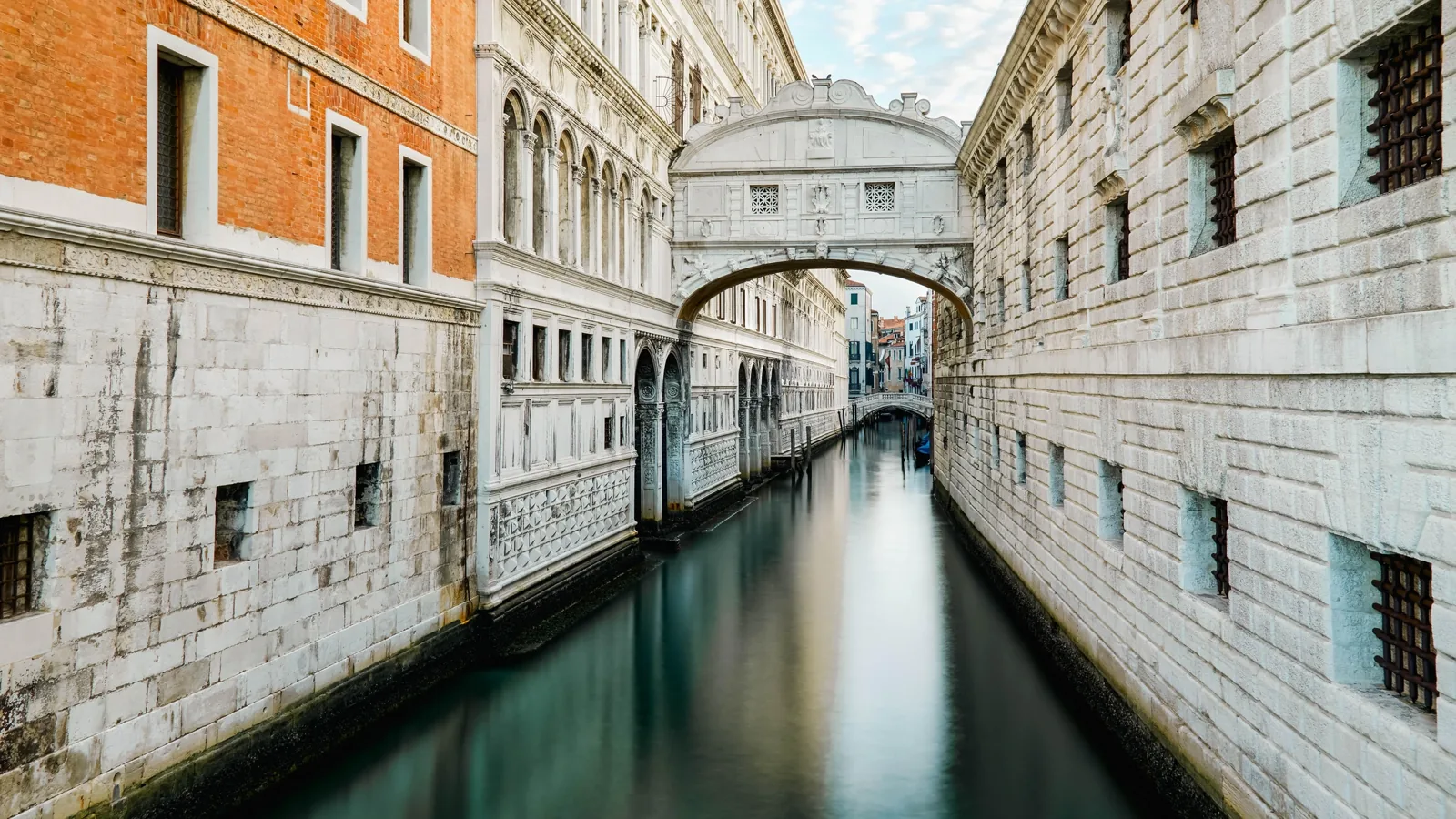
The choice affects both your spending and your energy. Before adding several boat trips, consider which route offers a different view and which you could walk. If you plan to visit Murano or Burano, allow time for the journey there and back as well as the island itself; treating either as a quick stop can reduce the visit to a string of photographs. The image shows the canal beneath the Bridge of Sighs; it illustrates the waterways, not a particular route or service.
Budget: where to spend your money
Venice can be expensive, especially once accommodation, water transport, admission fees and meals in popular areas add up. You do not need a universal budget figure to make a good decision: costs depend on the season, where you stay and how many paid visits you choose.
On a tight budget, prioritise what you cannot recreate in another city: time to explore and, if it interests you, one well-chosen cultural visit. Paying for every experience on a list can leave less room to enjoy them. With a bigger budget, the question is the same: which expense will improve your stay?
How the season changes the experience
Light, temperature and crowds can make a walk through Venice feel very different. Heat can make crossing the city on foot more tiring; cold or rain may encourage you to alternate streets with museums and other indoor spaces. Episodes of acqua alta can also occur, so check conditions close to your trip if they may affect how you get around.
There is no ideal date for everyone. If long walks are your priority, look for conditions you find comfortable. If exhibitions and interiors interest you, a day of less inviting weather still offers possibilities. Matching your expectations to the time of year helps more than hoping for a city that is always empty and sunlit.
A different perspective for those who live nearby
Venice need not be a tour of monuments to be worthwhile. For someone who lives in or near the city, choosing an exhibition at the Gallerie dell’Accademia and spending the rest of the outing walking through Dorsoduro may make more sense than repeating the route between St Mark’s and Rialto. It gives you a specific reason to return without trying to see everything.
For a first-time visitor, those famous places do provide context. Seeing them and then leaving the main route lets you compare the Venice you expected with the city unfolding around it.
Who is Venice worth visiting for?
Venice particularly suits people who enjoy walking, observing architecture and letting the journey become part of the experience. It may disappoint those looking for easy routes, open space at the most famous sights or a short break packed with quick visits.
If you have little time, arrive with one clear priority. If you can stay several days, spread out the major monuments and leave room for walks without a set destination. Venice is worth visiting when you see it as a lived-in, complex city: beautiful, demanding and more interesting than the image that made it famous.