Bacari and cicchetti: a taste without a formal meal
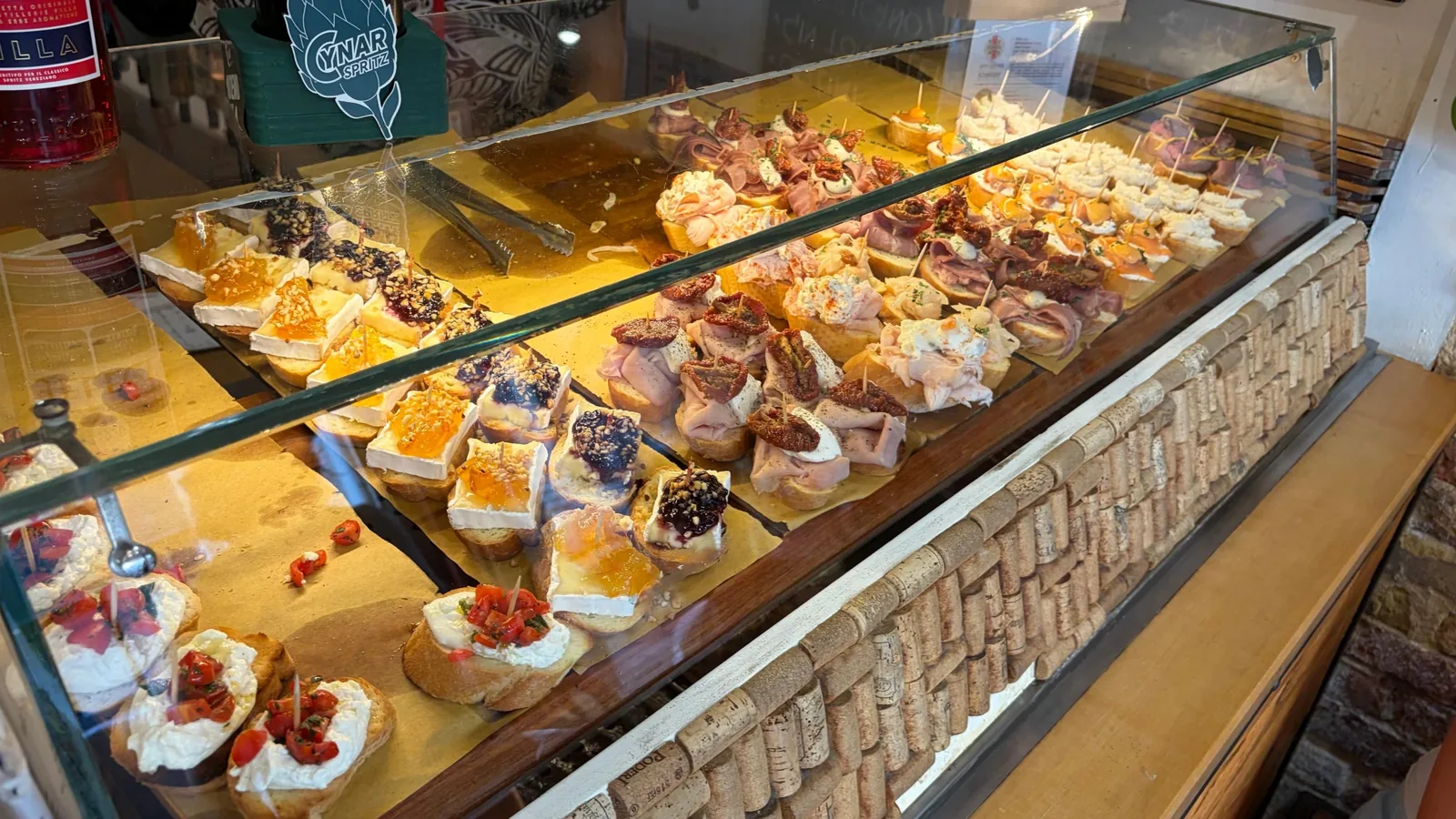
Bacari are a good introduction to Venetian food. Their cicchetti are small bites that may feature fish, vegetables or cured meats. They suit you if you’re travelling alone, want to share a range of flavours or prefer a short stop before walking on.
Variety differs from place to place, and a few bites may not make a full meal. Look at what’s on display and ask what each one contains if you have dietary restrictions. If you want to sit comfortably, talk at length or try a dish made to order, choose another kind of place. Ordering just a little at your first stop also leaves room to discover somewhere else later.
Rialto and San Polo: eating near Venice’s trading heritage
The Rialto market is a reminder of Venetian cuisine’s ties to the lagoon and the exchange of goods. Walking nearby helps explain why fish features so prominently on menus. For a first-time visitor already passing through Rialto, San Polo is a practical place to pause for lunch without crossing Venice just to find a table.
Being close to the market does not prove that a restaurant buys from it or cooks better. If that connection matters to you, ask about the ingredients and how they are prepared. A menu that identifies ingredients and explains dishes is more useful than a general promise of “authentic Venetian cuisine”.
Cannaregio: a meal after a walk
Cannaregio offers another option if your walk takes in the Jewish Ghetto or the district’s fondamente: eating there saves you from retracing your steps towards Rialto or San Marco. Around Fondamenta della Misericordia, you can compare places for an informal stop; on other streets, look for a table and a slower lunch.
Don’t assume that moving away from the monuments guarantees a smaller bill or a more local experience. Read the menu before going in and see whether it fits what you need that day: a simple dish, several things to share or time to rest. For residents who already know the central routes, choosing Cannaregio can give a walk a destination and a chance to try somewhere new without turning the outing into a tourist itinerary.
Dorsoduro and Castello: two reasons to change neighbourhoods
If you’re visiting the Gallerie dell’Accademia or walking beside the Giudecca Canal, Dorsoduro lets you eat without interrupting your route. Around Campo Santa Margherita, you can compare options before deciding between a quick break and a leisurely meal. Choose the area because it fits your plans, rather than expecting the same atmosphere on every street.
Castello suits a different day: one that takes you towards the Arsenale or the Giardini. Via Garibaldi is a useful point of reference when looking for somewhere to eat before or after your walk. There is less reason to go there solely because someone has called the whole district a “secret”: Venice changes from one street to the next, and the best choice depends on where you’ll actually be. The cicchetti display in the photograph illustrates snacks to look for around the city; it does not identify a venue or prove that it is in Dorsoduro or Castello.
Dishes to look for on a menu
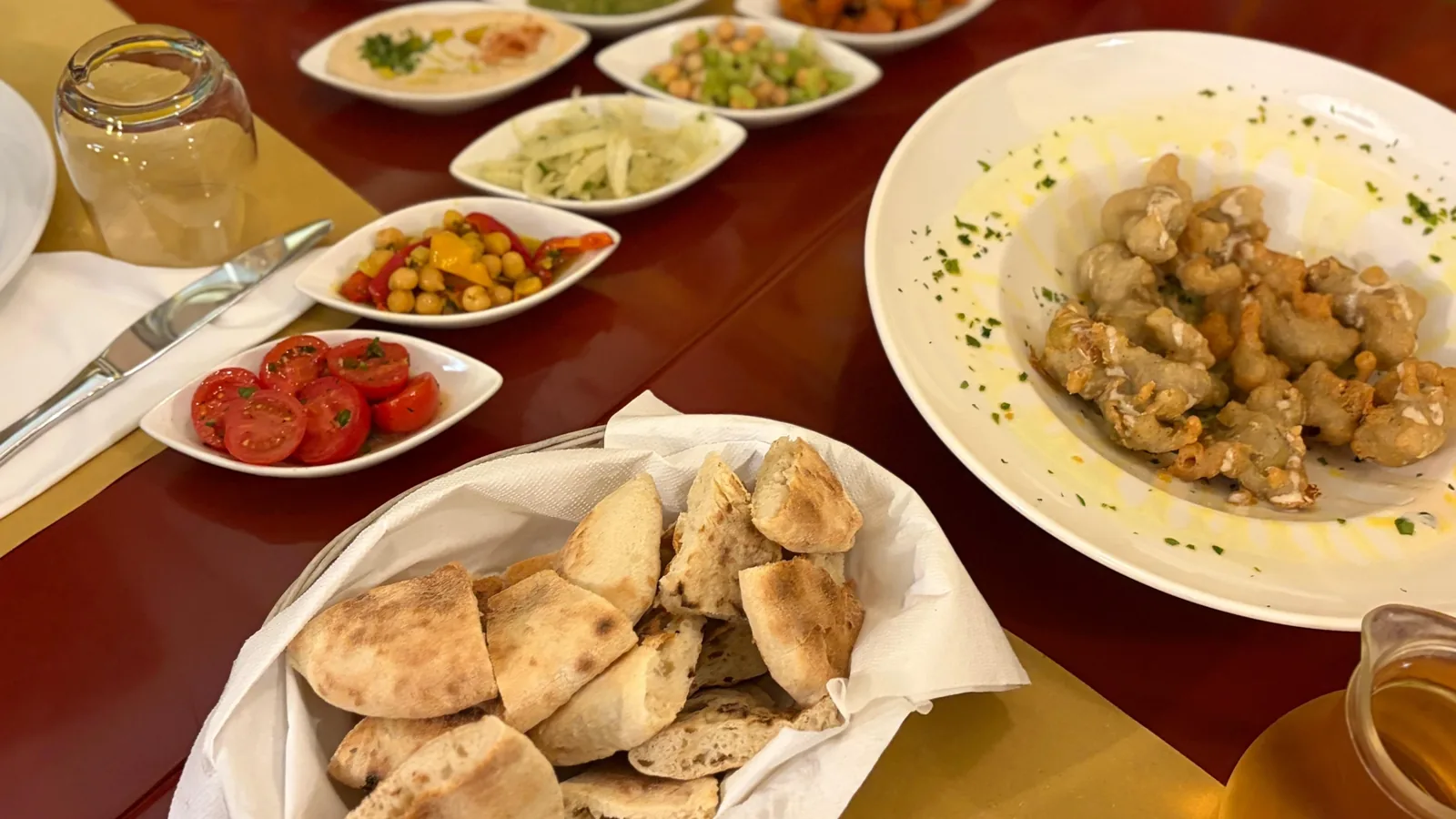
Sarde in saor, sardines prepared with onions and a sweet-and-sour balance, offer a recognisable taste of Venetian cooking. Baccalà mantecato, a creamy salt-cod preparation, often appears among bites to share. If you prefer pasta, bigoli in salsa pairs thick pasta with a traditional onion and fish sauce. These dishes have distinctive flavours and may be intense if you expect something mild.
You needn’t order them all at one meal. Choose according to your appetite and ask how a dish is made: traditional recipes can vary. If lagoon fish appeals to you, ask which species is served and how it is prepared, without assuming that every fish described as “local” comes from the same area. A clear answer is worth more than a long list of specialities.
Eating well while keeping an eye on the bill
In Venice, as in any heavily visited city, location, service and the type of meal affect the bill. Before sitting down, read the full menu and check the charges for drinks, service or a cover where listed. Then you can choose a table near a famous sight because you want to, with the terms clear before you pay.
To manage spending, mix formats: sit down when you want to explore a dish and make an informal stop when the day calls for more walking. A market is not automatically a place to eat, and several cicchetti are not necessarily cheaper than one dish. Compare what you’ll get and how much time you want to spend; saving money is of little use if the meal leaves you unsatisfied.
How to spot a place that suits you
Be wary of menus that promise to do everything equally well, from several different cuisines to a long selection of Venetian dishes, without explaining how anything is prepared. A shorter menu does not guarantee quality either, but it makes it easier to ask what is being cooked that day. Check whether the dish names are clear and whether you can find out about ingredients, portion sizes and terms before ordering.
Don’t judge a business solely by its proximity to a monument or the language of its menu. If time is short, there are good reasons to eat near Piazza San Marco. The more useful question is simpler: does that table offer the food, break and setting you want? If you live in or near Venice, you can reverse the visitor’s usual approach: choose the dish or place first and build your walk around it.
A city that eats beyond the postcard
Venice’s streets, markets and tables are part of a lived-in city. Wait your turn, keep entrances clear and respect working spaces when you stop to look at a menu or shop window. On a short visit, the best meal may be one that lets you discover a new flavour without rushing; for a resident, it may be a reason to return to a neighbourhood.
Venice does not demand a restaurant checklist. A bacaro, a dish chosen with curiosity and a table you want to linger at can tell you more about the city than several scheduled meals. Decide what you want from each stop, and let your route—and your appetite—have a say.