 Activity on TourBookGo
Three-Hour Guided Bike Tour of Vienna
Follow cycle lanes and less congested roads to cover more of Vienna than on foot, with historical commentary and stops for photographs.
Combine walks around individual areas with the underground and trams to explore Vienna comfortably without wasting time on unnecessary journeys.
Vienna is best understood on foot, but walking alone is not enough to explore it fully. Its historic centre invites you to slow down among squares, palaces and cafés, while many attractions extend beyond this elegant core. The most comfortable strategy usually combines walks around specific areas with the underground, trams and urban trains. Driving, by contrast, rarely improves a city-focused visit: a car can be useful for continuing through Austria or exploring rural areas, but within Vienna it generally adds parking, restrictions and traffic.
Compare locations and options to find a base that suits your trip. Booking.com confirms current availability and pricing.
Find accommodation on BookingThe old town is compact and packed with monuments, shops, museums and pleasant streets for strolling. Walking gives you a better sense of the city's scale: a grand avenue opens into a quiet neighbourhood, a church appears between restrained façades, and a café provides just the break your itinerary needed.
However, a walkable centre should not be mistaken for everything being nearby. Trying to combine Schönbrunn Palace, the Prater, the Danube area and several museums in a single day on foot turns sightseeing into an endurance test. It is better to choose one area, explore it at a relaxed pace and use public transport to reach the next.
Historic paving, accumulated distances, and cold or rainy weather can make walking more tiring. Travellers with young children, reduced mobility or luggage should allow some extra time and check the accessibility of the specific stations and places they intend to visit in advance.
The underground is especially practical when reaching your destination matters more than the scenery along the way. It provides quick access to neighbourhoods and monuments located far apart and is easy to use once you understand the direction of each line and the name of its terminus.
Its main limitation is precisely its efficiency: it moves travellers around without showing them much of the city. On a first visit, it works best as the backbone of your transport plans rather than as your only way of getting around. Use it to cover longer distances, then continue on foot.
Before buying a ticket or travel pass, consider how many journeys you will actually make. If your accommodation is centrally located and you plan to explore a different area each day, you may use public transport less than expected. If you are staying far from the centre or intend to visit several separate locations, a ticket valid for multiple journeys may be more convenient. Options and conditions can change, so it is sensible to check the latest information through official channels.
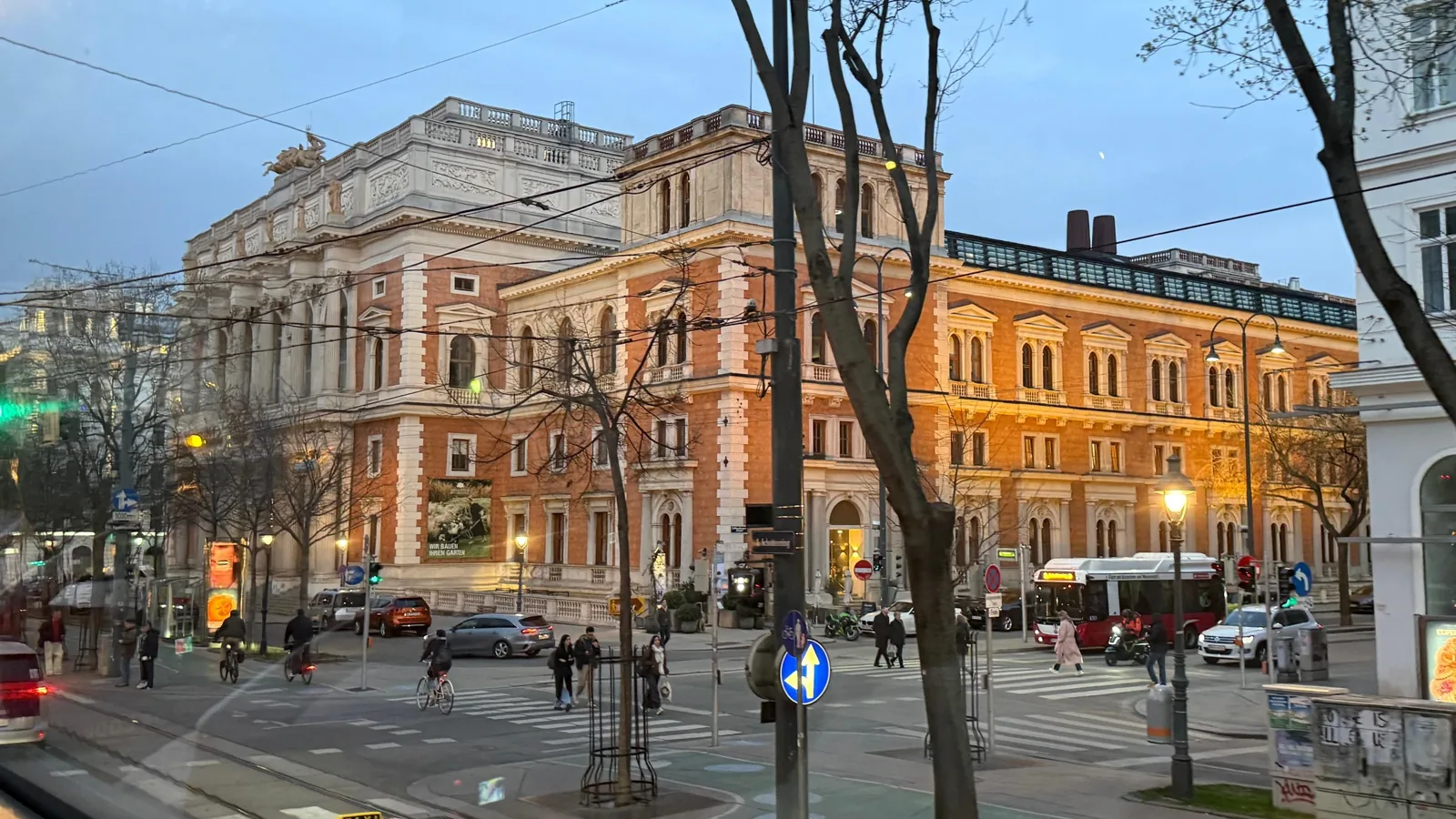
Trams offer a different experience. They are slower than the underground on some routes, but they help you get your bearings, admire the architecture and see how one neighbourhood gives way to another. Instead of disappearing underground, the journey becomes part of the visit.
They are particularly enjoyable on routes that pass along historic avenues or connect nearby areas without requiring a long walk. A tram ride can also provide a welcome break between museums, parks and shopping streets. Even so, not every route offers interesting views, and some may be less direct than they appear on the map.
The best formula is usually simple: take the underground for major leaps across the city and choose the tram when travelling above ground adds context or avoids a repetitive walk.
Buses fill the gaps where the underground and trams do not provide such a convenient connection. They may play a secondary role during a short tourist stay, but they can be useful in residential neighbourhoods, outlying areas or for specific journeys.
Urban and regional trains also help connect outer areas and certain points of entry into the city. Always distinguish between the urban network and services that use different fare zones. This is especially important for journeys involving the airport or excursions outside Vienna: do not assume that every urban travel pass covers the entire route.
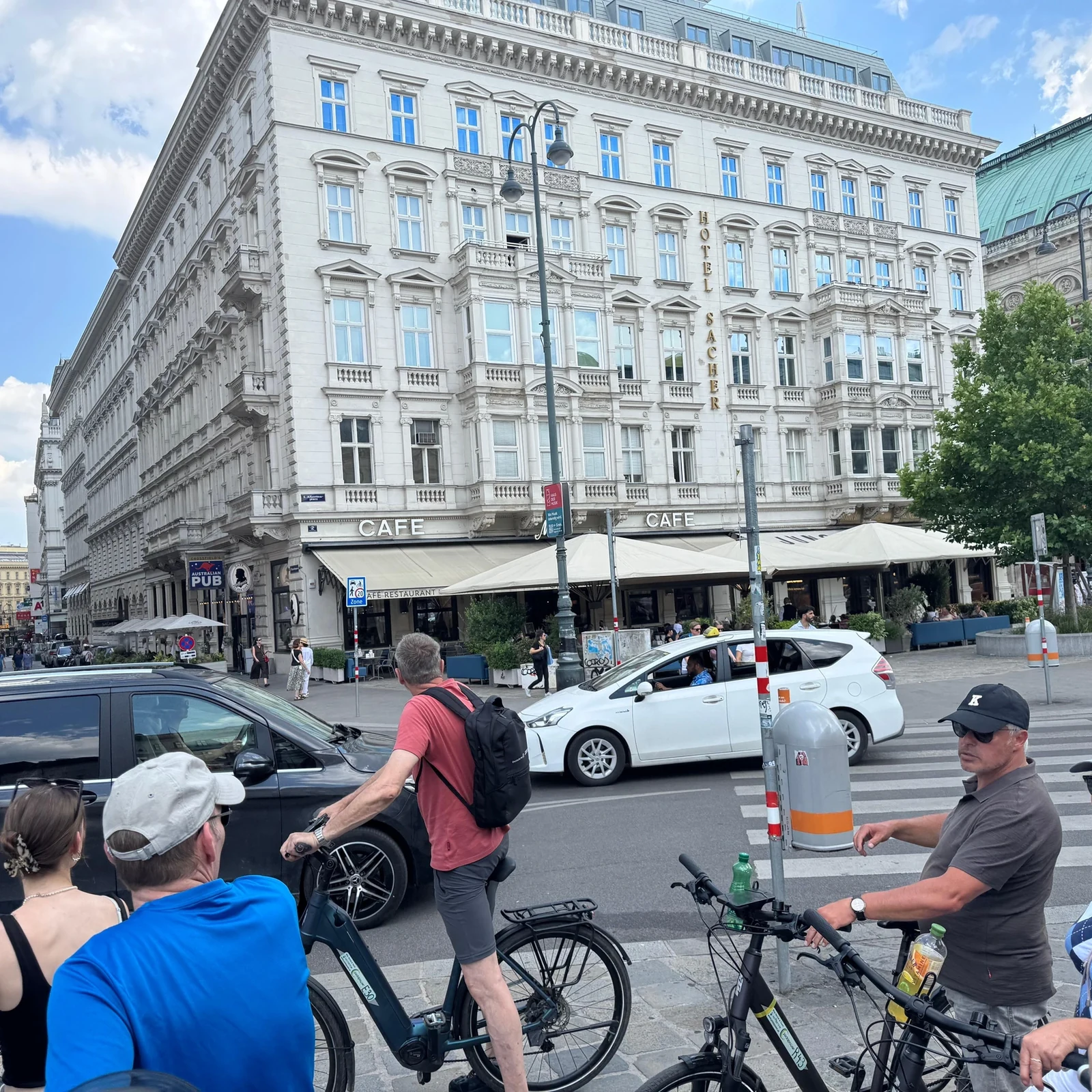
Vienna can be enjoyed by bicycle, particularly along the Danube, in parks and on routes away from the heaviest traffic. It is a good option for anyone already comfortable cycling in a city who wants to cover more ground without losing touch with their surroundings.
Not every visitor will find it relaxing. Trams, junctions, traffic and the need to follow local lanes and rules all demand attention. Nor is cycling ideal if you plan to go in and out of museums or monuments throughout the day. It works better as a deliberate plan for part of the day than as an automatic solution for the entire stay.
Normally, you do not need a car to explore Vienna. Driving means having to consider parking, urban regulations and traffic, while many tourist destinations are well connected by public transport. Pedestrian areas and the compact nature of the centre also reduce its advantages.
Hiring one may make sense if Vienna is the starting or finishing point of a longer road trip, if you are visiting rural places with limited connections, or if personal needs make driving particularly convenient. Even then, it may be easier to collect the car as you leave the city or return it when you arrive, avoiding the need to keep it parked for several days.
Anyone arriving in their own vehicle should check the current parking rules and consider accommodation with a clear parking solution. Improvising in this area can consume more time and money than expected.
Staying in the centre allows you to do much of your sightseeing on foot, but it usually means more tourist activity and, depending on the street, some noise. In this case, public transport is mainly useful for reaching Schönbrunn, the Prater, the Danube and other more distant locations.
Staying near a well-connected station, even outside the historic core, can provide a quieter experience and easier access to neighbourhoods with more everyday local life. Distance in kilometres matters less than the quality of the connection. Accommodation that appears close may prove inconvenient if it requires several changes, while somewhere farther away may work very well with a direct route.
Those seeking nightlife should also consider the return journey, not just how to get there. Services and frequencies may vary by day and time, so it is wise to check each late-night journey before heading out.
Vienna rewards a mixed pace. Walking lets you take in its details; the tram keeps you connected to the cityscape; the underground handles the distances; and buses and trains complete the less obvious journeys.
The key is not to choose a single mode of transport, but to divide the city into areas and avoid unnecessary journeys. One day might focus on the historic centre and its museums; another on Schönbrunn and its surroundings; another on the Prater or the Danube. This way, transport stops dominating the itinerary and returns to its proper role: bringing places closer together without turning your visit into a race.
Compare cycling and two sightseeing bus options for getting around and finding your bearings in Vienna.
Activity on TourBookGoFollow cycle lanes and less congested roads to cover more of Vienna than on foot, with historical commentary and stops for photographs.
 Activity on TourBookGo
Explore Vienna by hop-on hop-off bus with 24, 48 or 72-hour tickets, up to four routes, commentary in 19 languages, Wi-Fi and live GPS.
 Activity on TourBookGo
Explore Vienna by Big Bus with a 24- or 48-hour hop-on hop-off pass, audio commentary and option-dependent extras.