
What to Eat in Alicante: The Dishes That Best Define Its Cuisine
If you want to understand Alicante’s cuisine, it is worth looking beyond a single speciality. Rice takes centre stage, but cured seafood, fish, seafood and tapas complete a food culture deeply connected to the Mediterranean.
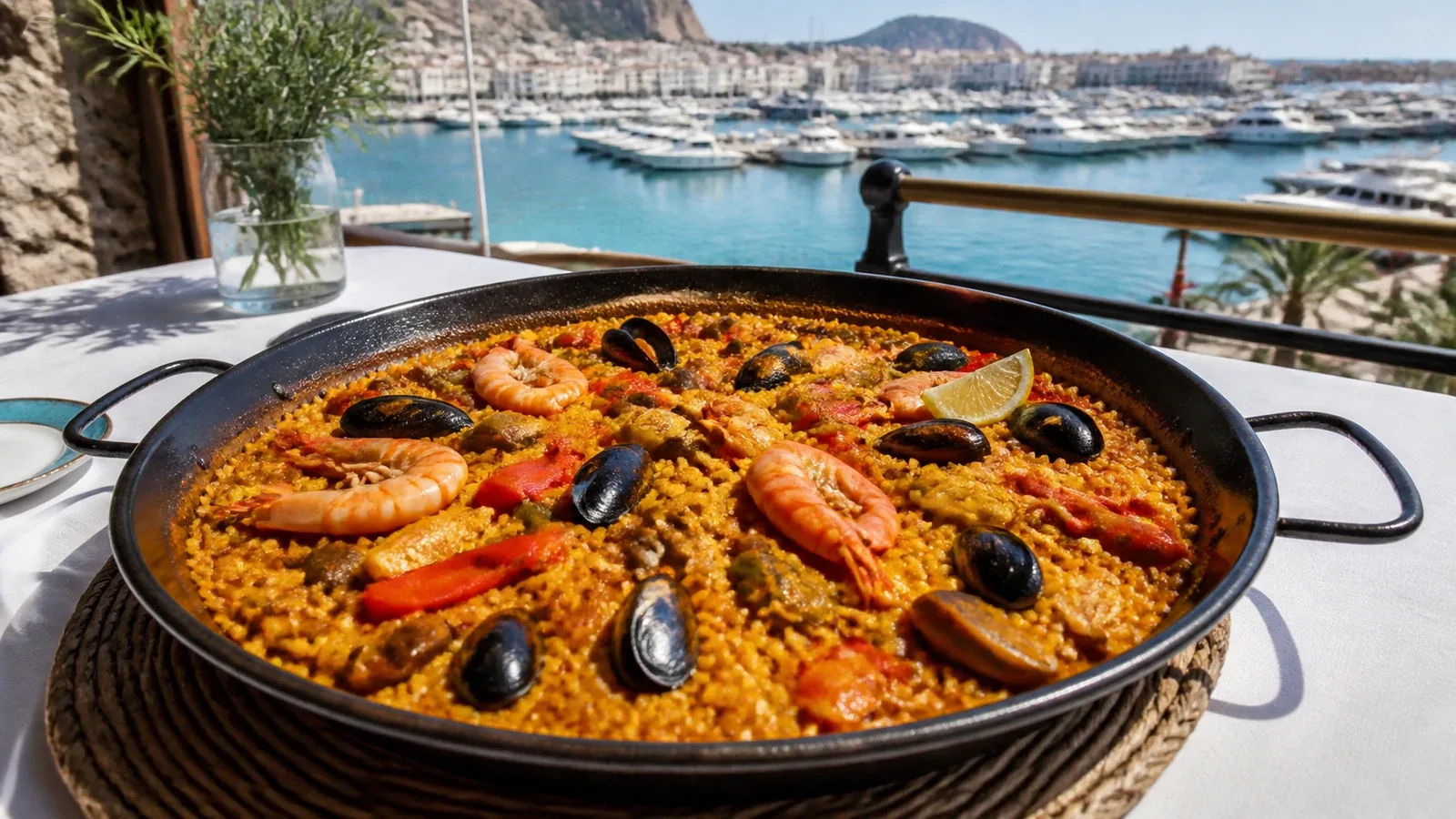
Rice Dishes: Much More Than Paella
If you choose just one culinary experience during your trip, it should probably revolve around rice.
Alicante is home to many different preparations: dry rice dishes, creamy or brothier versions, and recipes made with fish, seafood, vegetables or meat. Among the dishes most closely associated with the coast is arroz a banda, born from a seafaring tradition in which the fish and its stock are every bit as important as the rice itself.
There is one idea worth leaving behind before you sit down: not every Mediterranean rice dish is paella.
Asking for the house speciality is usually a better strategy than automatically ordering the best-known dish. Restaurants that take rice seriously tend to treat it as a cornerstone of their cooking rather than as an accompaniment designed for tourists.
And there is one important detail: good rice takes time. Alicante is best enjoyed when lunch is not squeezed between two sightseeing stops with one eye constantly on the clock.
Cured and Salted Seafood: Alicante’s Oldest, Saltiest Flavours
Mojama, cured fish roe and other salted seafood are part of a deeply Mediterranean tradition. These are concentrated, intense flavours of the sea, particularly interesting for anyone looking to try something more local than the usual Spanish tapas.
They will not appeal to everyone. Their intensity can come as a surprise if you are expecting mild, delicate fish.
That is precisely why they are worth trying in small quantities alongside other appetisers. They offer a glimpse into a style of cooking that existed long before Alicante became a city of terraces, low-cost flights and seaside holidays.
Fish and Seafood
Its proximity to the Mediterranean naturally gives fish and seafood an important place on many menus.
This is where it pays to ask for advice and find out what is particularly good that day. The most expensive fish is not always the most interesting, and an enormous seafood platter is no guarantee of a memorable meal.
A simple preparation can sometimes tell the story of the Mediterranean better than an overly elaborate presentation.
Tapas and Small Plates
Tapas work particularly well when you want to try several things without turning every meal into a lengthy occasion.
In Alicante, you will find everything from Spanish classics to products and dishes more closely associated with the eastern Mediterranean coast: ensaladilla, cuttlefish, squid, anchovies, cured seafood, fish, montaditos and small dishes that vary from one establishment to another.
It is an ideal format for your first evening, while you are still settling into the rhythm of the city.
The Best Areas to Eat in Alicante
Where you eat affects the atmosphere, convenience and often the price. The city centre, historic quarter and streets around the Central Market each offer a different way to experience Alicante at the table.
Traditional Centre: Convenient and Full of Choice
The city centre has a high concentration of restaurants, bars and terraces. It is convenient if you are sightseeing and want somewhere to eat without travelling too far.
The advantage is the variety. The disadvantage is exactly the same.
Alongside genuinely interesting places are establishments whose greatest strength is simply being located on a very busy street. A packed terrace does not necessarily mean memorable cooking.
Take a little time to read the menu, and be wary of extremely long lists promising to cover practically the entire spectrum of Spanish cuisine.
Old Town: Atmosphere Before Guarantees
The streets around Alicante’s historic centre provide one of the most pleasant settings for dinner. As evening falls, the pale façades change colour, the lights come on and tables begin to fill the streets.
It is an excellent area for combining dinner with an evening stroll.
But its charm also attracts plenty of visitors, so choosing carefully matters a little more here. Paying for location is not necessarily a problem — a beautiful terrace is also part of the travel experience — as long as you know that is what you are paying for.
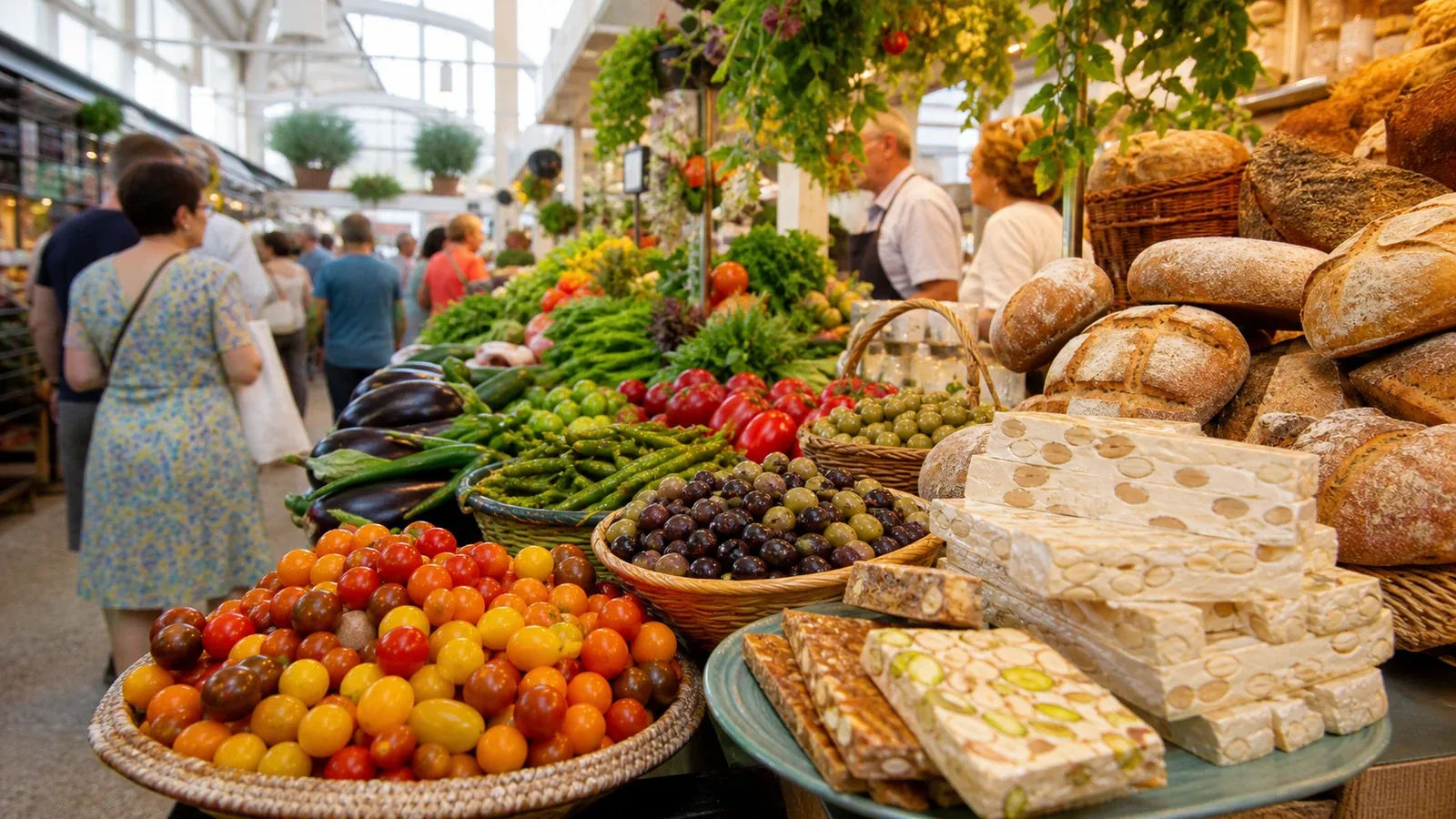
Central Market and Surrounding Streets: Everyday Alicante
If you want to understand what a city really eats, its markets can often be more revealing than its most elegant restaurants.
The area around Alicante’s Central Market brings you closer to the ingredients themselves: fish, fruit, vegetables, cured meats, preserves, salted seafood and other products that help explain the local cuisine.
It is also an interesting part of the city for breakfast, an aperitif or an informal lunch.
There is no need to turn the market into a tourist attraction. It is better to wander through it at a relaxed pace, observe what is happening and remember that, above all, it remains part of everyday city life.
Where to Eat Cheaply in Alicante
It is possible to eat well in Alicante on a reasonable budget if you do not need every meal to come with sea views.
Neighbourhood bars, places close to the market, bakeries, small tapas bars and set lunch menus can offer better value for money than restaurants lining the busiest tourist areas.
Another very Mediterranean strategy works well too: make lunch your main meal and keep dinner lighter.
Walking a few streets away from the main tourist thoroughfares usually broadens your options. That does not mean everything central is bad or everything hidden away is authentic. That equation is far too simplistic.
A mediocre restaurant can just as easily be found on a side street.
Eating by the Sea: Is It Worth It?
Yes, but it helps to understand what you are paying for.
Sitting beside the Mediterranean while the light changes has a value that does not appear on the plate. When you are on holiday, the setting matters too.
The problem comes when sea views are automatically confused with good food.
In very touristy areas, you may pay more for the location, terrace and demand. If you are looking for a special meal because of the setting, it may be worth it. If food is your absolute priority, compare your options first and do not rule out restaurants a few streets inland.
A good approach is to reserve one meal by the sea for the experience and devote others to exploring less obvious parts of the city.
How to Avoid Tourist Traps When Eating in Alicante
The most common mistake is choosing a restaurant simply because it is next to an attraction, a beach or a busy street.
It is also worth being cautious about endless menus offering rice dishes, burgers, pizzas, meat, fish, tapas and a full range of international cuisine all at once. Extreme variety is rarely a sign of specialisation.
Another mistake is searching for “paella” without distinguishing between different styles of rice. If you want to discover Alicante’s cuisine, ask which rice dish the restaurant recommends.
And avoid judging a place solely by its appearance. Some unpretentious bars serve excellent food, while other beautifully designed restaurants offer a fairly forgettable culinary experience.
Where Should You Eat If You Are Travelling as a Couple, with Family or on a Budget?
As a couple, a relaxed dinner in the historic centre or lunch near the sea can work particularly well. Alicante has enough light, terraces and evening atmosphere for the setting to feel special without the need to seek out luxury.
With children, rice dishes, simply prepared fish, croquettes, tortillas and tapas are all easy to share. Families will generally be more comfortable in spacious restaurants and may prefer to avoid the busiest dining hours.
On a tight budget, look for simple breakfasts, bars popular with local residents, markets and lunchtime options. You do not need to eat beside the sea every day to enjoy Alicante’s food.
For food-focused travellers, do not limit yourself to familiar tapas. Explore the rice dishes, try salted and cured seafood, ask about the day’s fish and dedicate at least one meal to a restaurant specialising in Mediterranean cooking or rice.
How the Experience Changes Throughout the Year
In summer, Alicante eats outdoors. Terraces, the sea and long evenings are part of the experience, but there are also more visitors and greater demand at restaurants along the coast.
Booking a table for a special meal can be a sensible idea.
Outside the busiest months, the experience can feel more relaxed. There is less need to chase opening times and tables, making it easier to notice the Alicante that keeps eating long after the swimsuits disappear from the beaches.
Winter also changes the appetite. A hot rice dish or a long, leisurely lunch takes on a different character when the Mediterranean is no longer simply a summer backdrop.
Is Alicante Worth Visiting as a Food Destination?
Yes, especially if you understand what Alicante does well.
There is no need to portray it as some grand gastronomic capital. Its appeal lies in something more straightforward: rice, the sea, Mediterranean produce, salted seafood, fish, markets and a culture of eating without too much ceremony.
It may disappoint anyone who expects every beachfront restaurant to be exceptional or imagines the local cuisine as little more than enormous seafood paellas.
Alicante rewards travellers who ask questions, compare options and are willing to walk a few streets beyond the obvious route.
Because the best table of the trip may not have white tablecloths or a spectacular view. It might simply be a rice dish arriving at the table still sizzling, a few thin slices of mojama, a piece of fish cooked without unnecessary flourishes and a conversation that keeps going while, a few streets away, the Mediterranean continues to bathe the city in light.
