 Activity on TourBookGo
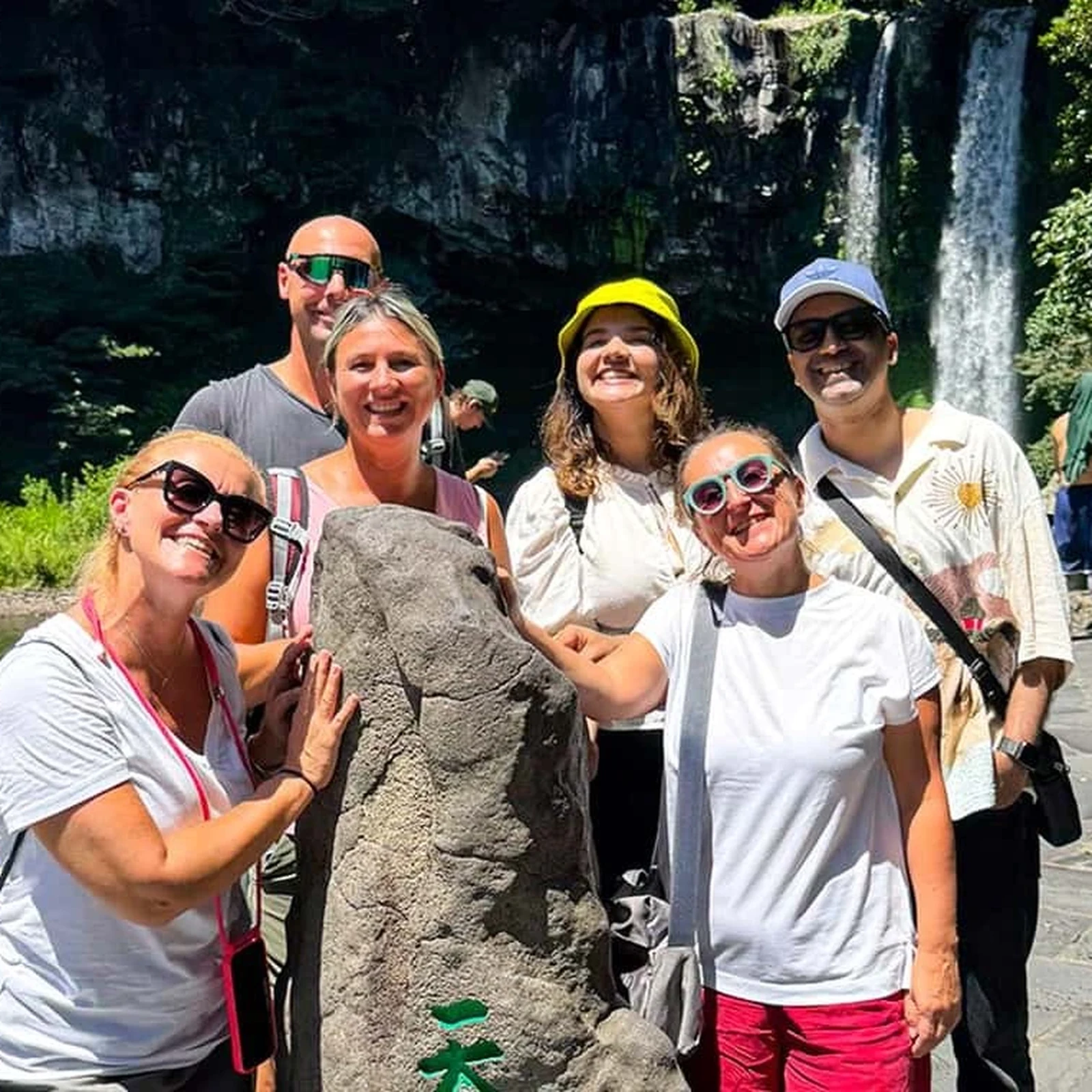
South Jeju Tour with UNESCO Heritage and Mount Hallasan
Book a South Jeju tour with waterfalls, Yakcheonsa Temple, Osulloc tea fields, coastal scenery and an easy Mount Hallasan hike from €25.
The best time to visit Jeju generally falls within two periods: from late April to May and from late September to October. These months offer a particularly pleasant balance of mild temperatures, vibrant scenery and good conditions for walking along the coast, climbing the island’s oreum—its small volcanic cones—or exploring the trails of Hallasan.
Choosing the best time to visit Jeju is not simply a matter of chasing good weather. The island changes dramatically with the seasons: spring belongs to the flowers; summer to the sea; autumn to golden paths; and winter to silence. The right time depends on which version of Jeju you want to discover.
Compare locations and options to find a base that suits your trip. Booking.com confirms current availability and pricing.
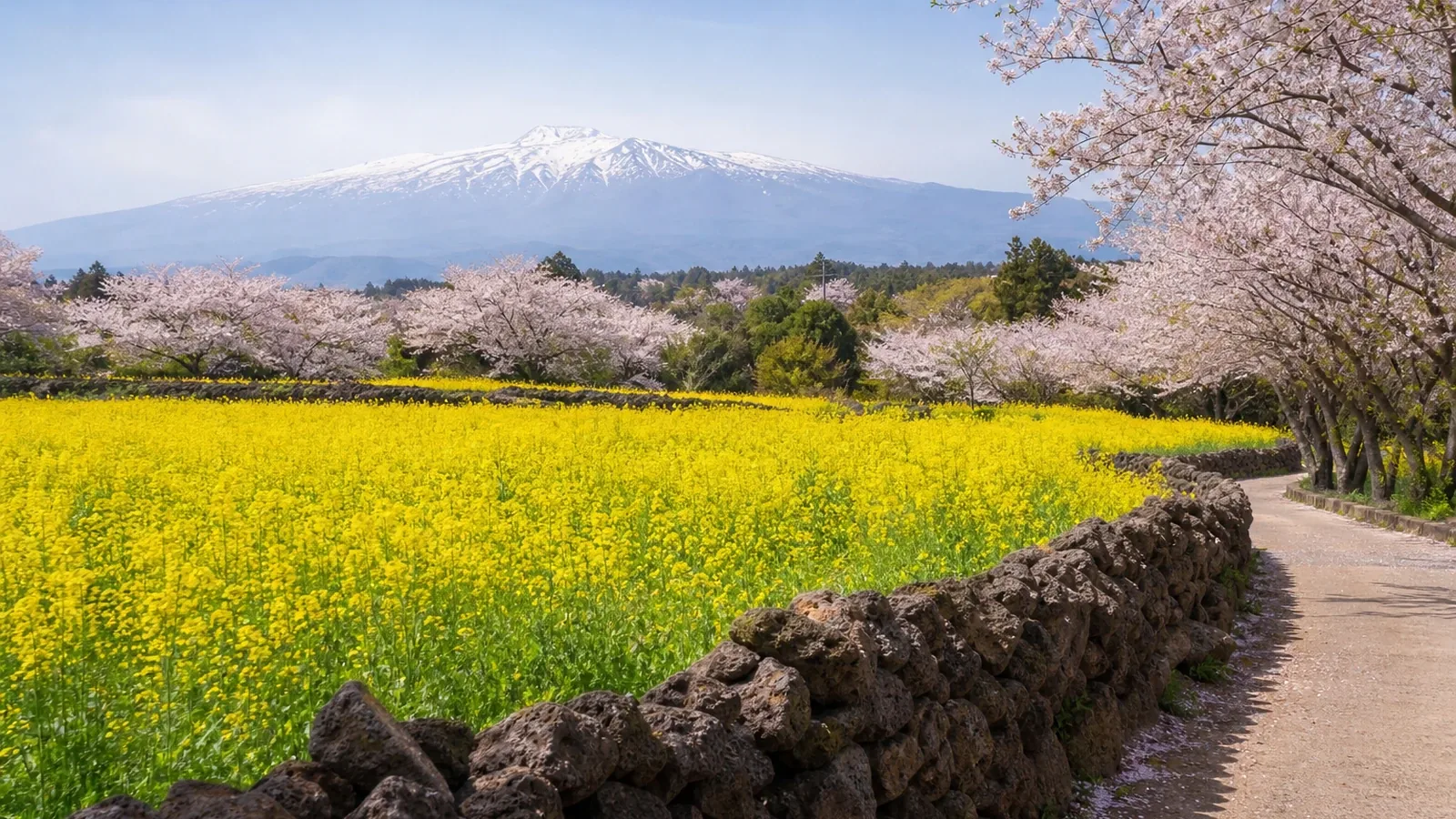
Find accommodation on BookingBetween mid-March and May, the island slowly emerges from winter. Fields of rapeseed turn yellow, cherry trees come into bloom and the rural roads take on a delicate beauty that contrasts with the dark volcanic-stone walls.
April and May are particularly good choices for a first visit. Temperatures are usually comfortable for walking and driving, although March can still feel cold and windy. Jeju is a humid island exposed to the ocean: even in spring, a clear morning can give way to cloud cover within a few hours.
The blossom season attracts large numbers of visitors, especially at weekends and during national holidays. At those times, flights and accommodation may become more expensive, and the most photographed places lose some of their tranquillity. It is best not to plan the entire trip around an exact flowering date, as peak bloom varies each year depending on temperatures and rainfall.
It is a good season for couples, photographers, garden lovers and travellers who want to combine gentle hiking with scenic drives. It may disappoint anyone expecting warm beach days: the landscape looks like spring long before the sea becomes truly inviting.
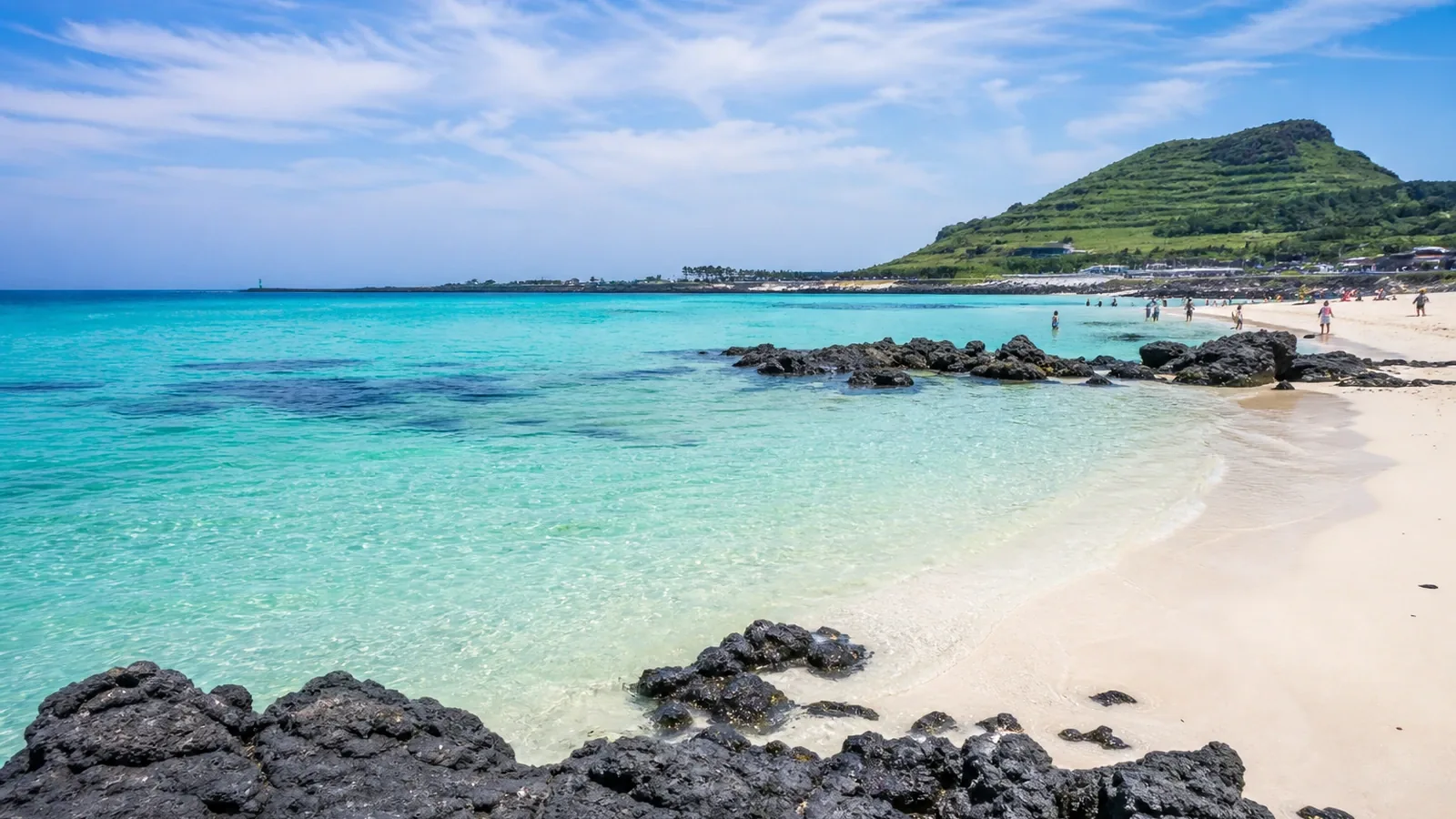
July and August reveal Jeju at its brightest and most energetic. The beaches fill up, the water takes on turquoise hues and island life moves outdoors. This is the right season for swimming, kayaking and other marine activities.
It is also the most demanding time of year. Summer is hot, humid and rainy, and accounts for a significant share of Jeju’s annual rainfall. The rainy season usually begins in late June, and there is also a risk of typhoons during the summer months.
The humidity can make walking more tiring, especially on trails with little shade. Heavy rain and strong winds may force changes to boat trips or mountain routes. Summer is also the most popular season for enjoying the beaches, so coastal accommodation and flights are usually in higher demand.
Yes, when the sea is the main reason for the trip and you are willing to accept some unpredictable weather. It is not the best choice for travellers who want to walk long distances, avoid crowds or follow a rigid itinerary.
From late September through November, the heat subsides and calm returns to the trails. The oreum are covered in silver grass, the light becomes more slanted and the coast takes on copper tones. On clear days, walking through Jeju in autumn feels almost elemental: wind, black stone, open sea and vast stretches of grass moving in unison.
October is probably the best month for an all-round visit. The weather is usually more pleasant than in summer and is well suited to coastal walks, mountain climbs and road trips. Even so, September can still bring periods of heat or unsettled weather, while November begins to feel cool, especially in the evenings and at higher elevations.
The mandarin season begins around November, when the orchards add splashes of orange to the landscape. Harvest dates, festivals and agricultural activities may vary, so it is worth checking them before travelling.
Autumn is not entirely free of visitors. Sunny weekends and places famous for their fields of silver grass can become crowded. Even so, it is usually easier to find quiet corners than at the height of summer.
From December to mid-March, Jeju reveals its most austere side. Temperatures are milder than in much of mainland Korea, although the wind makes it feel colder. Snow falls mainly on Hallasan and in elevated areas; along the coast, cold, damp and highly changeable days are more common.
Winter makes it possible to explore some places with fewer people, admire bare volcanic landscapes and experience the harvest of different citrus varieties. Watching the first sunrise of the year from Seongsan Ilchulbong is a well-known tradition, although any specific celebration should be checked in advance, as arrangements may change due to weather or organisational reasons.
Travelling at this time of year generally offers more tranquillity and, outside holiday periods, better accommodation deals. The trade-off is fewer daylight hours, strong winds and a greater likelihood that some mountain routes will be uncomfortable or affected by snow.
The busiest periods usually coincide with summer, major national holidays and the most famous flowering seasons. Flight and hotel prices fluctuate considerably depending on the day of the week, public holidays and how far in advance you book.
For a good balance between cost and experience, the second half of May, late September and the first few days of November often work well, particularly if you avoid weekends and public holidays. These periods do not guarantee low prices, but they usually offer more flexibility than the peak summer weeks.
For hiking and volcanic landscapes, May and October are the most comfortable options. For flowers and photography, April usually provides the most striking scenery. For beaches and water sports, July and August are the right months, provided you remain flexible in case of rain. For a quieter trip, November and winter can be appealing.
First-time visitors who want to explore the island without enduring the most intense heat should choose May or October. May brings the fresh green of spring; October offers clearer light and paths covered in silver grass.
October is the most complete choice, especially for walking, driving around the island and enjoying the scenery without the humidity of summer. May comes a very close second, with mild days, lush vegetation and a brighter atmosphere.
No time of year completely eliminates the possibility of wind or rain. Jeju has an oceanic climate and a landscape dominated by Hallasan, which can create significant differences between the north, the south, the coast and the higher elevations. The best strategy is not to search for a week of perfect weather, but to leave enough room in the itinerary to replace a mountain excursion with a museum, a market or a food-focused outing.
Jeju rewards flexible travellers. The island does not always look like it does in photographs, but even beneath the clouds it retains something that cannot be manufactured: the smell of the sea, wet volcanic stone and a sense of remote wilderness that shifts with every gust of wind.
Discover selected experiences in Jeju to complete this guide with volcanic landscapes, local culture, coastal routes, food and well-organised day trips.
Activity on TourBookGoBook a South Jeju tour with waterfalls, Yakcheonsa Temple, Osulloc tea fields, coastal scenery and an easy Mount Hallasan hike from €25.
 Activity on TourBookGo
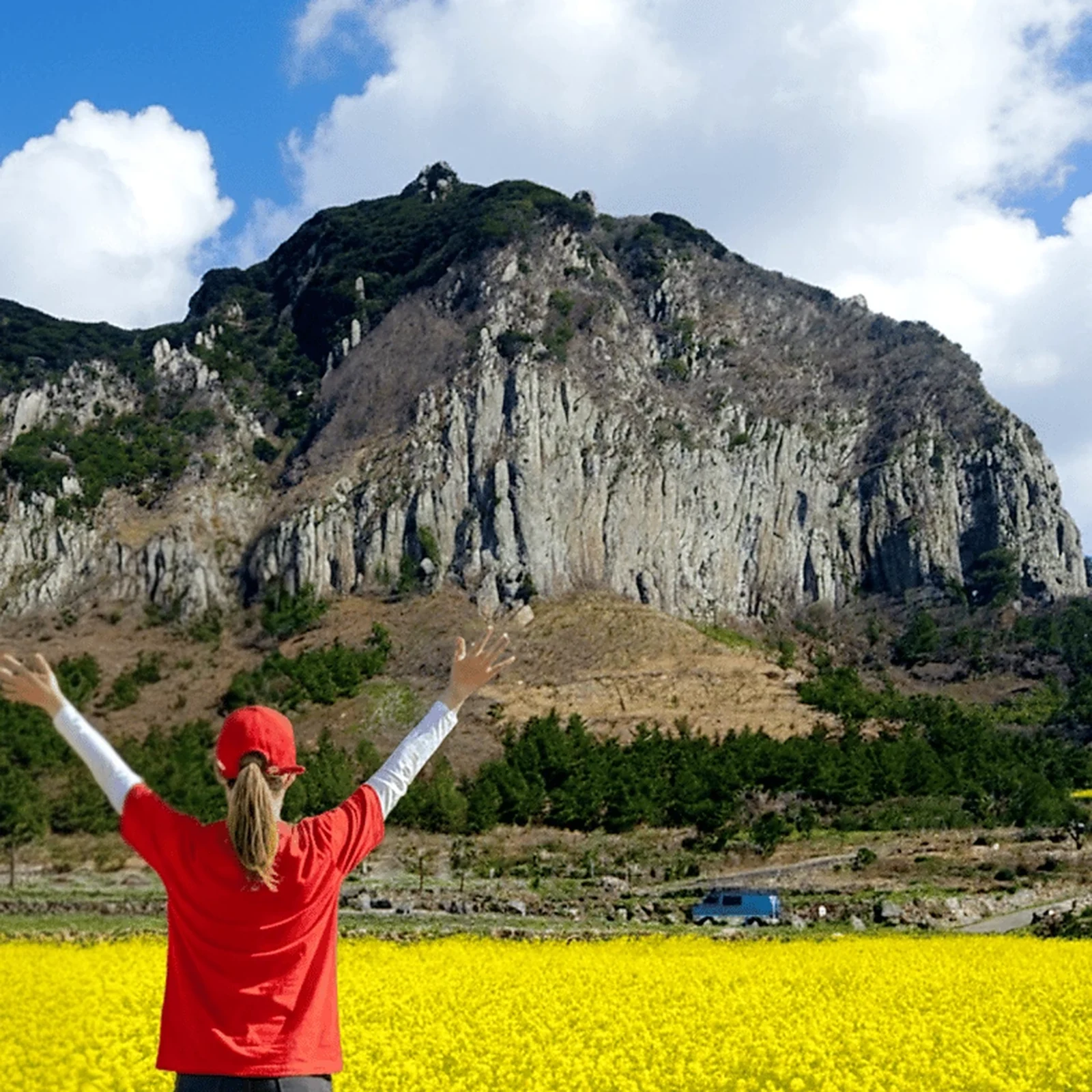
Book a Southwest Jeju tour with Hallasan, waterfalls, basalt cliffs, tea fields and coastal scenery on a 9-hour trip with no shopping stops.
 Activity on TourBookGo
Book an East Jeju tour from Seogwipo and visit Seongeup, Seopjikoji, Seongsan Ilchulbong and Manjanggul in a small group of up to 12 guests.