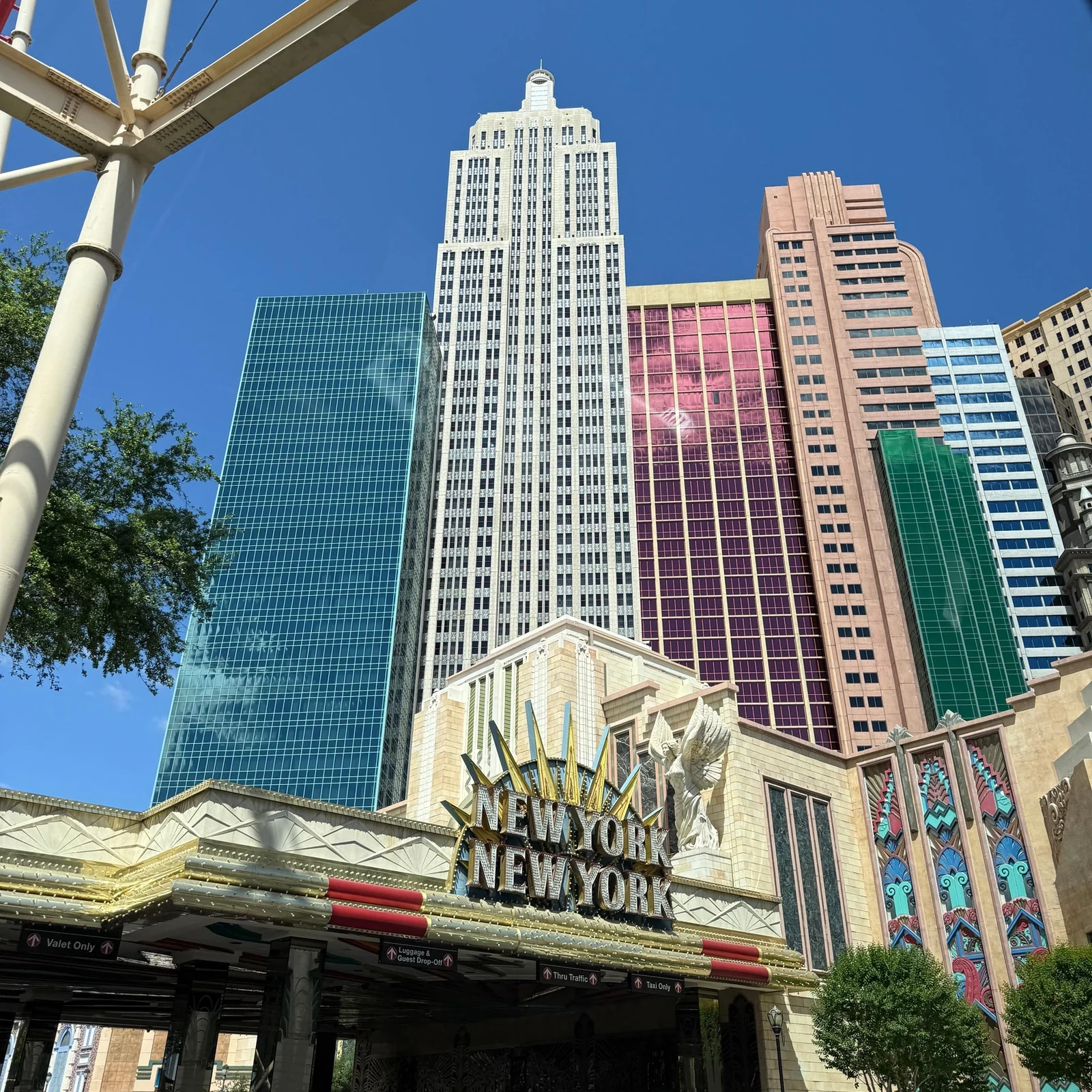
 Activity on TourBookGo
Big Apple Coaster Las Vegas
Book Big Apple Coaster Las Vegas tickets for the New York-New York roller coaster, with speeds near 70 mph, loops and a signature 180-degree twist.
Getting around Las Vegas is much easier when you combine walking, the monorail, buses, taxis, and ride-hailing services instead of relying on a single option. The best choice depends on the time of day, the heat, the distance, and the area you plan to explore.
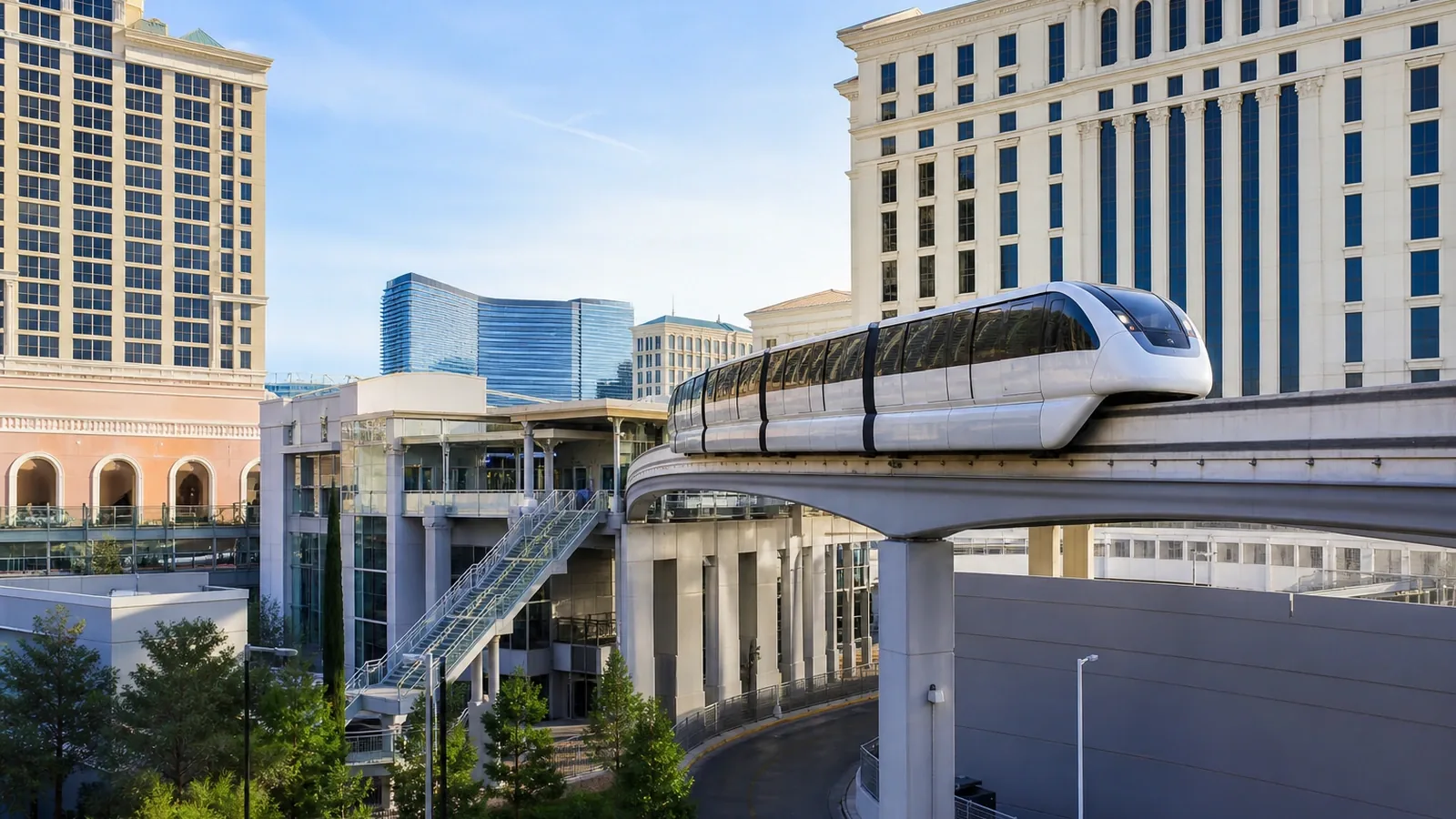
Getting around Las Vegas looks simple until you start exploring the Strip. From your hotel window, the huge casinos appear close together beneath almost theatrical lighting. In reality, the façades are enormous, entrances are set far back, and what looks like a short distance can become a long walk through pedestrian bridges, shopping malls, and seemingly endless resort lobbies.
Compare locations and options to find a base that suits your trip. Booking.com confirms current availability and pricing.
Find accommodation on BookingFor a first visit focused on the Strip and Downtown, usually not. A rental car may spend most of the trip parked while you pay parking fees, sit in traffic, and waste time trying to find the correct entrances to hotels that resemble small cities.
Renting a car starts to make sense when you are planning excursions outside the main tourist areas, traveling as a family with a lot of luggage, or hoping to explore more distant neighborhoods at your own pace. It can also be useful for combining Las Vegas with desert destinations, provided you check road conditions, fuel availability, and temperatures in advance.
Driving on the Strip does not always save time. Traffic becomes heavier during concerts, conventions, major sporting events, and roadworks, and entering or leaving some parking garages can take longer than walking part of the way.
Walking is part of the experience. On foot, you notice the roar of the fountains, the cool air spilling out of the casinos, the sweet scent of the lobbies, and the constant transition between the desert sun and artificial darkness.
Even so, it is best to divide the Strip into sections rather than trying to cover the whole thing at once. Distances are misleading, and reaching the hotel that looks “right next door” may require walking through a casino, crossing a pedestrian bridge, and going around an enormous property.
In summer, walking during the hottest part of the day can be exhausting and even unwise. At night, temperatures drop, but other obstacles appear: crowded sidewalks, large groups, broken escalators, and temporary detours.
The most sensible strategy is to explore several nearby hotels on foot and use transportation when moving to another part of the Strip.
The Las Vegas Monorail runs along the east side of the Strip and has seven stations, from MGM Grand to SAHARA, with stops near major hotels and the convention center. Trains usually arrive every few minutes, and service continues until late at night, with extended hours on much of the week.
It is especially useful when both your hotel and destination are close to a station. It allows you to avoid traffic and travel in air-conditioned comfort, which is particularly valuable during the hottest months.
Its main drawback is location. Some stations sit behind enormous resort complexes, so reaching the platform can involve a considerable walk. It also does not connect to Harry Reid International Airport or serve the west side of the Strip.
Before buying a multi-day pass, check the exact location of your hotel and estimate how often you will actually use the service. For some travelers, it is an excellent solution; for others, it looks much closer on the map than it really is.
The Deuce travels along Las Vegas Boulevard and connects the Strip with Downtown, Fremont Street, and other tourist areas. It operates 24 hours a day, although service is less frequent late at night and travel times can increase because of traffic.
It is an affordable and practical option for travelers who are not in a hurry. When a double-decker bus is in service, the upper level also offers an entertaining view of the neon lights, marquees, and endless succession of hotels.
Its main weakness is the road it travels on. Las Vegas Boulevard can become heavily congested, meaning that a simple trip on the map can turn into a slow journey. The bus is better suited to budget travel than to arriving on time for dinner, a show, or a flight.
Fares and pass options may change, so it is advisable to check them before traveling. RTC allows passengers to plan journeys and purchase certain tickets through its official apps.
Taxis and ride-hailing services are practical for late-night journeys, group travel, trips with luggage, or connections between poorly linked areas.
What confuses many visitors is that pickup does not always take place outside the hotel’s main entrance. Large resorts usually have designated areas for taxis and ride-hailing services, sometimes located in parking garages, on the side of the building, or on a different level. Requesting a car before finding the pickup point can result in cancellations and unnecessary waiting.
During major events or periods of high demand, fares may rise and traffic can eliminate much of the time advantage. Even so, splitting the cost between three or four people often makes this a convenient and reasonable option.
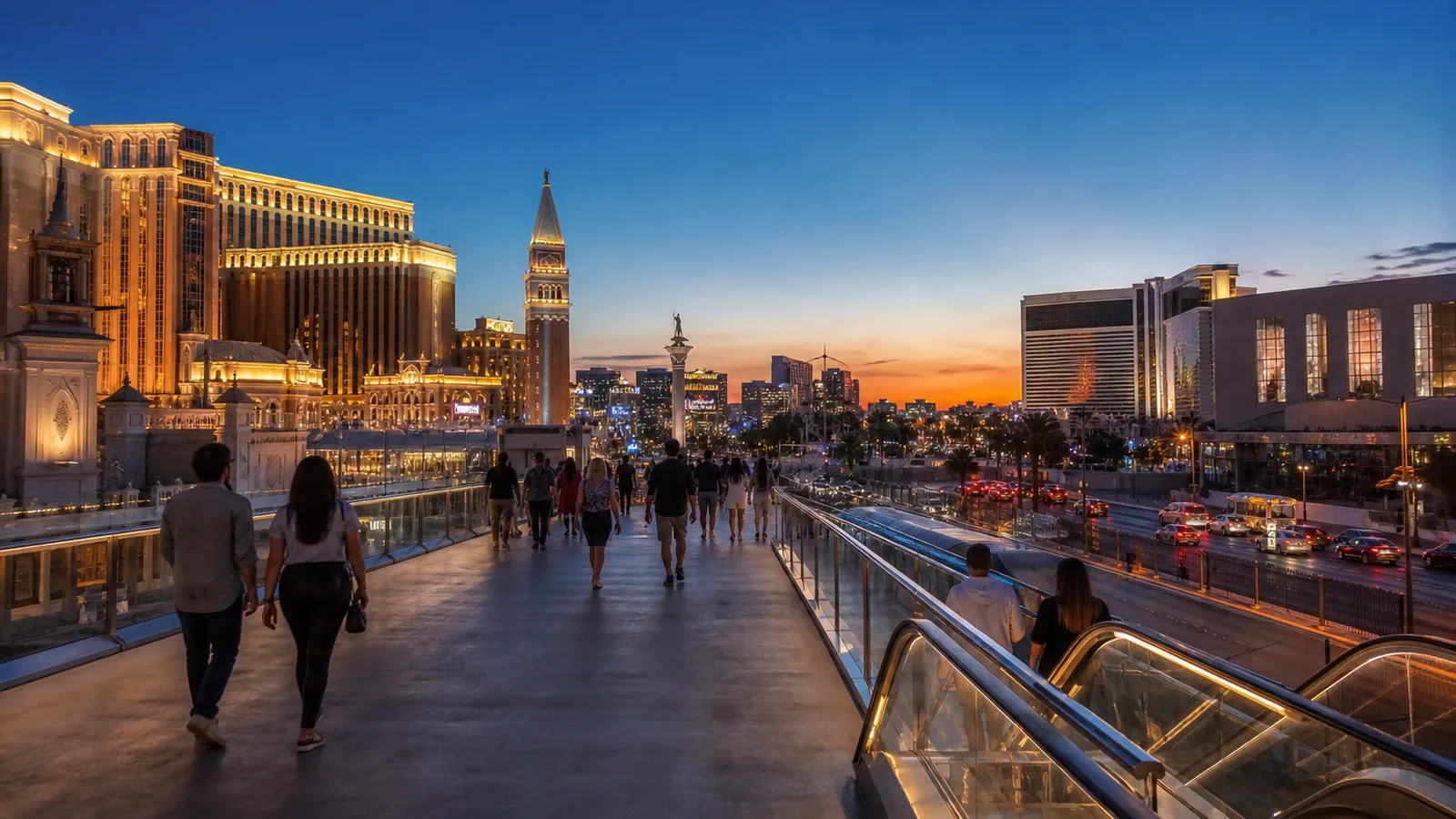
Taxis are available outside the baggage claim areas at both terminals. Uber and Lyft use designated pickup areas inside the parking garages: at Terminal 1, pickup is on the second level of the garage; at Terminal 3, it is on the valet parking level.
Public buses and various shuttle services are also available.
However, for first-time visitors, especially those arriving at night or carrying several suitcases, a taxi or ride-hailing vehicle is usually the simplest solution.
A common mistake is assuming that the monorail serves the airport. It does not.
The Strip and Downtown are two separate areas. Fremont Street is not within reasonable walking distance of the major central Strip hotels, particularly in hot weather or at night.
The Deuce connects the two areas at a low cost, although the journey can be slow. For two or more people, a taxi or ride-hailing service becomes more appealing because of the added comfort and time saved.
The smartest approach is to visit Downtown as a separate outing: travel there, explore Fremont Street and the surrounding area on foot, have dinner or a drink, and then take transportation back. Moving repeatedly between Downtown and the Strip on the same day usually takes more time than expected.
Some Strip resorts are connected by small, free trams. They can reduce the amount of walking between nearby hotels, but they do not form a continuous network and should not be confused with the Las Vegas Monorail.
They are convenient when they match your planned route exactly. The mistake is organizing an entire day around them: entrances may be hidden inside the resorts, and operating hours or service availability may vary.
First Visit of Three or Four Days: walk within individual sections, use the monorail when stations are conveniently located, and reserve taxis or ride-hailing services for the airport, Downtown, and later nights.
Budget Trip: use The Deuce for longer distances, walk reasonable routes within each area, and buy transportation passes only after calculating how much you will actually use them.
Couples’ Trip: walk to enjoy the atmosphere, and use taxis or ride-hailing apps when a journey begins to feel like a chore. In Las Vegas, saving half an hour can mean arriving at dinner or a show without feeling exhausted.
Traveling with Children or People with Reduced Mobility: it is best to limit walking, confirm step-free access, and avoid relying solely on map distances. Pedestrian bridges, long indoor corridors, and the heat can turn an apparently simple journey into a tiring experience.
The first is underestimating distances. The second is renting a car out of habit. The third is assuming that every hotel has one obvious main entrance.
Another frequent mistake is scheduling too many reservations at opposite ends of the Strip. Las Vegas punishes overly precise itineraries: traffic, a distant station, or fifteen minutes spent crossing a casino can throw the entire schedule off.
The best rule is simple: group each day’s activities by area, leave extra time between plans, and use transportation to preserve your energy, not just to cover distance.
Getting around Las Vegas can be easy, but it is rarely as straightforward as it appears. The city is designed to dazzle the eye, not to make its distances easy to understand. Travelers who accept its scale and combine different forms of transportation sensibly will enjoy the trip more and spend less time searching for an exit among lights, carpets, and corridors that seem to go on forever.
Discover selected experiences in Las Vegas to complete this guide with shows, viewpoints, nightlife, adventure and well-organised day trips.
Activity on TourBookGoBook Big Apple Coaster Las Vegas tickets for the New York-New York roller coaster, with speeds near 70 mph, loops and a signature 180-degree twist.
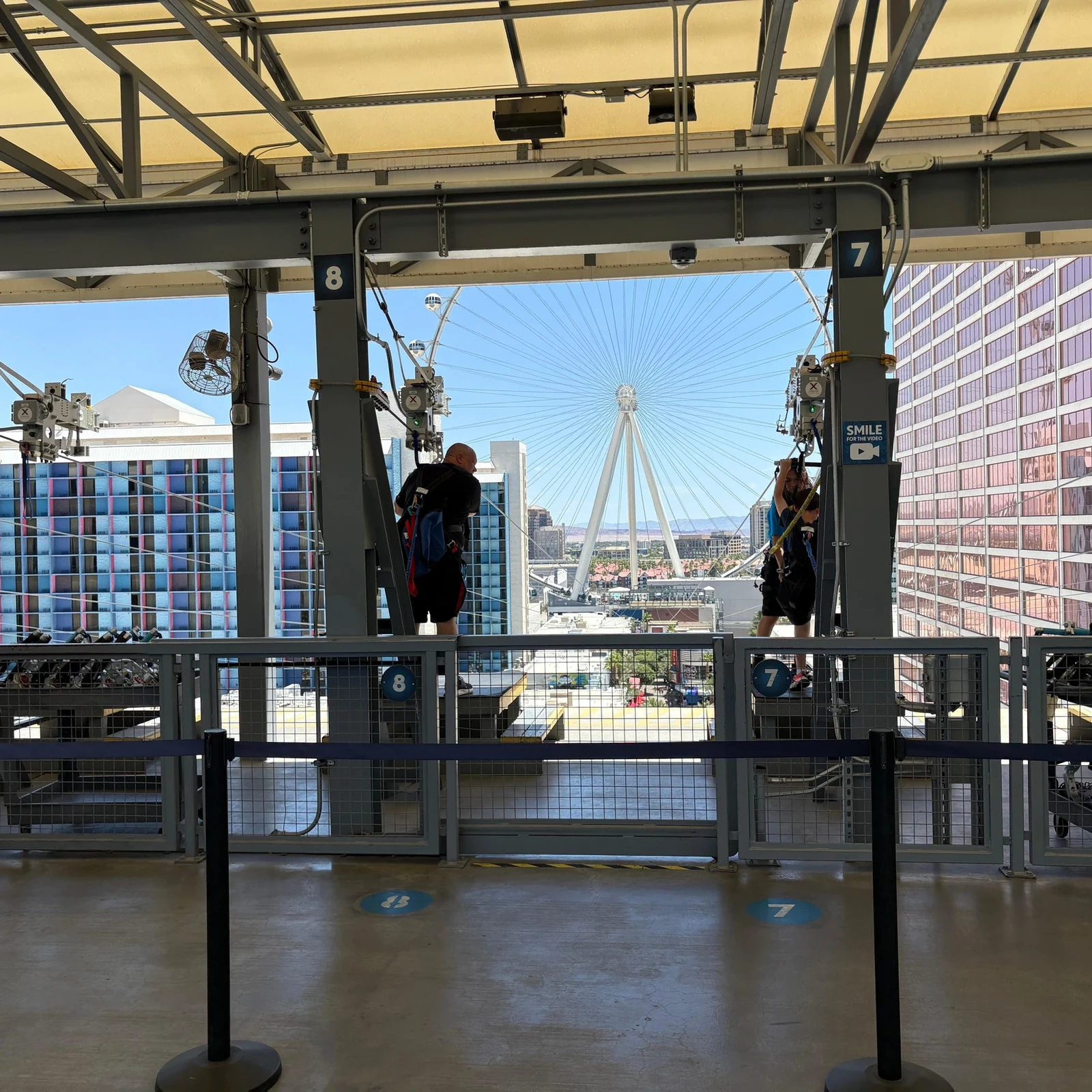 Activity on TourBookGo
Book FLY LINQ Zipline Las Vegas from €37 and ride more than 1,000 feet over The LINQ Promenade at up to 35 mph with fast-track access.
 Activity on TourBookGo
Visit Shark Reef Aquarium Las Vegas at Mandalay Bay: 2,000+ animals, 14 exhibits, an underwater shark tunnel and VR experience. Tickets from €26.