 Activity on TourBookGo
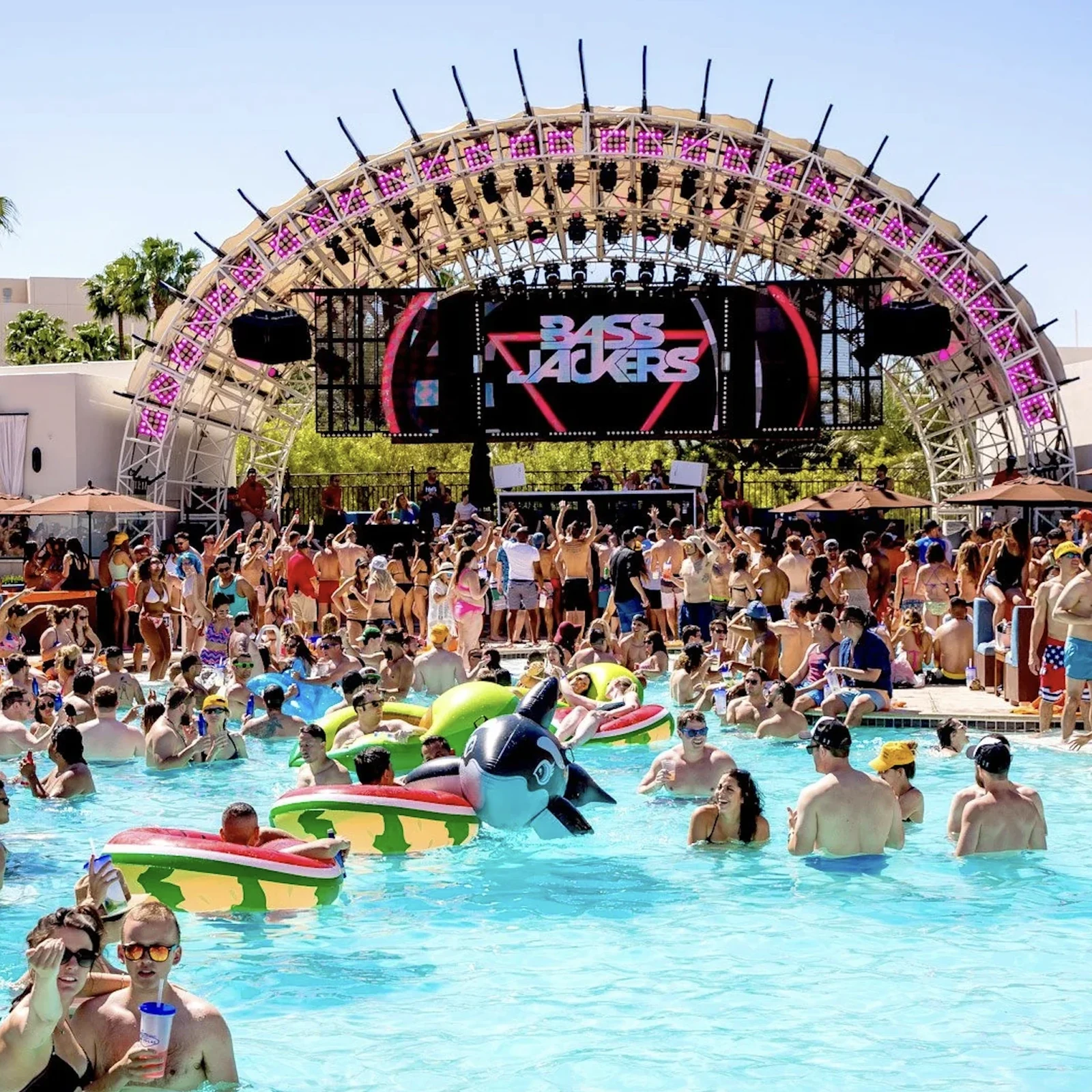
Las Vegas Pool Crawl with VIP Dayclub Access
Book a roughly 4-hour Las Vegas Pool Crawl across 3 party venues, including 2 dayclubs, with hosts, VIP access, priority entry and group games.
Knowing where to stay in Las Vegas can completely transform your trip. The central Strip is usually the most practical choice for a first visit, while Downtown, the southern Strip and outlying areas may be better for your budget, plans and preferred atmosphere.
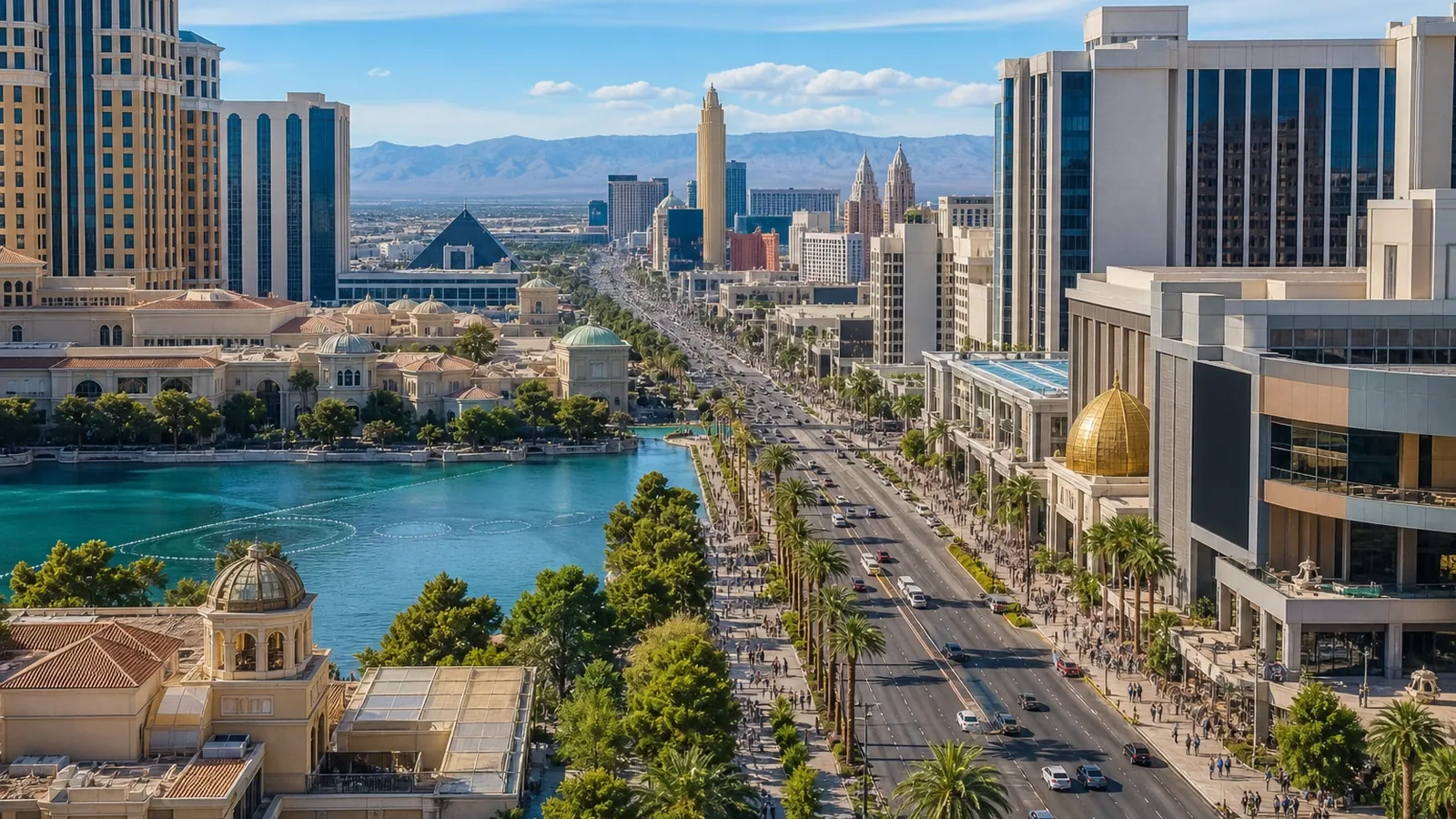
Deciding where to stay in Las Vegas is not just about choosing how much luxury you want around your bed. Location can completely transform your trip. A hotel that seems nearby may force you to walk for half an hour under the desert sun, while a tempting rate in Downtown could leave you far from every show you have booked on the Strip. The city is deceptive at first glance. Hotels may look like neighbors, but their façades are enormous, entrances are not always where you expect them to be, and crossing a casino can become a small expedition through slot machines, restaurants, and windowless corridors. For a first visit, the most practical option is usually the center of the Strip. However, Downtown, the southern Strip, and hotels away from Las Vegas Boulevard may suit families, drivers and travelers looking for a quieter place to stay.
Compare locations and options to find a base that suits your trip. Booking.com confirms current availability and pricing.
Find accommodation on BookingThe area roughly between Bellagio, Paris Las Vegas, Caesars Palace, Flamingo, and The LINQ contains much of Las Vegas’s most recognizable scenery: illuminated fountains, monumental replicas, shopping malls, restaurants, theaters, and casinos open around the clock.
It is the most convenient location for anyone visiting for two, three, or four nights who wants to experience a little of everything without constantly relying on taxis. Several monorail stations are located in this part of the Strip, although the tracks run along the eastern side and some stations require a fairly long walk through the hotel complexes. The line has seven stops between MGM Grand and SAHARA.
The best part: you can step outside your hotel and find yourself immediately immersed in the city’s spectacle. There are countless places to eat, shop, see a show, or simply walk around and watch the boulevard change as evening falls.
It is also a practical area for couples and groups with different plans: some can go shopping, others can visit a casino, and others can rest without the entire group needing to travel together.
What may disappoint you: this is the busiest, loudest, and most overwhelming part of the city. Rooms with views usually cost more, and a central address does not guarantee peace and quiet. Walking from one resort to another also takes longer than the map suggests.
The final bill can also be considerably higher than the initial room rate. Compare the total price after taxes, possible mandatory fees, and parking charges, rather than looking only at the headline figure shown during your search.
The southern section of the Strip is home to resorts such as Mandalay Bay, Luxor, Excalibur, New York-New York, and MGM Grand. It is still Las Vegas in all its intensity, but the atmosphere is different: the resorts are more spread out, and some properties offer more affordable rooms than the major names in the center.
It is a useful base for concerts, sporting events, or shows held in this part of the city. It can also work well for families who prefer large pools, indoor attractions, and resorts where they can spend much of the day.
The drawback becomes apparent when all your plans revolve around Caesars Palace, Bellagio, or The Venetian. You will be able to get around, but the journeys, waiting times, and walking will quickly add up.
Around Resorts World, Fontainebleau, SAHARA, and the area near the convention center, you will find contemporary resorts, ambitious architecture, and some of the city’s most carefully designed rooms.
This area is appealing for luxury trips, conventions, or getaways where the resort itself is a central part of the experience. The monorail runs as far as SAHARA and also serves the convention center.
However, the area is not as well connected as the center. Some stretches feel emptier, and walking to the Strip’s main attractions can be tiring, especially in hot weather or late at night.
Downtown offers a more compact, relaxed, and rough-edged version of Las Vegas. Beneath the illuminated Fremont Street canopy, historic casinos, live music, street performers, and visitors carrying enormous drinks all mingle among flashing neon lights.
Rooms are generally more affordable, and the distances between casinos are easier to manage. The area also has a stronger personality: traces of old Las Vegas remain here, even though they are wrapped in entertainment that is every bit as tourist-oriented as the Strip.
The downside is obvious. Fremont Street can be extremely noisy, even in the early hours of the morning. Light sleepers should request a room away from the canopy, stages, and main façades.
Downtown is not a walkable extension of the Strip. The Deuce bus connects the two areas 24 hours a day and also stops in the Arts District, but traffic can make the journey longer.
South of Downtown, the Arts District is home to galleries, murals, vintage shops, breweries, cocktail bars, and restaurants with an identity less closely tied to the major casinos. The city itself considers it one of its most important cultural neighborhoods.
It may appeal to travelers who want to discover that Las Vegas also exists beyond the resorts. In the evening, its low-rise buildings and former commercial properties offer a more human scale than the palaces of Las Vegas Boulevard.
However, hotel options are limited, and not every street is equally lively. It is better suited to repeat visitors, travelers with a car, or those willing to use private transportation at night.
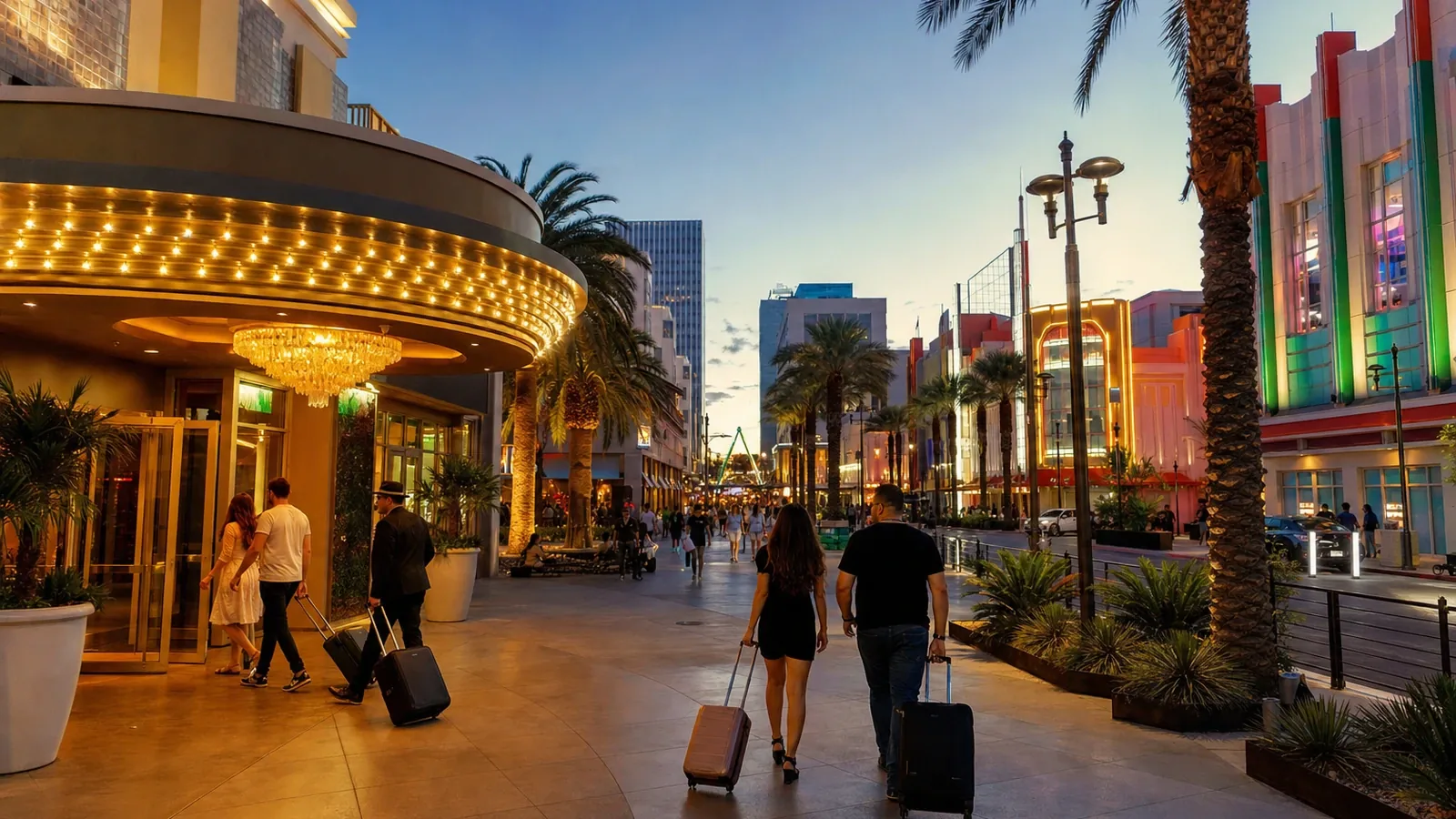
Resorts in Summerlin, Henderson, and other outlying areas tend to offer quieter surroundings, less hectic pools, and an atmosphere aimed at both local residents and visitors. They are a good option for relaxing, playing golf, or combining the city with road trips.
There are also hotels just a few blocks from the Strip that appear very close on the map. Look carefully: "near the Strip" does not necessarily mean the walk will be pleasant. Wide roads, parking lots, awkward crossings, and intense heat can turn one kilometer into a very unappealing walk.
There is no need to label entire neighborhoods as though everything in them were problematic. The most common mistake is something else: booking the cheapest hotel without checking the actual route to the places you intend to visit.
I would be wary of any accommodation that requires a long nighttime walk through poorly trafficked areas, even if it claims to be "just minutes from the Strip." I would also avoid isolated motels chosen solely for their low price, especially when recent reviews mention poor maintenance, unexpected charges, or problems in the surrounding area.
Hotels near the airport are useful for a layover or a very early flight, but they are rarely inspiring as a base for an entire vacation.
If you are staying on the Strip or Downtown, usually not. The official tourism website states that a car is unnecessary in these two areas thanks to walking, the monorail, buses, and private transportation services.
It is worth considering if you are staying away from the main tourist areas or planning several excursions outside the city. The airport has a separate rental car center connected to the terminals by shuttle buses.
Before booking, remember to include parking costs. Several major Strip hotel groups charge for parking and may apply different rates on weekends or during special events.
For a first visit lasting only a few nights, I would choose the central Strip and prioritize location over a slightly more luxurious room.
For a trip focused on parties and casinos on a controlled budget, Downtown offers more personality and manageable distances, provided that noise is not an issue.
For families or event attendees, the southern Strip usually offers a good balance.
For a luxury getaway centered on the hotel itself, the northern Strip and some of the major resorts elsewhere on the Strip are better choices.
For travelers seeking peace, excursions, and local life, accommodation off the Strip may be more enjoyable, but it almost always means accepting longer journeys.
Las Vegas rewards proximity. A magnificent suite in the wrong location may leave you more exhausted than a simple room close to everything you came to experience.
Discover selected experiences in Las Vegas to complete this guide with shows, viewpoints, nightlife, adventure and well-organised day trips.
Activity on TourBookGoBook a roughly 4-hour Las Vegas Pool Crawl across 3 party venues, including 2 dayclubs, with hosts, VIP access, priority entry and group games.
 Activity on TourBookGo
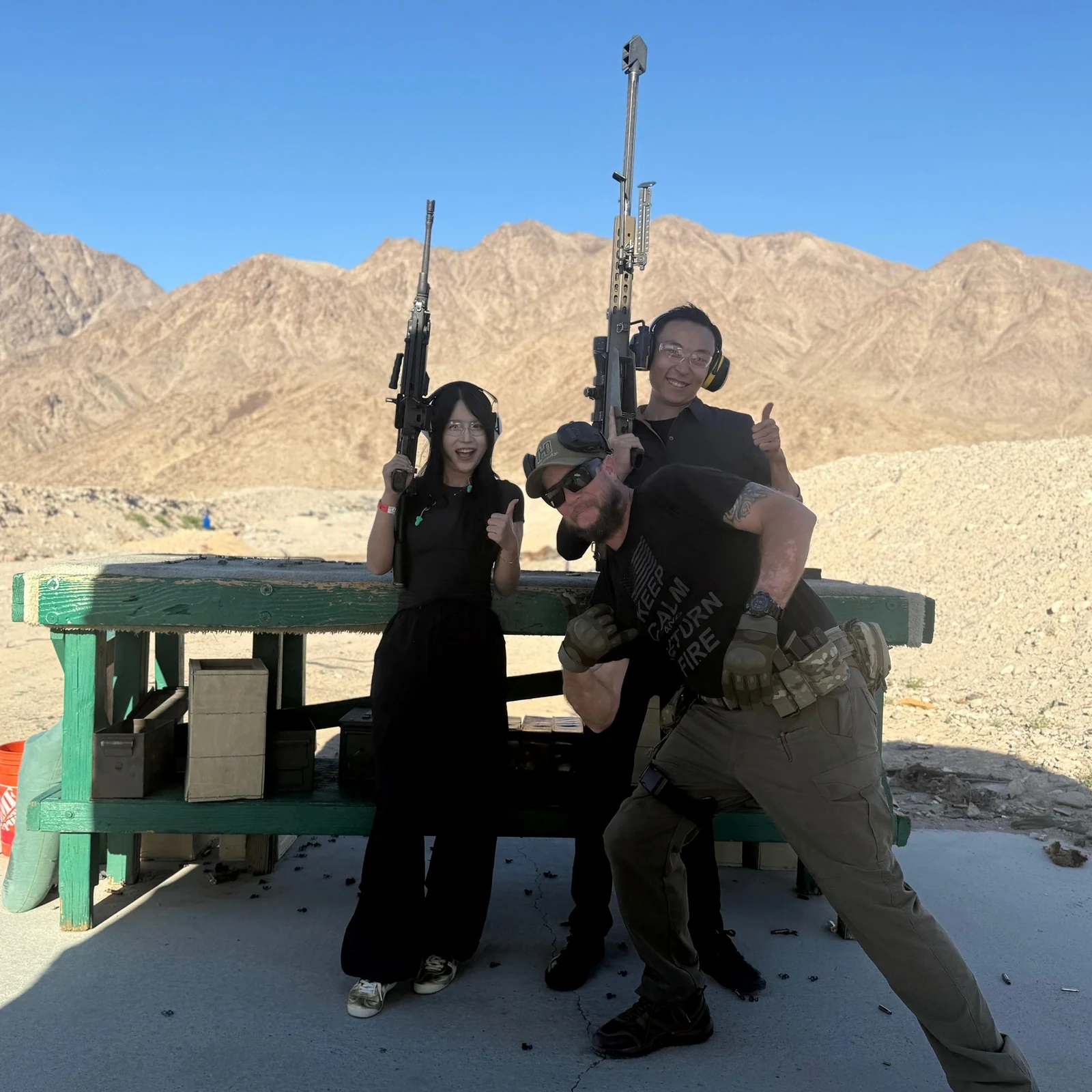
Las Vegas machine gun and rifle shooting at an outdoor Boulder City range with hotel transfers, instruction, safety gear and several firearm packages. From €44.
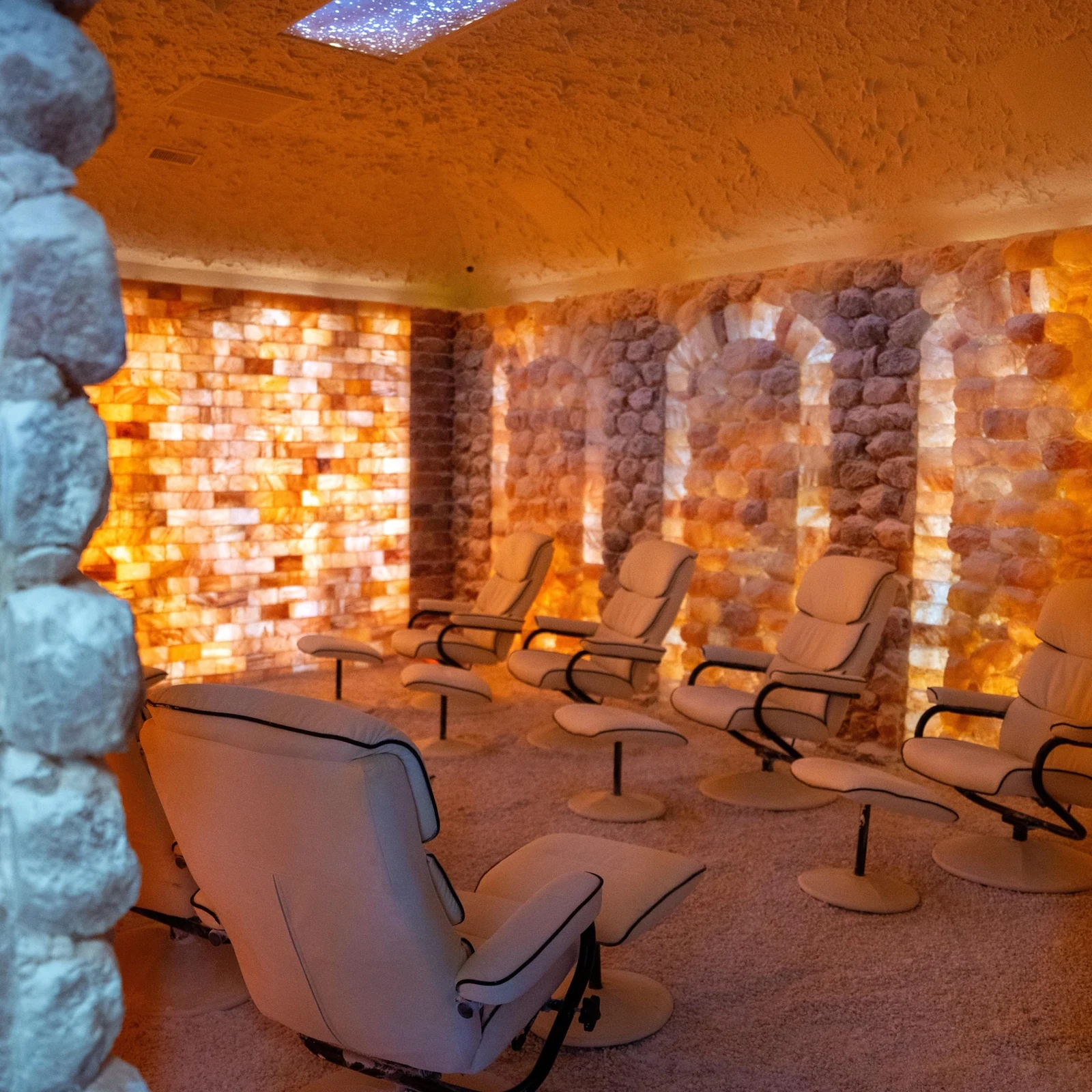 Activity on TourBookGo
Enjoy Himalayan salt cave halotherapy in Las Vegas with a 45-minute session at The Salt Room, lounge chairs, soft lighting and a small group. From €34.