 Activity on TourBookGo
Los Angeles Hollywood, Beverly Hills & Beaches Tour in One Day
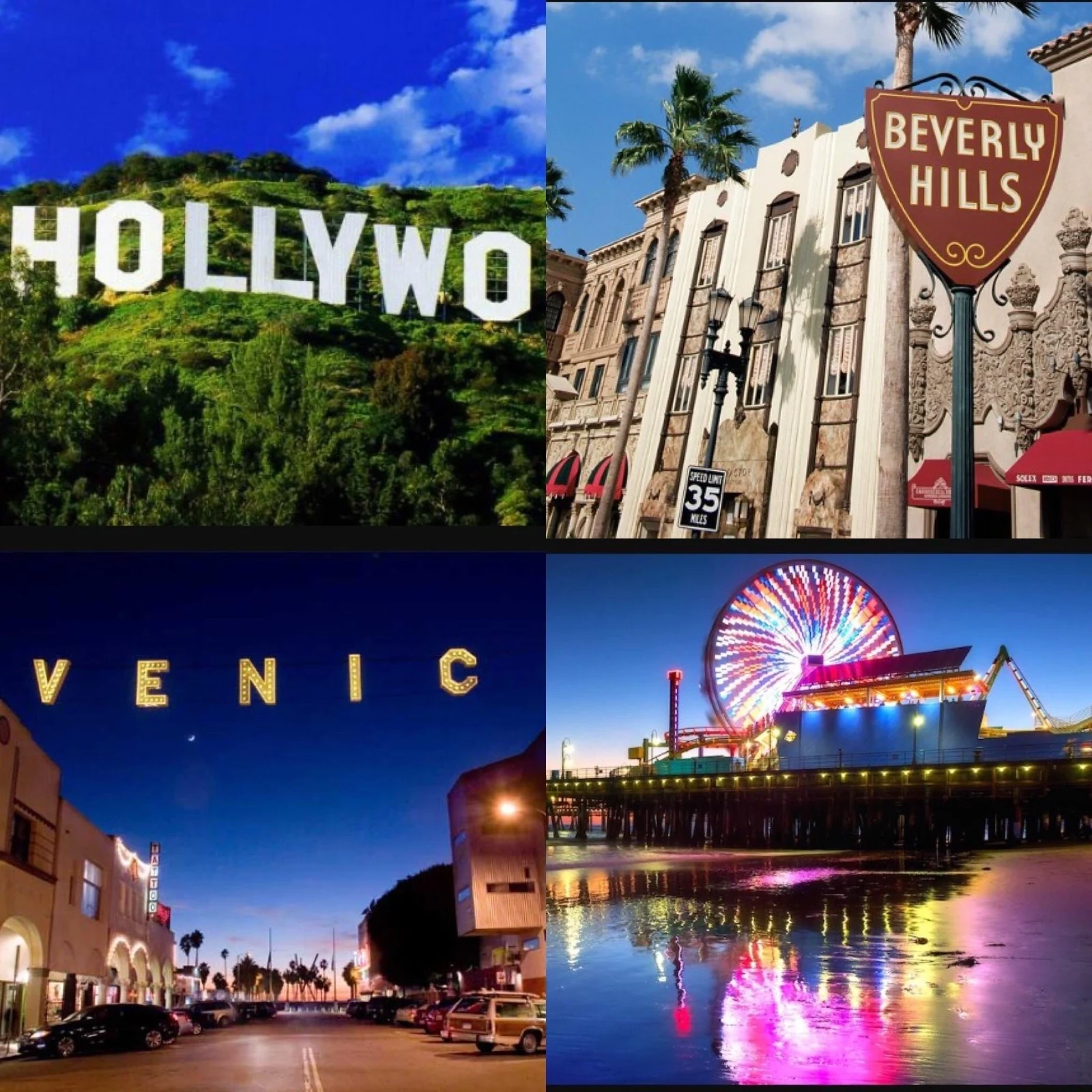
Take a Los Angeles Hollywood Beverly Hills and beaches tour with Santa Monica, Venice Beach and Griffith Observatory on a 7.5-9 hour guided day trip.
A Los Angeles itinerary organized around nearby neighborhoods, helping you reduce travel time, avoid unnecessary cross-city journeys, and enjoy each area properly.
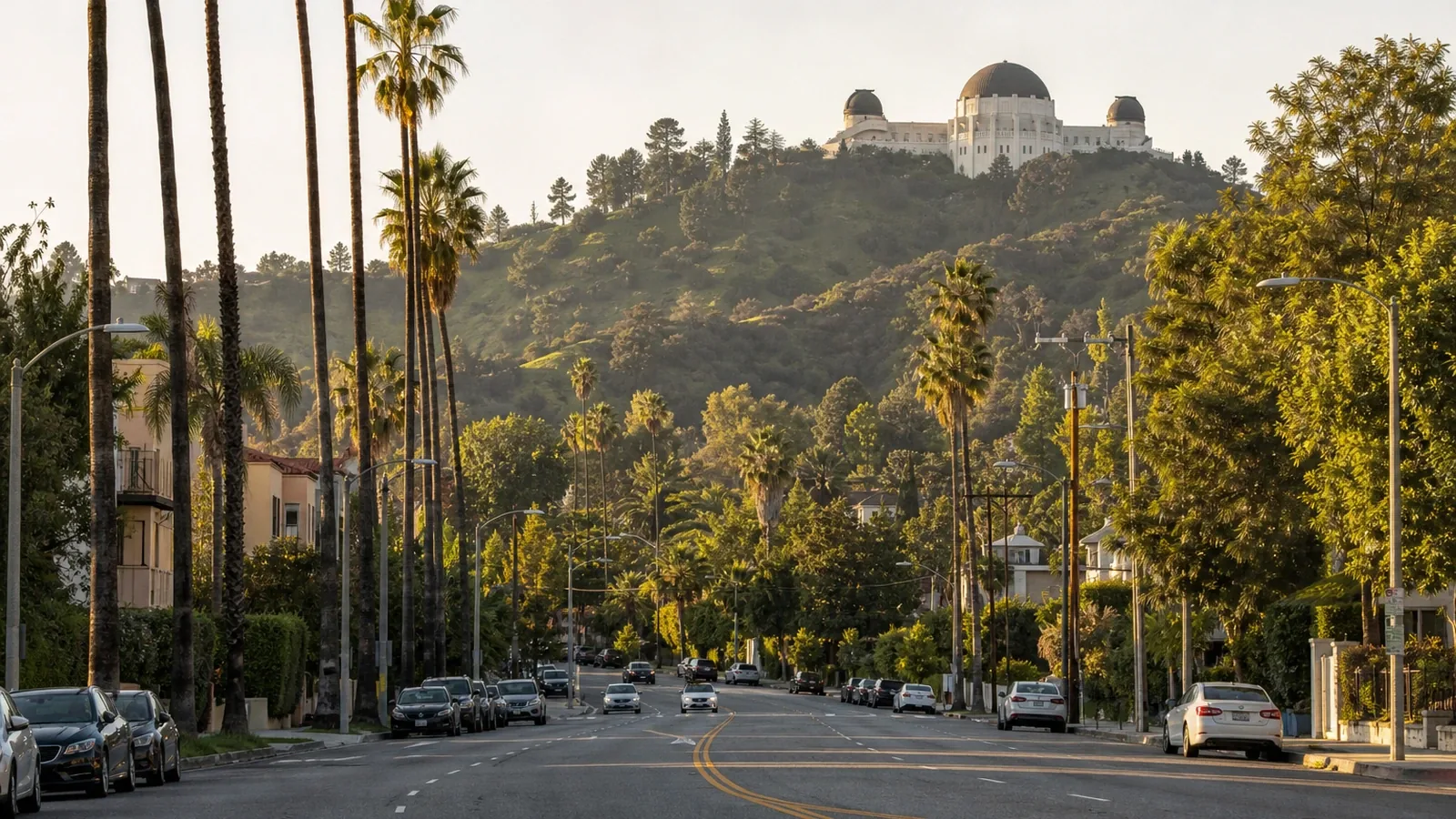
A well-planned Los Angeles itinerary is not about crossing the city from one end to the other. It is about experiencing it in distinct areas: a morning beneath the Hollywood Hills, an afternoon by the Pacific, lunch among the stalls of Downtown, and a sunset that turns the palm trees into black silhouettes. The most common mistake is planning a Los Angeles travel route as though all its icons were close together. On a map, the distances may seem manageable; in reality, traffic, parking, and the city’s sheer size can consume much of the day. The best strategy is to group nearby neighborhoods together and accept that seeing fewer places often allows you to experience the city more fully.
Compare locations and options to find a base that suits your trip. Booking.com confirms current availability and pricing.
Find accommodation on BookingWith just one day, trying to combine Hollywood, Downtown, Beverly Hills, Venice, and Santa Monica means spending more time on the road than enjoying the city. It is better to choose one of these two Los Angeles routes.
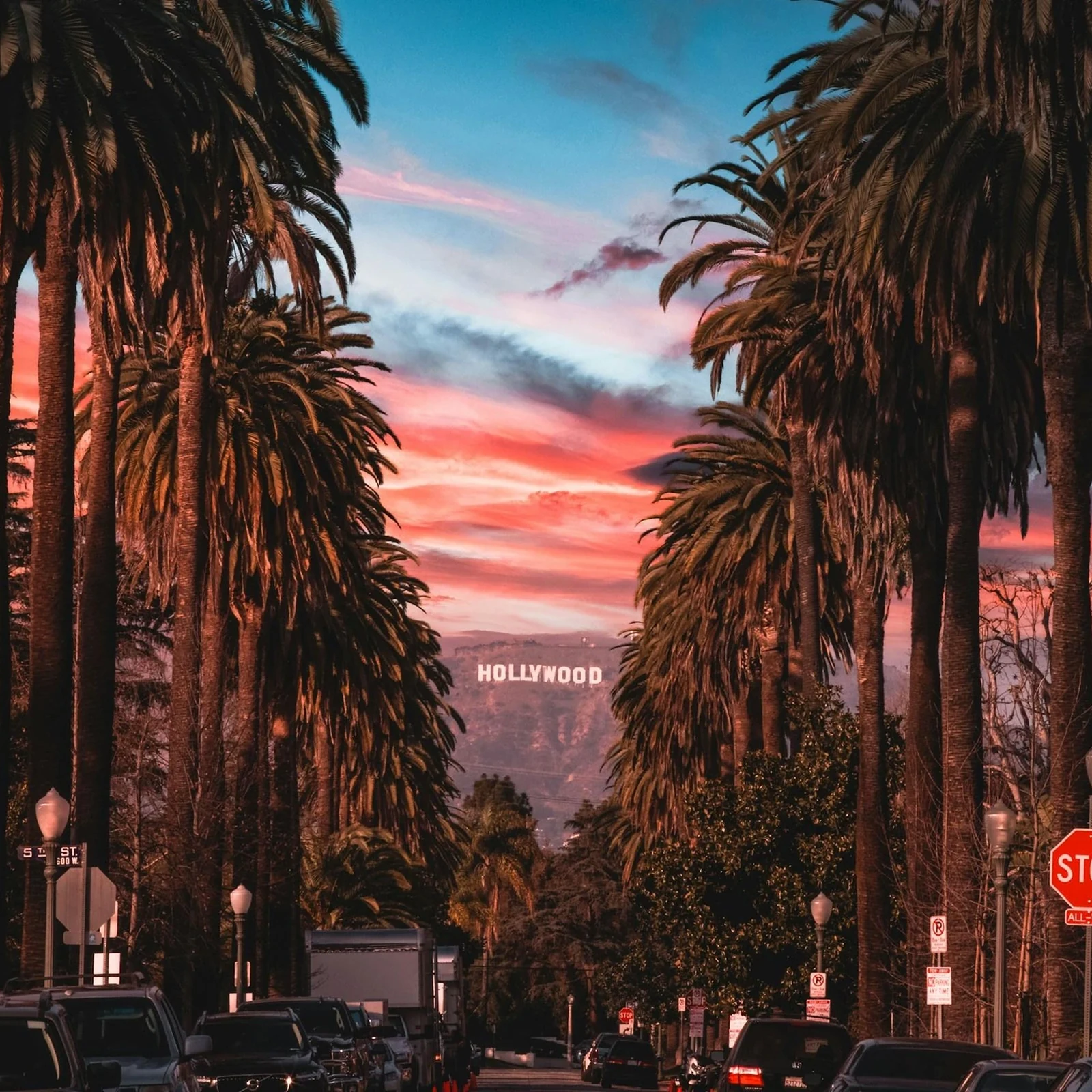
Start early on Hollywood Boulevard. The Walk of Fame carries enormous symbolic weight, although the reality can feel noisier, more commercial, and more run-down than the movies suggest. Spend just enough time there to see the area around the Chinese Theatre and a few historic façades.
Then continue to Los Feliz, a more pleasant neighborhood for lunch, browsing small shops, and observing a less theatrical side of everyday life.
Set aside the afternoon for Griffith Park. You can follow one of its accessible trails, make your way to the observatory, and wait for the light to fade over the Los Angeles basin. From there, the scale of the city becomes clear: endless avenues, dry mountains, scattered towers, and a glowing haze that seems to belong on a cinema screen.
This route works especially well for first-time visitors looking for the city’s most recognizable imagery.
Those who prefer the ocean should skip Hollywood and devote the entire day to the west side.
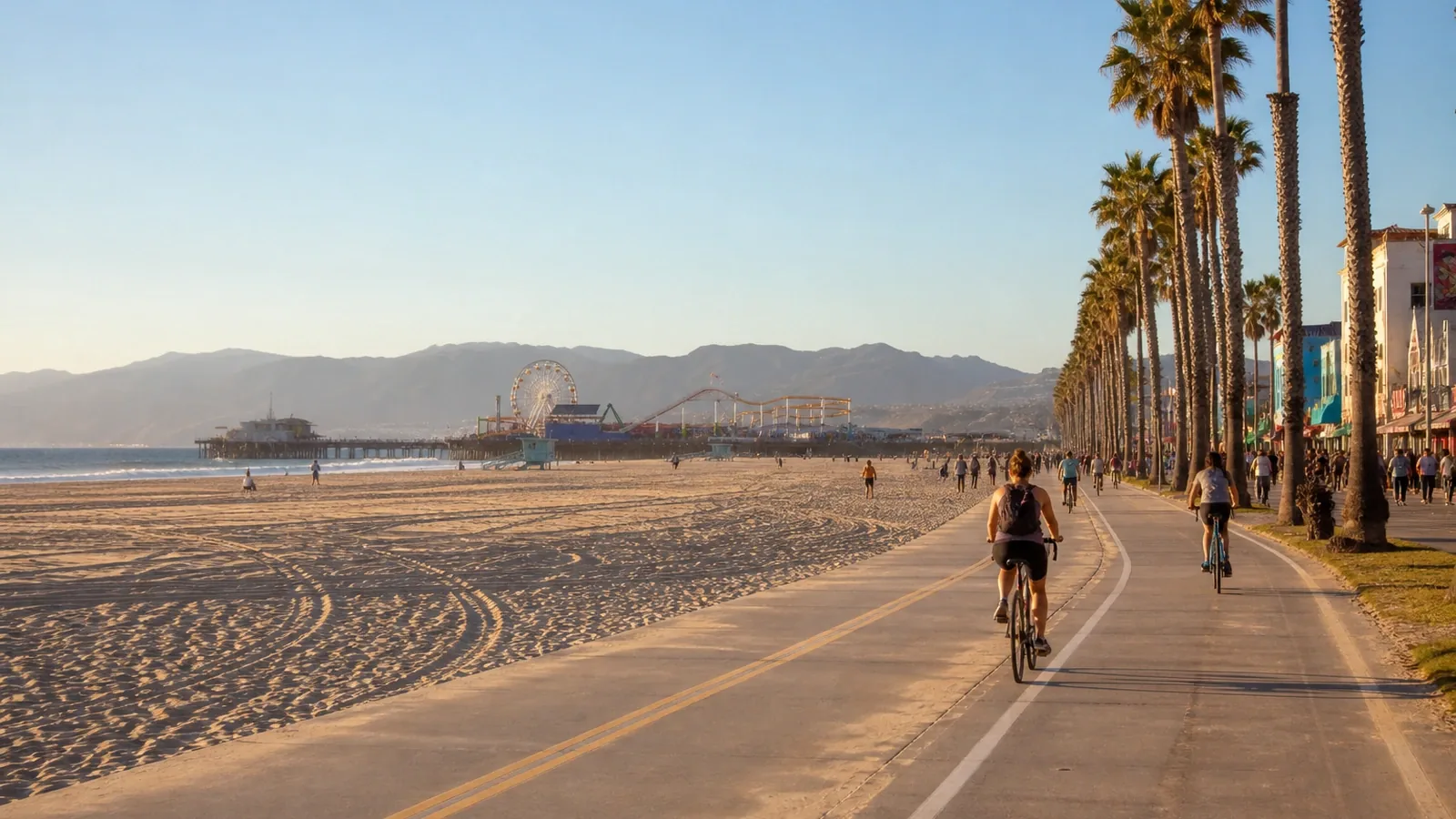
Begin in Santa Monica, walk along the beach, and continue toward Venice Beach on foot, by bicycle, or with a short ride. The boardwalk is eccentric, intense, and sometimes chaotic: athletes, street performers, tourists, musicians, and characters who seem to have stepped out of another decade all share the same space.
Afterward, leave the beachfront for a few minutes to explore the Venice Canals, then finish on Abbot Kinney Boulevard, where the atmosphere is more polished and relaxed. The contrast between these places reveals the character of Los Angeles better than a rushed tour of its landmarks.
Day 1: Hollywood and Griffith Park. Follow the Hollywood, Los Feliz, and Griffith Observatory route. Do not overload the day with Beverly Hills or the coast: the time you save is better spent enjoying a relaxed dinner in Los Feliz, Thai Town, or Koreatown.
Day 2: Santa Monica, Venice, and Abbot Kinney. Devote the second day to the Pacific. Start in Santa Monica and head south toward Venice. Explore the beach, the canals, and Abbot Kinney before returning at sunset.
Santa Monica is more orderly and family-friendly; Venice is rougher around the edges and less predictable. Some people fall in love with that mix, while others find the boardwalk too touristy or untidy. It is best visited during the day, and you should not expect a quiet beach.
Metro’s E Line connects Downtown Los Angeles with Santa Monica, while the B Line links Downtown with Hollywood and Universal City. The network makes it possible to organize several days without a car, although some journeys between neighborhoods are still more convenient by taxi or private vehicle.
Day 1: Hollywood, Los Feliz, and Griffith. Spend your first day exploring the city’s cinematic landscape and panoramic views.
Day 2: Santa Monica and Venice. Enjoy a full day by the ocean without adding distant attractions.
Day 3: Downtown, Little Tokyo, and the Arts District. Start at Union Station and explore the historic area around Olvera Street. Then continue toward Grand Central Market, Bunker Hill, and the cultural landmarks along Grand Avenue.
In the afternoon, head to Little Tokyo and the Arts District. This combination makes sense because the different areas are relatively close to one another and connected by Metro. Downtown stations also provide convenient access to Grand Avenue, Historic Broadway, and Little Tokyo.
Downtown Los Angeles is not a traditional city center filled with elegant storefronts and lively streets at every hour. It changes dramatically from one block to the next: it can be monumental, creative, and fascinating, but it can also reveal inequality, dirt, and difficult social realities. It is best explored with a clear route in mind, and you should avoid wandering aimlessly through unfamiliar areas, especially at night.
Begin with the city’s best-known sights, but leave time for real neighborhoods. Hollywood Boulevard is only a small part of Hollywood, not its best summary.
Take your time along the coast. The route between Santa Monica and Venice lets you feel the city change as the landscape becomes more informal and eccentric.
Combine historic architecture, markets, museums, Japanese food, and former industrial spaces transformed into galleries and restaurants.
Spend the morning and part of the afternoon at the Getty Center. Its appeal lies not only in the collections, but also in the architecture, gardens, and views across western Los Angeles.
It is advisable to reserve an entry time in advance and check the current access conditions. Public transport is available, but many visitors find it easier to arrive by car. Bear in mind, however, that traffic around the I-405 freeway can disrupt your schedule.
Afterward, continue to Beverly Hills and West Hollywood. Rodeo Drive is interesting as an urban setting, but visitors with little interest in luxury brands probably do not need to spend much time there.
Universal Studios usually takes up almost an entire day. Opening hours vary depending on the day and season, so it is wise to check the official schedule shortly before your visit.
Those who do not enjoy theme parks can replace it with a studio tour, a film museum, or a cultural day around Miracle Mile.
Malibu is the best choice for visitors with a car who are looking for cliffs, beaches, and a scenic coastal drive. Do not imagine an endless succession of empty coves: in summer and on weekends, some beaches become very crowded, and parking may be limited.
Without a car, it makes more sense to spend the day in Pasadena, exploring its historic center and cultural institutions. This also avoids losing hours on the Pacific Coast Highway when traffic is heavy.
Your final day should reflect your own interests rather than a generic checklist.
For art and film, combine Miracle Mile, its museums, and Fairfax. For food, explore Koreatown. For cafés, independent shops, and neighborhood atmosphere, choose Silver Lake, Echo Park, or Highland Park. For a relaxed day, return to the coast and enjoy whatever the earlier itinerary forced you to experience too quickly.
Official multi-day suggestions also divide Los Angeles into areas—Hollywood, the coast, Downtown, and the studios—a far more realistic structure than constantly crossing from one side of the city to the other.
Hollywood + Los Feliz + Griffith Park form a coherent day.
Santa Monica + Venice + Abbot Kinney should be explored together.
Downtown + Little Tokyo + the Arts District work well on foot and by Metro.
Getty Center + Beverly Hills + West Hollywood can share a day, provided you leave enough time for traffic.
Universal Studios + Burbank fit together better than Universal and Malibu.
Malibu + Getty Villa are a natural combination if you have a car and organize your reservations in advance.
Do not schedule a timed visit on one side of the city immediately after another appointment on the opposite side. Avoid changing neighborhoods during peak traffic hours, and always check real-time travel estimates before setting out.
Do not rent a car simply because you feel you have to. It can be useful for Malibu, the hills, and outlying areas, but it also means paying for parking and dealing with traffic jams. Metro works particularly well along the Downtown, Hollywood, and Santa Monica corridors. For other journeys, a combination of public transport and taxis may be more convenient.
Los Angeles rewards those who give up on trying to see everything. Its true richness does not lie in collecting landmarks, but in allowing each area enough time to reveal its own light, contradictions, and distinctive way of life between the desert, the mountains, and the Pacific.
Discover selected experiences in Los Angeles to complete this guide with Hollywood, film studios, museums, coastline, nature and well-organised tours.
Activity on TourBookGoTake a Los Angeles Hollywood Beverly Hills and beaches tour with Santa Monica, Venice Beach and Griffith Observatory on a 7.5-9 hour guided day trip.
 Activity on TourBookGo
Book a Hollywood SUV tour lasting about 4 hours, with Los Angeles pickup, up to 6 guests, and stops at the Walk of Fame and Griffith Observatory.
 Activity on TourBookGo
Los Angeles and Hollywood tour from Long Beach lasting about 8 hours, with Beverly Hills, Santa Monica, Venice Beach, transportation and luggage space.