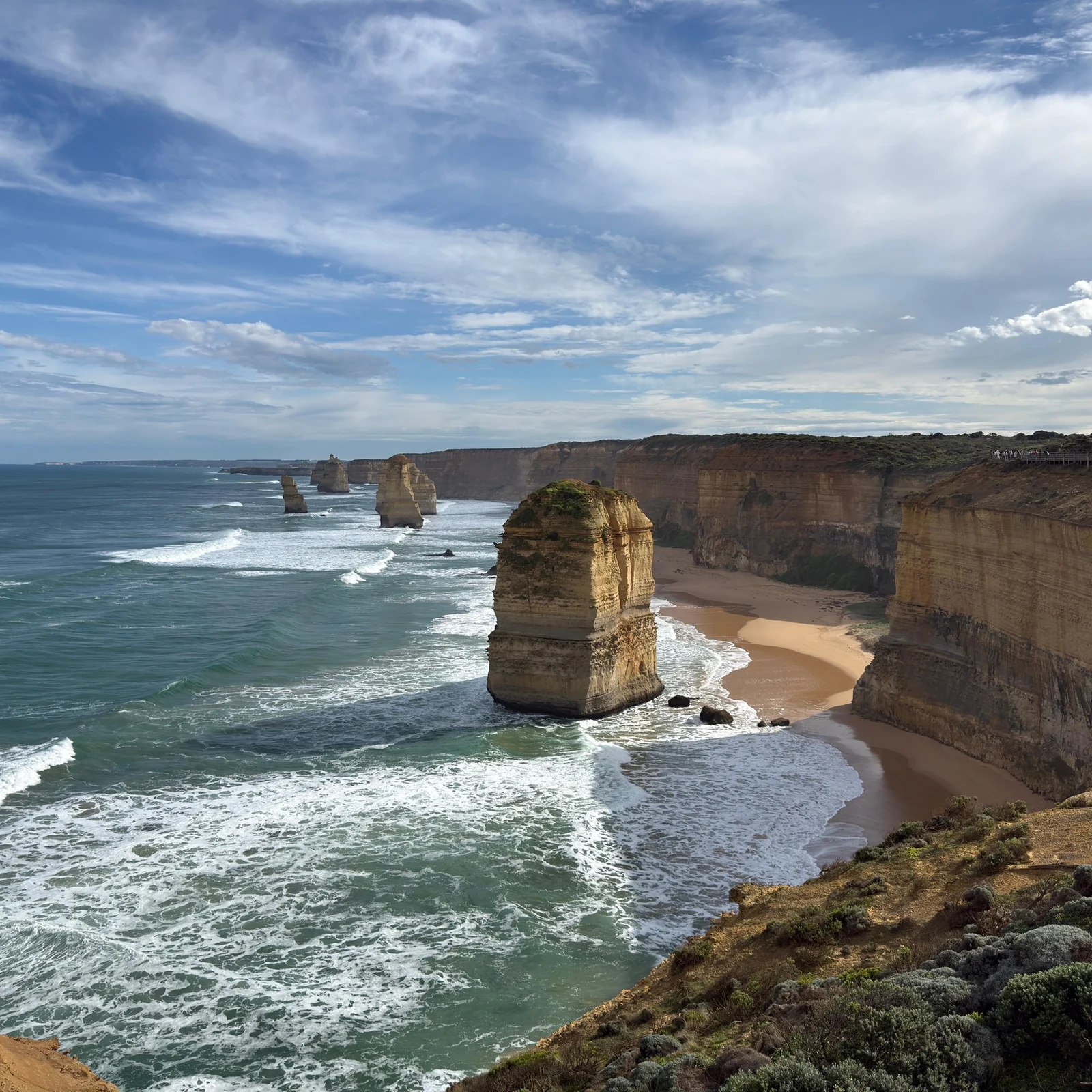
 Activity on TourBookGo
Great Ocean Road Tour from Melbourne: 12 Apostles, London Bridge and 10 Stops
Book a Great Ocean Road tour from Melbourne on a 12-13 hour reverse route with the 12 Apostles, London Bridge, Loch Ard Gorge and 10 stops.
If you are looking for things to do in Melbourne, start with its laneways, markets, cafés, galleries and walks beside the Yarra. This is a city best enjoyed on foot, with time for characterful neighbourhoods and a few unexpected discoveries.
Choosing the best things to do in Melbourne becomes easier once you stop treating the city as a checklist of landmarks. Its appeal reveals itself gradually: in a café tucked between buildings, the early-morning atmosphere of Queen Victoria Market, a paint-covered laneway, a tram crossing the city centre, or an evening beside the Yarra as the lights begin to glow. Melbourne is best experienced by walking, wandering and combining its best-known sights with neighbourhoods, markets and time for the unexpected.
Compare locations and options to find a base that suits your trip. Booking.com confirms current availability and pricing.
Find accommodation on BookingFlinders Street Station and Federation Square are good places to start, but Melbourne’s personality really emerges once you venture into its smaller streets and famous laneways.
Hosier Lane is the most famous for street art, while murals and graffiti can also be found in AC/DC Lane and other laneways around the CBD. It is worth thinking of them as constantly changing spaces rather than perfectly preserved open-air museums: a piece you see today may be gone or painted over tomorrow.
One small warning: Hosier Lane can be disappointing if you are expecting a hidden gem. It is central, extremely well known and usually draws plenty of visitors. The real pleasure comes from continuing to explore after taking the obligatory photo and discovering the lesser-known passageways.
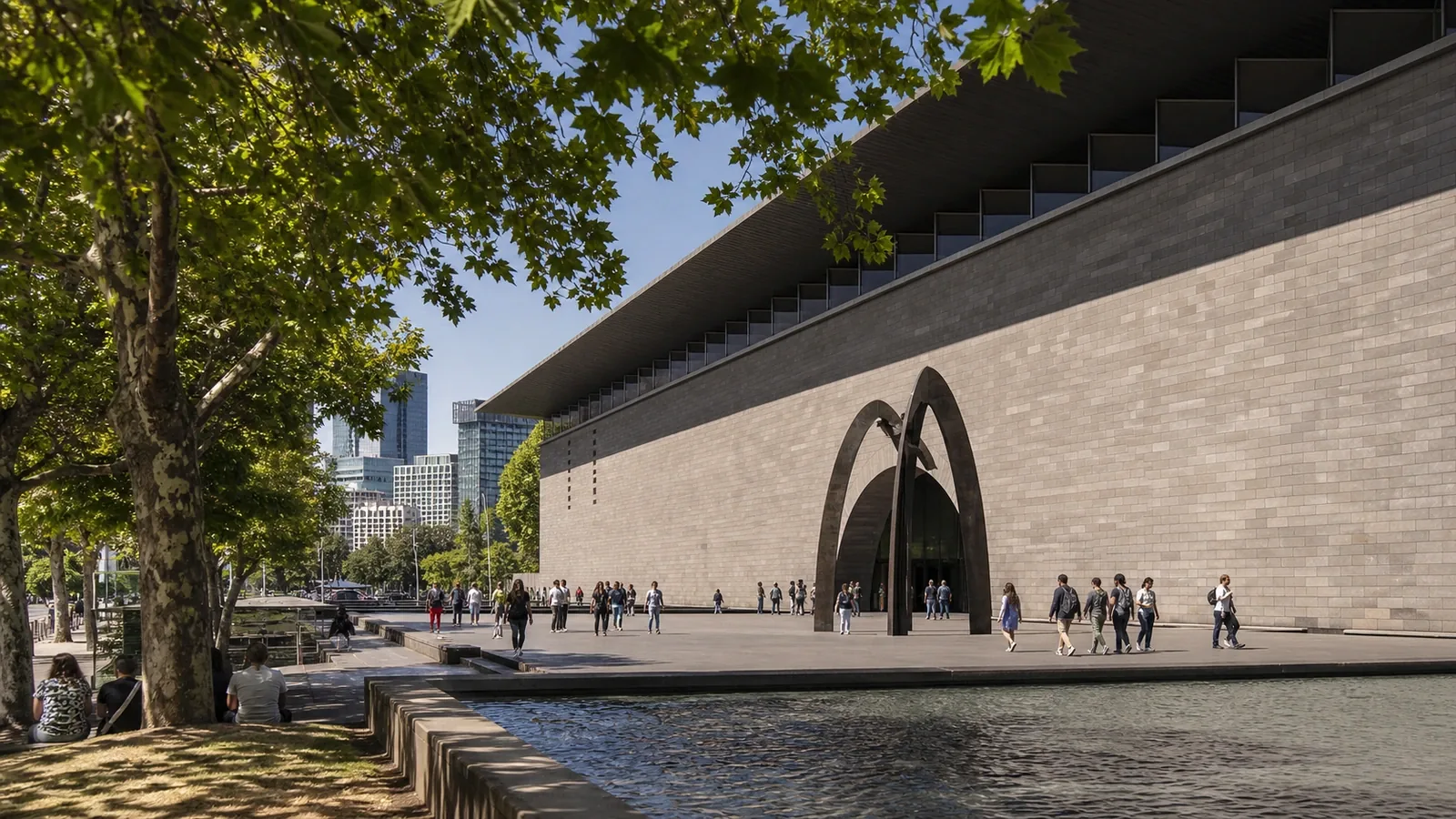
The National Gallery of Victoria is worth making time for even if museums are not usually the focus of your travels. NGV International houses international collections, while The Ian Potter Centre at Federation Square is dedicated to Australian art, including First Nations art. General admission to both venues is free, although some temporary exhibitions require a ticket.
It is also one of those places that can effortlessly rescue a rainy morning, making it especially useful when you are deciding what to do in Melbourne when it rains.
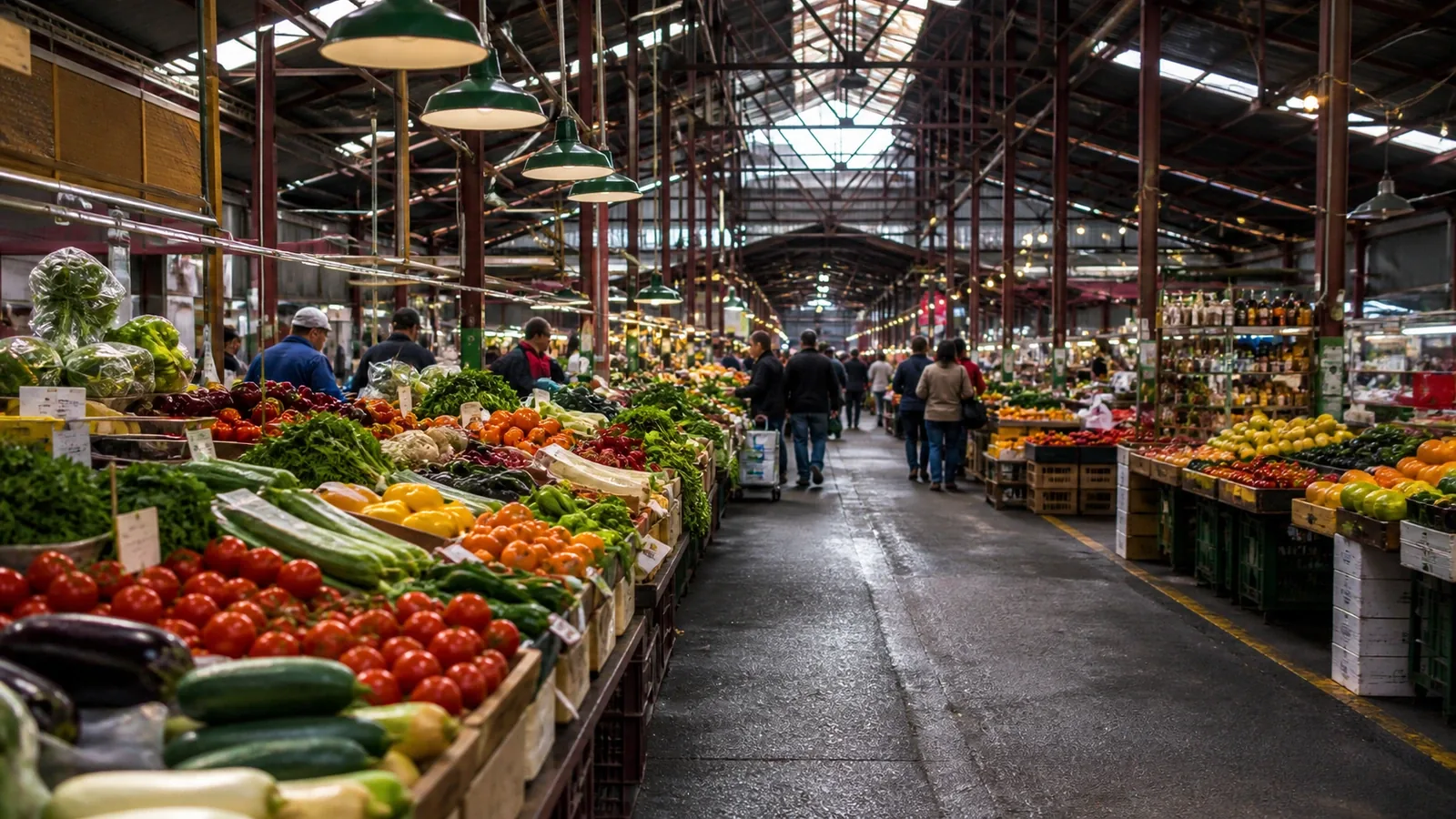
Queen Victoria Market is far more interesting when you experience it as an actual market rather than simply as a tourist attraction. Wander through the stalls, see what locals are buying, try something to eat and spend some time around the food sections instead of focusing only on souvenirs. The market remains one of the city’s major historic trading spaces.
Not every section opens every day, and opening hours can vary, so it is worth checking the schedule before planning your visit.
After the concrete, trams and laneways, the Royal Botanic Gardens completely change the pace of the day. They are especially pleasant for an aimless walk, a picnic or simply a rest after several hours exploring the city centre.
In Melbourne, sitting down for breakfast or seeking out a good café should never be considered wasted time between sightseeing stops. It is part of the experience.
Carlton retains a strong Italian heritage around Lygon Street; Chinatown adds a completely different layer; Fitzroy and Collingwood reveal a more alternative side of Melbourne; and the markets offer a way to experience the city through produce, small businesses and casual food.
The best strategy is not to chase twenty cafés and restaurants made famous by social media. Pick one or two neighbourhoods and stop wherever catches your eye. It usually makes for a far more authentic experience.
The river may not have the natural drama of some of the world’s great urban waterways, but it shapes much of central Melbourne’s landscape. A walk from Federation Square towards Southbank works particularly well as daylight begins to fade.
There is no need to turn it into a multi-hour attraction. It is more enjoyable as a transition between Melbourne’s cultural daytime side and the city after dark.
Anyone wanting to understand Melbourne beyond its Victorian architecture can explore the history and culture of its Traditional Owners. The Koorie Heritage Trust at Federation Square provides an accessible introduction to First Nations cultures, while cultural experiences connected to the river landscape and the Royal Botanic Gardens are also available.
Phillip Island is one of the classic day trips from Melbourne for travellers wanting to combine coastal scenery and wildlife. The island is particularly well known for its landscapes and the Penguin Parade. It makes sense for families and animal lovers. For anyone with only two or three days in Melbourne, however, giving up an entire day may be too much.
Vineyards, green hills and local producers make the Yarra Valley a much more relaxed escape. It is particularly well suited to couples, wine lovers or travellers who need a break from the pace of the city.
The Great Ocean Road is the most spectacular excursion, but it is also the one least suited to rushing. The route stretches for around 243 kilometres along the coast and includes places such as the Twelve Apostles, forests, beaches and coastal towns. Trying to do the entire route at speed on a marathon day trip can turn an extraordinary landscape into many hours spent staring at the road from inside a vehicle.
If you are looking for things to do in Melbourne when it rains, the city has enough excellent indoor options to keep a wet day interesting.
The NGV is the obvious cultural choice. ACMI, at Federation Square, is dedicated to film, television, video games and screen culture; admission to its permanent exhibition is free, although other activities may require a ticket.
It is also worth visiting the State Library Victoria and seeing its famous domed reading room, or simply using the rain as an excuse to move slowly from café to café.
There are plenty of free things to do in Melbourne: explore the laneways and street art, visit the general collections at the NGV and ACMI, stroll through the gardens, discover the State Library or walk beside the Yarra.
Melbourne also has a Free Tram Zone in the city centre, and you do not need a myki if you travel entirely within that zone.
ACMI works surprisingly well for families thanks to its interactive elements, and its permanent exhibition, The Story of the Moving Image, is designed as a family-friendly experience.
Melbourne Museum is another reliable choice, particularly with younger children: it has a gallery specifically designed for under-fives, although you may need to book a time slot in addition to purchasing the relevant museum ticket.
The gardens and markets also make it easy to alternate cultural visits with places where children do not have to feel as though they are sightseeing all day.
For a couple, I would choose fewer attractions and more atmosphere: a slow breakfast, Fitzroy or Carlton, a gallery, a walk through the gardens and an evening beside the river.
The night can end at one of the many rooftop bars in the city centre. Melbourne has a thriving scene of rooftops, small bars and hidden venues tucked among laneways and buildings.
Melbourne develops even more personality after dinner. There are neighbourhood pubs, small bars, live music venues, clubs and rooftop bars spread across both the city centre and neighbourhoods such as Fitzroy, Collingwood and Richmond.
It is also worth checking whether a major sporting event or show coincides with your visit. In Melbourne, a great night out does not have to mean going to a nightclub: it could be a small concert, a busy pub or a drink on a rooftop while watching the sky change above the buildings.
Melbourne requires a little patience. It is not a city where one huge landmark follows another. Anyone looking purely for iconic photo opportunities may come away less impressed than they would from Sydney.
It is also best not to fill every hour with activities. Part of Melbourne’s appeal lies precisely in walking around Carlton, Fitzroy or the CBD without any particular destination in mind.
The weather can have a major impact on the experience: pleasant days invite you into gardens, neighbourhoods and outdoor terraces, while cold or rainy weather makes galleries, museums, cafés and markets more appealing. The answer is not to fight Melbourne but to keep your plans flexible.
For a first visit, I would prioritise the Melbourne laneways, Federation Square, the NGV, Queen Victoria Market, the Royal Botanic Gardens, one neighbourhood outside the CBD and an afternoon and evening devoted simply to eating, walking and watching the city go by. I would then add Phillip Island, the Yarra Valley or the Great Ocean Road only if there were enough days.
Melbourne rewards travellers who learn to slow down far more than those racing between twenty attractions.
And perhaps that is its greatest appeal: at first, it feels like a city you need to explore. After a few days, it starts to feel like a city where it would be very easy to stay.
Discover selected experiences in Melbourne, from city tours and food experiences to nature, wildlife and day trips across Victoria.
Activity on TourBookGoBook a Great Ocean Road tour from Melbourne on a 12-13 hour reverse route with the 12 Apostles, London Bridge, Loch Ard Gorge and 10 stops.
 Activity on TourBookGo
Phillip Island tour from Melbourne lasting around 12 hours with Brighton Beach, Moonlit Sanctuary, Nobbies Boardwalk, Penguin Parade, pickup and admission.
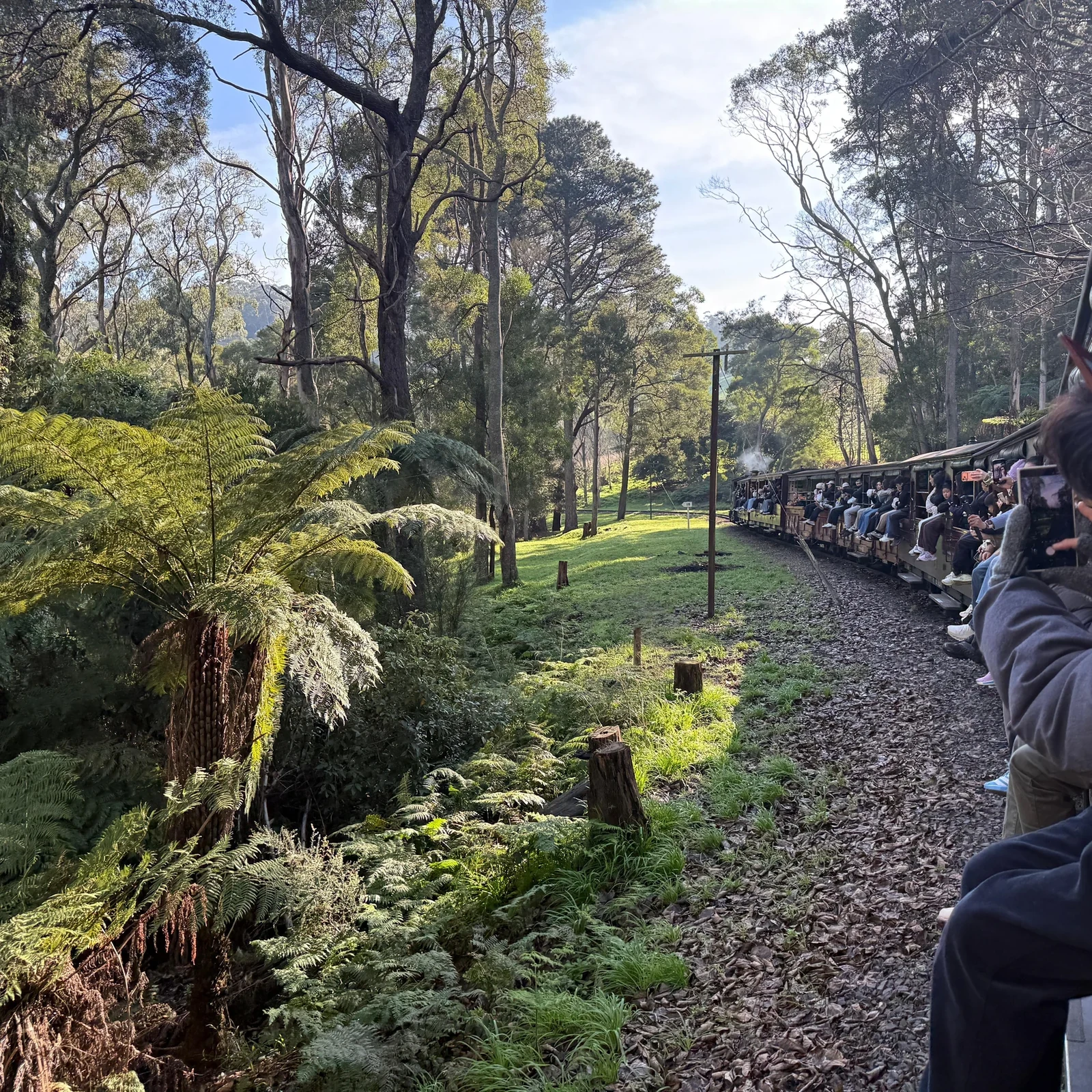 Activity on TourBookGo
Combine Puffing Billy, The Nobbies and Phillip Island's Penguin Parade on an approximately 12-hour tour from Melbourne with transport, guide and admission.