Getting around Miami: public transport, car and the best options
For most first-time visitors, getting around Miami is easier without renting a car for the entire stay: combining public transport, walking and direct rides is often more practical.
Getting around Miami takes a little more planning than the map suggests. Two neighborhoods may look close yet still be separated by miles of avenues, bridges, traffic and water. South Beach has an easy walking rhythm; Brickell works well with short walks and public transport; Wynwood invites you to explore on foot once you arrive; and Coconut Grove can feel like another city altogether. That fragmentation is part of the Miami experience.
So the question is not simply whether you need to rent a car in Miami. The best way to get around depends on where you are staying, which neighborhoods you want to visit and how often you need to travel between Miami Beach and the mainland.
South Beach for a few days: walking + Miami Beach trolley + a taxi or ride-hailing service when needed.
Downtown or Brickell: Miami Metromover + Metrorail + short walks.
A trip with excursions outside Miami: rent a car, preferably only on the days you actually need it.
Booking.com
Accommodation in Miami
Compare locations and options to find a base that suits your trip. Booking.com confirms current availability and pricing.
For a first trip focused on South Beach, Downtown, Brickell, Wynwood and a few nearby areas, renting a car in Miami is not essential. In fact, if most of your plans stay within these neighborhoods, it can become a burden.
Traffic can eat up a considerable part of your day, and parking in tourist areas adds both time and expense. Miami Beach has municipal parking garages, but rates vary depending on the garage, the time of day and certain events; private parking facilities may also follow different pricing structures.
It is also worth understanding tolls before picking up a rental car. Florida makes extensive use of electronic tolling, and rental companies have their own programs and fees for handling tolls, so it is worth reading that clause carefully before leaving the rental counter.
A car makes much more sense if you want to explore outlying areas, take day trips outside Miami or build a road trip into your itinerary. In that case, renting one only on the days you genuinely need it can be more practical than paying to leave it parked.
Miami public transport: when Metrorail makes sense
Within Miami public transport, Metrorail works quite well when your route follows its network, although it does not have the density of the subway systems in New York, Paris or Madrid.
Its biggest advantage for visitors is the airport connection. The Orange Line connects Miami International Airport with Government Center in Downtown, where you can continue on Metromover or travel to other parts of the city center. Metrorail currently runs every day, and you can pay directly with a contactless bank card or digital wallet.
The standard fare for Metrorail and Metrobus is currently $2.25 per trip, although fares may change over time.
Its main limitation is significant: there is no Metrorail line running directly to South Beach. To reach the beach, you will need to combine it with another form of transport.
Miami Metromover: an easy way to explore Downtown and Brickell
In Downtown and Brickell, getting around Miami becomes considerably easier.
The Miami Metromover is free and runs along several loops covering much of the urban core, connecting Downtown, Brickell and Omni. It is especially convenient for getting from one part of the center to another without dealing with traffic or spending too long walking in the sun.
As well as being practical, there is something almost cinematic about it: the small train glides between glass façades, elevated highways and sudden views of a city that seems to have been built vertically.
It is no substitute for a full metro network, but within the area it serves, it is one of the easiest and most enjoyable ways to travel.
Getting around Miami Beach and South Beach without a car
Getting around Miami Beach without a car works best with a combination of walking, buses and the Miami Beach trolley.
The city operates a free trolley service covering different parts of Miami Beach. It currently runs seven days a week, roughly from 8:00 a.m. to 11:00 p.m., with average frequencies of around twenty minutes on many routes.
For travelers staying in South Beach, this combination can eliminate quite a few car journeys and make parking far less of a concern.
There is also currently a free water taxi between Miami Beach and Downtown Miami, although the service is more limited: it operates on weekdays and runs far less frequently than conventional urban transport. It is an appealing alternative for certain journeys, but not something to build an entire itinerary around.
Can you explore Miami on foot?
Yes, but it is better to think neighborhood by neighborhood.
Miami is a great city to explore on foot within individual areas, but usually not by walking from one major neighborhood to another.
South Beach is excellent for walking: Ocean Drive, the Art Deco District, Española Way and much of Collins Avenue are ideal for exploring at a relaxed pace. Brickell and Downtown also work well when you combine short walks with Metromover. Wynwood is best explored on foot once you arrive.
Trying to connect Miami’s major areas on foot, however, is usually impractical.
The climate also changes how distances feel. During the hottest and most humid months, twenty minutes in the sun can feel much longer than Google Maps suggests, and a sudden tropical downpour can turn a pleasant stroll into a dash for the nearest doorway.
Taxi or ride-hailing in Miami: the most convenient complement
For many travelers, the best way to get around Miami is not to choose one transport system, but to combine several depending on the neighborhood and time of day.
A taxi or ride-hailing service is especially useful for trips between Miami Beach and the mainland, for getting back at night or for reaching neighborhoods that require too many public-transport connections.
The drawback is the same one that affects private cars: the traffic is still there. Paying for a ride does not make congestion on the approaches to Miami Beach or during rush hour disappear.
That is why it makes sense to think of Miami in zones and group your sightseeing geographically.
How to get from Miami Airport to Downtown, Brickell or South Beach
If you are wondering how to get from Miami Airport to Downtown, Miami International Airport is fairly well connected to the local transport network.
The MIA Mover links the terminals with the Miami Intermodal Center and the Rental Car Center. From there, you can access both rail services and car-rental facilities.
If you are staying in Downtown or Brickell, Metrorail is often a sensible option. For South Beach, which is not directly served by rail, you will need to continue by bus, taxi or another form of road transport.
The best way to get around Miami for each type of trip
South Beach for a few days: walking + Miami Beach trolley + a taxi or ride-hailing service when needed.
Downtown or Brickell: Metromover + Metrorail + short walks.
South Beach and Downtown combined: public transport during the day, plus the occasional direct ride when it saves you too many transfers.
A trip with excursions outside Miami: rent a car, preferably only on the days you need it.
A week exploring South Florida extensively: a car becomes considerably more useful.
The mistake that costs the most time when getting around Miami
A common mistake is planning a trip as if Miami were a compact historic city center.
It is not.
It is better to set aside one morning for South Beach, another part of the day for Wynwood and the Design District, and another for Downtown and Brickell, rather than constantly crossing Biscayne Bay and traveling from one end of the city to the other.
In Miami, good geographical planning matters almost as much as choosing the right sights.
So, what is the best way of getting around Miami?
For most first-time visitors, the best approach to getting around Miami does not involve renting a car for the entire stay.
I would walk within each neighborhood, use Metromover in Downtown and Brickell, take Metrorail whenever the route fits its network, and rely on buses, the trolley or direct rides to connect more distant areas.
I would only add a car once the trip starts extending beyond urban Miami.
It is a less romantic solution than cruising around the city in a convertible beneath the palm trees, but it is also much more sensible: in Miami, freedom does not always mean having a car. Sometimes it means not having to find somewhere to park it.
C
DiscoverCars
Car rental
Compare prices and book your rental car at the best price.
Discover Miami through selected experiences combining city tours, Biscayne Bay, the Everglades, day trips and outdoor activities to suit the pace of your journey.
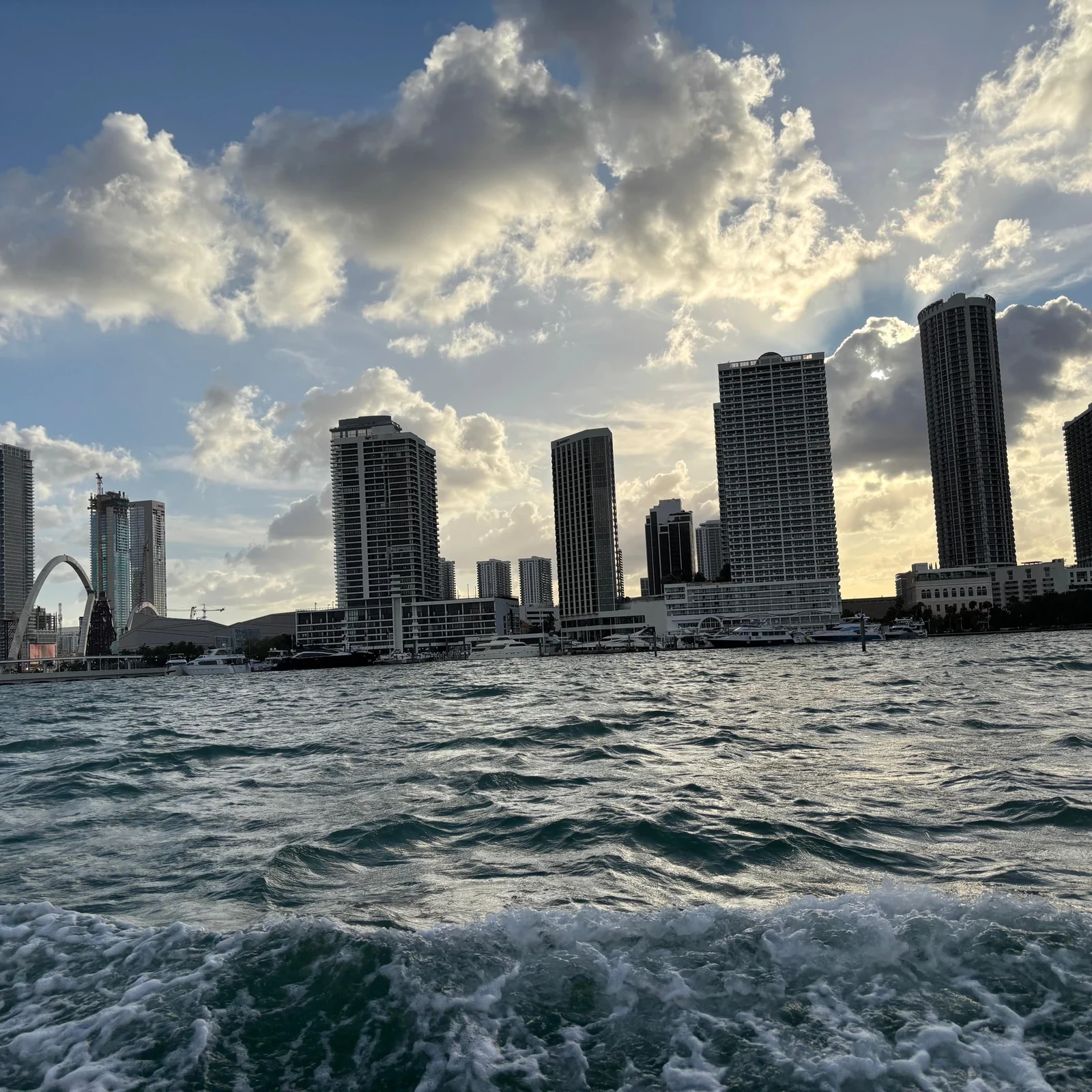
Discover Miami on a 45-minute speedboat tour from Bayside Marketplace, with skyline views, South Beach, Star Island, Fisher Island and luxury mansions.
From €45The experience lasts 45 minutes and combines sightseeing sections with faster stretches.


 Activity on TourBookGo