 Activity on TourBookGo
Statue of Liberty tickets with official ferry and Ellis Island
Book Statue of Liberty tickets with official ferry to Liberty Island and Ellis Island, including multilingual audio guide and museum access.
Choosing where to stay in New York is not just about choosing a hotel. It is about choosing the rhythm you want to wake up to: the distant siren between skyscrapers, the steam rising from a manhole in Midtown, the elegant silence of an Upper West Side street, the golden light over the East River from Brooklyn, or the more local pulse of Queens when Manhattan starts to feel too expensive.
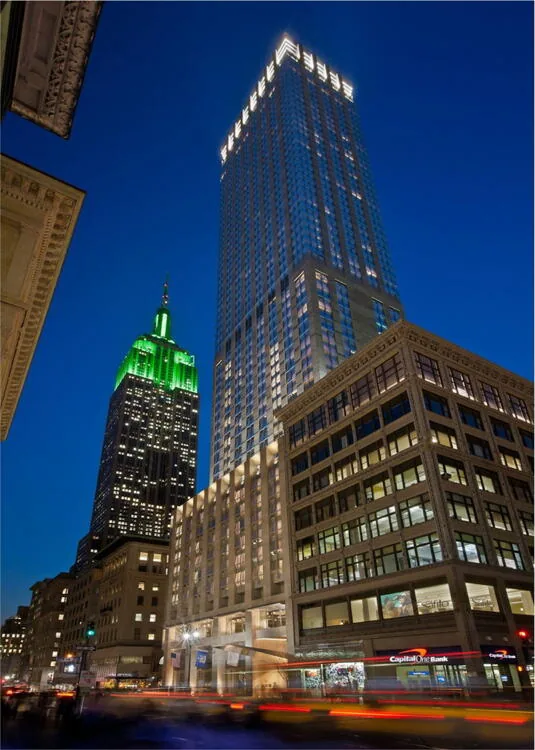
The best area where to stay in New York depends less on “being central” — because the city has many centres — and more on the way you travel: first visit, romantic trip, tight budget, children, museums, nightlife, shopping, or a desire to feel like you are sleeping in a real, well-connected neighbourhood.
Compare locations and options to find a base that suits your trip. Booking.com confirms current availability and pricing.
Find accommodation on BookingMidtown is the most practical choice for anyone visiting New York for the first time. You are close to Times Square, Bryant Park, Fifth Avenue, Grand Central, the Empire State Building, and many subway connections. NYC Tourism includes numerous hotels in areas such as Times Square/Theatre District, Midtown West, and the Garment District in its hotel listings, confirming something that becomes obvious as soon as you walk around the city: much of the tourist accommodation is concentrated here.
The best thing about Midtown is its convenience. You step out of the hotel and the city appears all at once: vertical, bright, theatrical. The less appealing side is that it can feel noisy, expensive, and somewhat impersonal. Times Square, in particular, is exciting on the first night, but it can become tiring by the second: too many screens, too many people, too much rush.
Worth it for: first-time visitors, short breaks, travellers who want to see everything easily. May disappoint: those looking for a more intimate, residential, or food-focused New York.
The Upper West Side is one of the best areas to stay in New York if you want to sleep in Manhattan without feeling as though you are living inside a tourist postcard. It has the calm atmosphere of brick buildings, neighbourhood cafés, families on the school run, bookshops, restaurants that are not so obviously aimed at visitors, and Central Park close by.
It is especially good for families, low-key couples, and travellers who want to combine museums, walks, and rest. The area works very well if your trip revolves around Central Park, the American Museum of Natural History, or Lincoln Center.
The drawback is that it does not have Downtown’s nightlife or Midtown’s immediate centrality. Some nights, after dinner far away, the journey back can feel long, although the subway handles it well.
Chelsea, Flatiron, and NoMad are highly recommended areas for travellers who no longer want to stay right in Times Square but do not want to be too far away either. They have galleries, good restaurants, design hotels, pleasant streets for walking, and easy access to several parts of Manhattan.
Chelsea adds the appeal of the High Line and a creative atmosphere; Flatiron has a very New York kind of urban beauty, with pale stone buildings, lively squares, and cafés where the city seems less aggressive. NoMad, depending on the street, can be elegant or somewhat bland, but it is usually very practical.
The best: a good location without so much tourist saturation. The worst: high prices and some avenues with heavy traffic.
Lower Manhattan is an excellent area for those who want to be close to the World Trade Center, Wall Street, Battery Park, the ferry to the Statue of Liberty, and the Brooklyn Bridge. NYC Tourism describes Lower Manhattan as one of Manhattan’s standout areas and also lists hotels in this part of the city.
During the day, the Financial District buzzes with executives, tourists, and students; at night, some streets empty out and a strange, almost cinematic calm appears. That can be an advantage if you are looking for rest, but a disappointment if you expect nightlife right outside your hotel door.
It is a good base for combining Manhattan with Brooklyn, especially if you want to walk across the bridge at sunset.
If your budget allows, SoHo, Nolita, and Greenwich Village offer one of the most beautiful experiences when staying in New York. Lower-rise streets, cast-iron façades, independent shops, small restaurants, jazz, discreet terraces, and a sense of a city that is lived in, not just photographed.
Greenwich Village, described by NYC Tourism as a historic neighbourhood and a pleasant place to observe local life, is ideal for those who want to wander without a fixed route and feel a more human side of New York.
The problem is clear: it is usually expensive. There are also fewer large hotels, so it is wise to book early. It is not the most practical area if your priority is going every day to museums on the Upper East Side or to attractions spread all over the city, but it is one of the most memorable.

Brooklyn can be a great choice if you want views, restaurants, a young atmosphere, and a less monumental version of New York. DUMBO, one of Brooklyn’s most visited neighbourhoods, stands out for its cobbled streets, industrial architecture, and river views towards Manhattan.
Williamsburg works best for travellers interested in nightlife, cafés, shops, music, and restaurants. Downtown Brooklyn and Brooklyn Heights are more practical and elegant, with good connections and a somewhat more residential rhythm.
The trap is choosing “Brooklyn” without looking at the map. Brooklyn is huge. A poorly connected hotel can turn each day into a small relocation. The key is to stay close to a useful subway line into Manhattan.
Queens is a smart option when Manhattan is prohibitively expensive. Long Island City, facing the East River, offers modern hotels, good connections, and magnificent skyline views; NYC Tourism describes it as a former industrial centre transformed into a lively area with restaurants, contemporary art museums, and waterfront parks.
Astoria has more of a neighbourhood soul: Greek food, international culture, local life, and value for money that can be more forgiving. NYC Tourism highlights its mix of gastronomy, culture, and atmosphere by the East River.
The downside is that you will not be “inside” the classic postcard image. For some travellers, that will feel like a loss; for others, it will be a more honest way to get to know the city.
Rather than talking about “off-limits” neighbourhoods, in New York it is better to talk about areas that are impractical for certain travellers.
I would avoid staying near JFK, LaGuardia, or Newark airports unless you have a layover, a very early flight, or a one-night stopover. Saving money on a hotel can cost you dearly in time, fatigue, and transfers.
I would also choose carefully when it comes to accommodation far from the subway or in deeper areas of Brooklyn, Queens, or the Bronx if the trip is short. The city is enjoyed on foot, yes, but it quickly becomes exhausting when every journey adds forty or fifty minutes.
Times Square should not automatically be avoided, but it is worth thinking twice if noise bothers you, you are travelling with small children, or you want a more local experience. It is practical, but intense.
No. For a normal tourist trip, renting a car in New York is usually more of a problem than a solution. The MTA operates the city’s subway and bus system, and the network allows you to move around the five boroughs extensively. In addition, NYC Tourism’s official guide notes that public transport operates 24 hours a day, seven days a week.
A car complicates what the city already does well without one: getting around. Parking can be expensive, rules change from one street to another, and Alternate Side Parking regulations require attention to signs and street-cleaning schedules; NYC311 explains that, when these rules are in effect, you cannot park on the side of the street being cleaned for the entire period shown.
Renting a car only makes sense if you are leaving the city for rural areas, distant beaches, or a route through New York State. For Manhattan, Brooklyn, Queens, and most urban visits, the subway, walking, and the occasional taxi are better.
For a first visit, Midtown or Chelsea are the most convenient options. For a romantic trip, Greenwich Village, SoHo, or the Upper West Side have more charm. For families, the Upper West Side and Midtown near Bryant Park work very well. To save money without feeling isolated, Long Island City can be an excellent move. To experience a younger, more nocturnal New York, Williamsburg has character, although it is not for those seeking silence.
The smartest decision is not always to sleep next to the most famous landmark, but next to the right subway line, on a street you will feel like returning to at night, and in a neighbourhood that does not force you to fight the city every morning.
New York rewards those who choose their base well. Not because the hotel is the trip, but because in this city, the neighbourhood where you wake up completely changes the way you remember it.
Make the most of your stay in New York with selected experiences that are easy to combine with the area where you are staying.
Activity on TourBookGoBook Statue of Liberty tickets with official ferry to Liberty Island and Ellis Island, including multilingual audio guide and museum access.
 Activity on TourBookGo
Book SUMMIT One Vanderbilt tickets in New York and enjoy an immersive observation deck with 360-degree Manhattan views, mirrored rooms and an open-air terrace.
 Activity on TourBookGo
Book a Niagara Falls tour from New York with bus transportation, a Spanish or English-speaking guide, and a visit to the U.S. side.