
Climb up to Santa Bárbara Castle
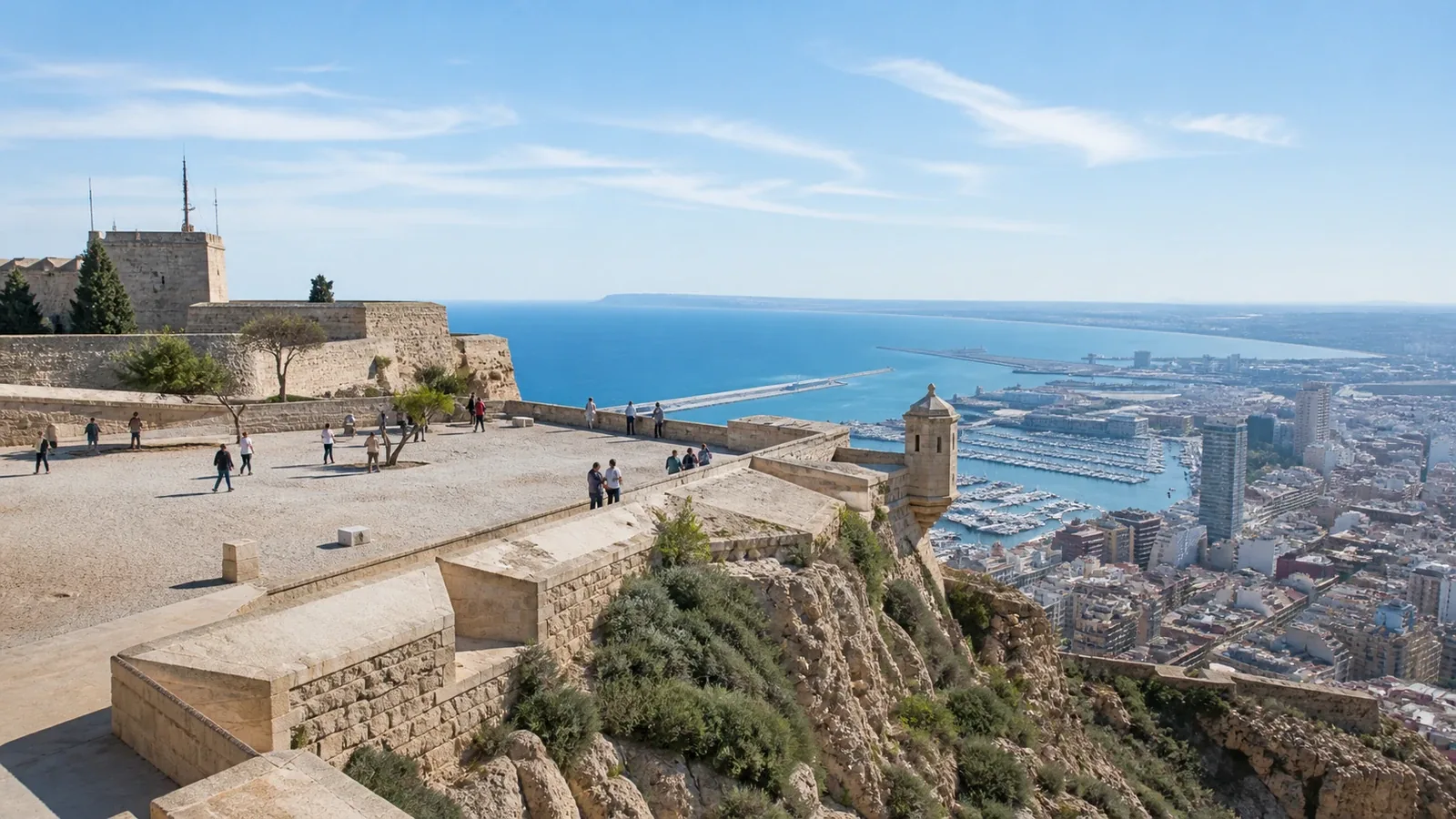
At the top of Mount Benacantil, Santa Bárbara Castle overlooks Alicante and much of its coastline. More than a standalone historic monument, it is one of the best places from which to understand the geography of the city.
From above, you can see the harbour, Postiguet Beach and the urban landscape stretching inland. The pale stone of the fortress contrasts with a Mediterranean that, on clear days, seems to fill half the horizon.
In summer, it is best to avoid the hottest hours of the day. Early in the morning or towards the end of the afternoon, the visit is usually much more pleasant, and the changing light transforms the views.
Wander through the Santa Cruz neighbourhood
At the foot of the castle lies one of Alicante’s most characterful corners.
The Santa Cruz neighbourhood climbs the hillside through narrow lanes, stairways, whitewashed façades, flowerpots and small details that encourage you to slow down. Here, the city takes on a more intimate scale.
This is not a vast monumental old town comparable to those of some other Spanish cities, and expecting one may lead to disappointment. Its charm lies precisely elsewhere: in its small size, its slopes and the feeling of stumbling across almost domestic corners right in the middle of the tourist centre.
Combine Santa Cruz with the old town
From there, you can continue towards the squares, churches and streets of the traditional centre. It is a good way to discover Alicante on foot without turning the day into a rushed succession of monuments.
Walk along the Explanada de España
Few images are as closely associated with Alicante as the Explanada de España, with its palm trees and distinctive wave-patterned paving.
It is a pleasant promenade, especially once the heat begins to ease and the city starts to come alive outdoors. Its location beside the harbour makes it easy to combine with other sights in the centre.
Still, it is best appreciated for what it is: an iconic urban promenade rather than an attraction that necessarily requires hours of your time. Part of its appeal is simply strolling along it at an unhurried pace before continuing towards the harbour, the centre or the beach.
Spend a few hours on Postiguet Beach
Postiguet Beach has one undeniable advantage: it is practically part of the city itself.
That makes it easy to combine sightseeing, restaurants and a swim without having to plan major journeys. It is especially convenient on a short break.
The downside appears during the busiest periods. Its accessibility also means it can become quite crowded. Anyone picturing a peaceful Mediterranean cove will probably want to explore other parts of the coastline.
Discover Alicante’s other beaches
If you are staying for several days, it is worth looking beyond Postiguet.
The Alicante coastline makes it possible to swap the urban setting for longer beach days and different atmospheres. San Juan Beach is one of the best-known alternatives for those looking for more space and a broader stretch of sand where they can spend much of the day by the sea.
The best choice depends largely on the type of trip. On a one- or two-day visit, constantly moving between beaches may take up more time than it is worth. On a longer stay, however, exploring the coast makes much more sense.
Visit the Central Market
Some cities are best understood through their monuments; others begin to reveal themselves in front of a counter filled with fish, fruit or local produce.
Alicante’s Central Market offers a glimpse into a more everyday side of the city. It is particularly rewarding for travellers interested in food and in places where local life still meets tourist curiosity.
It is worth going with the intention of looking around, buying something or tasting local products rather than simply photographing the building and leaving.
Visit a museum when you feel like changing the pace
Alicante also offers cultural alternatives when you want a break from the beach and outdoor walks.
Museums can be especially welcome during the hottest hours of the day or when the weather is unsettled. Depending on your interests, archaeology, art and local history can add depth to a city that may initially appear to be all about the coast.
There is no need to turn a Mediterranean getaway into a cultural marathon. Choosing one or two places that genuinely interest you is usually far more satisfying.
Take a trip to Tabarca Island
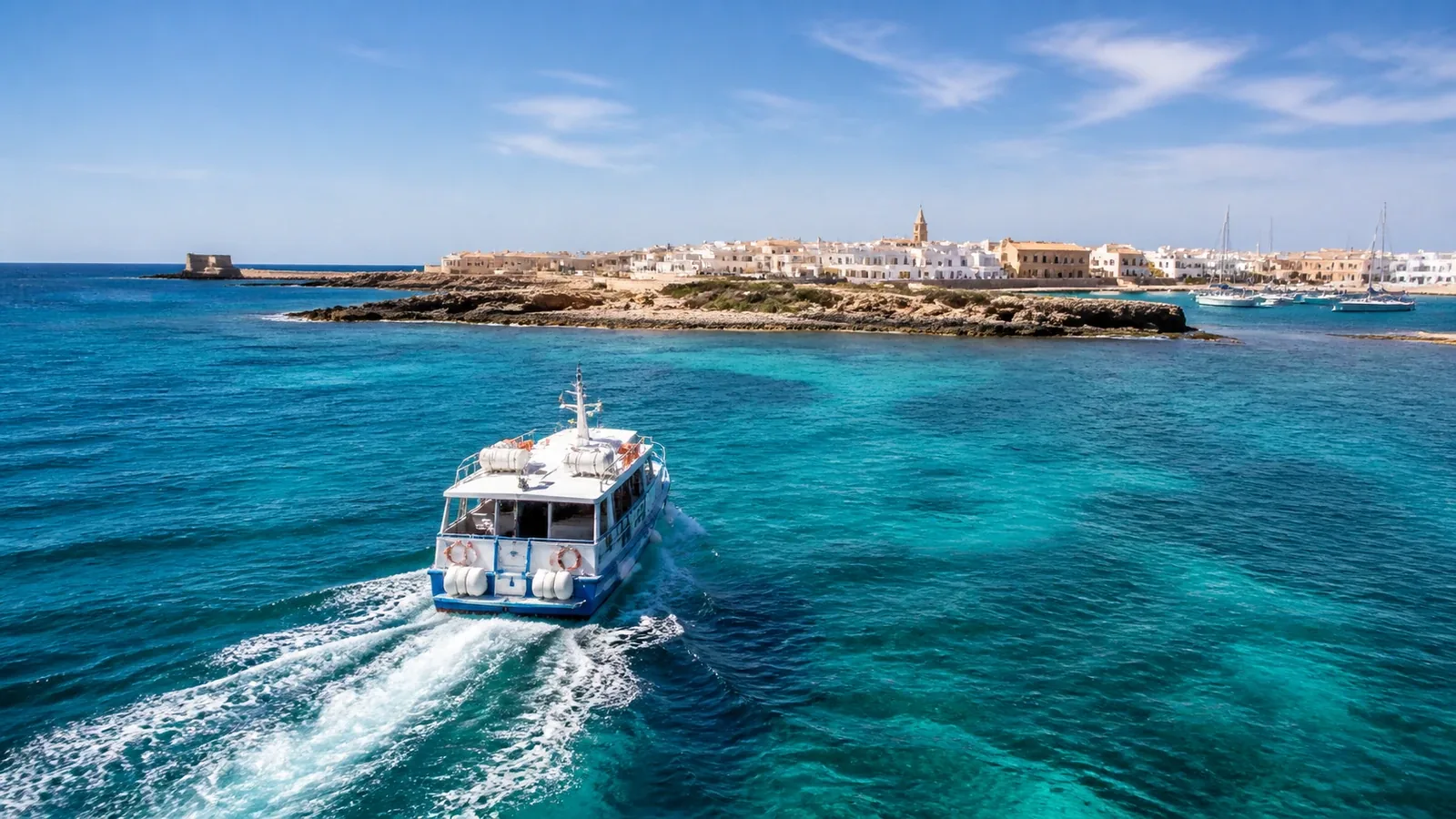
One of the best-known excursions from Alicante is Tabarca, a small Mediterranean island just off the coast.
The trip allows you to leave the urban landscape behind for a few hours and replace it with sea, low-rise houses and a different pace of life. In good conditions, the boat journey itself becomes part of the experience.
But Tabarca requires a little planning. At busy times, it can feel much less peaceful than some promotional photographs suggest. If complete tranquillity is what you are after, choosing the right season and time of day matters.
It is also advisable to check the available boat connections before travelling, as services can vary.
Enjoy Alicante as evening falls
Alicante takes on new nuances at sunset.
The heat begins to ease, terraces start filling up and walking becomes pleasant again. It is a good time to return to the historic centre, stroll around the harbour or simply find a table and watch the city change.
Alicante’s nightlife can be lively, particularly at weekends and during peak season. That will be a plus for travellers looking for atmosphere and a drawback for anyone hoping to get an early night in certain central areas.
Try Alicante’s food without settling for the first terrace you see
Rice dishes play an important role in local cuisine, but Alicante’s food scene deserves a little more curiosity.
Fish, seafood and Mediterranean produce are all part of a cuisine inevitably connected to the sea. As in many tourist cities, the most spectacular location does not necessarily guarantee the most interesting meal.
A useful rule is to occasionally step away from the main tourist strips and pay attention to where local residents are eating. It is also wise to be cautious of endless menus designed to satisfy every possible international taste at once.
What to Do in Alicante When It Rains
Rain does not have to ruin the entire visit. Markets, museums, food and some historic sites make it possible to reorganise the day.
That said, Alicante is a city whose personality is best enjoyed outdoors. If bad weather dominates most of a very short break, you will inevitably miss an important part of the experience.
Alicante with Children
The combination of beaches, relatively easy walks and outdoor activities means Alicante can work well for families.
The main challenge in summer is the heat. Trying to visit the castle, walk for hours and then continue with more activities in the middle of the day can turn a good plan into an exhausting one.
With children, a less ambitious pace usually works better: one main visit, some beach time and enough breaks.
Alicante for Couples
Alicante does not need elaborate attractions to work as a couples’ getaway. A sunset walk, a relaxed dinner, views from above and a day beside the Mediterranean can easily fill a weekend.
Those looking exclusively for secluded hotels, deserted coves and complete silence may prefer to use Alicante as a gateway for exploring other parts of the province.
Free Things to Do in Alicante
A considerable part of the city’s appeal lies precisely in experiences that do not require filling your schedule with paid attractions.
Walking through Santa Cruz, strolling along the Explanada, looking out over the Mediterranean, wandering by the harbour or discovering different corners of the centre all make it possible to enjoy Alicante on a modest budget.
The key is not to confuse travelling well with doing as many activities as possible.
What Is Really Worth Doing in Alicante?
For a first visit, a balanced itinerary would include Santa Bárbara Castle, the Santa Cruz neighbourhood, the historic centre, the Explanada de España, local food and some time at the beach. If you have more days, then Tabarca, San Juan and other excursions around the province begin to make more sense.
Alicante will probably disappoint anyone expecting a city overflowing with monumental sights or deserted urban beaches in August. Nor does it need to compete on those terms.
Its appeal lies elsewhere.
It lies in emerging from a narrow street and suddenly seeing the blue Mediterranean. In looking down over the city from Benacantil. In walking beneath the palm trees as the sun loses its strength. In sitting down to a rice dish without feeling the need to fill the rest of the afternoon with five more sights.
Alicante is best enjoyed when you leave some space between plans.
And perhaps that is precisely one of the best things you can do here: allow yourself to travel a little more slowly.
