 Activity on TourBookGo
Hiroshima Bar Hopping Food Tour
Book a Hiroshima bar hopping food tour through Nagarekawa with a local guide, 3 bar stops, okonomiyaki, sake, Japanese food and a group of up to 7.
Finding where to eat in Hiroshima means following the scent of caramelized sauce, hot cabbage, and sizzling iron griddles while discovering a local food scene that reaches far beyond okonomiyaki.
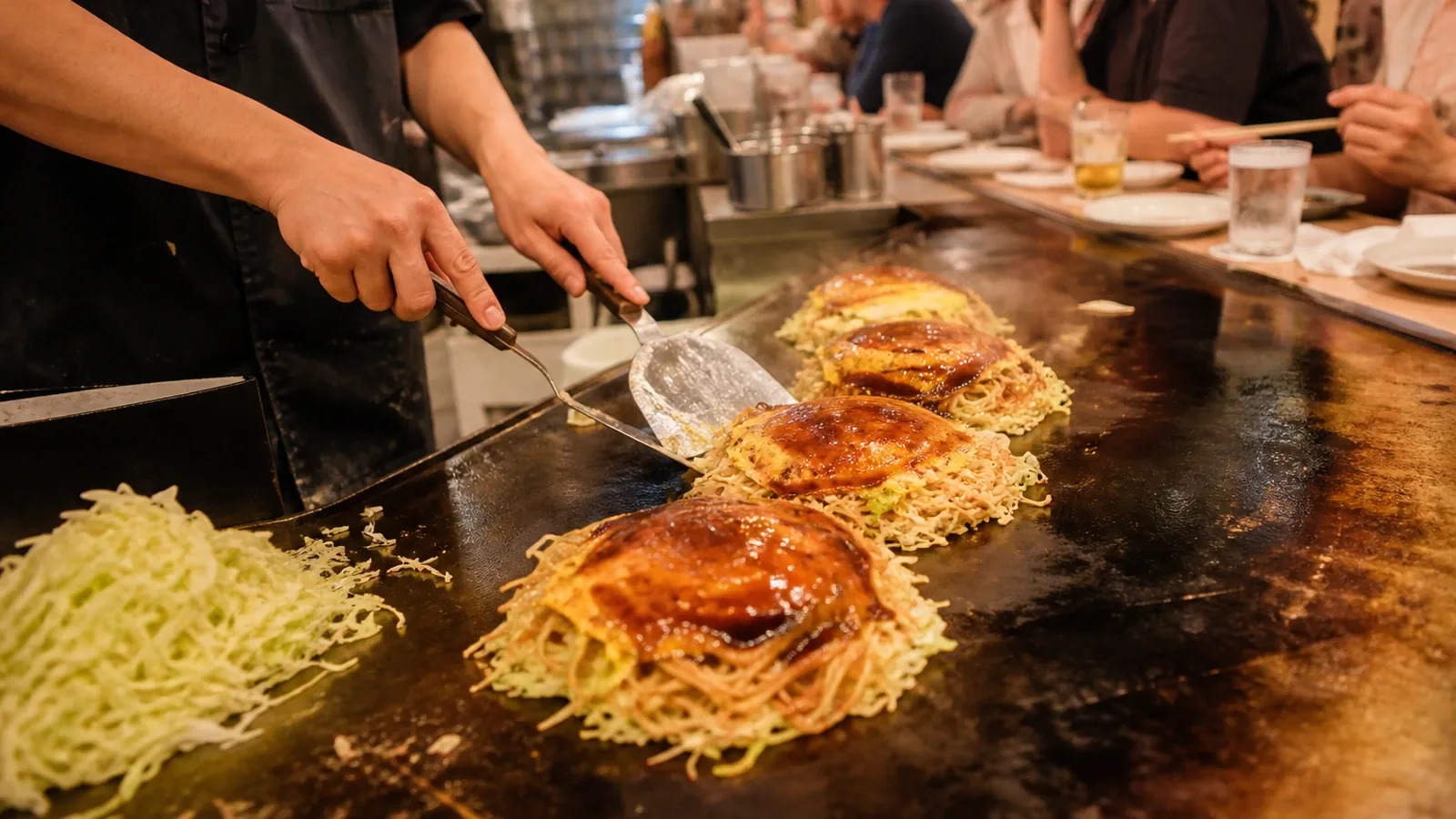
Knowing where to eat in Hiroshima opens the door to a food scene scented with caramelized sauce, hot cabbage, and sizzling iron griddles. Yet Hiroshima local food goes far beyond okonomiyaki, telling the story of the Seto Inland Sea through plump oysters, grilled conger eel, spicy noodles, and tiny bars where dinner stretches late into the evening over shared plates and glasses of sake. Eating well here does not require chasing famous restaurants. Often, all you need to do is sit down in front of a griddle, notice where the locals eat, and accept that some of the most memorable places barely have room for a dozen people.
Compare locations and options to find a base that suits your trip. Booking.com confirms current availability and pricing.
Find accommodation on BookingThis is the dish that best represents the city. Unlike other Japanese versions, the ingredients are cooked in layers: a thin crêpe-like base, plenty of cabbage, bean sprouts, meat, egg, and soba or udon noodles. It is finished with a dark, sweet-and-savory sauce whose aroma lingers above the griddle.
Official Hiroshima Tourism and Travel Website, Dive! Hiroshima
The best experience is to sit at the counter in front of the teppan and watch the cook lift, flip, and press each layer into place. The basic version is usually enough. Adding oysters, squid, cheese, or spring onions can make it more interesting, but it can also turn an already substantial dish into an excessive meal.
Okonomi-mura, in Shintenchi, currently brings together 23 specialist restaurants. It is convenient for a first introduction, has a lively atmosphere, and lets you compare different counters, although it is also one of the city’s most touristy spots.
Official Hiroshima Tourism and Travel Website, Dive! Hiroshima
For a more everyday experience, walk a few streets away from the main shopping avenues and step into a small neighborhood restaurant. It may not always be more refined, but there is usually less waiting and a more natural connection with the person cooking your food.
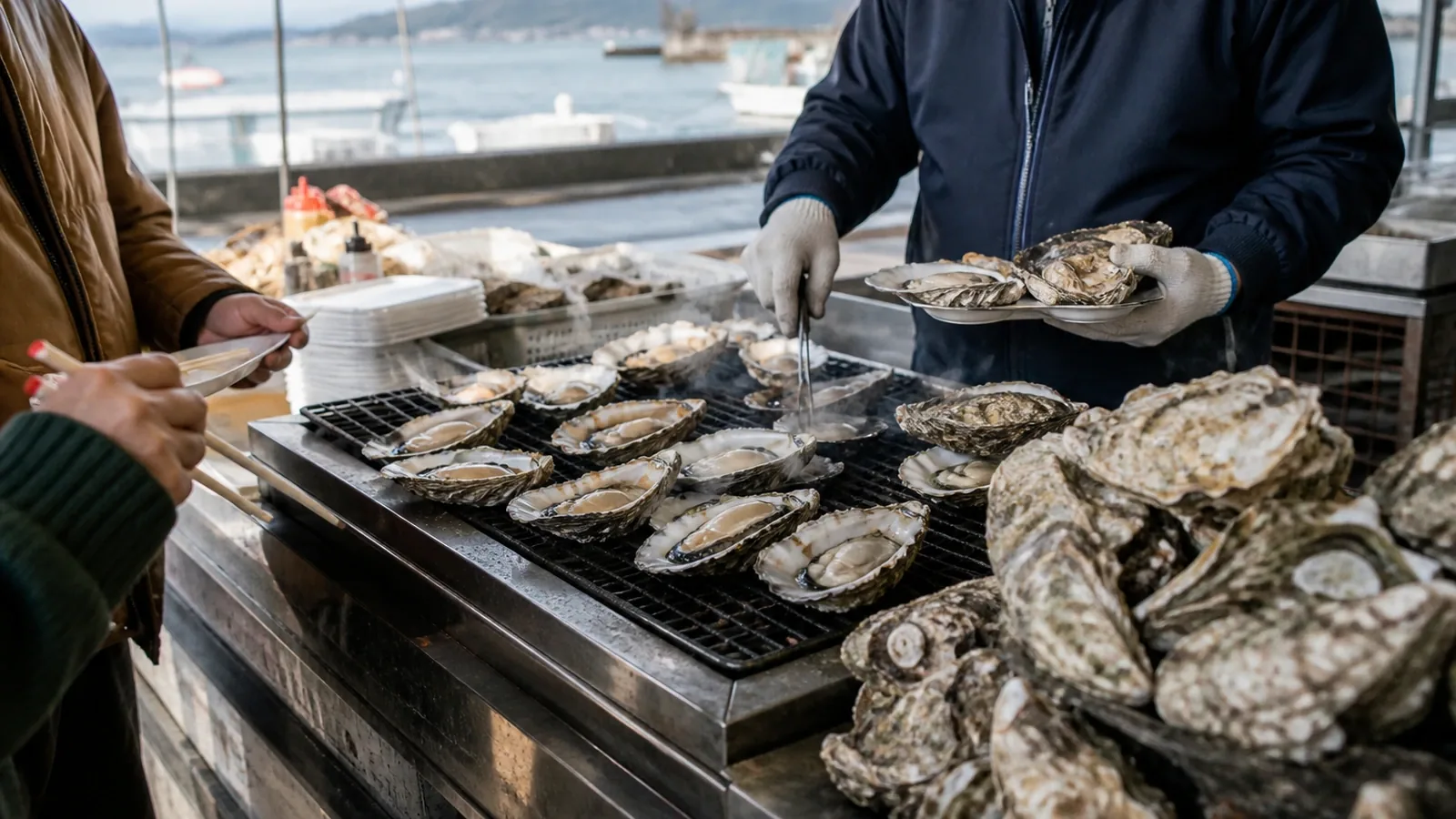
Oysters are served grilled in their shells, deep-fried, baked with toppings, added to okonomiyaki, or served with rice. Winter is traditionally the best season, when they tend to be plumper, although some varieties are sold throughout the year.
Official Hiroshima Tourism and Travel Website, Dive! Hiroshima
On Miyajima, plenty of stalls cook them in full view of passersby. Trying one or two while exploring the island is enjoyable; ordering version after version covered in cheese, sauces, and batter can mask the flavor of the oyster and quickly make lunch expensive.
To appreciate their texture, simply grilled or fried oysters are usually more revealing than heavily dressed preparations.
Anago-meshi is one of the traditional dishes of Miyajima and Miyajimaguchi. Sea conger eel is grilled and placed over rice cooked in a broth made from the fish itself. The result is delicate, slightly sweet, and less fatty than freshwater eel.
Official Hiroshima Tourism and Travel Website, Dive! Hiroshima
It usually costs more than a bowl of noodles or an okonomiyaki, so it is worth saving for a relaxed meal. Sitting down and taking your time allows you to appreciate it far more than eating it in a hurry between sightseeing stops.
These brothless noodles are an affordable, quick, and distinctly local option. They are served with minced meat, chili oil, and Japanese pepper, which creates an aromatic, gently numbing sensation in the mouth. Many restaurants allow you to choose the spice level.
Official Hiroshima Tourism and Travel Website, Dive! Hiroshima
It is a good alternative when you want something less heavy than another okonomiyaki. Start with a moderate spice level: the intensity of Japanese pepper does not always resemble the heat of Western chili.
Izakaya menus often feature koune, a cut of beef served in thin slices, usually grilled with salt and lemon. It is also worth looking for fish from the Seto Inland Sea, as well as octopus, sea bream, and small seasonal dishes.
Official Hiroshima Tourism and Travel Website, Dive! Hiroshima
Sake from Hiroshima Prefecture, especially from Saijo, often has a smooth profile associated with the use of soft water. For anyone who wants to understand it beyond a single glass, Saijo and its brewery district offer a food-and-drink experience of their own.
Official Hiroshima Tourism and Travel Website, Dive! Hiroshima
This is the easiest area for a first night in the city. It has a high concentration of okonomiyaki restaurants, taverns, noodle shops, and places open late. There is plenty of choice, but also more tourist signs and queues.
The advantage is variety. The downside is that it is easy to end up in the first visible restaurant without comparing the atmosphere, menu, or specialty.
After dark, Nagarekawa reveals a more grown-up side of Hiroshima: illuminated alleyways, izakaya, bars, seafood restaurants, and small specialist kitchens. It is a good area for sharing several dishes rather than ordering a single specialty.
Official Hiroshima Tourism and Travel Website, Dive! Hiroshima
It can be noisy on weekends, and not every venue is easy to understand from the outside. Looking at the dishes on display, observing the clientele, and choosing a busy counter with regular turnover usually works better than following the most insistent tout.
West of the station’s south exit lies Ekinishi, a small district of old houses converted into bars and restaurants. It retains a narrow, slightly retro atmosphere, with tiny venues where office workers, travelers, and groups of young people come for dinner.
Official Hiroshima Tourism and Travel Website, Dive! Hiroshima
It is one of the city’s most characterful areas, but not the most convenient for large groups, strollers, or travelers who prefer spacious and quiet surroundings.
The ekie complex, directly connected to the station, brings together okonomiyaki restaurants, oyster dishes, food shops, and edible souvenirs. It is practical when you first arrive, before catching a train, or on a rainy day.
Official Hiroshima Tourism and Travel Website, Dive! Hiroshima
It does not offer the intimacy of a neighborhood counter, but it saves you from traveling across town and makes it easy to try regional specialties with menus that are simpler to understand.
The shopping street leading toward Itsukushima Shrine is lined with stalls selling oysters, conger eel, and momiji manju, the maple-leaf-shaped sweet. The street is around 350 meters long and is designed for both snacking and souvenir shopping.
Official Hiroshima Tourism and Travel Website, Dive! Hiroshima
It is pleasant for grazing, though not necessarily for eating every meal of the day. The most visible businesses pay for their prime location with heavier crowds and, at times, higher prices.
Basic okonomiyaki, shirunashi tantanmen, and small noodle restaurants usually offer the best balance between price and how filling the meal is. Lunch sets also tend to be better value than long dinners in an izakaya.
To save money without giving up local food, alternate between different styles of eating: a substantial main dish at lunchtime, a street-food specialty in the afternoon, and a dinner of several shared plates. Ordering oysters, meat, alcohol, and okonomiyaki in the same sitting can quickly raise the bill and leave you feeling more overwhelmed than enlightened.
Okonomi-mura is worth visiting for its atmosphere, but there is no need to eat there more than once. The city is full of lesser-known griddles.
On Miyajima, the most photogenic products are not always those that best express the local cuisine. A simply cooked oyster or a well-made anago-meshi will often leave a stronger impression than a combination designed mainly to attract attention in photographs.
It is also best not to order too many dishes at the beginning. Hiroshima-style okonomiyaki is large, dense, and much more filling than it appears while it is being cooked.
Finally, not every specialty is equally appealing throughout the year. Winter is particularly good for oysters, while in the warmer months, the heat of the griddle, the humidity, and very heavy meals can be exhausting.
Hiroshima rewards people who enjoy casual food, small counters, bold flavors, and direct contact with the cook. It is also a welcoming city for solo travelers: many restaurants are arranged around a counter and do not require every meal to become a formal occasion.
It may appeal less to those looking for light, quiet dining or a wide range of vegetarian options. Some dishes can be prepared without meat, but sauces, broths, and side ingredients may still contain animal products, so it is important to ask clearly.
The best way to eat in Hiroshima is not to work through a checklist. It is to listen to the hiss of the griddle, order less than your eyes suggest, and leave room for the city to reveal, dish by dish, that its cuisine has as much memory as it does character.
Discover selected experiences in Hiroshima to complete this guide with history, local culture, food, Miyajima and well-organised tours.
Activity on TourBookGoBook a Hiroshima bar hopping food tour through Nagarekawa with a local guide, 3 bar stops, okonomiyaki, sake, Japanese food and a group of up to 7.
 Activity on TourBookGo
Explore a Hiroshima and Miyajima private tour with hotel pickup, private transport, Itsukushima Shrine and Peace Memorial Park across a 10-hour day.
 Activity on TourBookGo
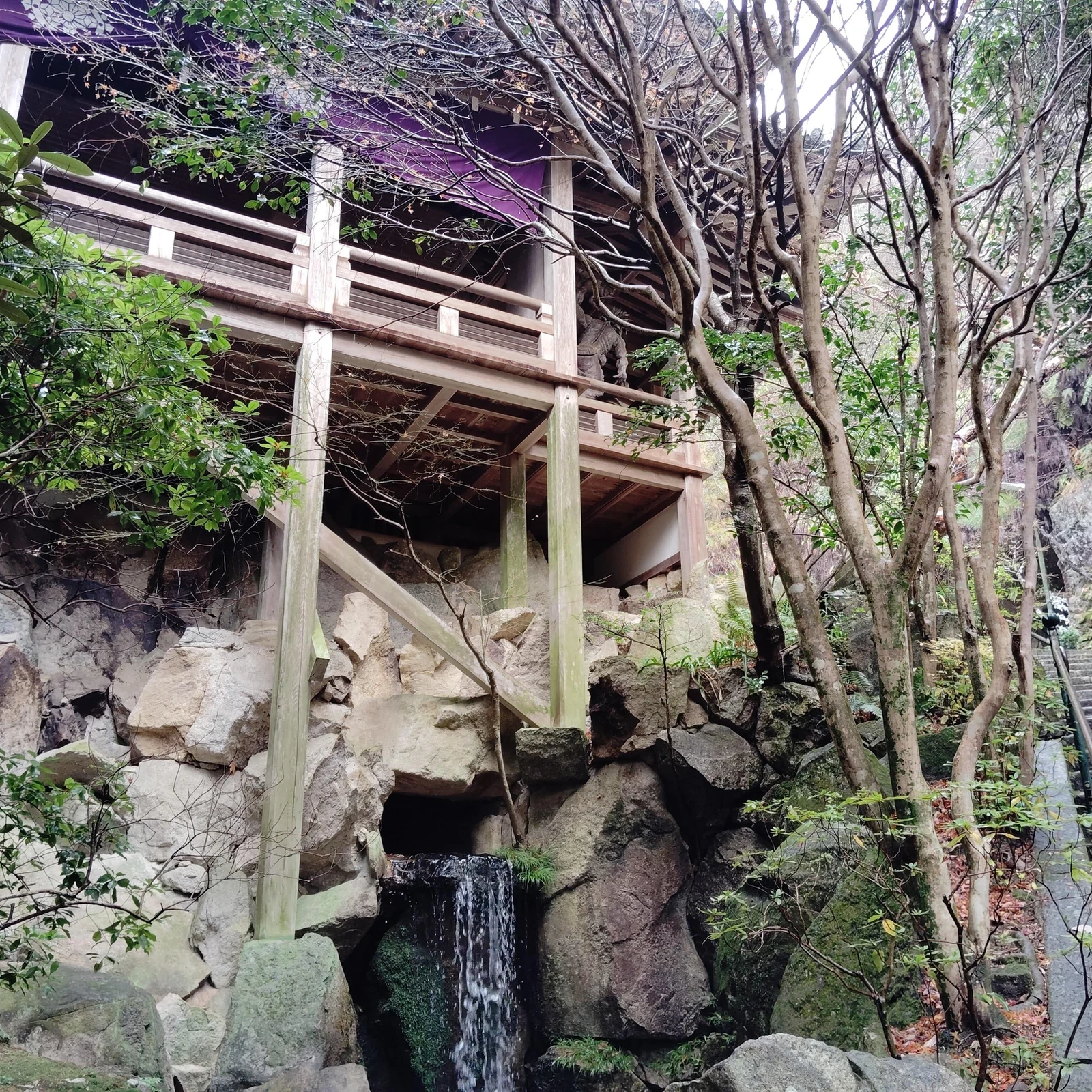
Take a private Mitaki-ji Temple tour in Hiroshima for 1.5 hours with a guide, three sacred waterfalls, a vermilion pagoda and Japanese religious heritage.