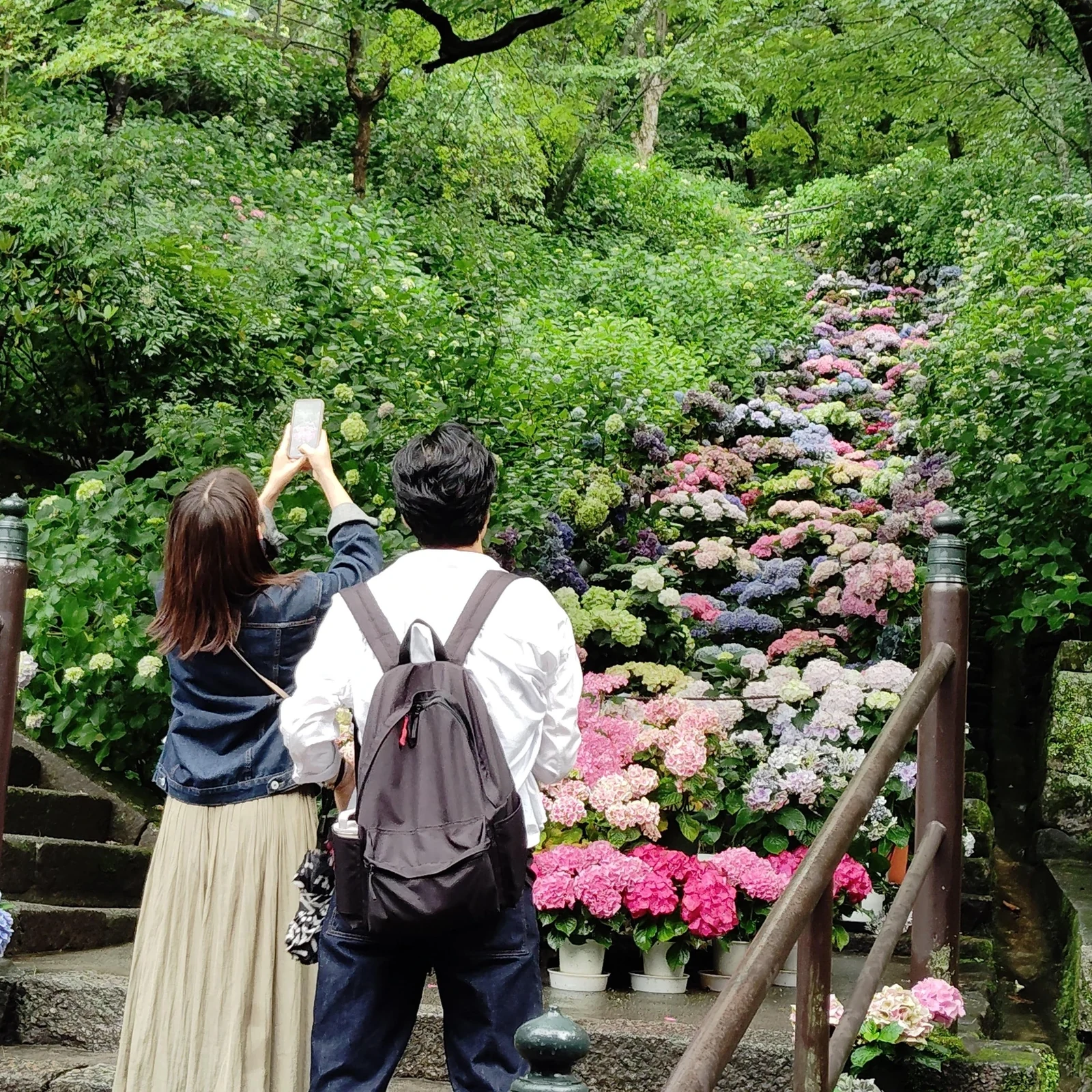
 Activity on TourBookGo
Private Hasedera Tour in Nara
Take a private Hasedera tour in Nara and discover the giant Kannon, Buddhist traditions and striking kake-zukuri architecture with a guide in 2 hours.
If you are wondering whether Nara is worth visiting, the answer begins far beyond its famous deer. Spend a few hours among temples, wooded paths and stone lanterns, and you discover a city where nature, spirituality and Japanese history still feel closely connected.
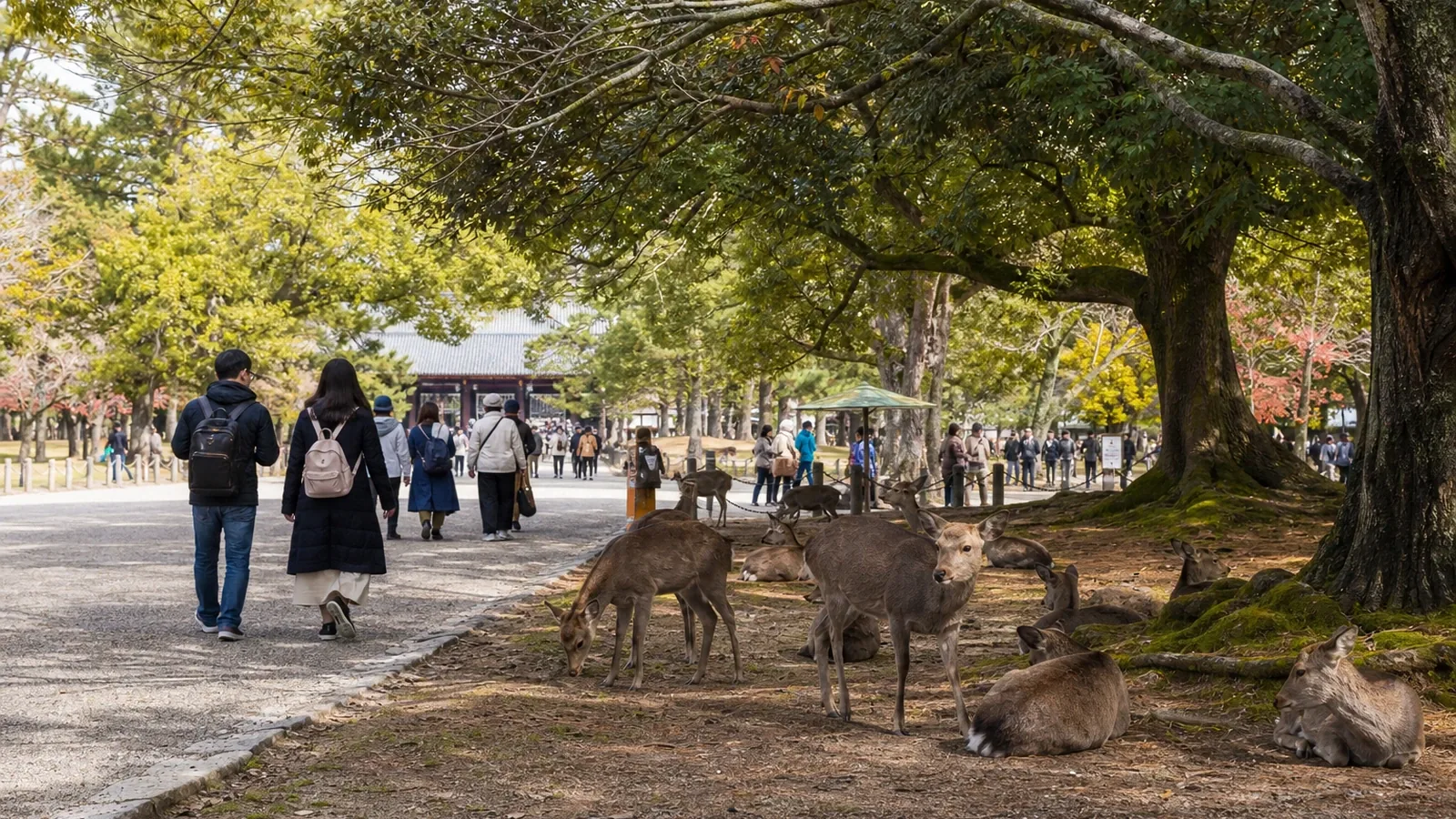
Is Nara worth visiting? For most travelers exploring Kansai, yes. Beyond the famous deer lies a city where ancient Japan still feels remarkably visible: monumental temples, cedar-lined paths, moss-covered stone lanterns and dark tiled roofs appear among green hills. Nara was Japan’s capital from 710 to 784, and several of its temples, shrines, forests and archaeological remains now form part of the UNESCO World Heritage Site known as the Historic Monuments of Ancient Nara. UNESCO World Heritage Centre The real question is not simply what to see in Nara, but how much of your Japan itinerary it deserves. One day is enough to experience the essentials; staying overnight reveals a quieter side of the city after many day-trippers have left. Nara is especially rewarding if you enjoy Japanese history, temples, nature and unhurried walks, although it will not appeal to every traveler in exactly the same way.
Compare locations and options to find a base that suits your trip. Booking.com confirms current availability and pricing.
Find accommodation on BookingWhat makes Nara special is something Kyoto, precisely because of its enormous popularity, can sometimes struggle to offer: a continuous sense of connection between nature, spirituality and history.
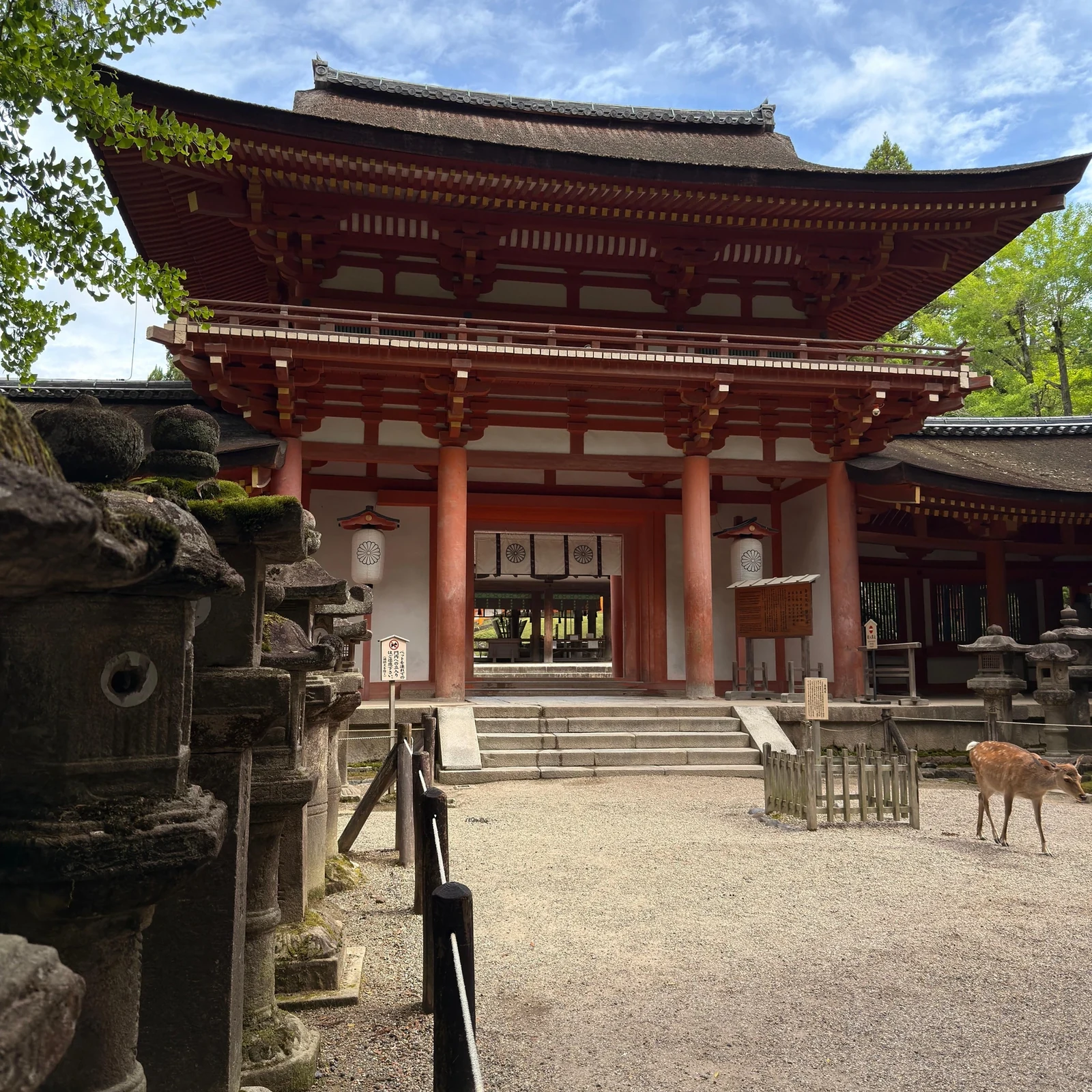
Nara Park is home to some of the city’s greatest landmarks, including Tōdai-ji, Kasuga Taisha and Kōfuku-ji. The park is vast and best explored on foot; between the temples are forests, ponds, gardens and the famous deer roaming freely throughout the area.
visitnara.jp
Tōdai-ji temple is usually one of the strongest impressions of any visit to Nara. You approach through the enormous Nandaimon Gate and, a few steps later, the great hall housing the Daibutsu comes into view: a Buddha statue around 15 meters tall.
visitnara.jp
But it would be a mistake to reduce Nara to simply “the city of deer and the giant Buddha.”
One of its greatest pleasures is to keep walking once the tour groups begin to thin out: climb toward Nigatsudō, follow the forest paths near Kasuga Taisha or end the afternoon wandering through the traditional streets of Naramachi. That is when Nara stops feeling like a postcard and becomes quieter, more atmospheric and more personal.
Visiting Nara does not offer exactly the same experience to every traveler. It is especially rewarding for those looking for history, walking, a slower pace and a clear contrast with Japan’s larger cities.
Travelers fascinated by Japanese history are likely to be among those who enjoy Nara the most. Here, history is not confined to museum displays: it remains woven into temples, paths, forests and the wider landscape.
The Historic Monuments of Ancient Nara offer insight into a decisive period in the political, religious and artistic development of Japan.
UNESCO World Heritage Centre
Nara is best experienced without too much rush and with plenty of time on foot.
Many of its main attractions can be connected by walking, allowing you to move gradually from city streets to temples, parks and wooded areas. Nara’s official tourism organization itself recommends exploring the park on foot.
visitnara.jp
The deer in Nara Park make the day feel very different from a simple succession of temples, and for many children they become one of the most memorable parts of the trip.
Children should understand, however, that these are not zoo animals. They are accustomed to people and are usually calm, but they can become persistent when expecting food and may even give visitors a small nudge.
visitnara.jp
Nara receives plenty of visitors, and its most famous sights can get crowded, particularly around Tōdai-ji and Nara Park. It is not a forgotten secret or an empty city.
Even so, visiting Nara often feels more spacious and relaxed than exploring Kyoto’s busiest attractions, especially once you move beyond the immediate Tōdai-ji and deer circuit. Nara’s own tourism guide notes that its large open spaces make it possible to explore at a more leisurely pace.
visitnara.jp
How much time to spend in Nara depends on your travel style. For a first visit, one day works very well, while staying overnight reveals a noticeably different city once many day-trippers have left.
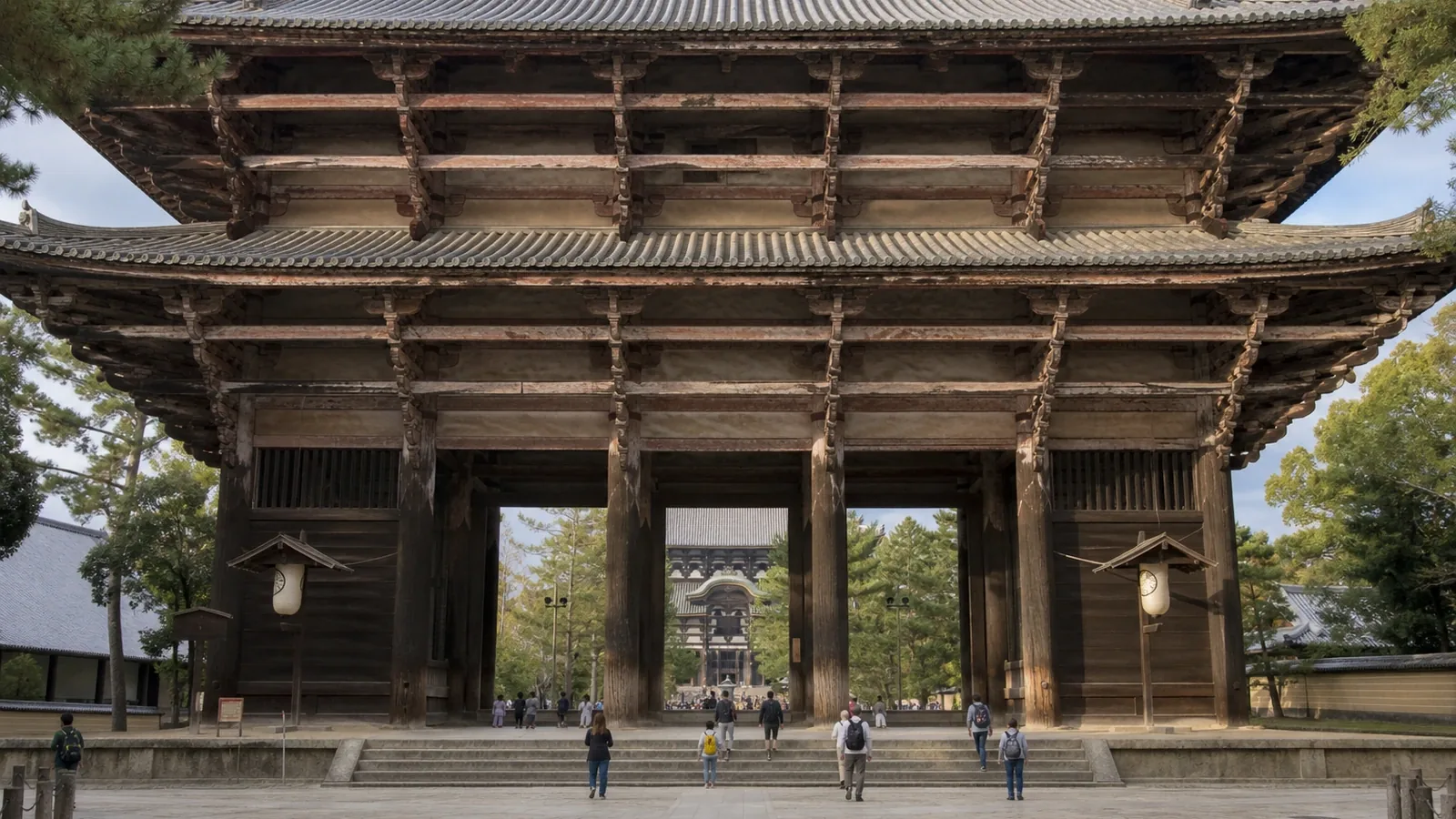
For a first trip to Japan, a Nara day trip from Kyoto or Osaka fits easily into a Kansai itinerary.
One day gives you enough time to combine Nara Park, Tōdai-ji, Kasuga Taisha and an additional walk or two without changing hotels. Good rail connections with Kyoto and Osaka make the trip especially convenient.
visitnara.jp
The mistake would be to turn that day into a race from temple to temple.
Nara rewards slow walking, time in the landscape and a few well-chosen stops far more than simply collecting entrance tickets.
Spending the night in Nara is worth considering if you have enough time and prefer to experience the city at a gentler pace.
Many day-trippers return to Kyoto or Osaka in the afternoon. Once the flow of visitors begins to fade, the city changes scale: streets grow quieter, the parks darken in the evening light and the atmosphere feels far less touristy.
The official tourism guide suggests that Nara Park alone can easily fill an entire day and notes that two or even three days are needed if you want to add places such as Mount Wakakusa, Naramachi and more temples at a relaxed pace.
visitnara.jp
A day in Nara does not have to be particularly expensive.
Much of the experience consists of walking through the park, the streets and the areas surrounding the temples. Costs rise mainly if you enter several paid sites, visit museums, choose more sophisticated restaurants or stay overnight.
For travelers on a mid-range budget, Nara is relatively easy to manage: you can choose which temples to enter, eat simply and spend many hours enjoying outdoor spaces.
Paying every entrance fee simply because you are afraid of “missing something” is rarely necessary. After several temples, cultural fatigue is real. Two places explored properly will usually stay with you longer than six rushed through while constantly checking the time.
The deer in Nara Park look charming in photographs, but the reality can be less idyllic during the busiest hours. Some gather around visitors carrying food and can become quite persistent.
The area around Tōdai-ji is also heavily visited. Anyone arriving with visions of a silent mountain sanctuary may find the first impression more touristy and commercial than expected.
And there is another possibility: temple fatigue.
If you have already spent several days exploring Kyoto and visited numerous shrines, gardens and Buddhist halls, Nara may make less of an impact than you expect. In that case, walk more, visit fewer monuments and leave more room to enjoy the scenery.
The experience of visiting Nara changes considerably with the season.
Spring brings blossoms and cherry trees; autumn transforms the parks and forests into shades of red and gold. Both seasons are visually extraordinary, but also very popular. Summer can be hot, while winter is traditionally the quietest season and makes it easier to visit temples and museums with fewer crowds.
visitnara.jp
Travelers who value silence more than seasonal color may find just as much beauty in a cold winter morning as on a famous peak-blossom weekend.
Yes, Nara is worth visiting, especially if you are already exploring Kyoto or Osaka and can spare at least one day.
Nara is particularly rewarding for travelers interested in Japanese history, Buddhism, architecture, nature and peaceful walks. It also works especially well as a counterpoint to Japan’s larger cities.
It may be less worthwhile if your trip is extremely short, you do not enjoy visiting temples, you have little tolerance for walking or your priorities are nightlife, shopping and urban energy.
And there is one final, important distinction.
If you go only to photograph the deer and leave again, Nara will probably seem like a pleasant day trip.
If you walk through Tōdai-ji, continue into the forests, listen to the temple bells, discover the lanterns of Kasuga and allow the day to slow down, Nara begins to reveal something much deeper about Japan.
That is why Nara is worth visiting.
Discover selected experiences in Nara to complete this guide with historic temples, deer, Japanese culture, nature and well-organised tours.
Activity on TourBookGoTake a private Hasedera tour in Nara and discover the giant Kannon, Buddhist traditions and striking kake-zukuri architecture with a guide in 2 hours.
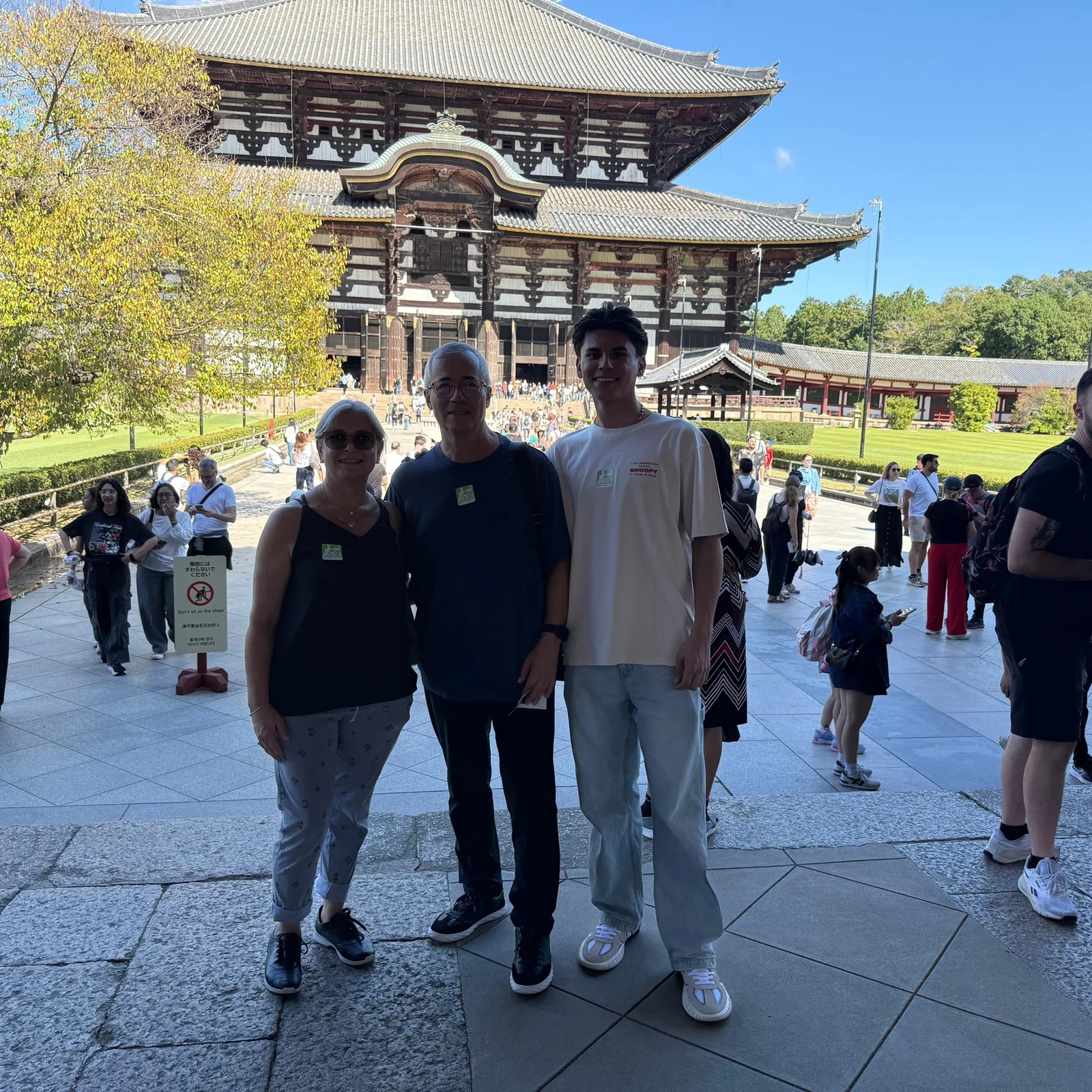 Activity on TourBookGo
Nara tour from Kyoto: 4-hour guided trip with coach travel, Tōdai-ji admission, Nara Park and Kasuga Taisha. Check price and availability.
 Activity on TourBookGo
Book an early morning Nara tour from Kyoto or Osaka and explore Kōfuku-ji, Kasuga-taisha, Nara Park and Tōdai-ji with an English-speaking guide.